※ This article is content provided for medical information purposes.
This content is not subject to review under Article 56, Paragraph 2 and Article 57 of the Medical Service Act,
and is not a post intended for advertising purposes.
Hello,
I am Seong Hyeon-ju, director of Cheongdam OK Clinic.
| ▶ Full member of the Korean Association of Cosmetic Plastic Surgery (KACS) |
|---|
| ▶ Full member of the Korean Society for the Study of Obesity (KSSO) |
| ▶ Full member of the Korean Academy of Aesthetic and Metabolic Surgery (KAAM) |
| ▶ Full member of the Korean Society of Liposuction Surgery (KSSL) |
| ▶ Full member of the Korean Society for Aesthetic Surgery (KSAS) |
When consulting about upper-arm liposuction,
there is one question I receive most often.
“Will my arms become thinner immediately after surgery?”
“How long will the swelling last?”
“Is the pain severe?”
In fact, many people consider improving the appearance of their upper arms
as they prepare sleeveless or short-sleeved clothing for summer.
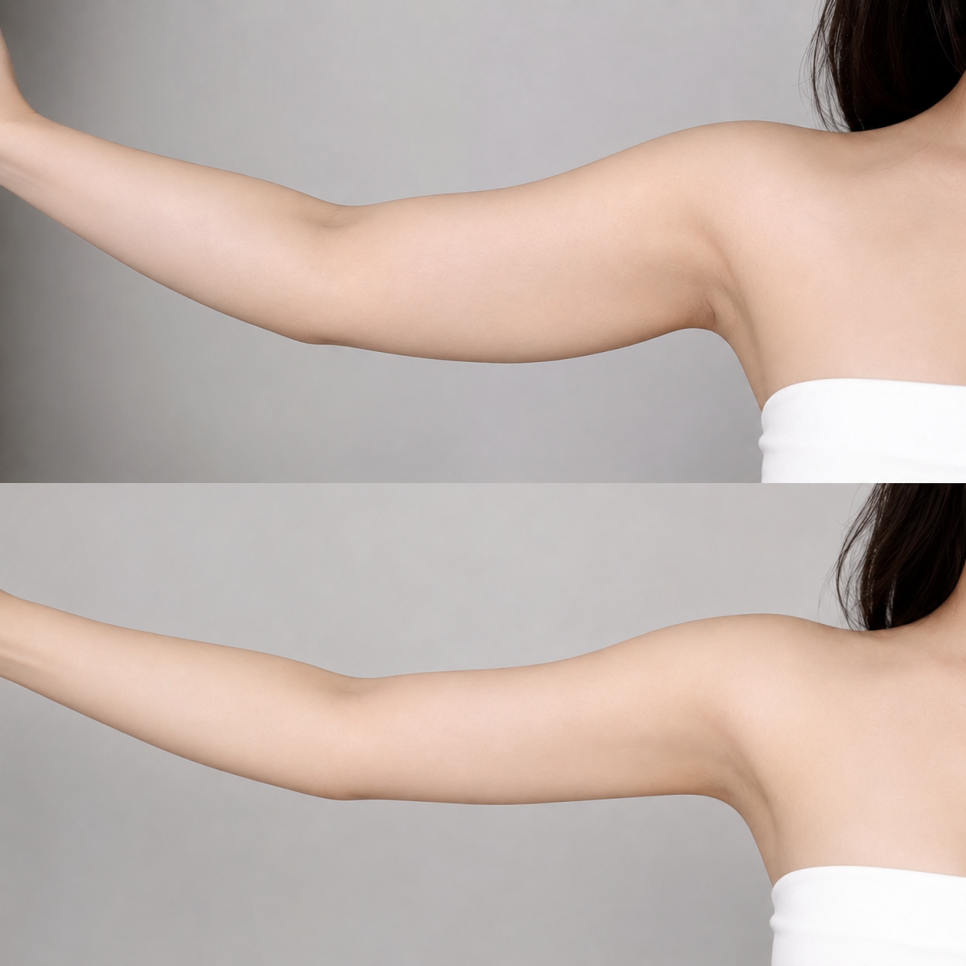
However, upper-arm liposuction is not a procedure
whose results are complete immediately after surgery.
The contour changes throughout the recovery process,
and the point at which the final results appear also varies.
Today, I will explain in detail
when the effects of upper-arm liposuction become visible,
as well as swelling, pain, and the recovery period.
| CONTENTS |
|---|
| When do the effects of upper-arm liposuction become visible? How long do swelling and bruising last? How severe is the pain from upper-arm liposuction? What should be checked during the recovery period? |
- When Do the Effects of Upper-Arm Liposuction Become Visible?
A reduction in arm circumference
can be observed even immediately after surgery.
However, the smooth arm contour that many people envision
does not appear right away.
Because the tissues are stimulated during surgery,
swelling occurs.
For this reason, there may be a period when the arms
appear thicker than they actually are.
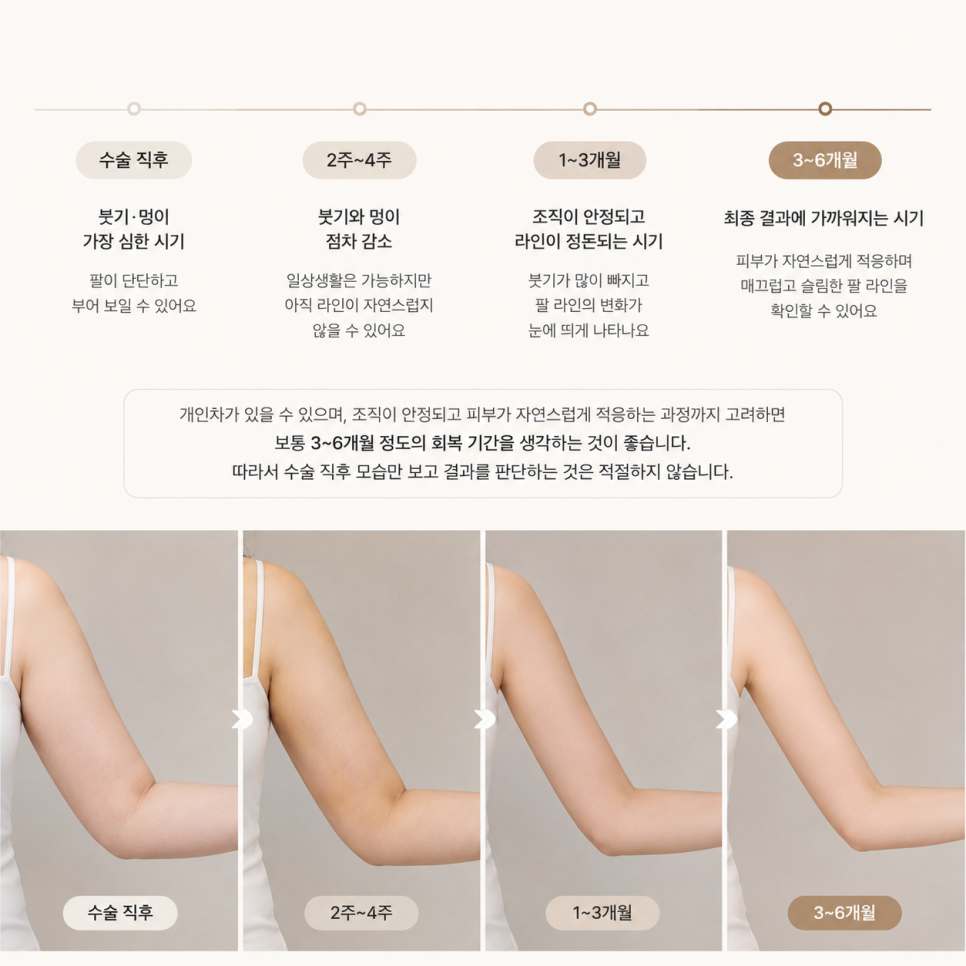
Initial swelling is generally
most noticeable within 1–2 weeks after surgery.
It gradually decreases as time passes.
In general, many people begin to notice changes
in their arm contours after about one month.
However, the final results require
more time than that.
Taking into account the process by which the tissues stabilize
and the skin naturally adapts,
it is generally advisable to allow
approximately 3–6 months for recovery.
Therefore, it is not appropriate to judge the results based only on the appearance immediately after surgery.
- How Long Do Swelling and Bruising Last?
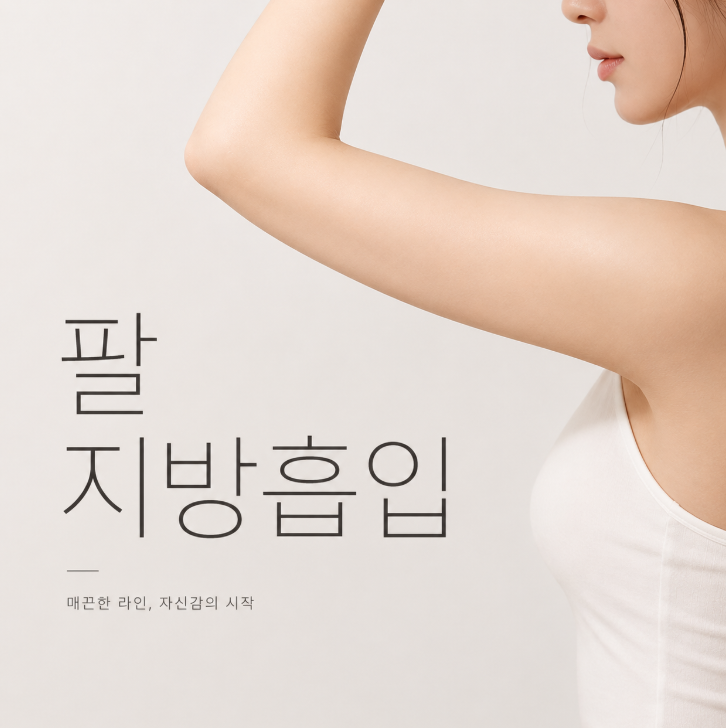
After upper-arm liposuction,
the changes experienced most commonly are swelling and bruising.
These are natural reactions
that occur as the tissues recover.
Although bruising varies from person to person,
it generally gradually fades over approximately 2–3 weeks.
Swelling tends to last longer than bruising.
In particular, swelling may remain relatively longer
on the inner upper arms or around the armpits.
The condition may also feel different
in the morning and afternoon.
On days when you sit for long periods or are less active,
the swelling may feel more pronounced.
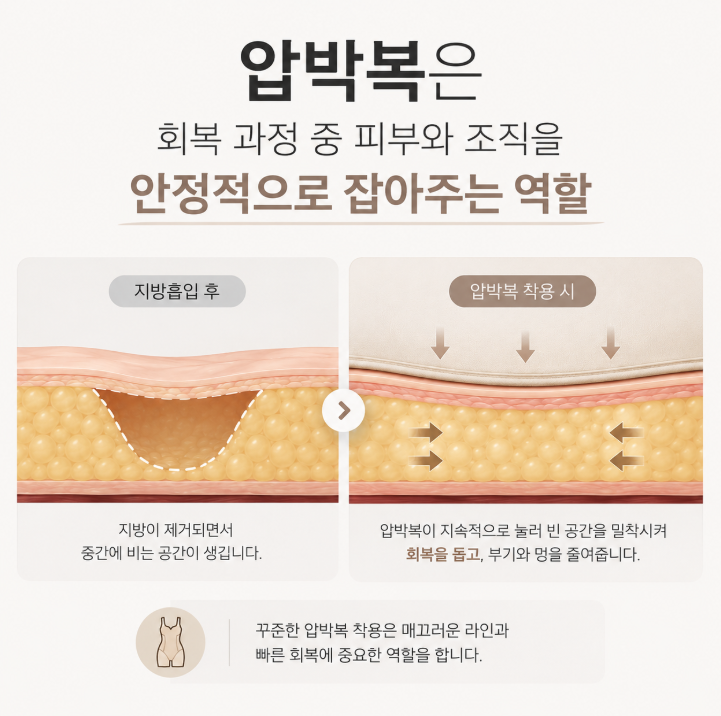
During this period, wearing compression garments
and managing your daily activities are important.
Wearing compression garments for the prescribed period
can help the tissues settle into place in a stable manner.
Strenuous exercise or excessive use of the arms
may delay recovery, so caution is needed.
- How Severe Is the Pain from Upper-Arm Liposuction?
Many people postpone consultations
because they are concerned about pain.
The pain actually experienced
differs from that associated with major incisional surgery.
Most people describe it as being similar
to muscle soreness after an intense arm workout.
You may feel tightness when raising your arms
or changing clothes.
You may also experience a dull ache or tenderness
when the area is pressed.

These symptoms are common changes
that may occur during the recovery process.
Pain is generally felt most strongly
within several days after surgery and gradually decreases thereafter.
However, differences between individuals do exist.
If there is a larger amount of fat or a wider treatment area,
the recovery period may be somewhat longer.
Therefore, before surgery, it is important to receive
a thorough explanation tailored to your condition.
- What Should Be Checked During the Recovery Period?
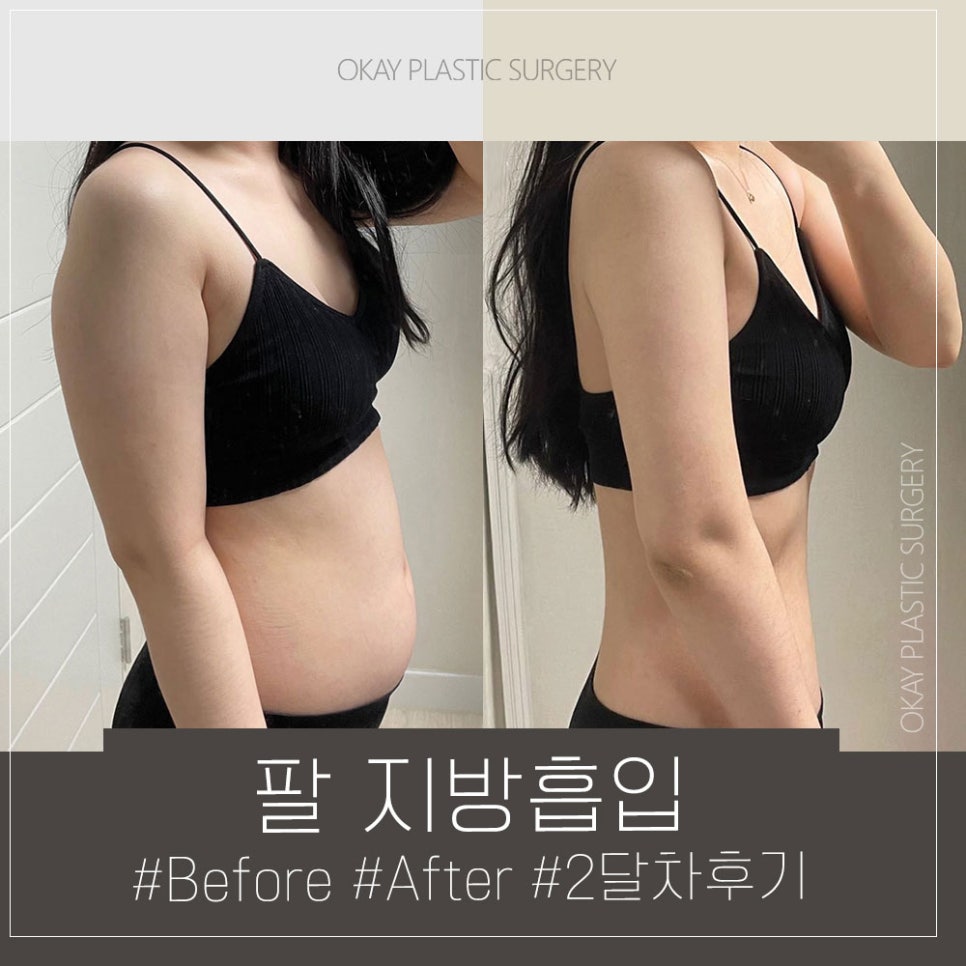
Upper-arm liposuction is not a surgery
that ends simply with the removal of fat.
The recovery process is also
an important stage that affects the results.
The upper arms, in particular, are an area that moves frequently.
During the early recovery period, it is best to avoid
strenuous exercise or repeatedly lifting heavy objects.
Some people may also experience a pulling sensation in the skin
or temporary unevenness.
These changes may also occur
as the tissues settle into place.
They often gradually improve over time,
but regular follow-up checks are necessary.
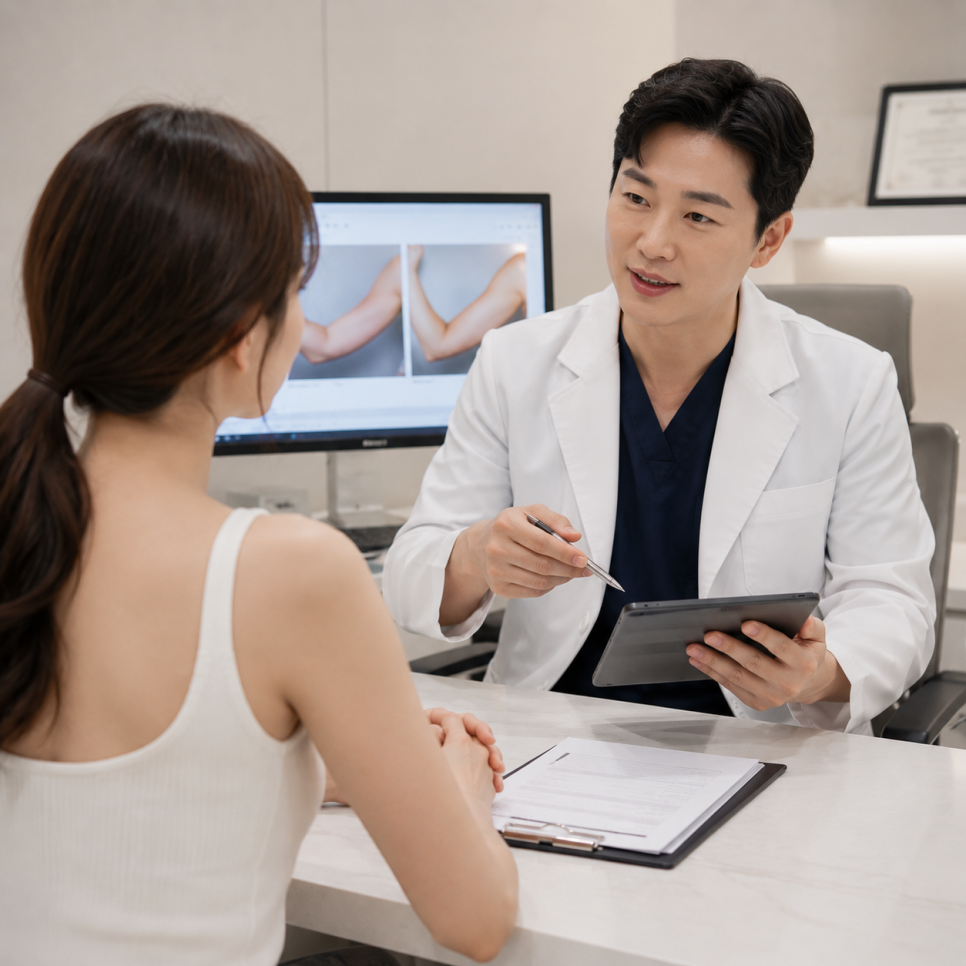
With upper-arm liposuction, what matters is not only
how much fat has been removed,
but also whether the overall arm contour
connects naturally.
To achieve satisfactory results, the proportions extending
from the shoulders through the upper arms to the elbows
must be considered together.
Therefore, if you are considering surgery,
rather than comparing only prices or reviews,
please also check the recovery management system
and the consultation process.
These differences may be important factors
that determine the quality of the final results.
↓↓↓ Related content you may find helpful ↓↓↓
-Operating Hours-
| Weekdays 10:00–19:00 (last registration at 18:30) Saturdays 10:00–16:00 (last registration at 15:30) Public holidays / Wednesdays and Sundays: Closed regularly |
-Contact Information-
| ▶ Cheongdam OK Clinic |
|---|
| Consultation phone: 02-3446-7588 KakaoTalk inquiries |
-How to Get Here-