※ This article is content provided for medical information purposes.
Under Articles 56(2) and 57 of the Medical Service Act, this content is not subject to deliberation, and we would like to inform you that this post is not intended as an advertisement.
Hello,
I am Seong Hyeon-ju, director of 청담오케이의원.
| ▶ Full member of the Korean Association of Cosmetic Plastic Surgery (KACS) |
|---|
| ▶ Full member of the Korean Society for the Study of Obesity (KSSO) |
| ▶ Full member of the Korean Association of Aesthetic Medicine and Body Contouring (KAAM) |
| ▶ Full member of the Korean Society of Liposuction Surgery (KSSL) |
| ▶ Full member of the Korean Society of Aesthetic Surgery (KSAS) |
When counseling patients about dieting,
there is one story I hear surprisingly often.
“People tell me my upper body is slim,
but my legs are unusually thick.”
“I lose weight, but my thighs stay the same.”
“My weight is normal,
but I’m stressed because of my lower body.”
In reality, lower-body obesity is often
not simply a matter of weight.
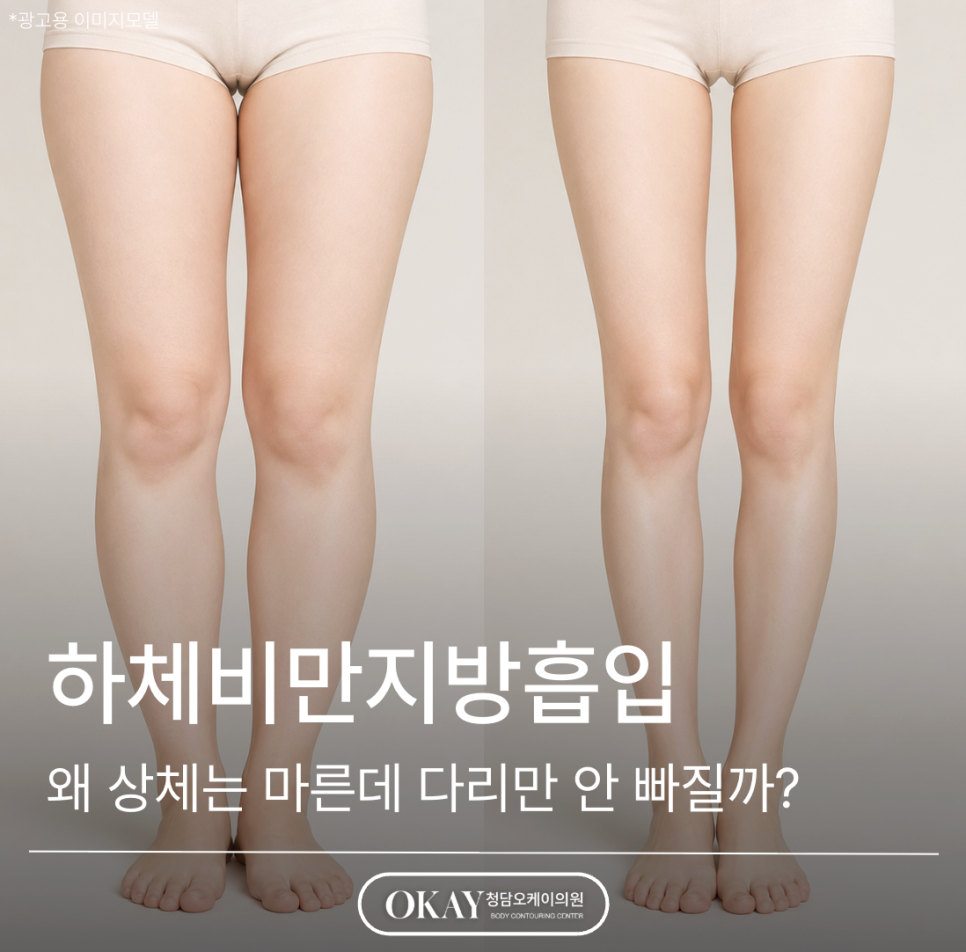
Today, I will explain why the upper body may be slim while the legs do not slim down, as well as what people considering liposuction for lower-body obesity should know.
| TABLE OF CONTENTS |
|---|
| Why the lower body can be thick even when the upper body is slimCases that cannot be resolved with exercise and dietWhen liposuction for lower-body obesity may be neededKey points for improving satisfaction |
- Why the lower body can be thick even when the upper body is slim
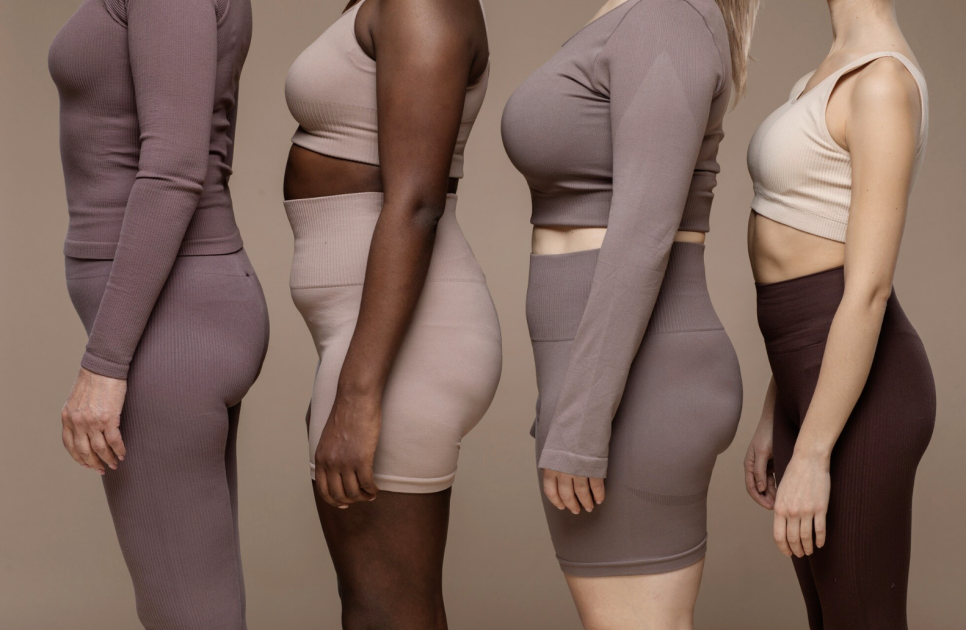
Even at the same weight, body shape varies from person to person.
In women especially, fat often accumulates
primarily around the thighs and hips.
Genetic factors may play a role,
and fat may also accumulate in the lower body due to hormones and individual fat-distribution patterns.
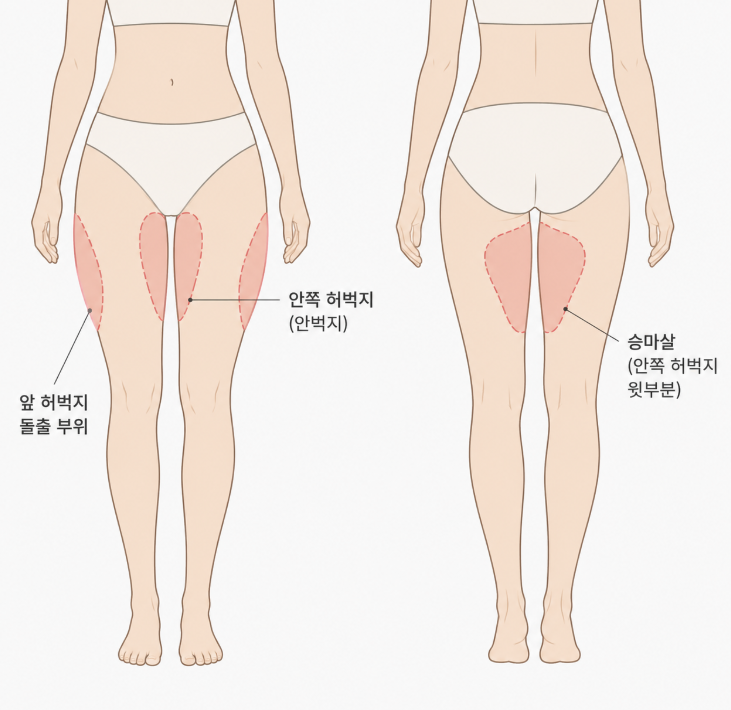
Therefore, even if a person does not weigh much,
the inner thighs, outer thighs, and saddlebags
may appear prominent.
In fact, many people who have a slim upper body
but are concerned about their lower body
experience stress because of body-shape imbalance
rather than their weight.
- Cases that cannot be resolved with exercise and diet
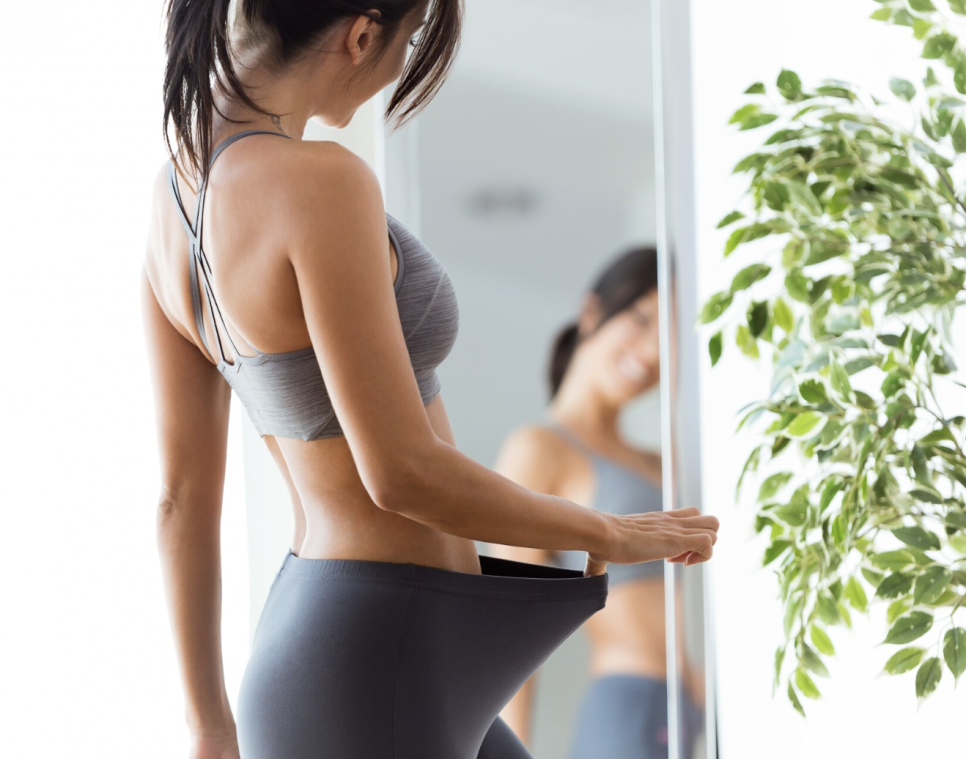
Of course, losing weight is very important.
However, selectively losing fat from only a specific area
is more difficult than many people expect.
This is why people say that even after doing plenty of aerobic exercise and managing their diet,
they lose fat from their face first and their breasts first.
Fat on the inner thighs and saddlebags in particular
often remains until relatively late in the weight-loss process.
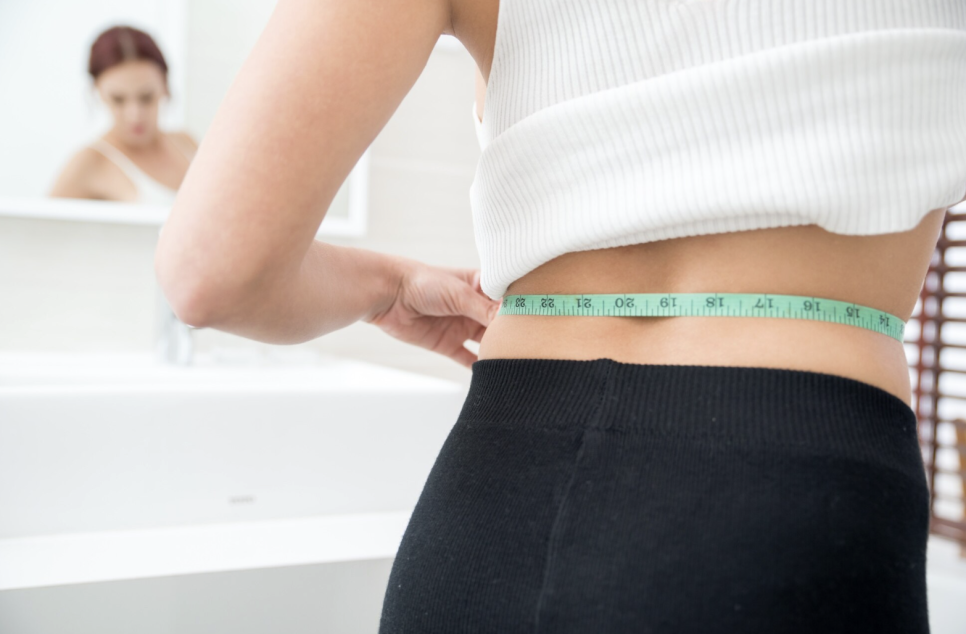
If your weight has decreased but your pants still fit the same,
it may be worth considering that this is not simply a weight issue
but may also be influenced by the distribution of fat itself.
For this reason, even after successfully losing weight,
many people consider additional care
because of the appearance of their lower-body contours.
- When liposuction for lower-body obesity may be needed
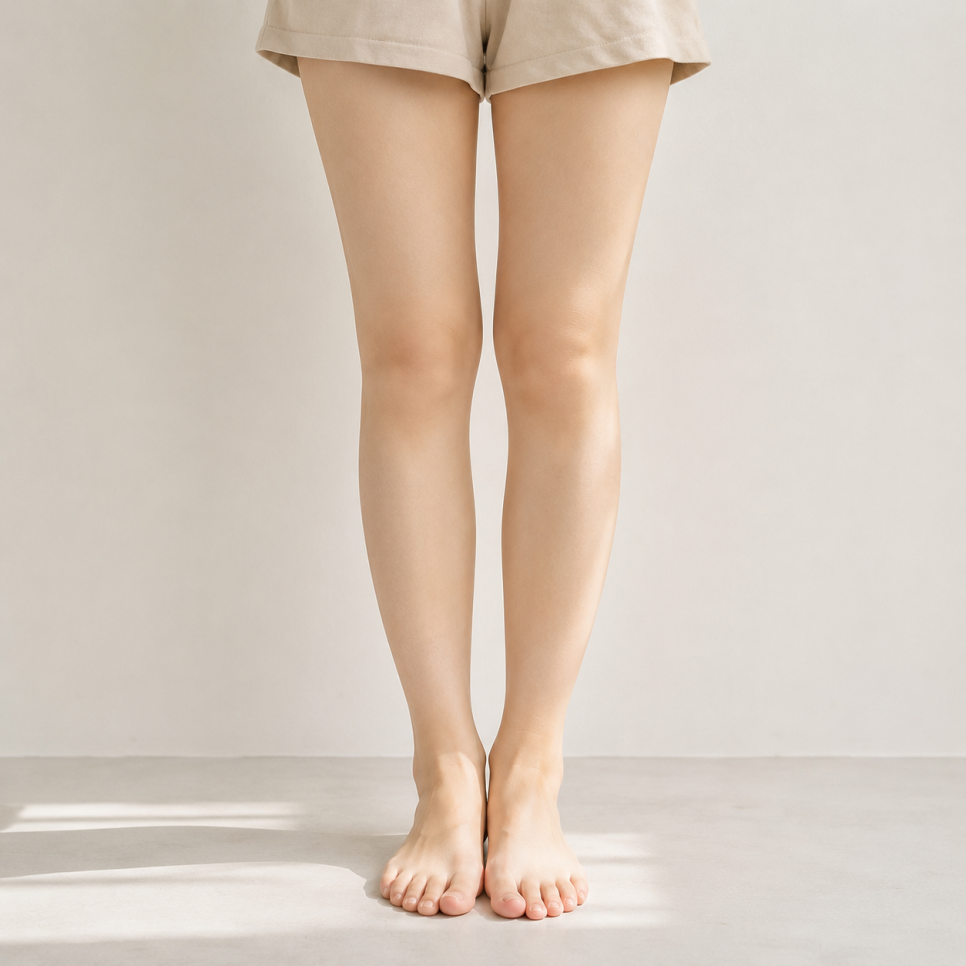
Liposuction for lower-body obesity
is often focused on improving body contours
rather than on weight loss.
Many people seek a consultation when their inner thighs rub together and feel uncomfortable,
when saddlebags make the fit of their pants look uneven,
or when fat above the knees makes their legs appear shorter.

The important thing
is not to remove as much fat as possible.
Removing too much fat
may instead result in uneven contours.
Therefore, it is important to consider the inner, outer, front, and back of the thighs together
and assess overall balance.
Ultimately, the key to liposuction for lower-body obesity
can be said to lie more in contour design than in the amount of fat removed.
- Key points for improving satisfaction
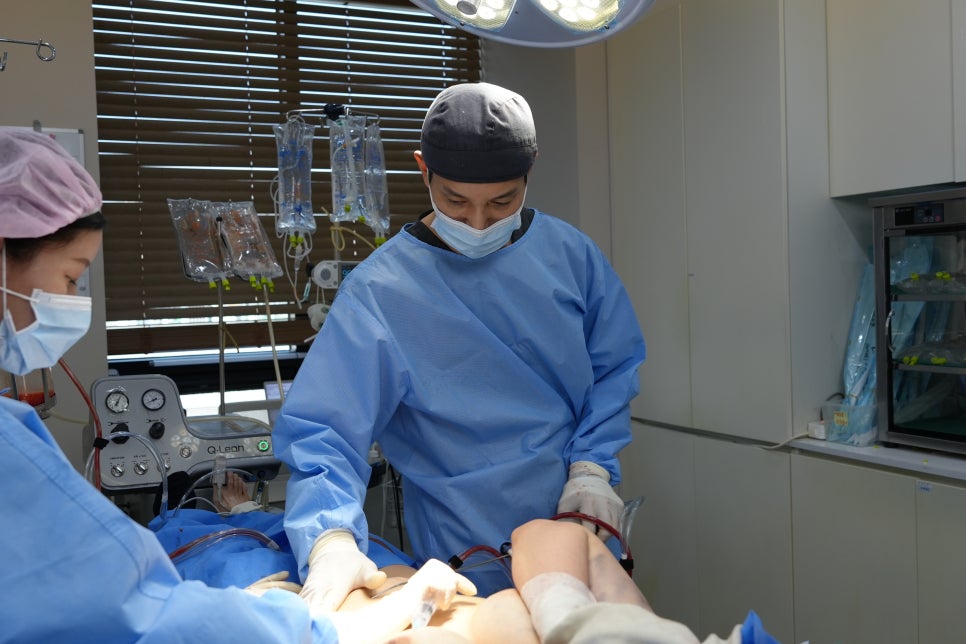
The reason results differ even for the same thighs
is the design.
Whether to reduce only the saddlebags,
whether to also contour the inner thighs,
and whether to take the contours around the knees into consideration
can all significantly affect the result.
In addition, body shape, pelvic structure,
and skin elasticity must all be considered
to achieve a natural-looking result.
That is why accurately analyzing your current body shape
during the consultation process is especially important.
If you have a slim upper body but are particularly concerned about your legs,
rather than looking only at your weight,
it is better to first examine your current fat distribution
and body-shape characteristics.
This is because lower-body obesity
is often a matter of contours rather than numbers.
Even at the same weight, one person’s legs
may look long and slim,
while another person’s thighs may look thick.
If you are considering liposuction for lower-body obesity,
rather than focusing on the number on the scale,
first examine why the contours of your legs
currently look the way they do.
↓↓↓ Related content you may find helpful ↓↓↓
-Operating Hours-
| Weekdays 10:00–19:00 (last registration at 18:30)Saturdays 10:00–16:00 (last registration at 15:30)Public holidays / Wednesdays and SundaysClosed regularly |
-Inquiries-
| ▶ 청담오케이의원 |
|---|
| Consultation: 02-3446-7588KakaoTalk inquiries |
-Directions-