※ This article is informational content intended to provide medical information.
It is not subject to review under Articles 56(2) and 57 of the Medical Service Act,
and we would like to inform you that this post is not intended for advertising purposes.
Hello,
I am Seong Hyeon-ju, director of Cheongdam OK Clinic.

| ▶ Full Member of the Korean Association of Aesthetic Plastic Surgery (KACS) |
|---|
| ▶ Full Member of the Korean Society for the Study of Obesity (KSSO) |
| ▶ Full Member of the Korean Association for Aesthetic Medicine and Body Contouring (KAAM) |
| ▶ Full Member of the Korean Society of Liposuction Surgery (KSSL) |
| ▶ Full Member of the Korean Society of Aesthetic Surgery (KSAS) |
One of the questions most frequently asked during consultations by people considering an M-shaped hairline hair transplant is:
"Can I go to work right after the surgery?"
Especially for office workers and those whose jobs involve meeting many people, there is considerable interest in the recovery period and when they can return to their daily routines.
Many people also wonder how much pain they can expect,
when the hair will begin to grow,
and how long the results will last.
An M-shaped hairline hair transplant is not simply a procedure to fill in areas that appear sparse. It is one method that may help improve the overall impression and proportions of the face.
Today, I will summarize information that is helpful to know if you are considering an M-shaped hairline hair transplant.
| Table of Contents |
|---|
| What is an M-shaped hairline hair transplant?How much pain can be expected during the surgical process?When can you return to work, and what is the recovery period?How long do the results last, and what precautions are needed? |
- What Is an M-Shaped Hairline Hair Transplant?
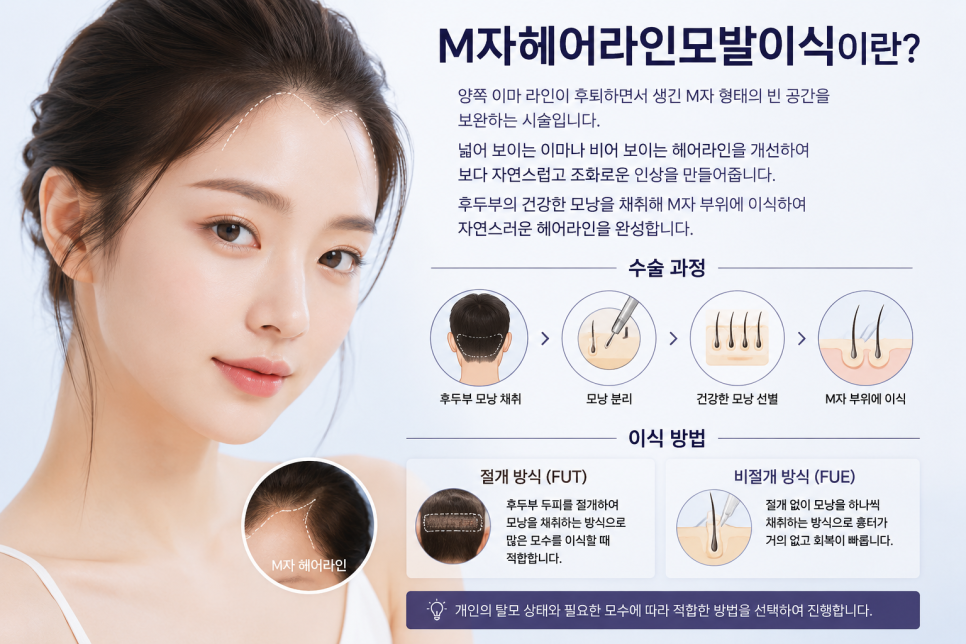
An M-shaped hairline hair transplant is a procedure that addresses the M-shaped sparse areas created as both sides of the forehead hairline recede.
It may be performed not only for men but also for women, and may be considered to improve a forehead that appears wide or a hairline that appears sparse.
In general, healthy hair follicles are harvested from the back of the head and transplanted to the areas where they are needed.
Both strip and non-incisional techniques are currently used, and the method may vary depending on the individual's hair-loss condition and the number of grafts needed.
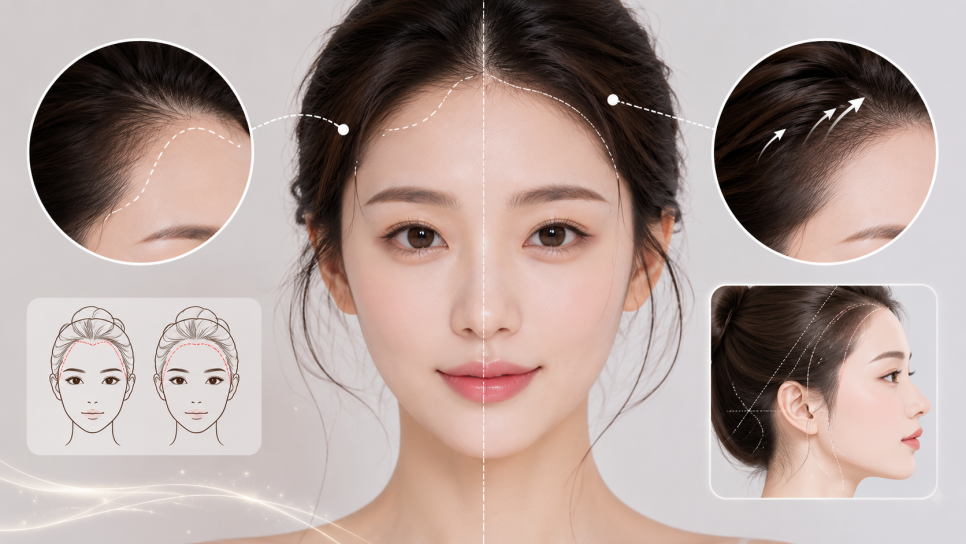
The important point is not simply filling in sparse areas, but designing the hairline while considering the shape of the face and the proportions of the facial features.
This is because even when the same number of grafts is transplanted, the overall impression can vary significantly depending on the hairline design.
- How Much Pain Can Be Expected During the Surgical Process?
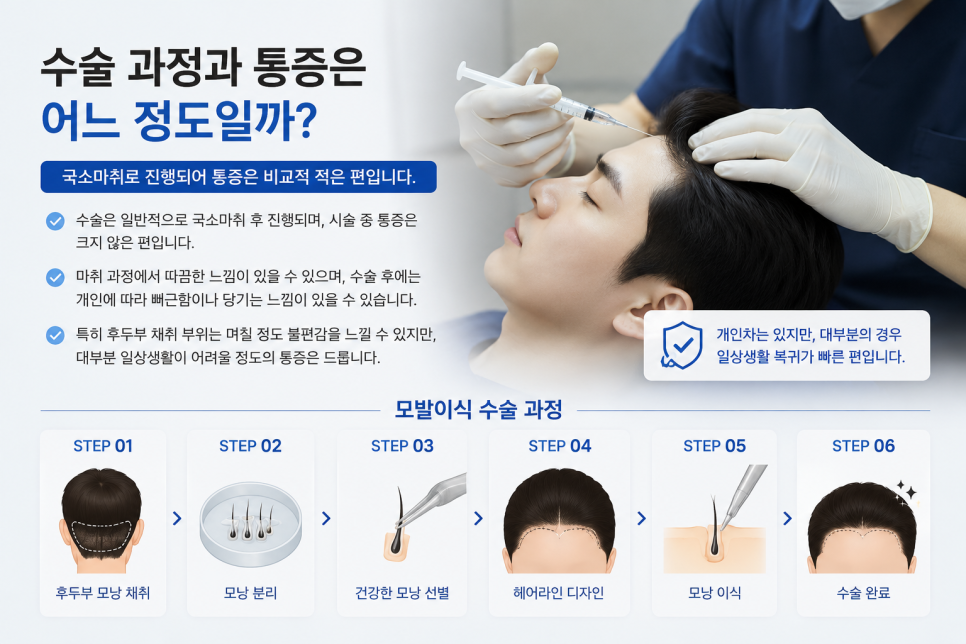
One of the main concerns for people considering a hair transplant is pain.
Because the procedure is generally performed after local anesthesia, pain during the procedure is usually relatively limited.
However, you may feel a brief stinging sensation during the administration of anesthesia,
and after the surgery, some people may experience soreness or a pulling sensation.
In particular, the donor area at the back of the head may feel uncomfortable for several days.
However, in most cases, relatively few people report pain severe enough to make daily activities difficult.
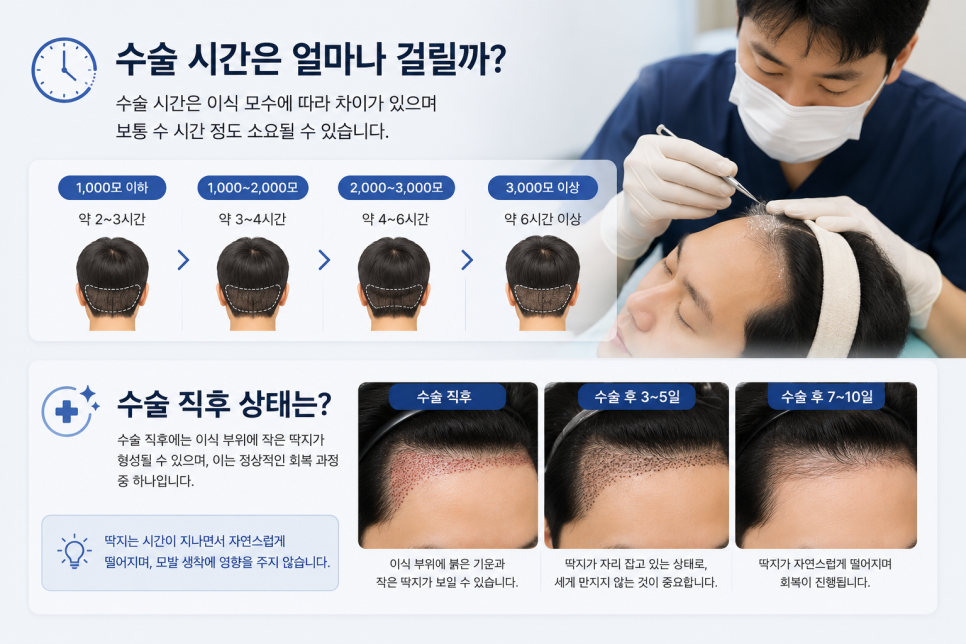
The surgical time varies depending on the number of grafts transplanted and may generally take several hours.
Small scabs may form in the transplant area immediately after the surgery, and this is one part of the normal healing process.
- When Can You Return to Work, and What Is the Recovery Period?
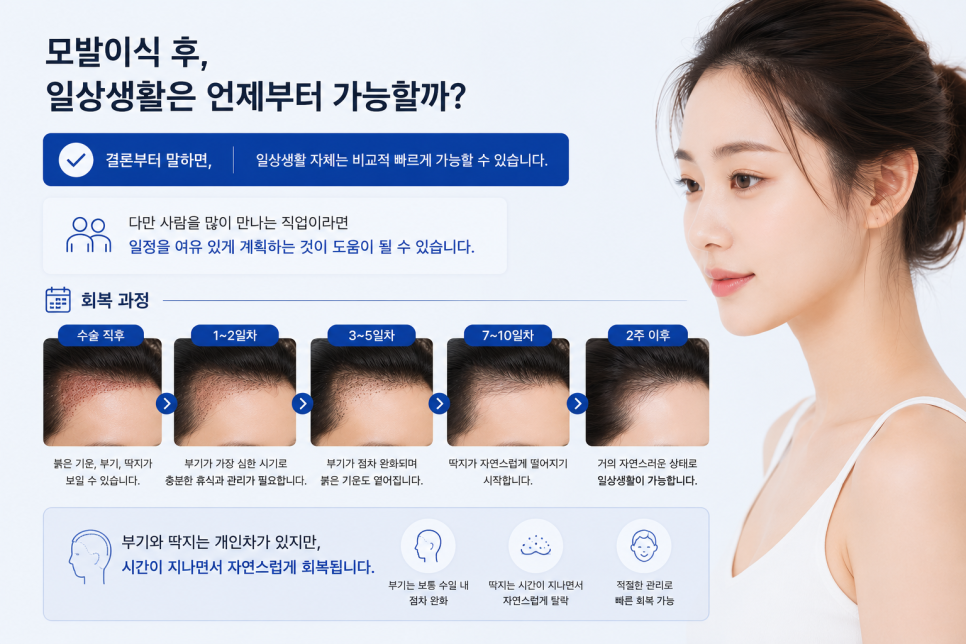
This is the point that many people are most curious about.
To put it simply, it may be possible to resume daily activities relatively quickly.
However, if your job involves meeting many people, it may be helpful to plan your schedule with some flexibility.
This is because redness, swelling, or scabs may be visible immediately after the surgery.
Swelling often gradually subsides within several days,
and the scabs naturally fall away over time.
Although individual experiences vary, many people take several days to rest after surgery before returning to work.
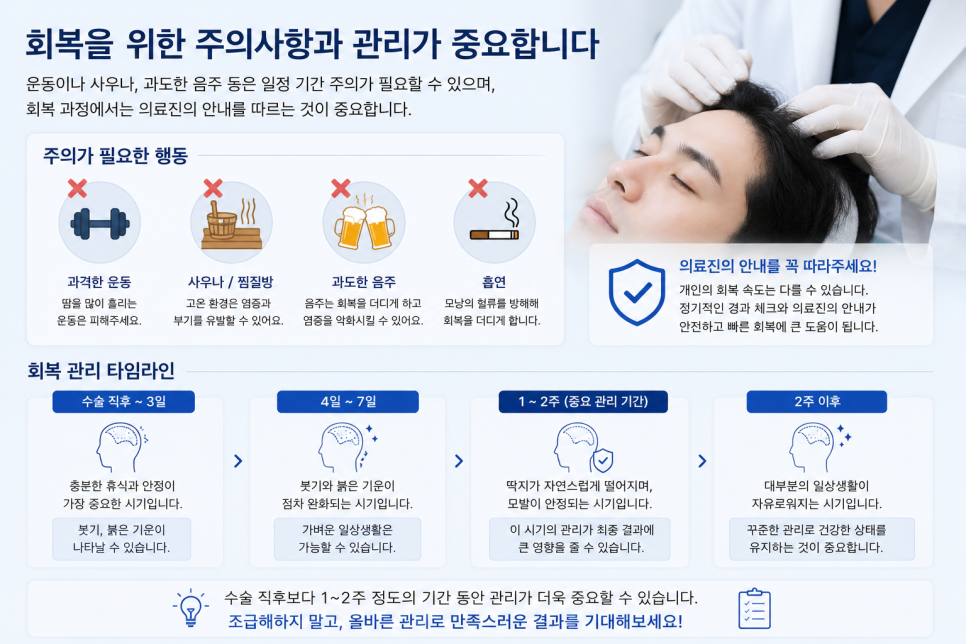
Exercise, saunas, and excessive alcohol consumption may require caution for a certain period,
and it is important to follow your medical team's instructions during the recovery process.
- How Long Do the Results Last, and What Precautions Are Needed?
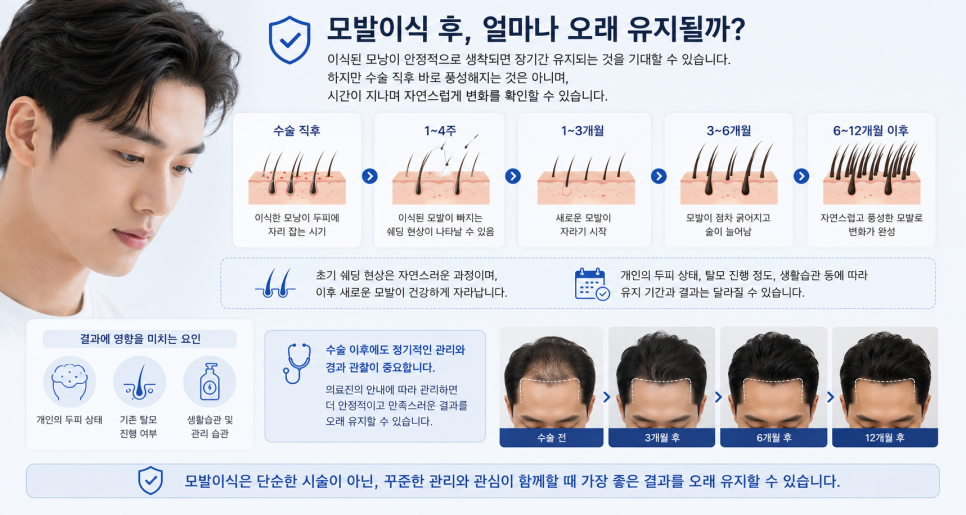
One of the questions most frequently asked after a hair transplant is, "How long will it last?"
Once the transplanted follicles become stably established, long-term maintenance is often expected.
However, the hair will not become full immediately after surgery.
In the early stages, a shedding phase in which the transplanted hair falls out may occur,
and this is often explained as a natural process.
As new hair begins to grow afterward, changes can be observed over time.
In addition, results may vary depending on the individual's scalp condition,
whether existing hair loss is progressing,
and lifestyle habits.
Therefore, regular care and monitoring of progress remain important after surgery.
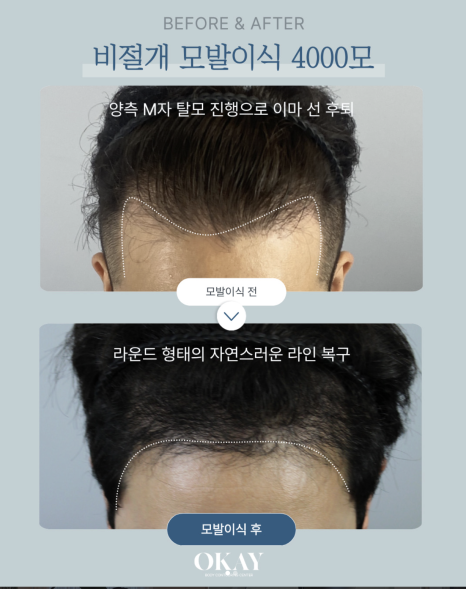
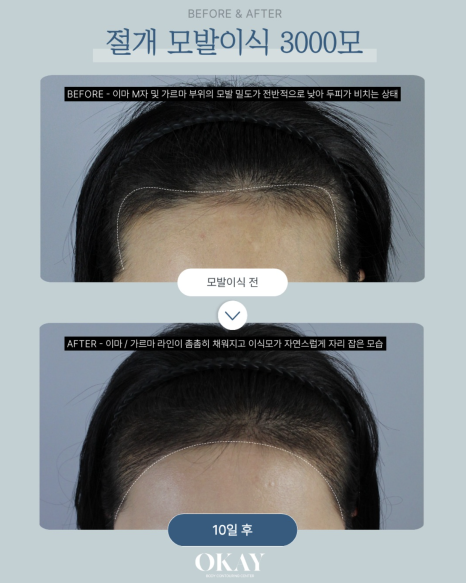
Above all, what matters is not looking only at the number of grafts, but developing a plan that sufficiently takes your facial shape and current hair-loss condition into account.
If you are considering an M-shaped hairline hair transplant, consider not only pain and the recovery period, but also the design and long-term maintenance.
↓↓↓ Related Content ↓↓↓
-Operating Hours-
| Weekdays 10:00–19:00 (last registration at 18:30)Saturdays 10:00–16:00 (last registration at 15:30)Closed on public holidays / Wednesdays and Sundays |
-Contact Information-
| ▶ Cheongdam OK Clinic |
|---|
| Consultation: 02-3446-7588 KakaoTalk inquiries |
-Location-