※ This post is content provided for medical information purposes.
Please note that it does not fall under content subject to review pursuant to Paragraph 2 of Article 56 and Article 57 of the Medical Service Act, and that it is not a post intended for advertising purposes.
Hello,
I am Seong Hyeon-ju, director of Cheongdam OK Clinic.

| ▶ Full Member of the Korean Academy of Cosmetic Surgery (KACS) |
|---|
| ▶ Full Member of the Korean Society for the Study of Obesity (KSSO) |
| ▶ Full Member of the Korean Academy of Aesthetic and Metabolic Surgery (KAAM) |
| ▶ Full Member of the Korean Society of Liposuction Surgery (KSSL) |
| ▶ Full Member of the Korean Society for Aesthetic Surgery (KSAS) |
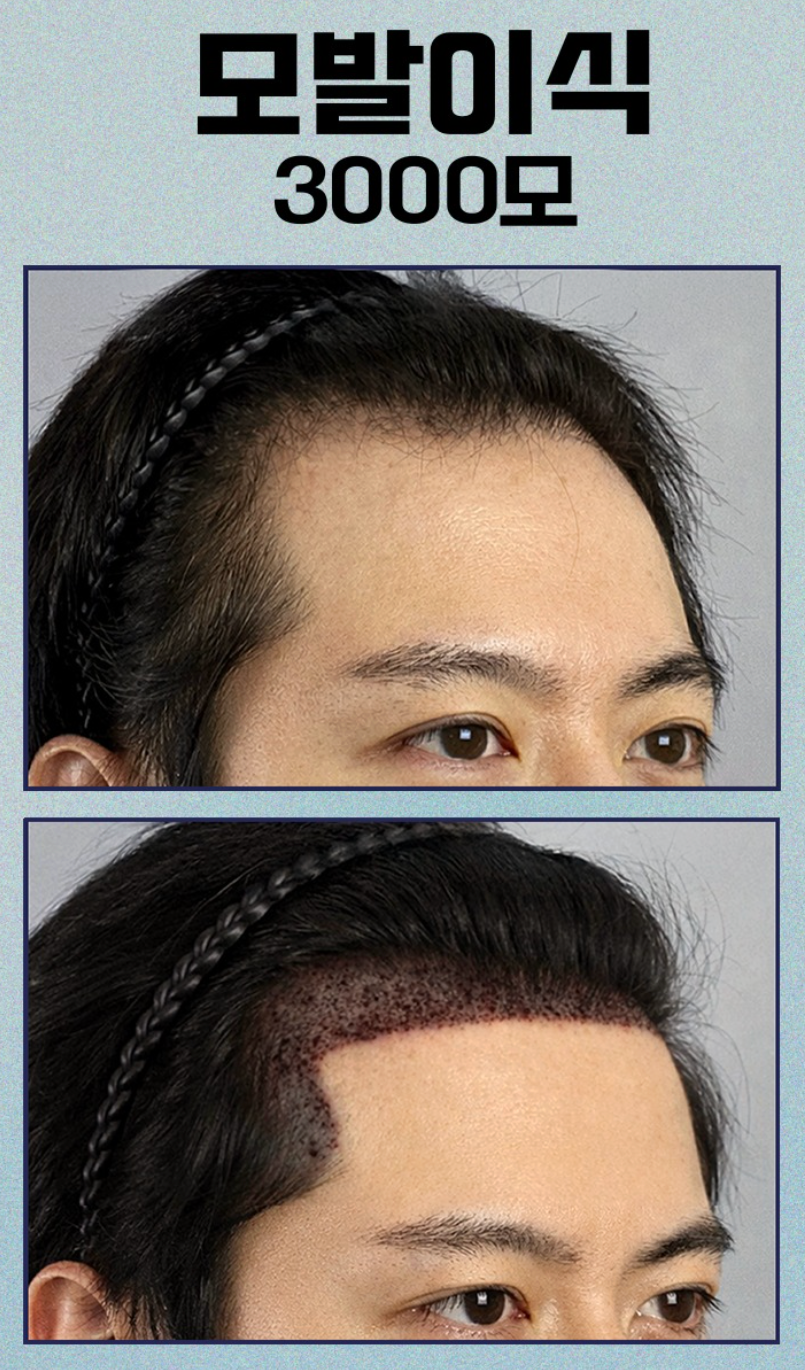
A hair transplant involving 3,000 hairs
is one of the more commonly performed
ranges of transplantation.
However, even with the same 3,000 hairs,
some people report high satisfaction,
while others may feel that the result is insufficient.
This is because the outcome is influenced not only by the number of hairs,
but also by the extent of hair loss,
hairline design,
the condition of the existing hair, and other factors.
Today, we will look at
how much coverage can be achieved
with a 3,000-hair hair transplant.
| Table of Contents |
|---|
| Hair Transplantation with 3,000 Hairs / Coverage Possible with 3,000 Hairs / Design Factors That Affect the Results / Points to Check During a Consultation |
Hair Transplantation with 3,000 Hairs
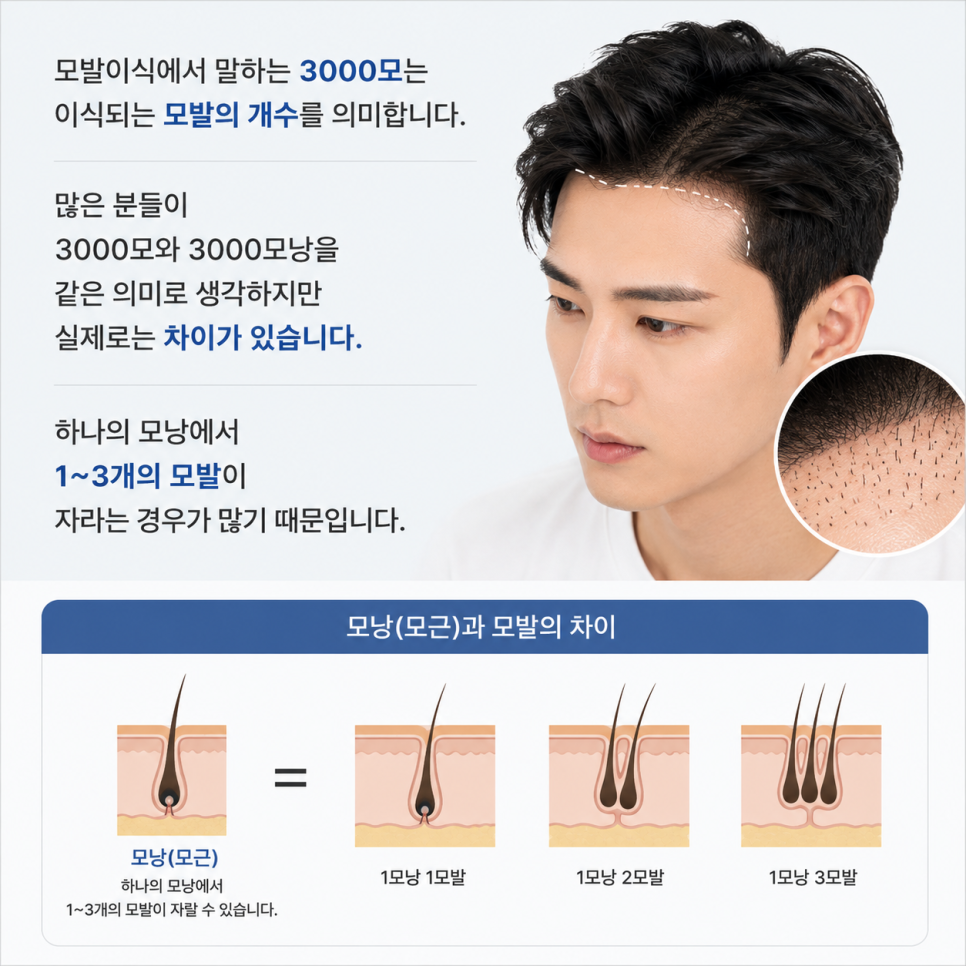
The 3,000 hairs referred to in hair transplantation
means the number of hairs being transplanted.
Many people think
that 3,000 hairs and 3,000 follicles
mean the same thing,
but in practice, there is a difference.
This is because
one follicle often produces
one to three hairs.
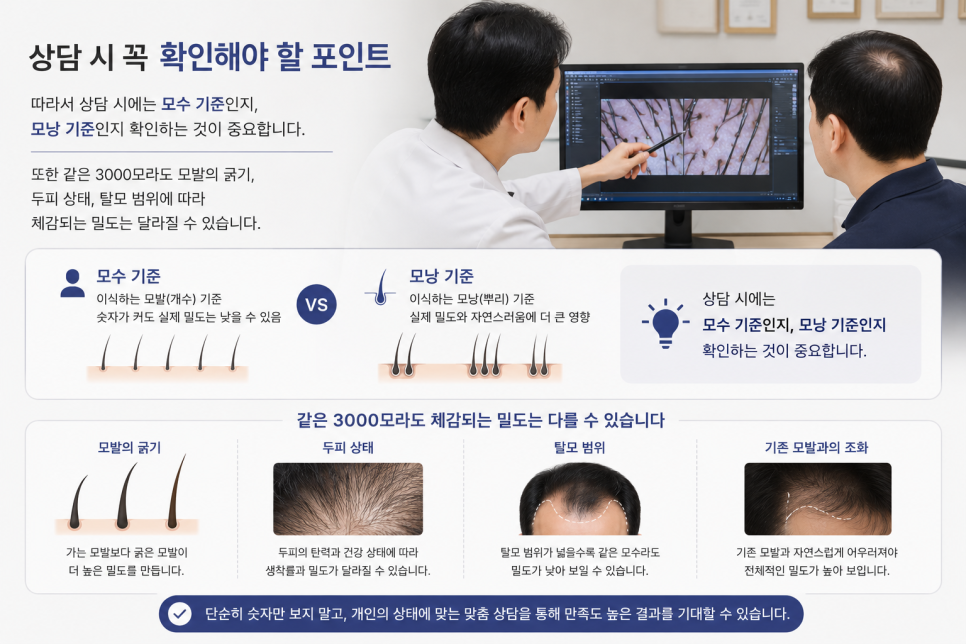
Therefore, during a consultation,
it is important to confirm whether the figure is based on the number of hairs
or the number of follicles.
In addition, even with the same 3,000 hairs,
the perceived density
may vary depending on the thickness of the hair,
the condition of the scalp,
and the extent of hair loss.
Coverage Possible with 3,000 Hairs
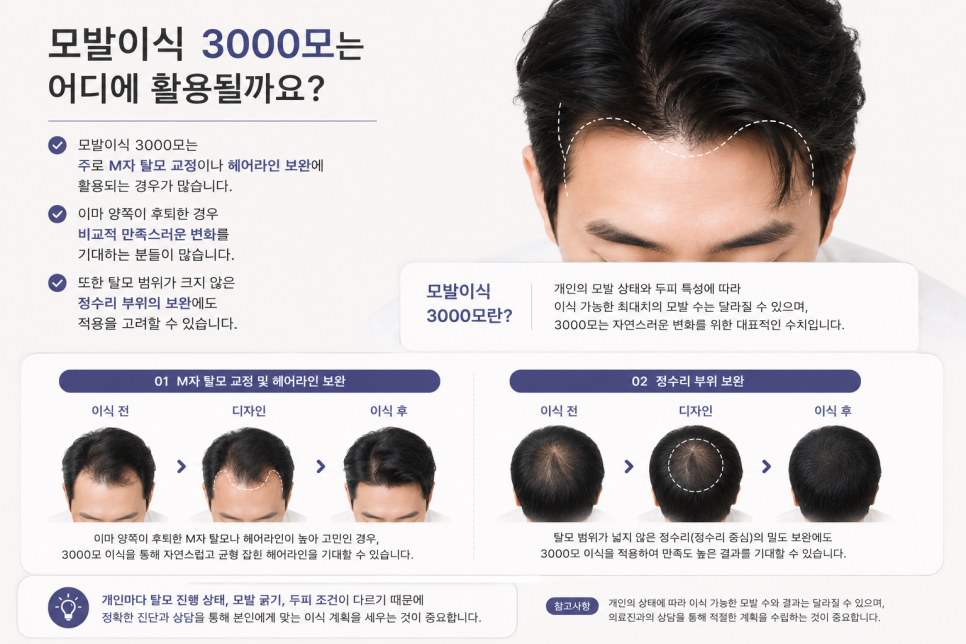
A 3,000-hair hair transplant
is often used to correct an M-shaped hairline
or to improve the hairline.
When both sides of the forehead have receded,
many people may expect
relatively satisfying changes.
It may also be considered
for improving the crown area
when the extent of hair loss is not large.
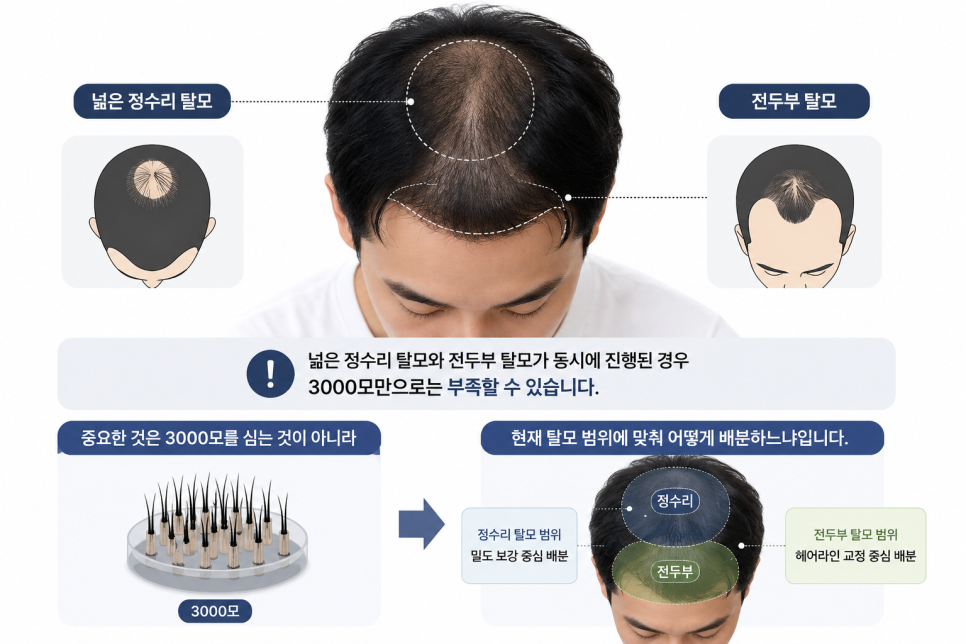
However, when extensive crown hair loss
and frontal hair loss
have progressed simultaneously,
3,000 hairs alone
may not be sufficient.
The important point
is not simply to implant 3,000 hairs,
but to determine how to distribute them
according to the current extent of hair loss.
Even with the same number of hairs,
the results may differ
depending on how they are placed.
- Design Factors That Affect the Results
The results of a hair transplant
are not determined simply
by using a large number of hairs.
Design is especially important
when correcting the hairline.
If the forehead is set excessively low
or a hairline that does not suit the shape of the face is created,
it may give an unnatural impression.

Conversely, a design that takes facial proportions into account
may help achieve
a more natural-looking result.
It is important to consider
not only the line seen from the front,
but also the line visible from the side.
- Points to Check During a Consultation
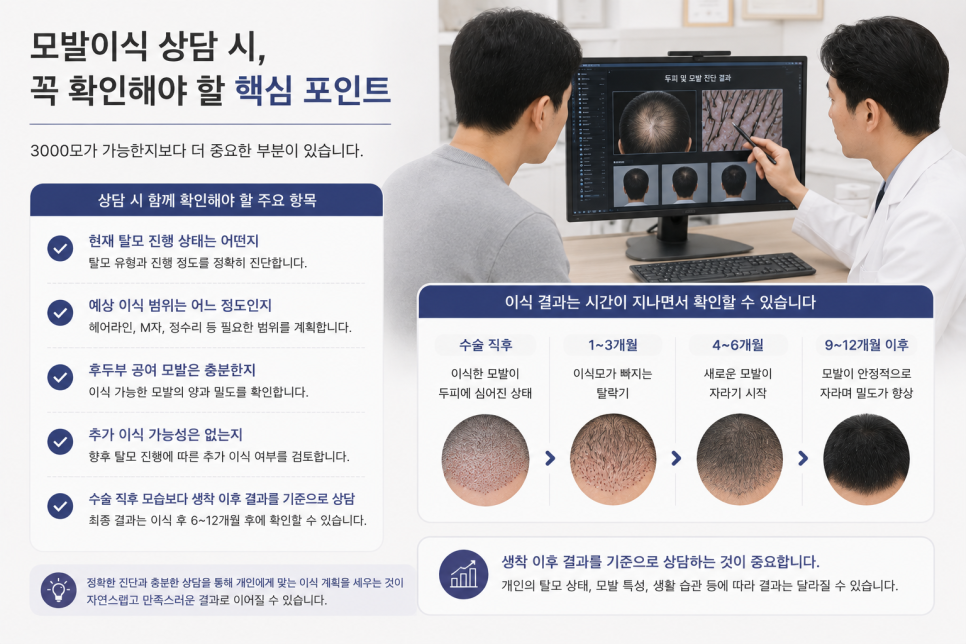
During a hair transplant consultation,
there are more important points
than whether 3,000 hairs are possible.
It is advisable to check together
how advanced the current hair loss is,
what the expected transplantation area is,
whether sufficient donor hair is available at the back of the head,
and whether additional transplantation may be possible.
In addition, the consultation should be based
on the result after graft survival and growth,
rather than on the appearance immediately after surgery.
A hair transplant
is not completed immediately after surgery.
Over time,
the transplanted hair goes through the processes of graft survival and growth.
Therefore, rather than comparing only the number of hairs,
creating a plan suited to the current condition
may help support a result with greater satisfaction.
↓↓↓ Related content you may also find helpful ↓↓↓
-Operating Hours-
| Weekdays: 10:00–19:00 (last registration at 18:30)<br>Saturdays: 10:00–16:00 (last registration at 15:30)<br>Public holidays / Wednesdays and Sundays: Closed regularly |
-Where to Inquire-
| ▶ Cheongdam OK Clinic |
|---|
| Consultation: 02-3446-7588<br>KakaoTalk inquiries |
-How to Get Here-