※ This article is content provided for medical information purposes.
This content is not subject to review under Article 56, Paragraph 2, and Article 57 of the Medical Service Act,
and is not a post intended for advertising purposes.
Hello,
I am Seong Hyeon-ju, director of 청담오케이의원.
| ▶ Full member of the Korean Society of Aesthetic Plastic Surgery (KACS) |
|---|
| ▶ Full member of the Korean Society for the Study of Obesity (KSSO) |
| ▶ Full member of the Korean Academy of Aesthetic Medicine and Body Contouring (KAAM) |
| ▶ Full member of the Korean Society of Liposuction Surgery (KSSL) |
| ▶ Full member of the Korean Society for Aesthetic Surgery (KSAS) |
One of the things people considering liposuction
are most curious about
is liposuction swelling.
After looking in the mirror following surgery,
some people may feel that they look more swollen than expected,
or become concerned because
their contours are not immediately visible.
However, liposuction swelling
is a natural part of the recovery process
that occurs in most patients.
Understanding the recovery timeline
can instead help reduce
unnecessary concerns.
| Table of Contents |
|---|
| Why does liposuction swelling occur? Changes 1 week after liposuction Changes 1 month after liposuction Changes 3 months after liposuction |
- Why Does Liposuction Swelling Occur?
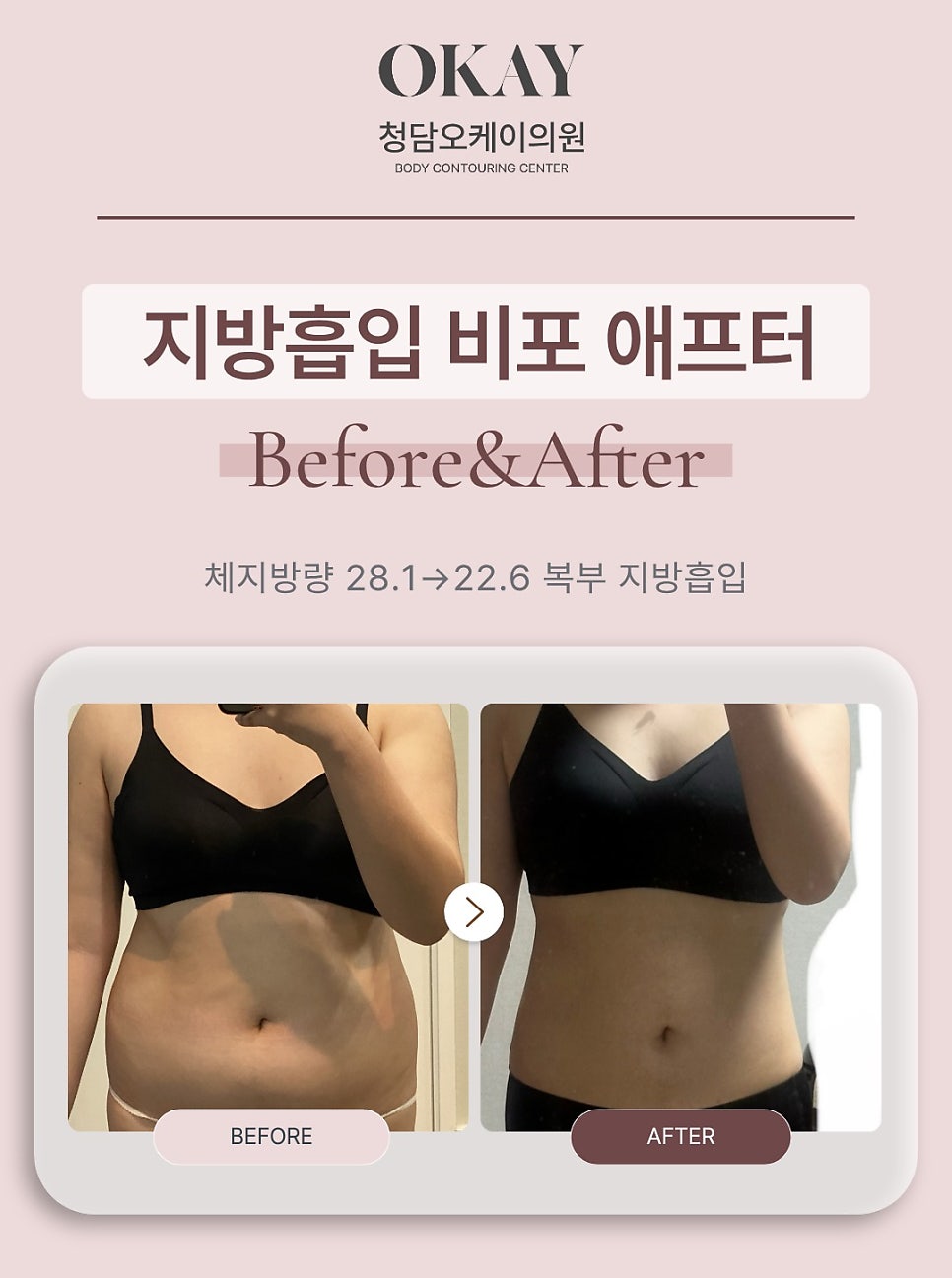
During the process of removing fat cells through liposuction,
some degree of irritation also occurs in the surrounding tissue.
To repair damaged tissue,
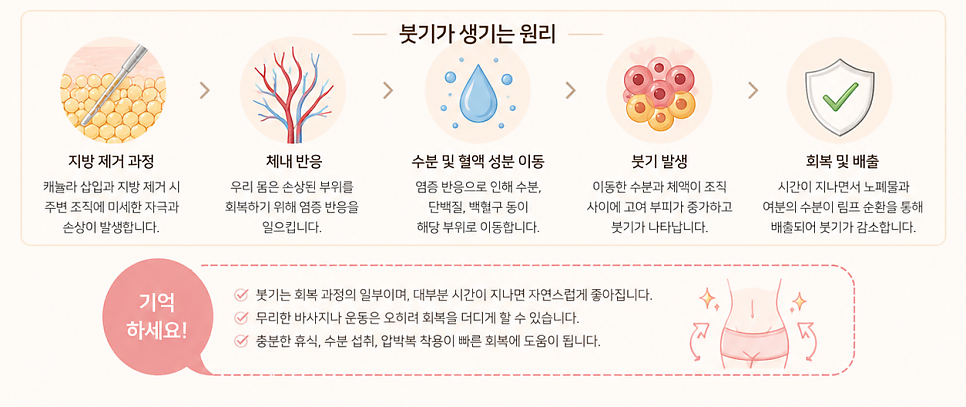
the body sends water and blood components
to the affected area.
This process is what causes
liposuction swelling.
Therefore, the presence of swelling alone
does not mean that
the surgical result is poor.
It is more appropriate to view it
as part of the normal recovery process.
In particular, areas with a broad treatment range,
such as the thighs or abdomen,
may have liposuction swelling that lasts relatively longer.
- Changes 1 Week After Liposuction
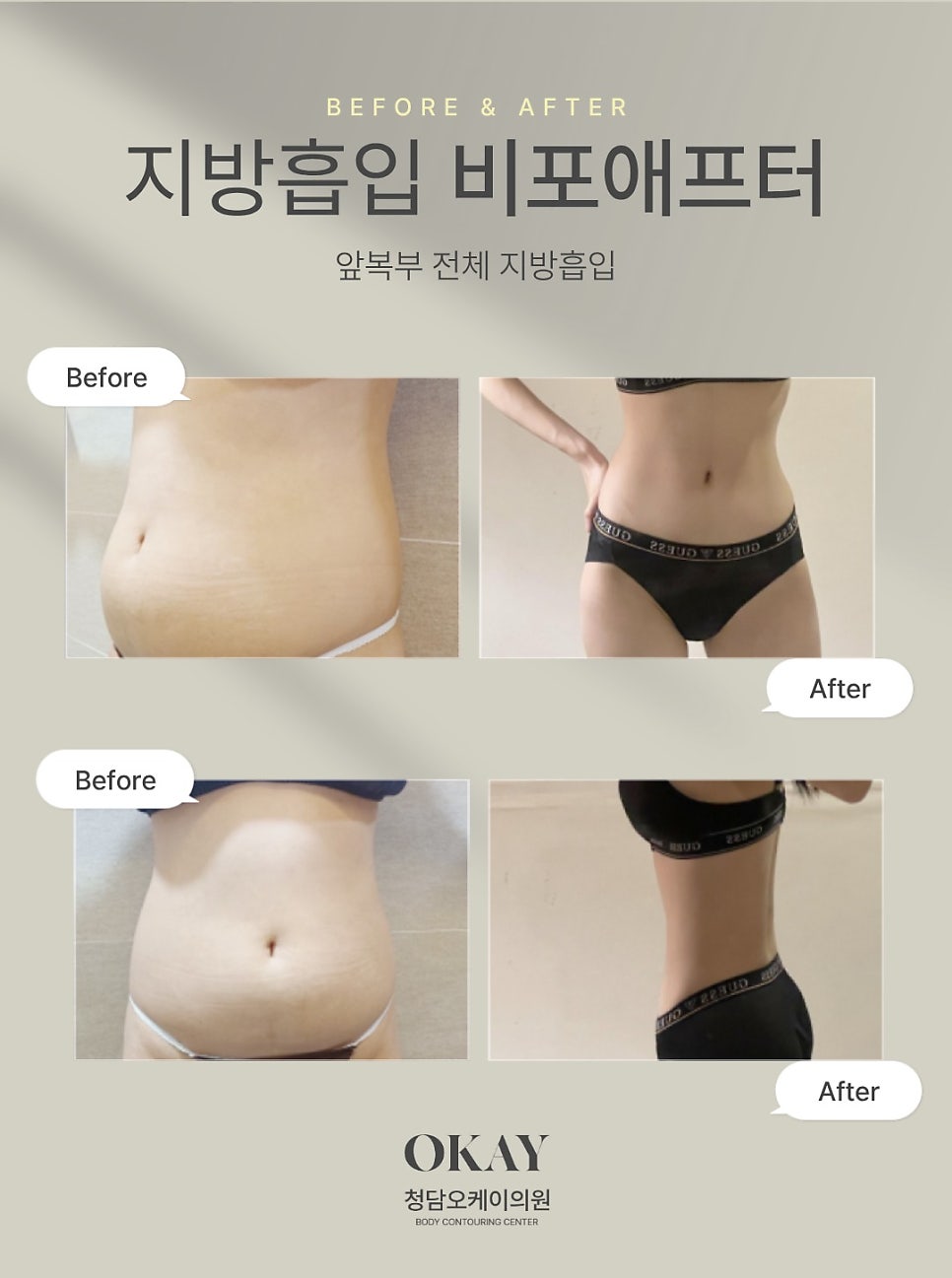
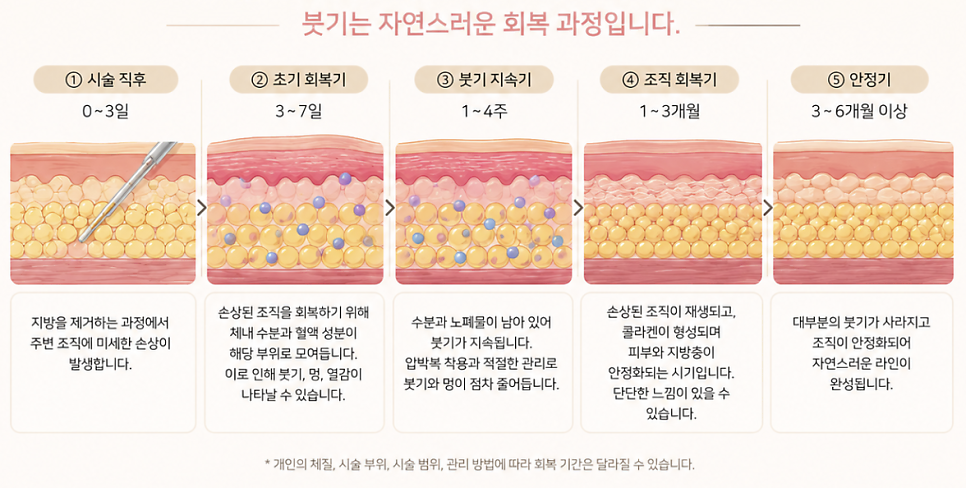
About one week after surgery
is when liposuction swelling is most noticeable.
Depending on the area,
some people may feel that it looks larger
than before surgery.
Bruising may also appear,
along with a pulling or stiff sensation.
During this period, wearing a compression garment
is often an important part of care.
This is because it may help the tissue settle stably
and reduce unnecessary swelling.
However, recovery speed varies from person to person,
so caution is needed when simply comparing yourself
with other people's experiences.
- Changes 1 Month After Liposuction
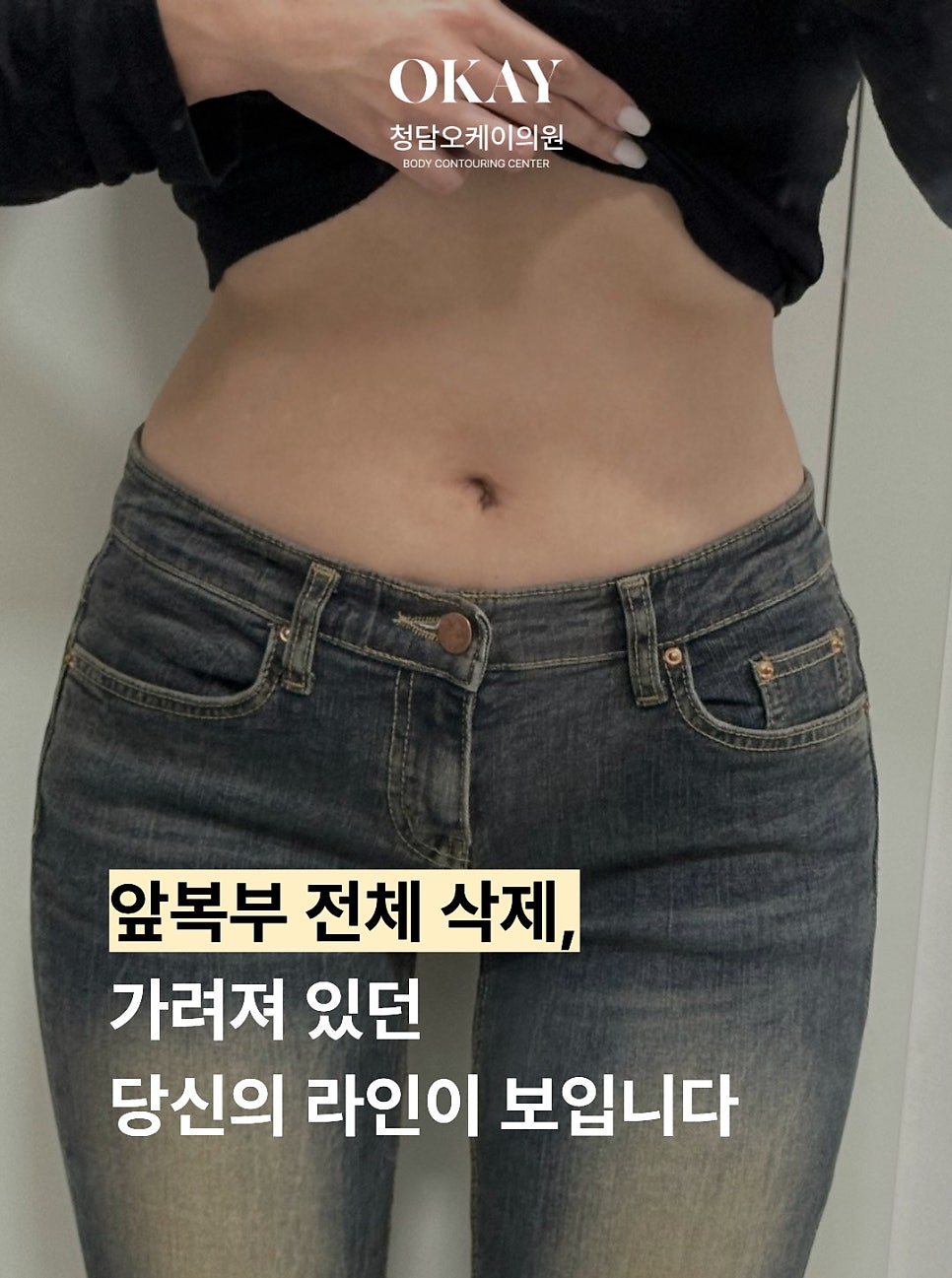
After about one month,
a significant portion of the initial liposuction swelling
has often subsided.
Some people notice that their clothes fit differently,
and changes in their contours
begin to appear gradually.
However, this is not yet the end of recovery.
The area beneath the skin may feel firm,
or an uneven sensation
may remain.
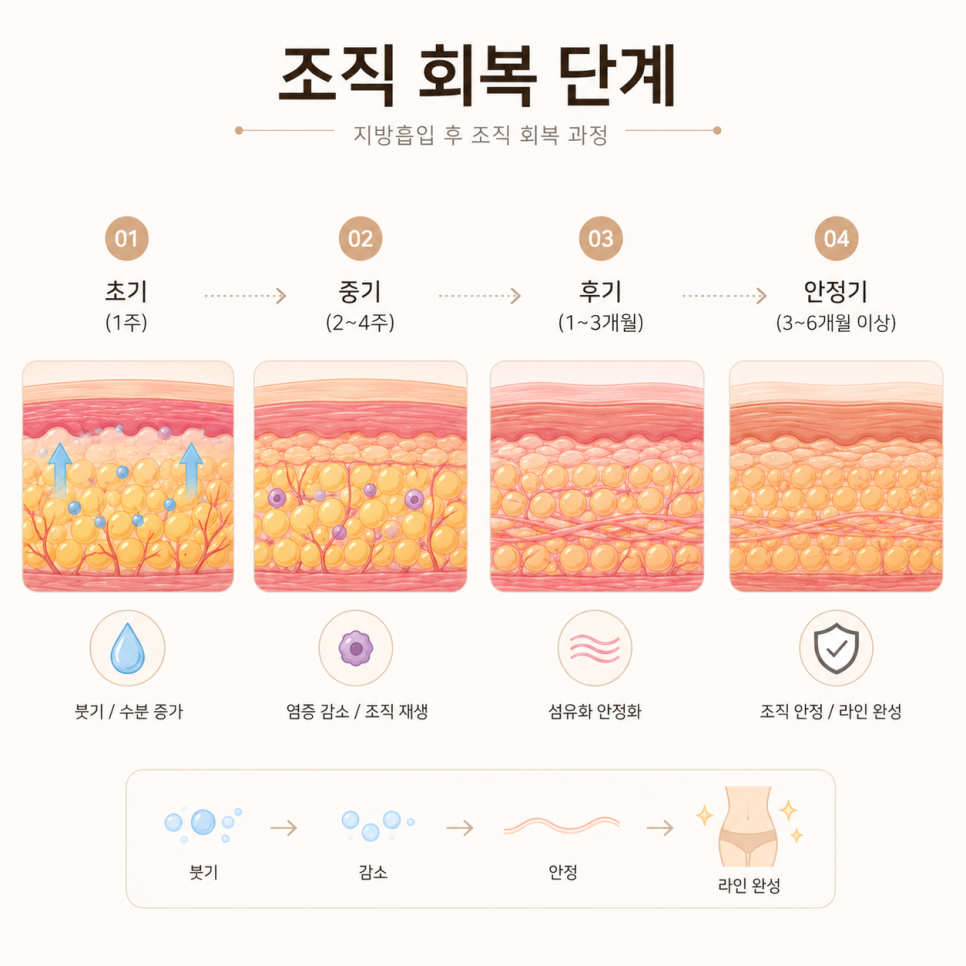
This is often associated with
a fibrotic response that occurs during recovery.
In most cases, it gradually becomes softer
over time.
Therefore, it is somewhat early
to judge the final result
based only on how things look at one month.
Some liposuction swelling may still remain,
so changes in the contours
may continue.
- Changes 3 Months After Liposuction
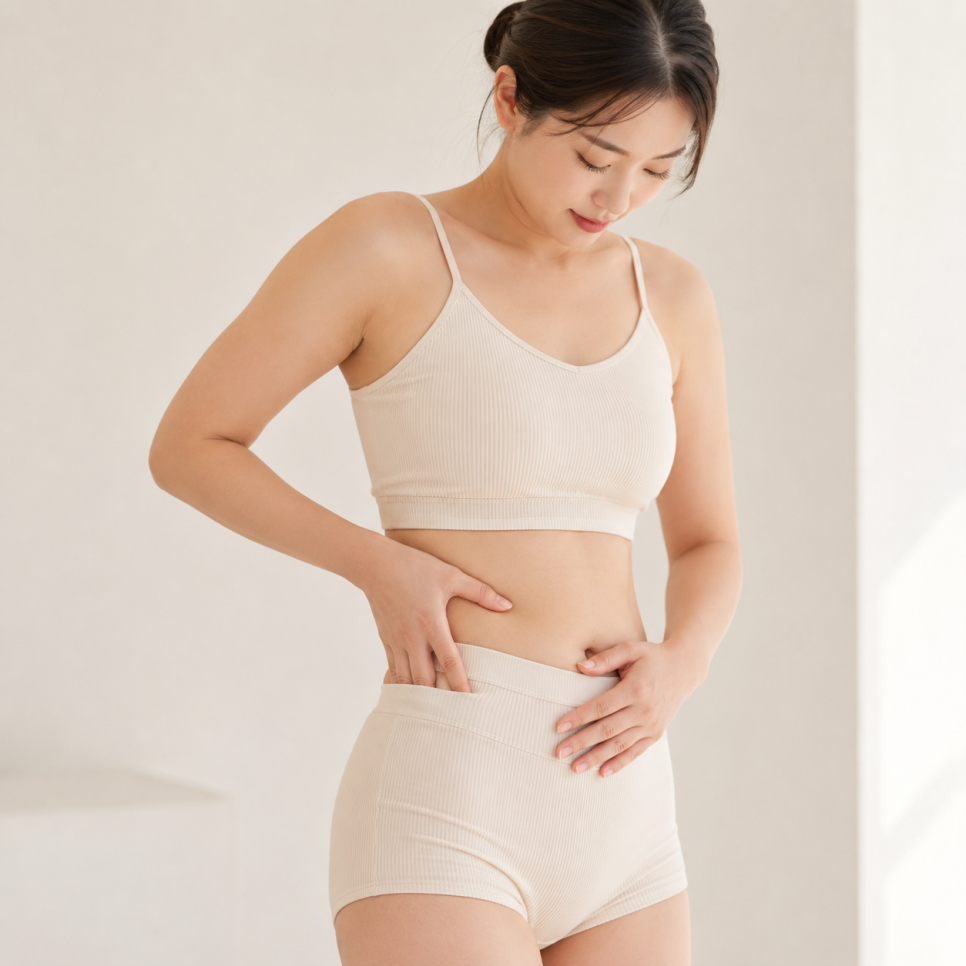
After about three months,
most liposuction swelling
has subsided considerably.
Compared with immediately after surgery,
the contours often look more naturally defined,
and changes in body shape
are more clearly visible.
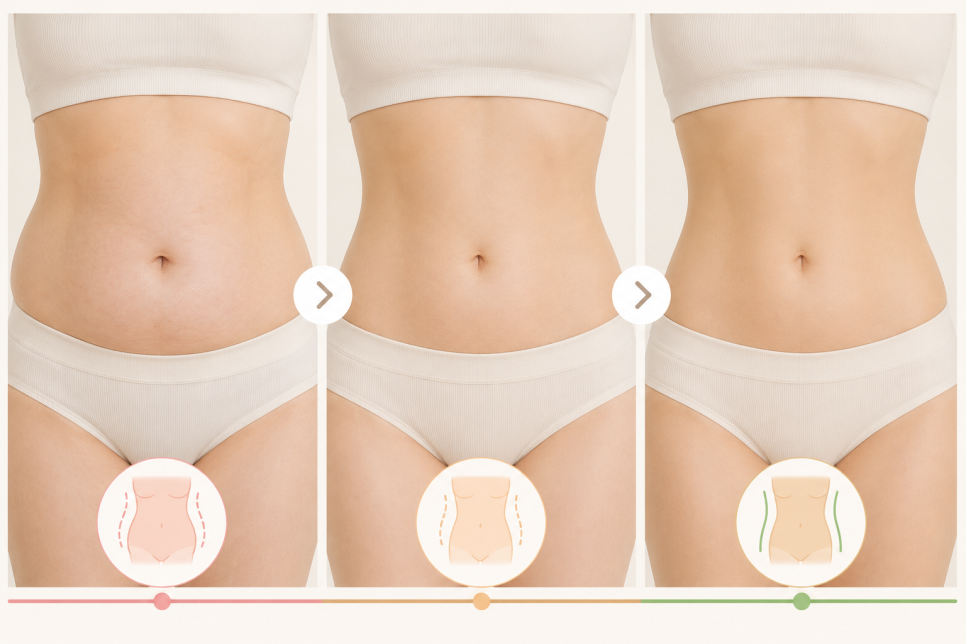
However, this does not mean that
all liposuction swelling has completely disappeared.
Depending on individual characteristics,
the treatment area,
and recovery speed,
it may continue for more than six months.
In particular, areas such as the inner thighs
and around the knees
where circulation is relatively slower
may take longer to recover.
Ultimately, liposuction swelling
does not indicate that the surgery was unsuccessful;
it is a natural change that appears
as the body recovers.
You can observe gradual changes
as you pass the one-week,
one-month,
and three-month milestones.
Therefore, rather than becoming excessively anxious
about liposuction swelling,
it is important to understand the recovery process
and allow sufficient time to observe the changes.
↓↓↓ Related Content ↓↓↓
-Operating Hours-
| Weekdays 10:00–19:00 (last registration at 18:30)Saturdays 10:00–16:00 (last registration at 15:30)Public holidays / Wednesdays and Sundays: Closed regularly |
-Contact-
| ▶ 청담오케이의원 |
|---|
| Consultation phone: 02-3446-7588 KakaoTalk inquiries |
-Location-