※ This post is content provided for medical information purposes.
Please note that it is not subject to review under Article 56, Paragraph 2 and Article 57 of the Medical Service Act, and that this post is not intended for advertising purposes.
Hello,
I am Seong Hyeon-ju, director of 청담오케이의원.

| ▶ Full Member of the Korean Academy of Aesthetic Plastic Surgery (KACS) |
|---|
| ▶ Full Member of the Korean Society for the Study of Obesity (KSSO) |
| ▶ Full Member of the Korean Association for the Advancement of Aesthetic Medicine (KAAM) |
| ▶ Full Member of the Korean Society of Liposuction Surgery (KSSL) |
| ▶ Full Member of the Korean Society of Aesthetic Surgery (KSAS) |
Many people consider hairline hair transplantation because of a wide forehead or an M-shaped hairline.
Although there are many reviews and before-and-after photos online, many people still worry about whether they can achieve natural-looking results that suit their own facial shape.
In practice, hairline hair transplantation is not a procedure in which simply transplanting a large number of hairs leads to higher satisfaction.
This is because facial proportions, hair direction, the condition of the donor area, and the possibility of future hair-loss progression all need to be considered together.
Today, if you are planning hairline hair transplantation, I will introduce five criteria you should be sure to check to reduce the risk of failure.
| Table of Contents |
|---|
| 1. Check whether the hairline design suits your facial shape 2. Check whether the donor hair condition has been thoroughly assessed 3. Check whether hair direction and density are being considered 4. Check whether hair loss is currently progressing, along with the recovery process and care plan |
- Check whether the hairline design suits your facial shape
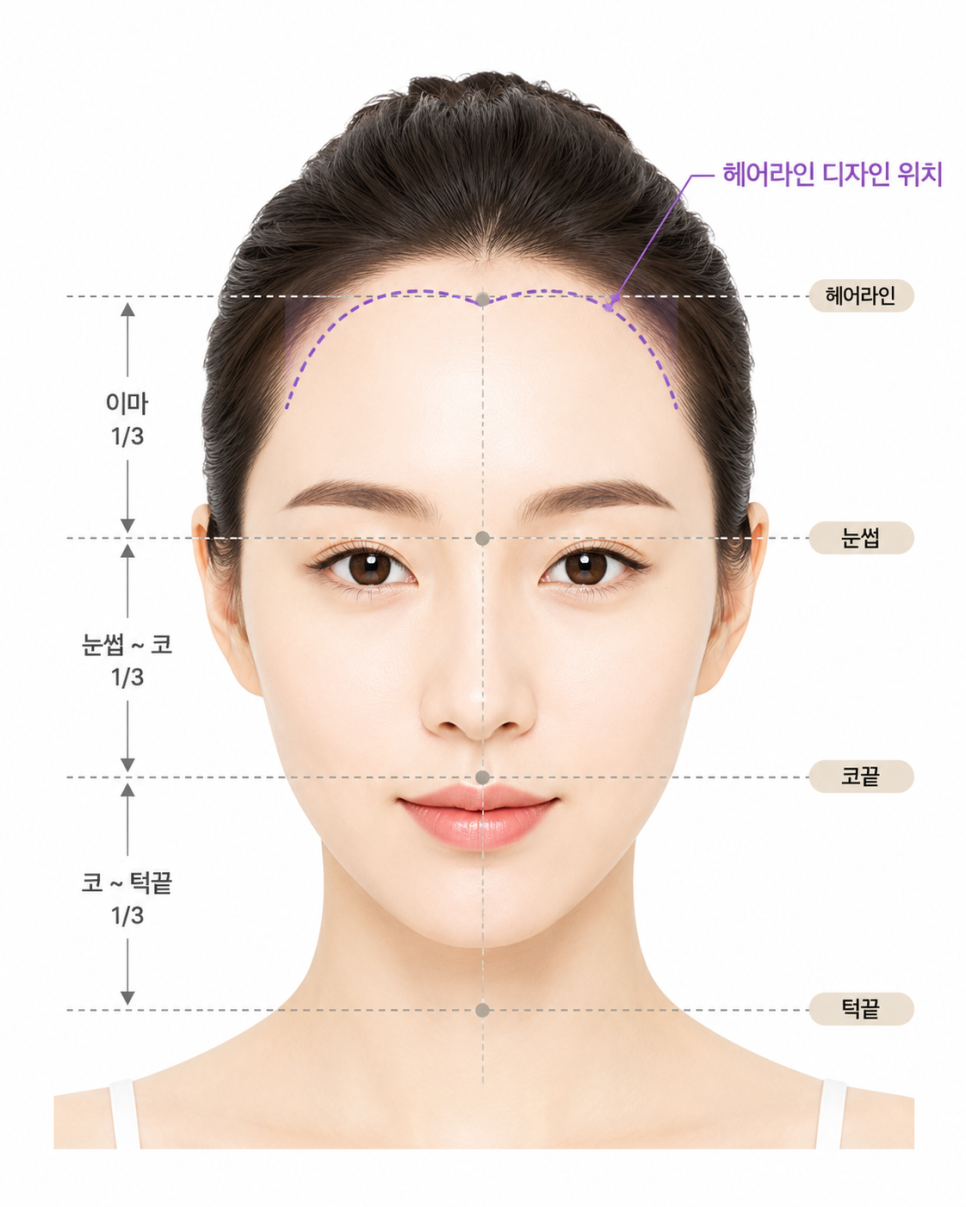
When many people think about hairline hair transplantation, they first think about making the forehead as narrow as possible.
However, what matters is not a low hairline, but proportions that harmonize with the face.
The width of the forehead, the width of the cheekbones, the jawline, and left-right symmetry all need to be considered together to achieve a more natural appearance.
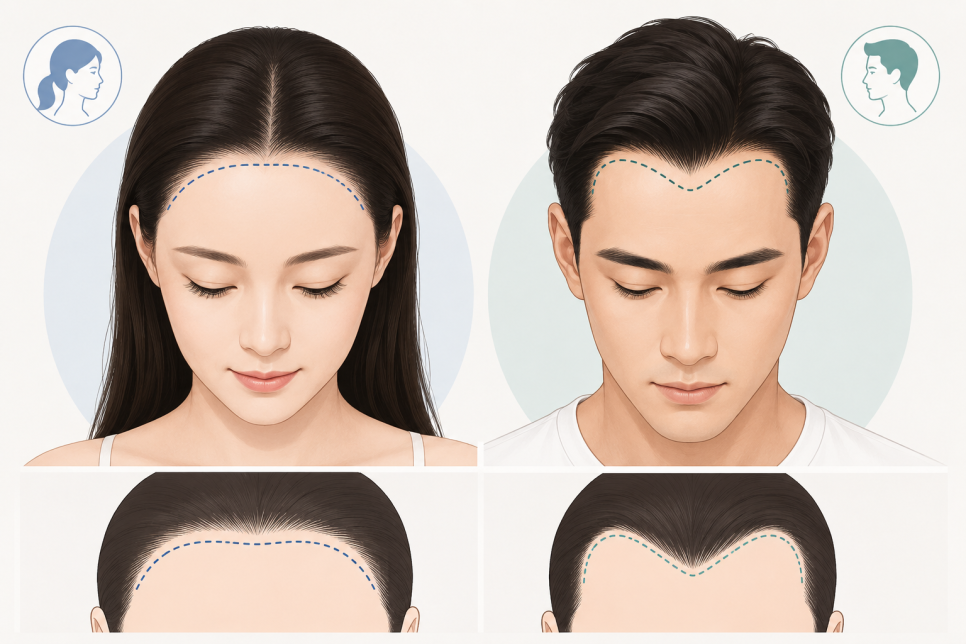
In particular, women often require a design with rounded, gentle curves, while men often require a design that takes the existing M-shaped hairline into account.
Because everyone has a different facial shape, the same design will not suit everyone.
- Check whether the donor hair condition has been thoroughly assessed
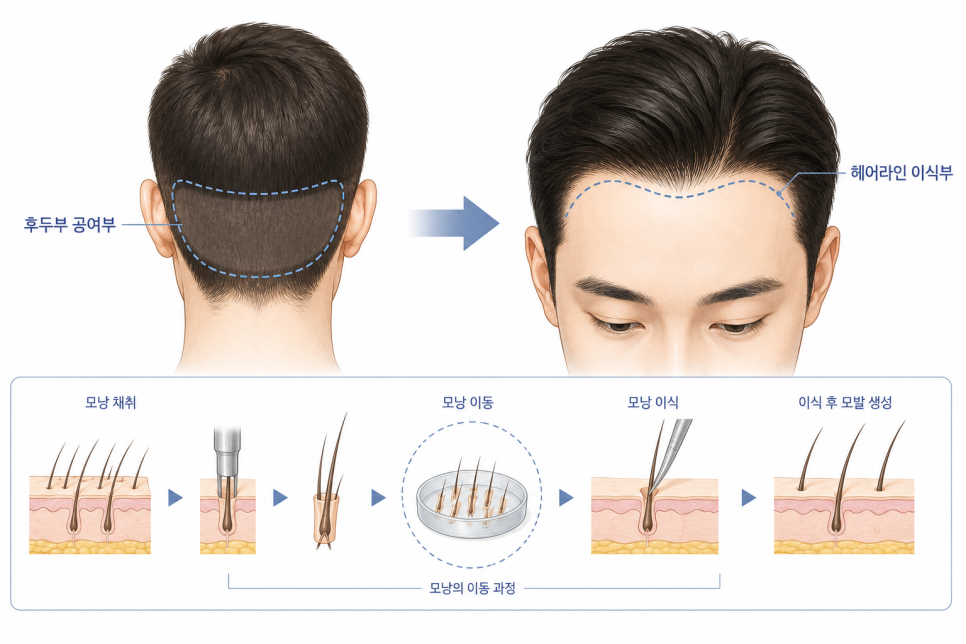
Hairline hair transplantation generally uses hair from the donor area at the back of the head.
Therefore, it is also important to check whether the donor area has sufficient hair density and thickness.
The amount of hair that can be used may vary depending on the condition of the donor area, and the transplantation plan may need to be adjusted accordingly.
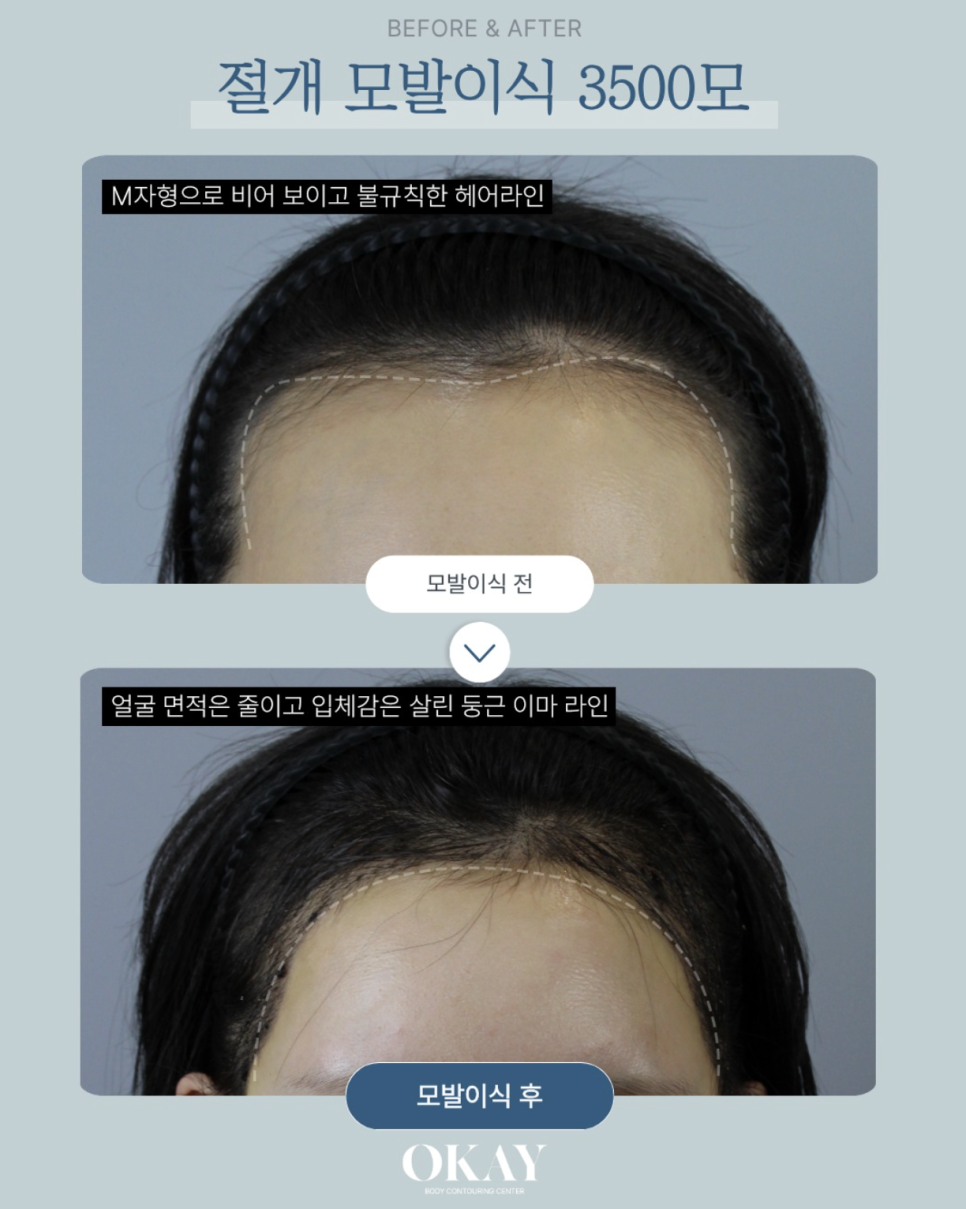
Rather than planning an excessive amount, it is helpful to receive a thorough explanation of the range appropriate for your current condition.
- Check whether hair direction and density are being considered
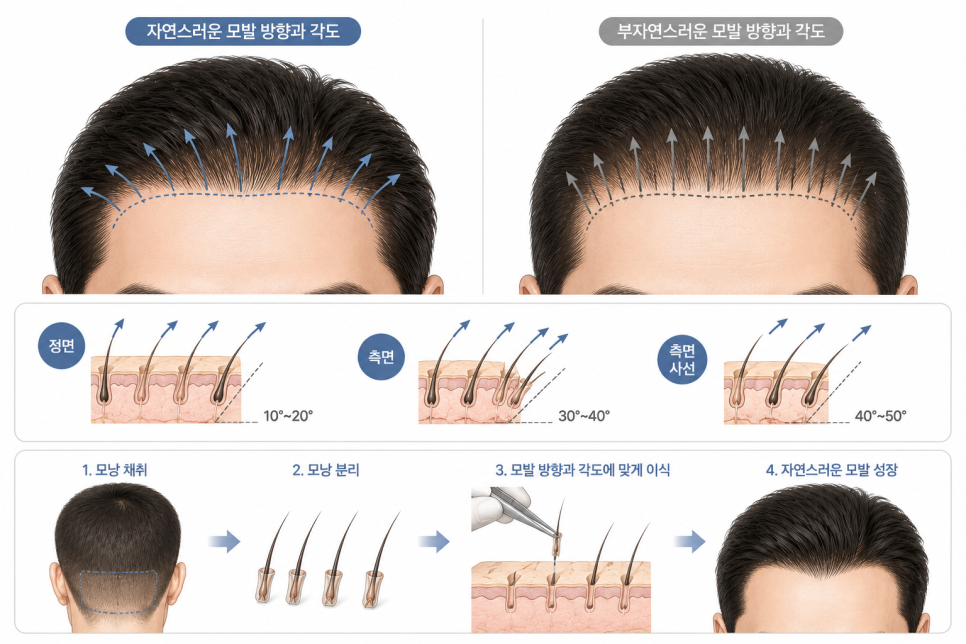
For natural-looking hairline hair transplantation, direction and angle are more important than the number of hairs transplanted.
Because the frontal hair naturally flows along the face,
it is necessary to consider the direction of the existing hair during transplantation as well.
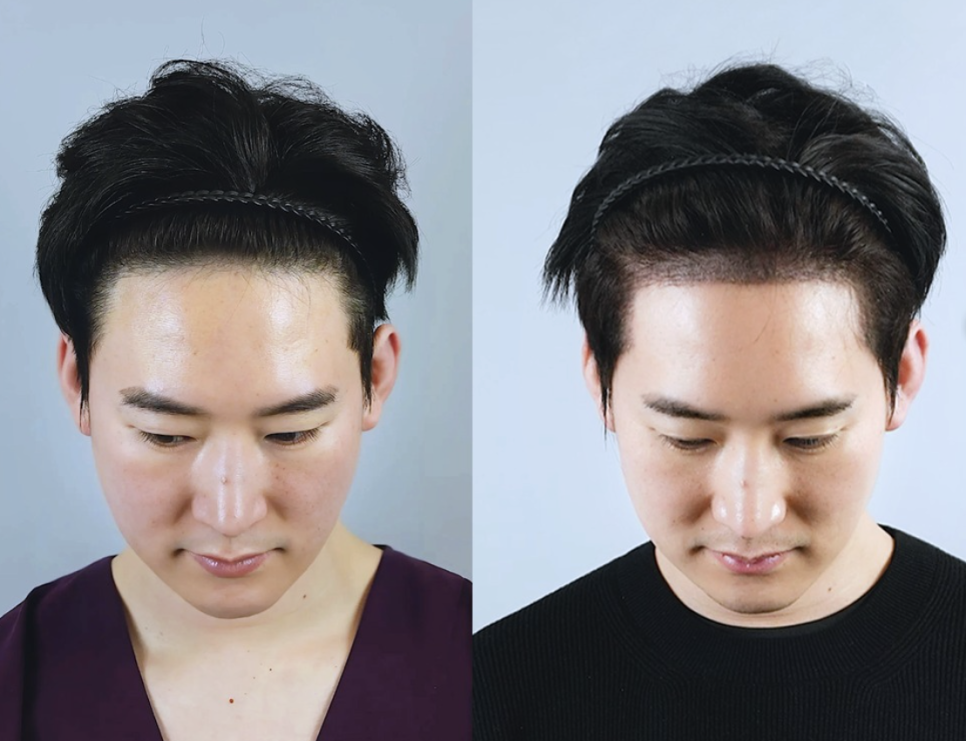
In addition, it is often necessary to consider a design in which the front has a relatively finer appearance, with the density continuing toward the back.
This type of design can help create a natural impression not only from the front but also from the side.
- Check whether hair loss is currently progressing, along with the recovery process and care plan
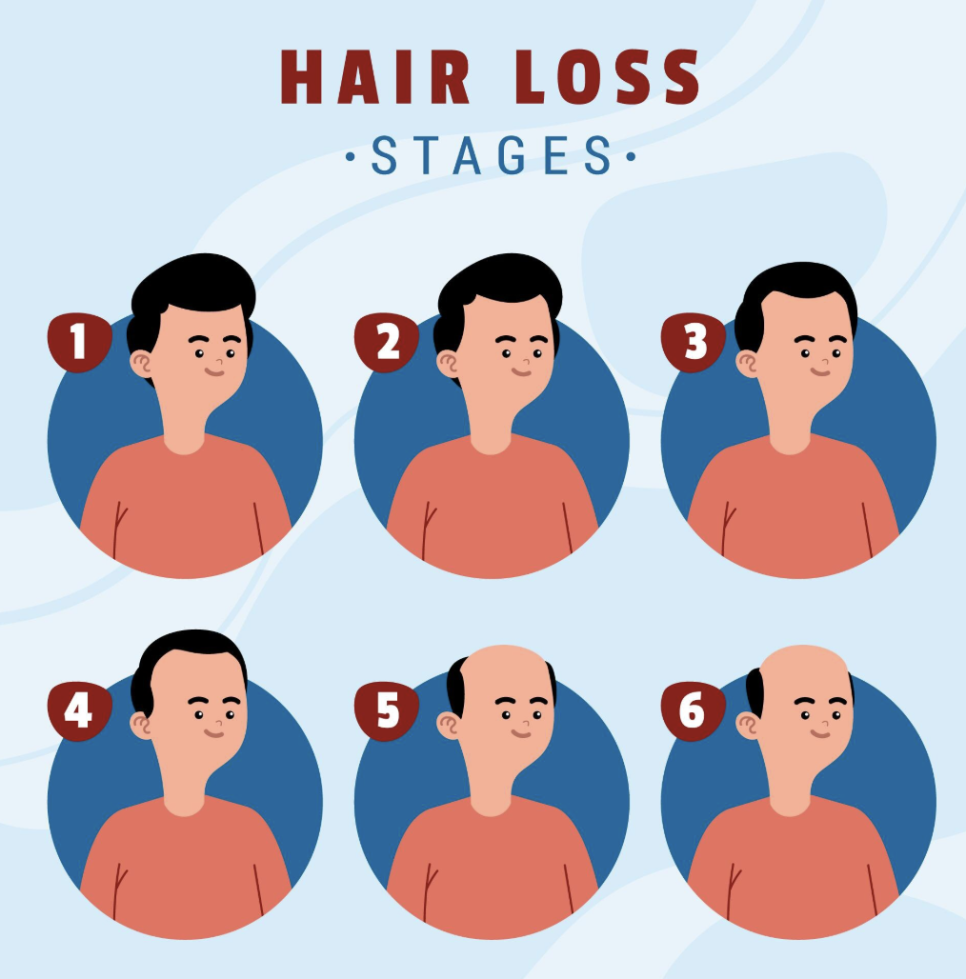
Not all cases of concern about the hairline have the same cause.
Some people naturally have a wide forehead, while in other cases the hairline has changed as hair loss has progressed.
If hair loss is still progressing, a plan that considers not only the current condition but also future changes may be necessary.
Therefore, when planning hairline hair transplantation, it is important to assess the condition of the scalp and hair together.
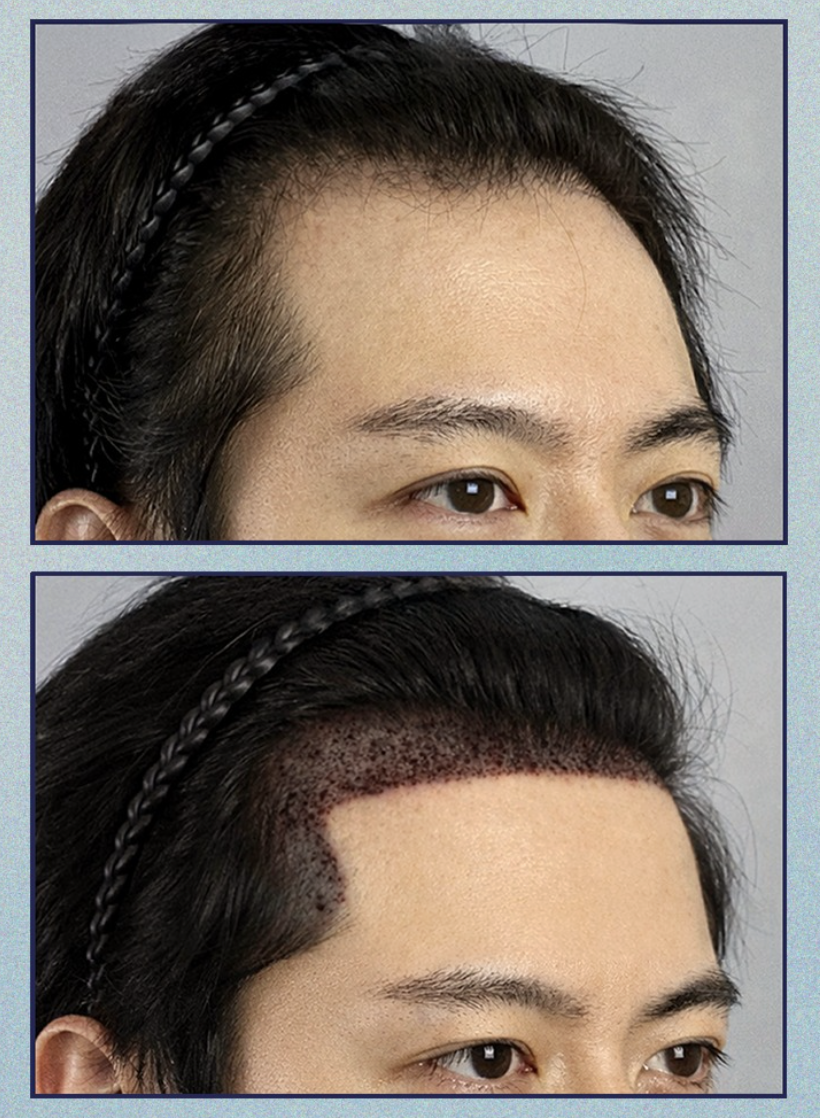
The recovery process is just as important as the surgery itself.
After hairline hair transplantation, swelling or flaking may occur depending on the individual.
A temporary shedding phenomenon in which the transplanted hair falls out, known as Shock Loss, has also been reported in some cases.
This may be explained as part of the process of preparing for a new growth cycle, but recovery speed and progress may vary from person to person.
It is also important to receive sufficient guidance on how to wash your face, when to exercise, alcohol consumption and smoking, and scalp-care methods.
Understanding and preparing for the recovery process can help reduce unnecessary concerns.
Because everyone has a different facial shape and hair condition,
rather than making a decision based only on reviews, it is important to objectively assess your own condition and make a decision based on a thorough explanation.
If you have any questions, consult with a professional to check the current condition of your hair and scalp and discuss which approach may be suitable for you.
↓↓↓ Related content you may find helpful ↓↓↓
-Operating Hours-
| Weekdays 10:00–19:00 (受付 closes at 18:30) Saturdays 10:00–16:00 (受付 closes at 15:30) Public holidays / Wednesdays and Sundays: Closed regularly |
-Contact Information-
| ▶ 청담오케이의원 |
|---|
| Consultation phone: 02-3446-7588 KakaoTalk inquiries |
-Location-