※ This post is content provided for medical information purposes.
It does not fall under the scope of review pursuant to Article 56, Paragraph 2 and Article 57 of the Medical Service Act,
and we would like to inform you that it is not a post intended for advertising purposes.
Hello,
I am Seong Hyeon-ju, director of Cheongdam OK Clinic.
| ▶ Full member of the Korean Association of Cosmetic Plastic Surgery (KACS) |
|---|
| ▶ Full member of the Korean Society for the Study of Obesity (KSSO) |
| ▶ Full member of the Korean Academy of Aesthetic and Metabolic Medicine (KAAM) |
| ▶ Full member of the Korean Society of Liposuction Surgery (KSSL) |
| ▶ Full member of the Korean Society of Aesthetic Surgery (KSAS) |
When searching for 3,000-hair transplants,
people often wonder:
'Would 3,000 hairs be enough?'
'Would 5,000 hairs look fuller?'
However, it is difficult to evaluate the results of a hair transplant based solely on the number of hairs transplanted.
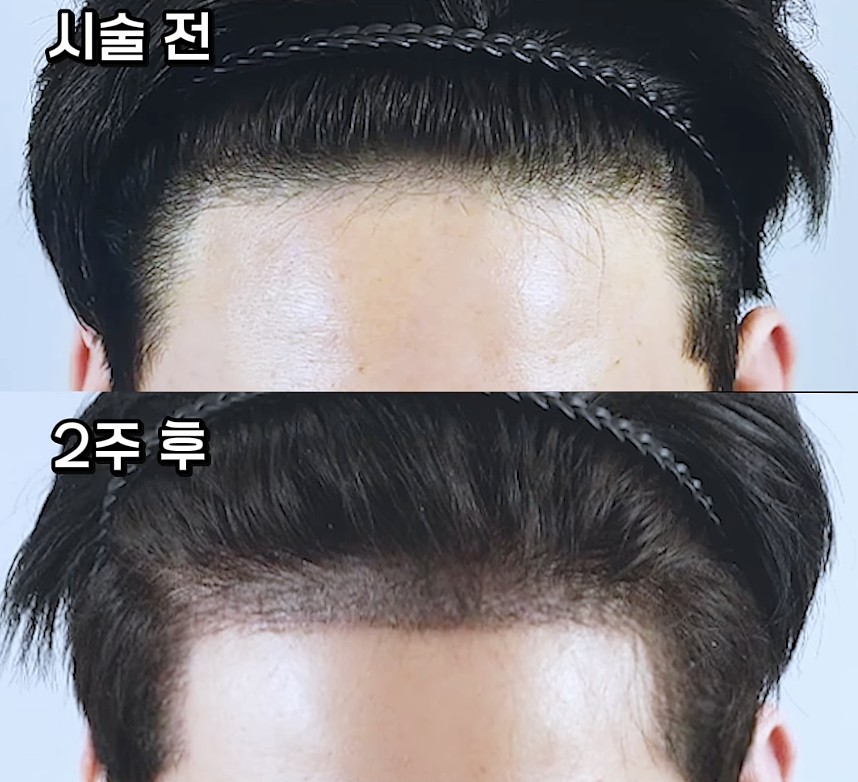
Even with the same 3,000 hairs,
the finished impression may vary depending on
where they are placed, at what density,
and in which direction they are transplanted.
Today, we will look together at the points that should be checked when planning a 3,000-hair transplant.
| TABLE OF CONTENTS |
|---|
| 1. What area can be covered with 3,000 transplanted hairs? 2. Design is more important than the number 3,000. 3. In these cases, 3,000 hairs may not be appropriate. 4. Points to check for a natural-looking result |
- What area can be covered with 3,000 transplanted hairs?
A 3,000-hair transplant is considered a relatively large amount.
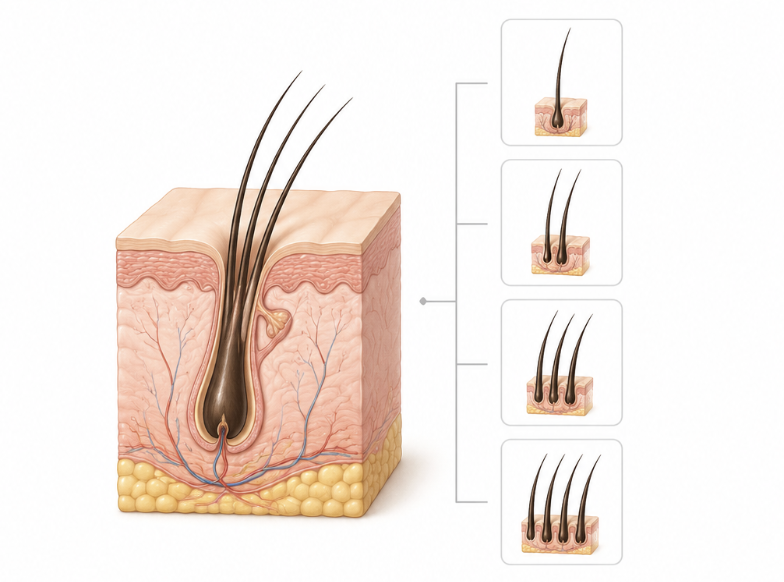
However, '3,000 hairs' refers to the number of hairs,
not the number of follicular units.
Because a single follicular unit
can contain 1 to 4 hairs,
the actual number of follicular units needed
may vary from person to person.
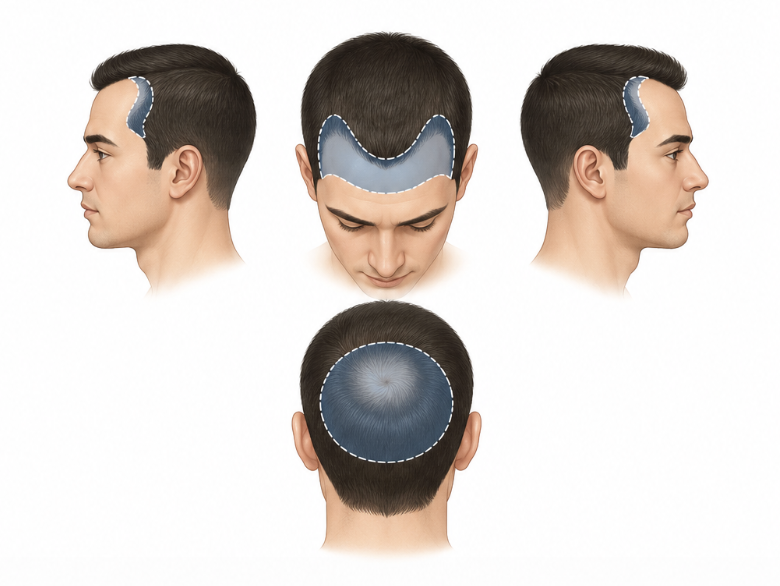
In general, it may be used for
M-shaped hair loss,
hairline correction,
part of the crown,
or when two areas are considered together.
However, even with the same 3,000 hairs,
the area that can be treated may differ depending on
the extent of hair loss,
the density of existing hair,
and the condition of the donor area.
- Design is more important than the number 3,000.
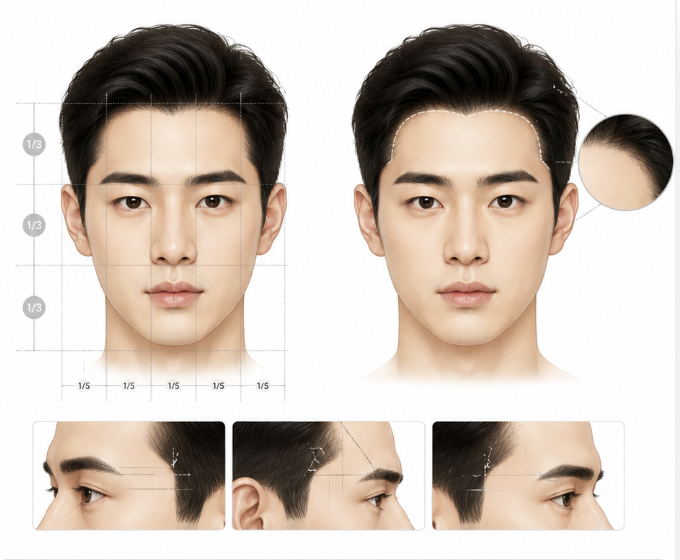
Many people first want to know,
'How many hairs should be transplanted?'
However, medical professionals first assess
the current extent of hair loss,
facial proportions,
as well as the hairline,
hair thickness,
and the direction in which the hair grows.
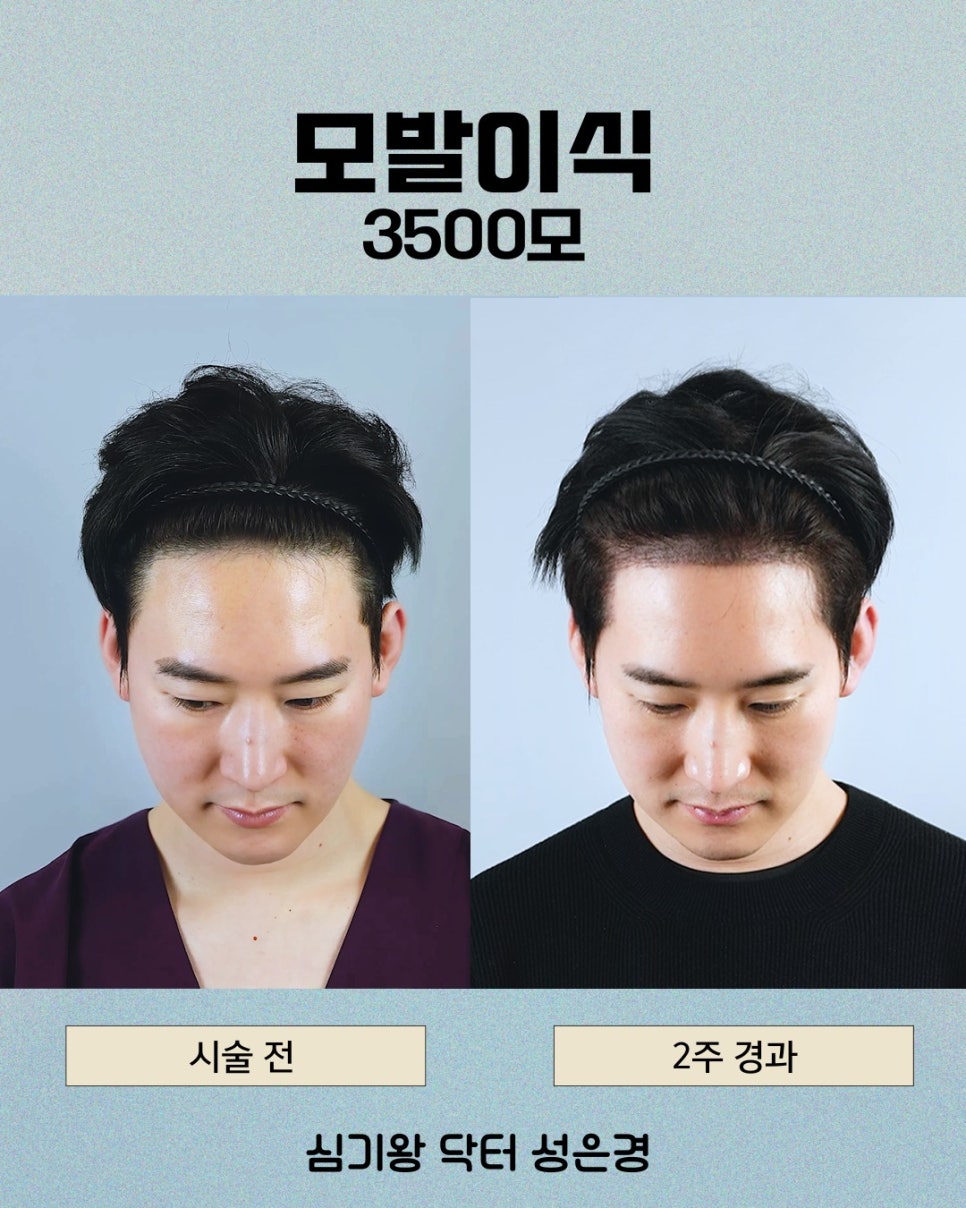
Even with the same 3,000 hairs,
the density and overall impression may differ
depending on whether they are focused only on the hairline
or distributed as far as the crown.
If the hairline is made excessively low
or the ongoing progression of hair loss is not taken into account,
additional treatment planning may be needed later.
Therefore, it is important to determine the required number of hairs
as part of the overall design process.
- In these cases, 3,000 hairs may not be appropriate.
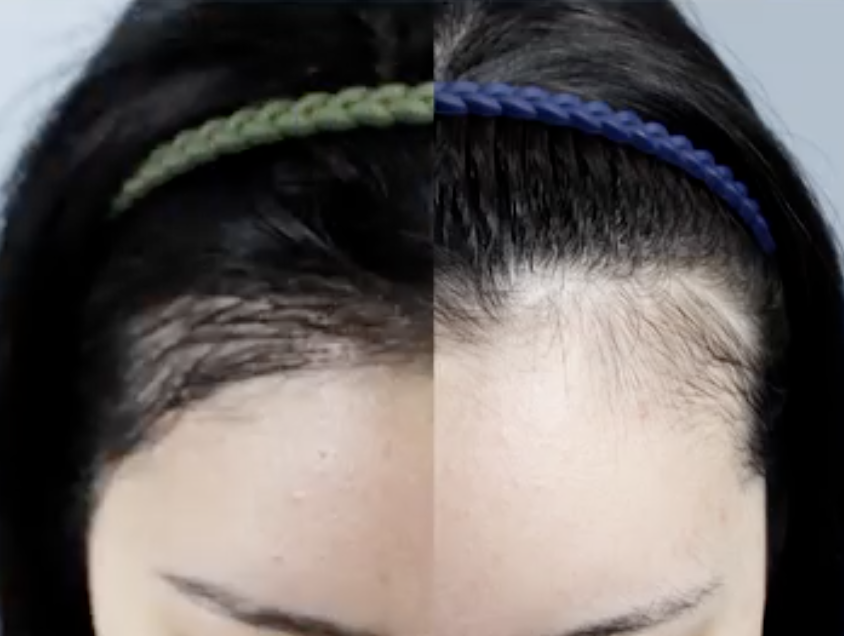
A 3,000-hair transplant
is not appropriate for everyone.
If there is not enough hair in the donor area,
if hair loss is still progressing,
or if the treatment area is very extensive,
other plans may also be considered.
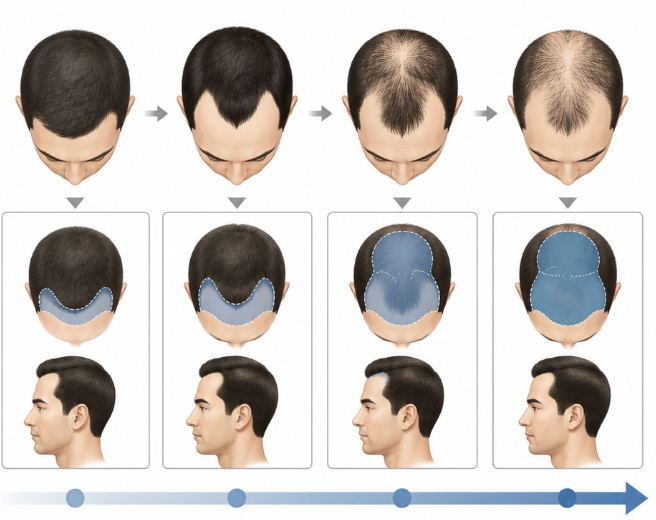
Conversely,
if the area of hair loss is not extensive
but an unnecessarily large number of hairs is planned,
there is a possibility that the donor area may be used unnecessarily.
Everyone has a different pattern of hair loss.
Rather than using more hairs than necessary,
it is important to create a plan
that suits the current condition.
- Points to check for a natural-looking result
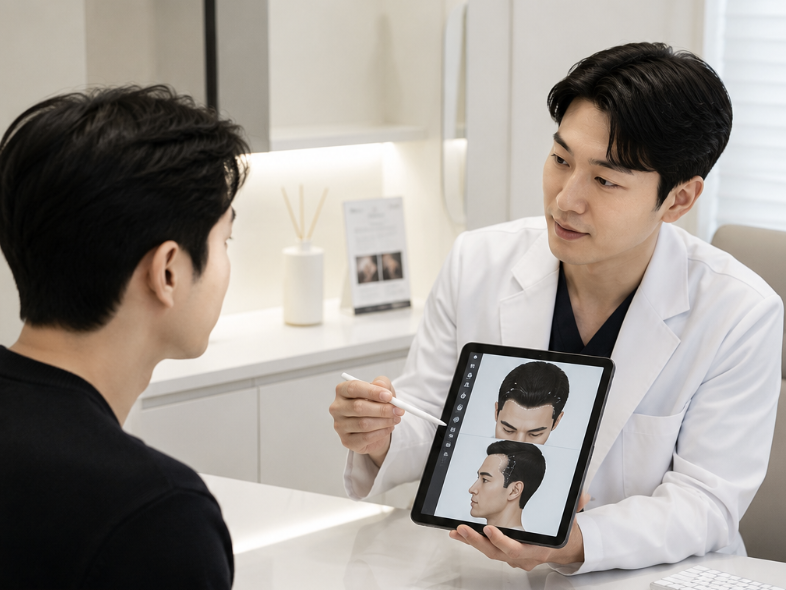
A hair transplant is not simply
a process of filling in hair.
The direction, angle, and density of hair growth,
the curve of the hairline,
and the possibility of future hair loss progression
must all be considered together.
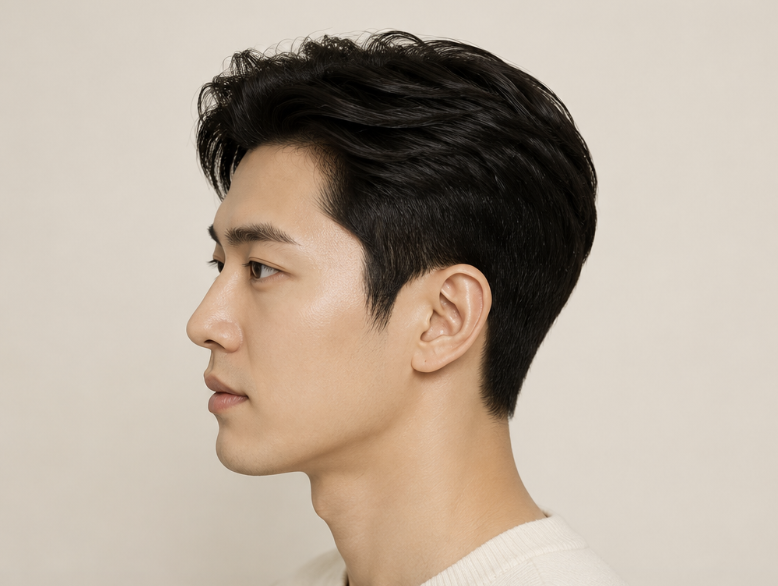
In particular, not only the hairline seen from the front
but also the hairline seen from the side
and the proportion of the forehead
may affect a natural-looking impression.
Through a thorough consultation,
check the condition of the donor area and the possible transplant range,
and create a plan that considers not only the present
but also future changes.
↓↓↓ Content you may also find helpful ↓↓↓
-Operating Hours-
| Weekdays 10:00–19:00 (last registration at 18:30) Saturdays 10:00–16:00 (last registration at 15:30) Public holidays / Wednesdays and Sundays: Closed |
-Inquiries-
| ▶ Cheongdam OK Clinic |
|---|
| Consultation phone: 02-3446-7588 Contact us via KakaoTalk |
-How to Get Here-