※ This post is content provided for medical information purposes.
It is not subject to review under Article 56(2) and Article 57 of the Medical Service Act,
and we would like to inform you that this post is not intended for advertising purposes.
Hello,
I am Seong Hyeon-ju, director of Cheongdam OK Clinic.

| ▶ Full Member of the Korean Academy of Cosmetic and Plastic Surgery (KACS) |
|---|
| ▶ Full Member of the Korean Society for the Study of Obesity (KSSO) |
| ▶ Full Member of the Korean Association for Aesthetic and Body-shaping Medicine (KAAM) |
| ▶ Full Member of the Korean Society of Liposuction Surgery (KSSL) |
| ▶ Full Member of the Korean Society of Aesthetic Surgery (KSAS) |
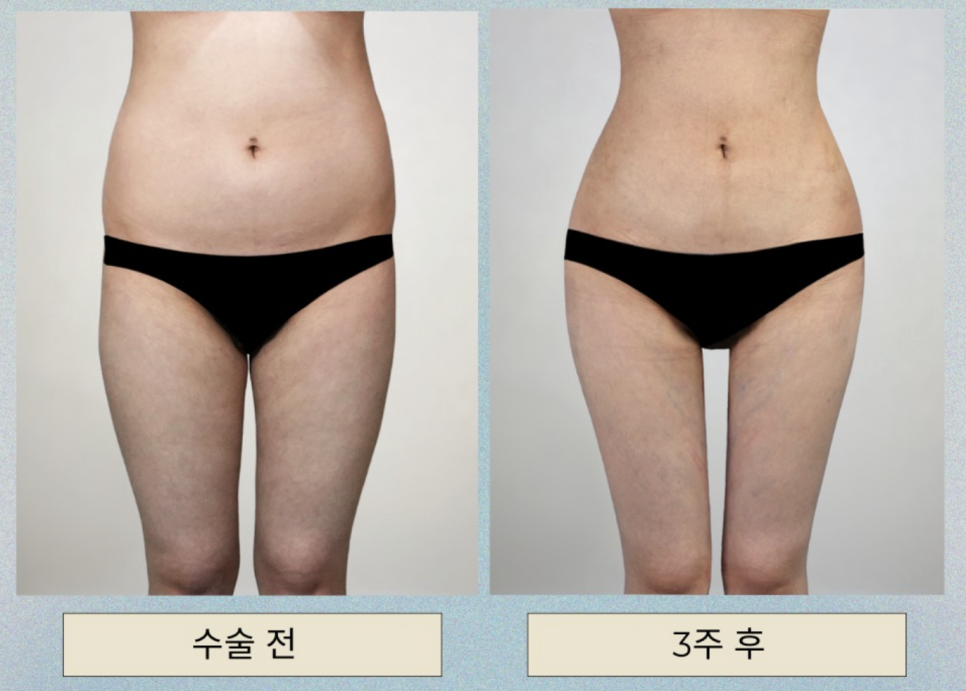
Most people searching for waist–hip contouring surgery
have likely spent a long time considering the area between
their waistline and hip line.
You may want your waist to look slimmer,
while your hips look flat,
and feel frustrated because the side waistline or hip dips
do not change as much as you hoped, even with exercise.
Reviews may make the changes look significant,
but you may still be concerned about whether
the same results would be possible for your body type.
In particular, surgery that combines liposuction
and fat grafting
should not be viewed simply as a process
of removing and adding as much as possible.
Removing more is not always the answer.
Every person has a different body shape.
Today, I will explain what waist–hip contouring surgery is
and why the waist and hips should be considered together.
| Contents |
|---|
| 1. What is waist–hip contouring surgery? 2. Looking only at the waist can make the proportions look awkward. 3. Proportion is more important than adding a large amount to the hips. 4. In these cases, it is better not to rush. |
- What is waist–hip contouring surgery?
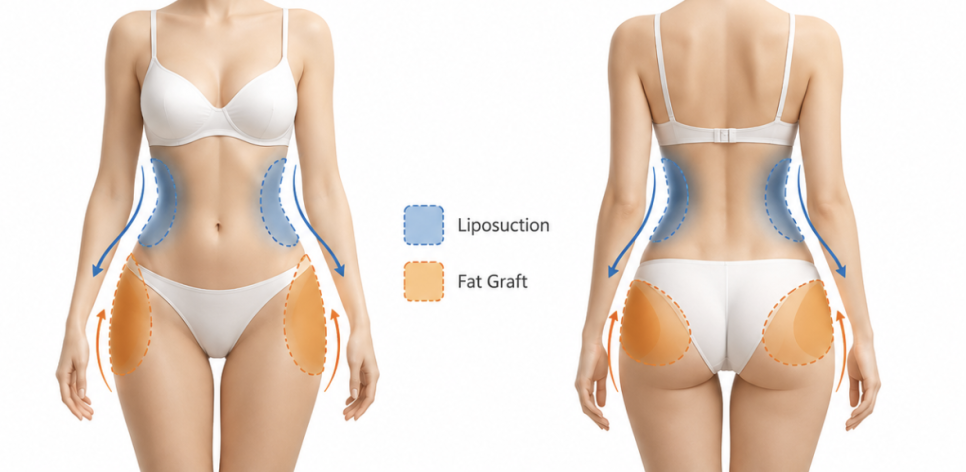
Waist–hip contouring surgery
is a body-contouring procedure that removes
unnecessary fat around the waist and, when needed,
grafts the patient’s own fat to the hip line
in order to design the proportions of the waist and hips together.
Simply put,
it is a process of making the waist look more defined
and filling in areas that appear hollow around the hips
to create a natural overall silhouette.
The important point here is that
this is not simply waist liposuction,
nor is it a procedure that
adds a large amount of fat to the hips.
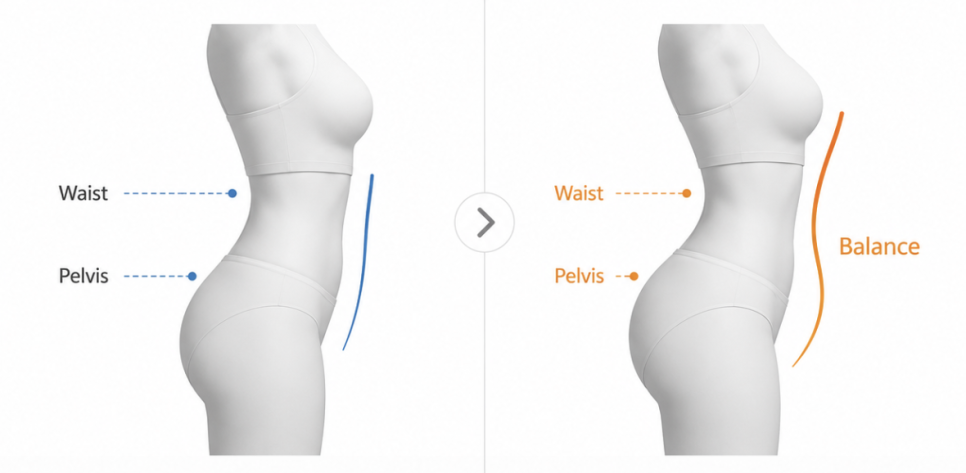
Waist–hip contouring surgery
is closer to a procedure that considers
the waist, love handles, hips, hip dips,
and the proportions of the buttocks together.
Therefore, before surgery,
you should not look only at the front view.
You should also check how the waist continues from the side,
how the hip and buttock lines appear from the back,
and how the silhouette may look different
when wearing clothes.
Body contouring is not about removing fat;
it is a process of creating balanced proportions.
- Looking only at the waist can make the proportions look awkward.
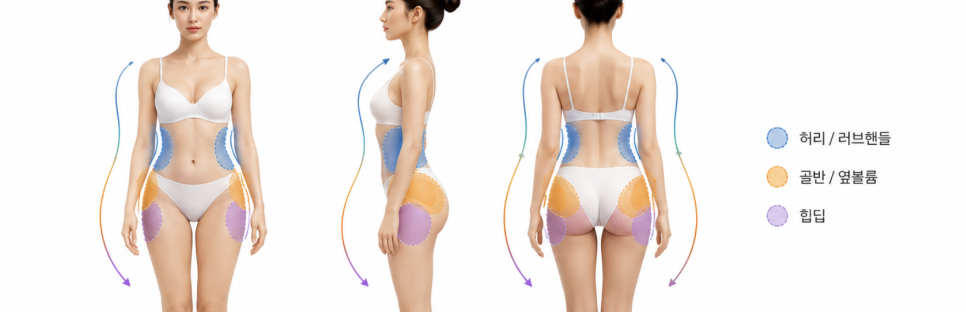
Focusing only on making the waist slimmer
can lead to an awkward result.
Even if the waist becomes smaller,
if the hips remain flat,
the overall line may not look
as smooth as expected.
Conversely, if only the hips are filled,
the waistline may not be defined,
making the result feel less three-dimensional.
That is why waist–hip contouring surgery considers
the thickness of the fat layer around the waist,
fat in the love handles,
hollows at the sides of the hips,
hip dips,
buttock volume,
and the proportions of the upper and lower body together.
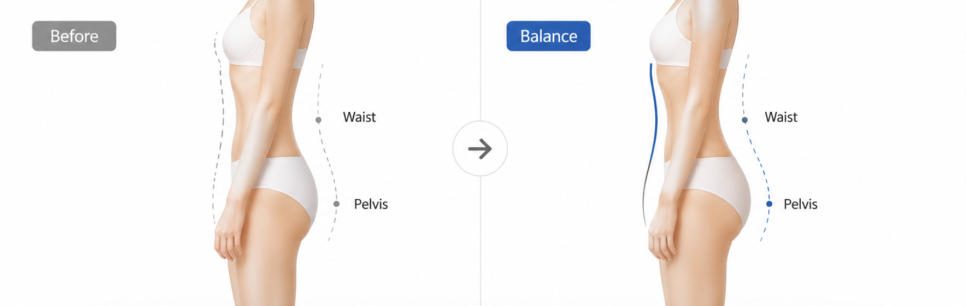
The waist and hips are not areas that function independently.
The hip line can appear more defined
when the waist is refined,
and the waistline can continue more naturally
when areas of insufficient volume around the hips are supplemented.
However, not everyone needs
waist liposuction and hip fat grafting
at the same time.
Depending on the current body shape,
waist contouring alone may be sufficient,
while in some cases, designing the buttock line
may be more important than hip fat grafting.
- Proportion is more important than adding a large amount to the hips.
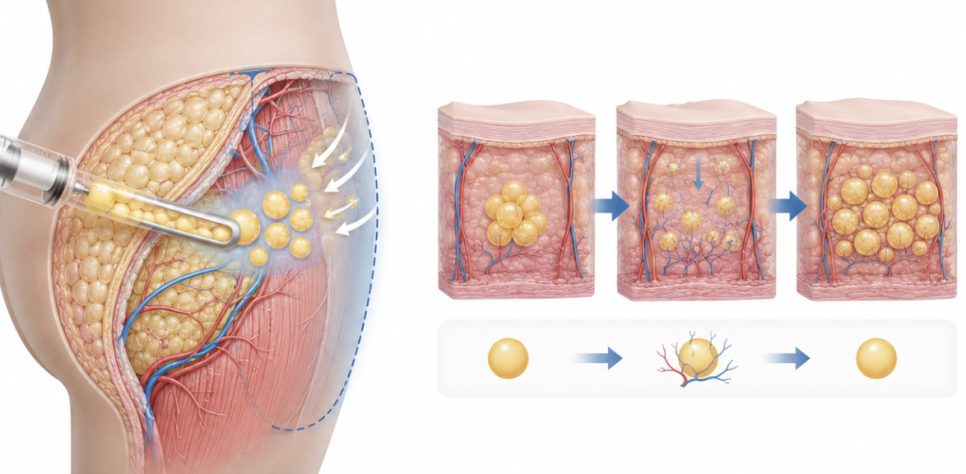
When considering hip fat grafting,
it is easy to think that more is better.
However, fat grafting
does not mean that all of the transferred fat
will remain exactly as placed.
The fat retention rate varies from person to person.
Results may differ depending on
skin elasticity,
the quality of the fat,
the available space in the grafting area,
lifestyle,
and the recovery process.
Injecting an excessive amount may instead
make the contours look unnatural
or lead to asymmetry,
lumping,
differences in absorption,
and other issues.

Therefore, what is important in waist–hip contouring surgery
is not how much fat is grafted.
It is where,
how much,
and in what direction it is designed.
Both hip filler and hip fat grafting
are better understood
not as procedures for creating size,
but as processes for balancing proportions.
A line that can remain satisfying over time
is more important than an excessive change.
The curve from the waist to the hips
should connect naturally
so that it does not feel excessive when wearing clothes.
- In these cases, it is better not to rush.

Waist–hip contouring surgery
may help improve satisfaction with one’s body shape,
but it is not suitable for everyone.
If your BMI is very low
and there is not enough fat to harvest,
if your skin elasticity has decreased significantly,
if your weight fluctuates considerably,
or if it is difficult to set aside time for recovery,
it is best to make a careful decision.
In addition, if expectations are too high,
sufficient consultation is needed first.
The contours that can be created through surgery
and the aspects that are difficult to change based on body structure
must be clearly distinguished.
Once fat is removed,
it cannot be recreated in the same way.
Therefore, excessive liposuction should be avoided.
Aggressive liposuction
may increase the possibility of
unevenness,
sagging,
asymmetry,
or indentations.
Of course, individual differences exist.
However, it is important to plan an appropriate amount from the beginning
and refine the fat layer evenly.
Safety is a prerequisite for every surgery.
If you are considering waist–hip contouring surgery,
you should first determine whether it is truly necessary
for your body shape.
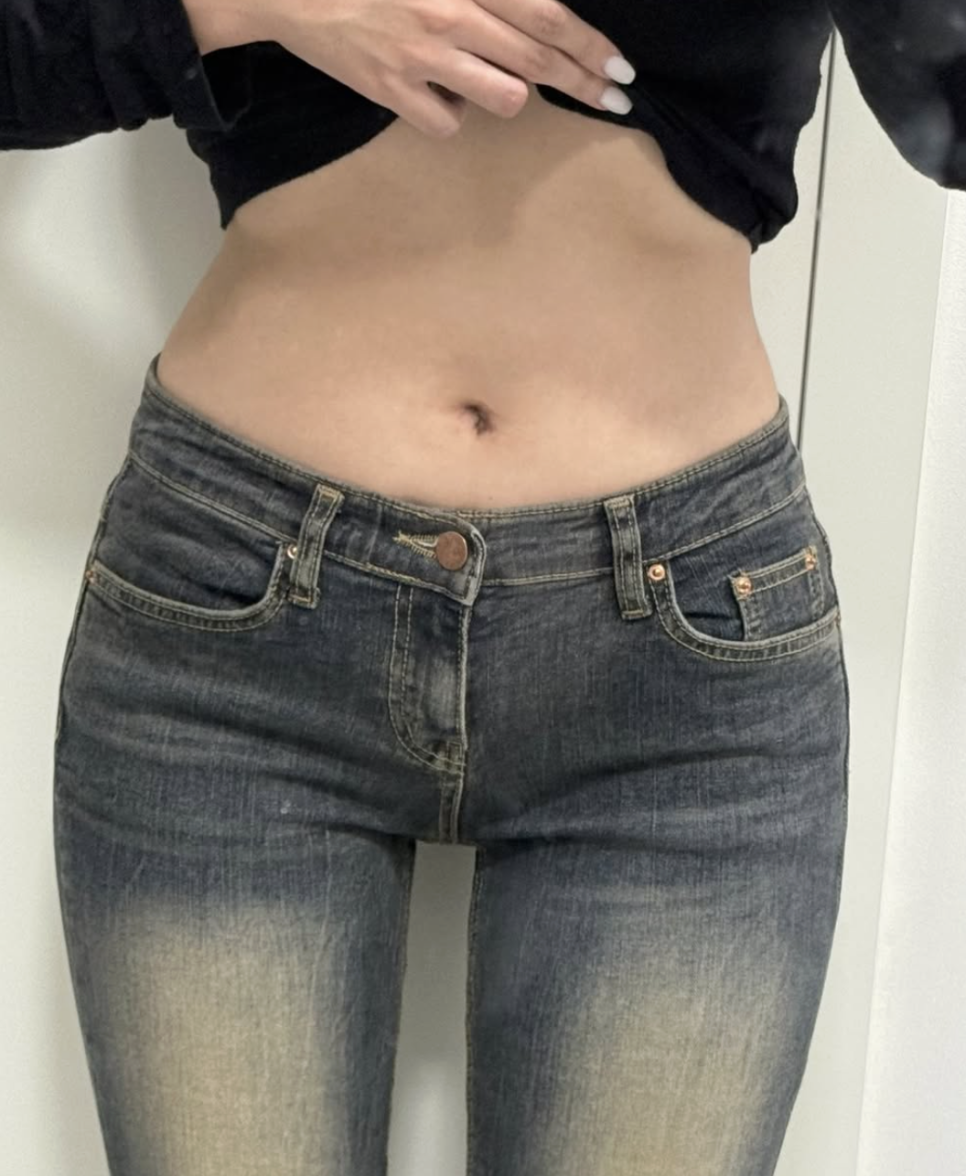
Even with the same waist–hip contouring surgery,
the direction of the result may differ from person to person.
For some people, refining the fat along the sides of the waist is key,
while for others, filling in hollows at the sides of the hips is more important.
For others, the overall proportions may look more natural
when the hip line and outer thigh line are considered together
rather than focusing on the hips alone.
That is why a 360-degree body-shape analysis
is needed during consultation.
The front,
side,
and back views should all be checked,
along with the flow from the waist to the hips,
from the hips to the buttocks,
and from the buttocks to the thighs.
We do not decide on a surgery first
and then adapt the patient to that method.
After assessing the current body shape,
we distinguish between the areas that need attention
and those that do not require treatment.
Ultimately, waist–hip contouring surgery
is not a procedure for simply making the waist slimmer;
it is a process of balancing the waist and hips.
Before deciding on surgery,
please check whether the proposed approach suits your body shape,
whether the plan is too aggressive,
and whether you can manage the recovery process.
If you have any questions, please consult with us
to comfortably discuss an approach suited to the proportions
of your waist and hips.
↓↓↓ Related content you may find helpful ↓↓↓
-Opening Hours-
| Weekdays 10:00 ~ 19:00 (last registration at 18:30) Saturdays 10:00 ~ 16:00 (last registration at 15:30) Public holidays / Wednesdays and Sundays: Closed regularly |
-Contact-
| ▶ Cheongdam OK Clinic |
|---|
| Consultation phone: 02-3446-7588 Contact us via KakaoTalk |
-Location-