※ This post is content provided for medical information purposes.
Under Articles 56(2) and 57 of the Medical Service Act, this content is not subject to review and is not a post intended for advertising purposes.
Hello,
I am Seong Hyeon-ju, director of Cheongdam OK Clinic.

| ▶ Full Member of the Korean Association of Cosmetic Plastic Surgery (KACS) |
|---|
| ▶ Full Member of the Korean Society for the Study of Obesity (KSSO) |
| ▶ Full Member of the Korean Academy of Aesthetic and Metabolic Medicine (KAAM) |
| ▶ Full Member of the Korean Society of Liposuction Surgery (KSSL) |
| ▶ Full Member of the Korean Society of Aesthetic Surgery (KSAS) |
One of the biggest concerns for people considering or undergoing liposuction is liposuction scars.
It is true that the burden of scarring has decreased compared with the past as incision sites have gradually become smaller, but not all scars heal in the same way.
Online, it is easy to find claims that liposuction scars only need laser treatment or that they will definitely disappear over time.
In reality, management methods may vary depending on the shape of the scar, the stage of healing, and the condition of the skin.
It is difficult to say that one particular treatment is always the right answer.
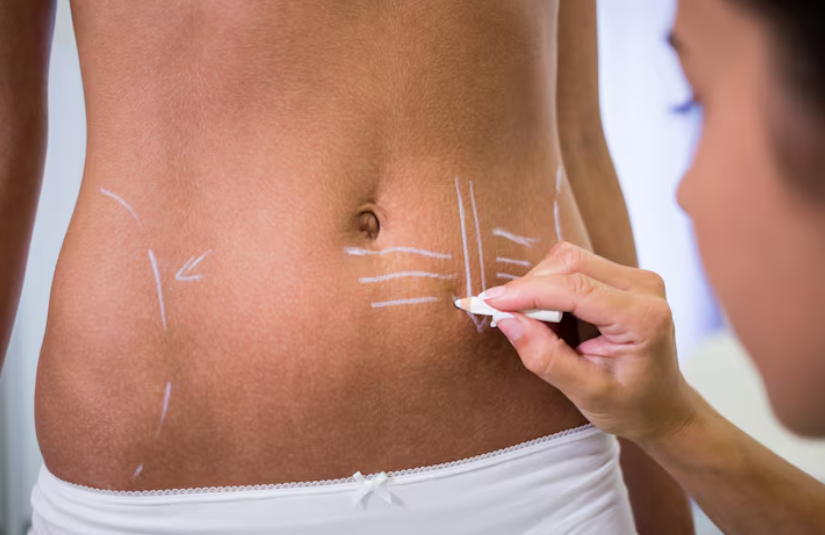
Today, we will take an in-depth look at why liposuction scars develop, when laser treatment may be needed, and how to manage them to help reduce their appearance.
| Contents |
|---|
| 1. Why liposuction scars develop 2. When laser treatment may be needed 3. Scar management methods 4. Key points for reducing scars |
- Why liposuction scars develop
Liposuction scars develop at the small incision sites where the cannula used to remove fat enters the skin.
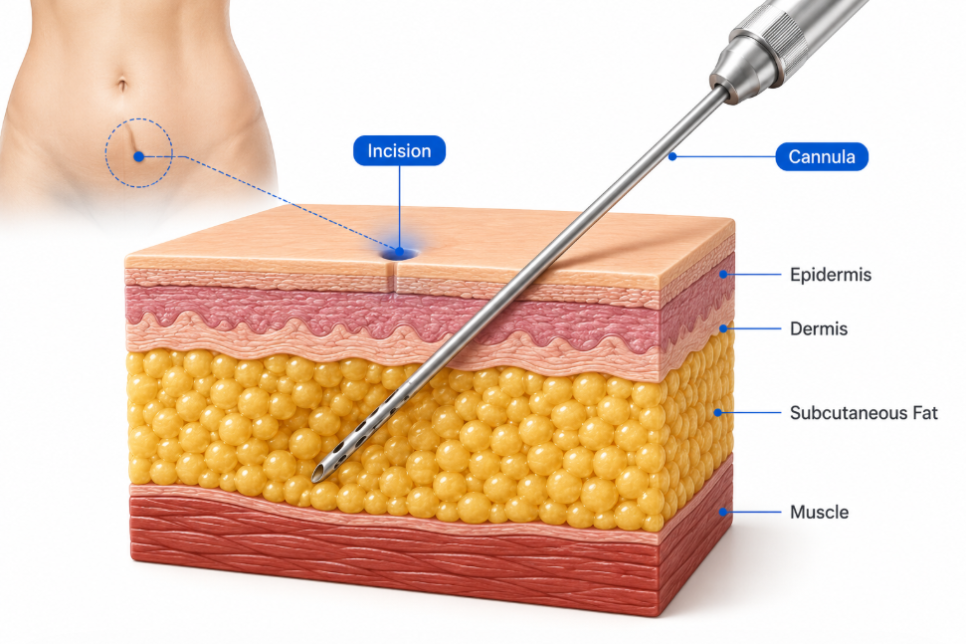
The incision is usually relatively small, measuring only a few millimeters, but the shape of the scar may vary depending on the skin’s healing capacity and individual characteristics.
The healing process may also differ depending on whether the treated area moves continuously and whether it is an area subject to significant skin tension.
At first, the scar may appear red or feel firm, and it often gradually fades over time.
However, not all liposuction scars heal at the same rate.
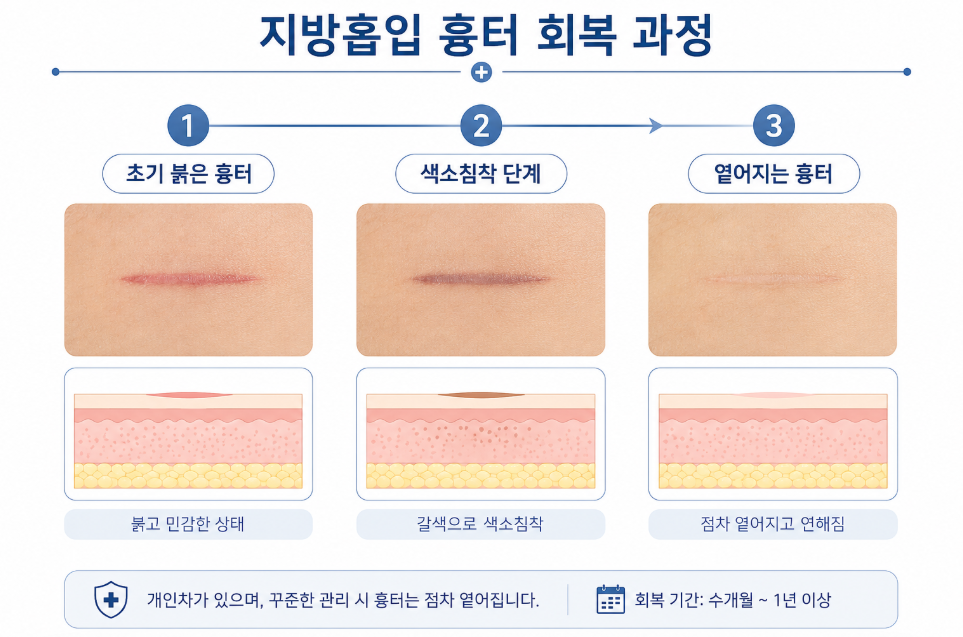
In some cases, hyperpigmentation may persist for a long time, while raised hypertrophic scars or a tendency to develop keloids may require more active management.
Therefore, rather than focusing solely on the fact that a scar has formed, it is important to first determine what stage of healing it is currently in.
- When laser treatment may be needed
When many people notice a liposuction scar, laser treatment is the first option that comes to mind.
Laser treatment is certainly one of the methods widely used for scar treatment, but it is not applied in the same way to every scar.
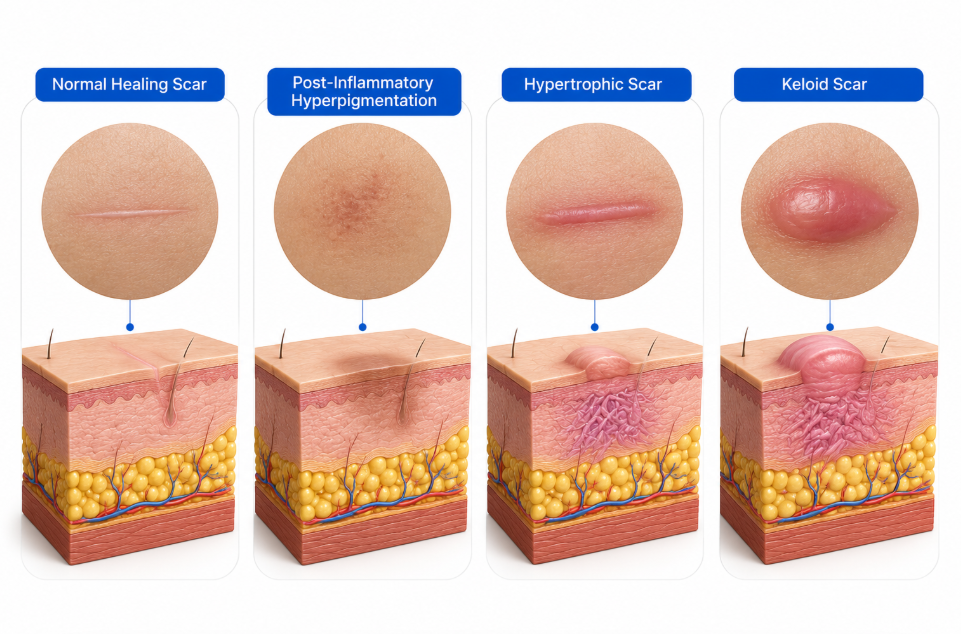
For example, the approach may differ between an early scar that is still red and an older scar that has stabilized and turned white.
The equipment and treatment plan may also vary depending on whether hyperpigmentation is the main concern or the scar tissue itself has become thickened.
During the early healing stage, many scars improve naturally as sufficient time passes.
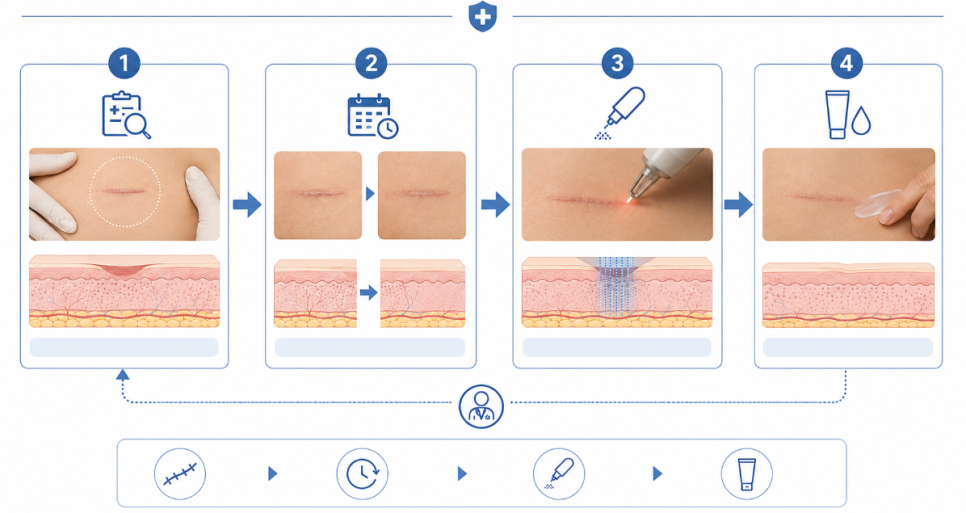
For this reason, starting laser treatment as quickly as possible is not always the best choice.
Conversely, if the color of a liposuction scar remains dark or the skin remains raised even after several months,
it may be helpful to consult a medical professional and determine whether appropriate treatment is needed.
Ultimately, the important question is not simply whether to undergo laser treatment, but when to begin treatment based on the current condition of the scar.
- Scar management methods
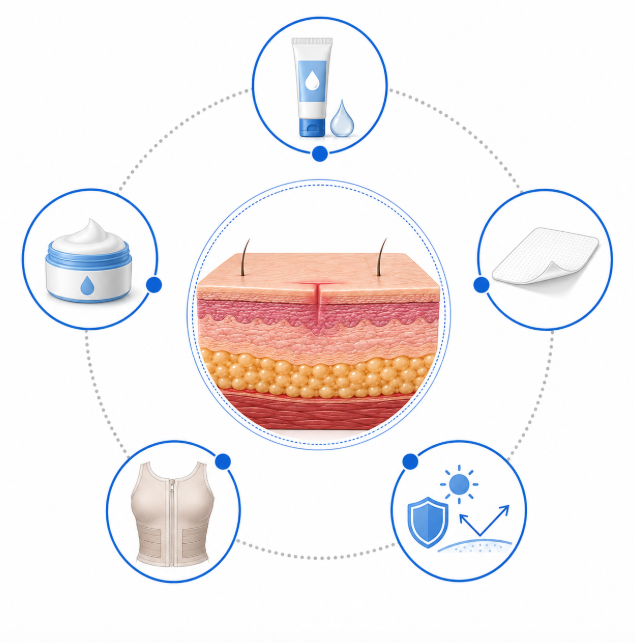
Daily care also plays a very important role in the healing process of liposuction scars.
First, keep the incision site clean until it has stabilized, and use dressings or ointments according to your medical professional’s instructions.
Once the wound has healed to some extent, scar care products such as silicone gel or silicone sheets may also be used.
Because exposure to ultraviolet rays can cause hyperpigmentation to persist longer, it is advisable to pay attention to sun protection if the area is exposed.
It is best to avoid forcibly removing scabs or repeatedly irritating the area, as this may delay healing.
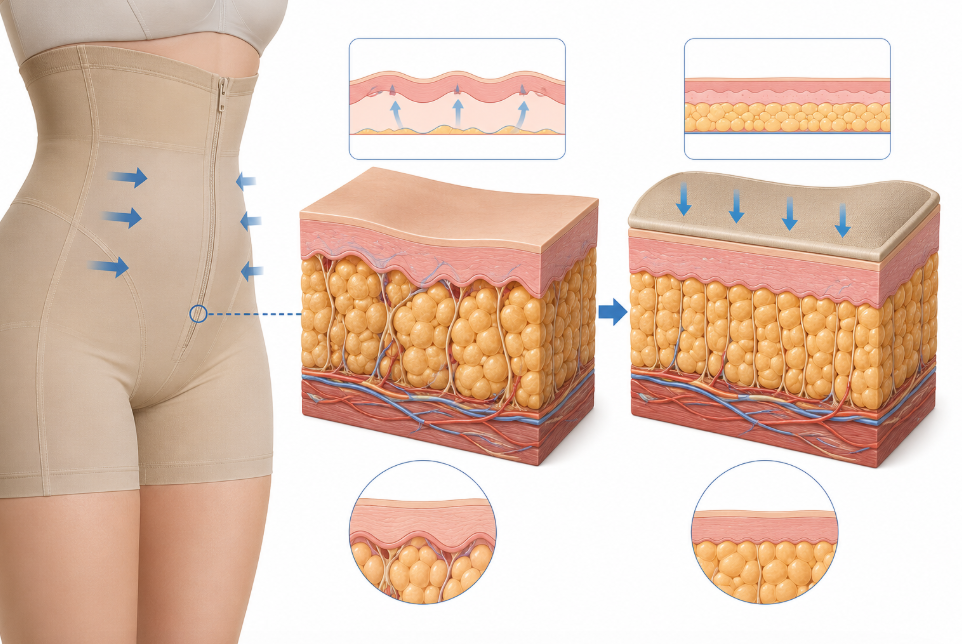
Wearing compression garments is also one of the important aspects of care during recovery after liposuction and may help the skin settle into place steadily.
The more consistently these management measures are followed, the more positively they may affect the healing of liposuction scars.
- Key points for reducing scars
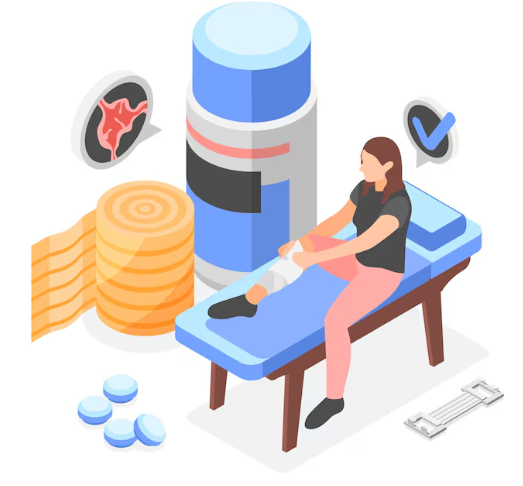
In fact, the best way to reduce liposuction scars is closer to prevention than treatment.
A treatment plan that avoids unnecessarily large incisions, meticulous suturing, and appropriate care during the healing process can work together to help reduce the burden of scarring.
If you tend to develop scars easily due to your individual characteristics, it is also important to have a thorough consultation with a medical professional before the procedure.
If you have previously developed keloids after surgery or have a history of scars becoming dark easily, sharing this information in advance can
help with developing a treatment plan.
Above all, it is difficult to judge the outcome of a liposuction scar based only on its appearance during the early healing stage.
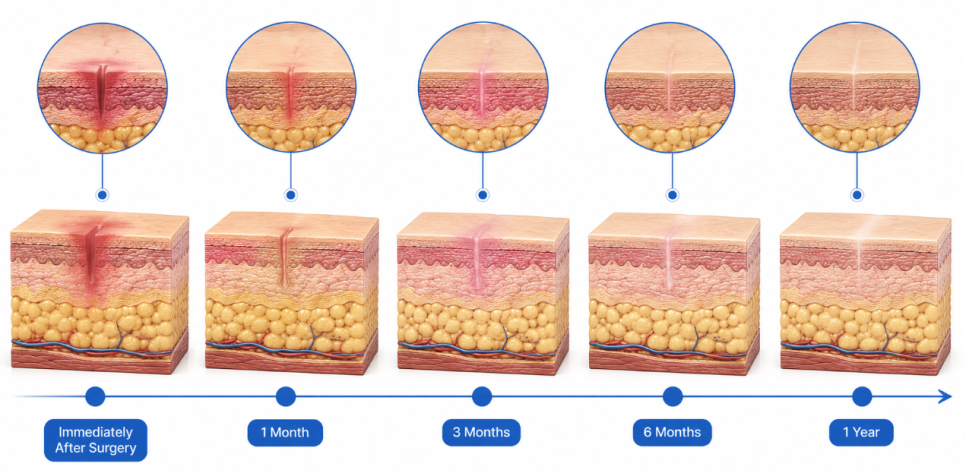
Because most scars gradually change over several months, it is necessary to observe their progress while allowing sufficient time for recovery.
Ultimately, laser treatment is only one of several scar management methods.
More satisfactory results may be expected when appropriate care suited to the shape of the scar and its stage of healing is provided together.
↓↓↓ Related content you may find helpful ↓↓↓
-Clinic Hours-
| Weekdays 10:00–19:00 (last registration at 18:30) Saturdays 10:00–16:00 (last registration at 15:30) Public holidays / Wednesdays and Sundays regularly closed |
-Contact Information-
| ▶ Cheongdam OK Clinic |
|---|
| Consultation phone: 02-3446-7588 KakaoTalk inquiries |
-Finding Us-