※ This post is content intended to provide medical information.
It does not fall within the categories subject to review under Articles 56(2) and 57 of the Medical Service Act,
and we would like to inform you that it is not a post intended for advertising purposes.
Hello,
I am Seong Hyeon-ju, director of 청담오케이의원.

| ▶ Full Member of the Korean Aesthetic Plastic Surgery Society (KACS) |
|---|
| ▶ Full Member of the Korean Society for the Study of Obesity (KSSO) |
| ▶ Full Member of the Korean Association of Aesthetic and Metabolic Surgery (KAAM) |
| ▶ Full Member of the Korean Society of Liposuction Surgery (KSSL) |
| ▶ Full Member of the Korean Society of Aesthetic Surgery (KSAS) |
The forearms are an area where the contour often remains noticeably unchanged even after significant weight loss.
In particular, fat on the outer or back of the forearms can be difficult to lose even for people who exercise regularly, making the overall silhouette look thicker when wearing clothes.
That is why many people consider forearm liposuction,
but simply removing a large amount of fat does not necessarily create an attractive result.
In fact, forearm liposuction is a procedure in which the design—taking body type, fat distribution, and skin elasticity into account—determines the outcome.
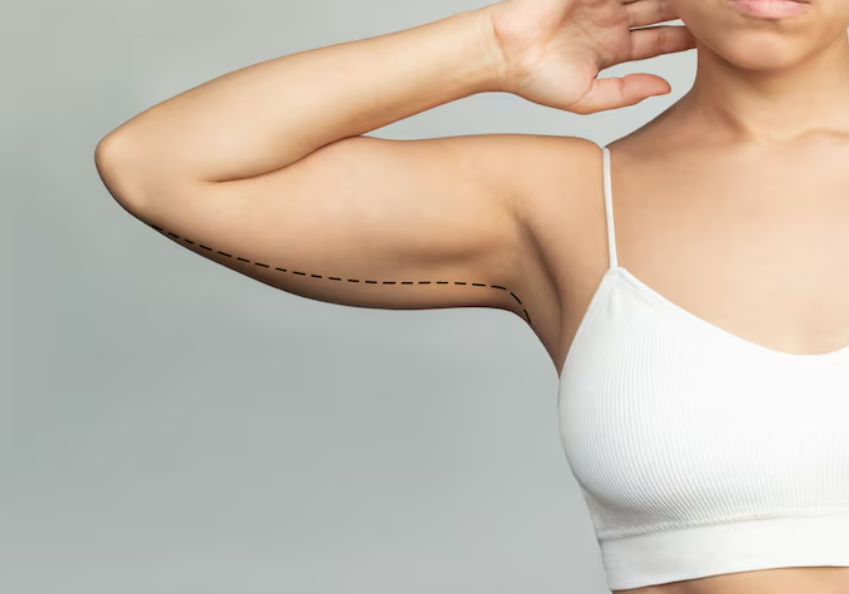
Today, we will look at why design is important in forearm liposuction and what differences arise depending on body type.
| Contents |
|---|
| 1. Principles of forearm liposuction 2. Design by body type 3. Standards for attractive contours 4. Points to check before surgery |
- Principles of Forearm Liposuction
Many people think that forearm liposuction is simply a procedure that removes fat from the arms.
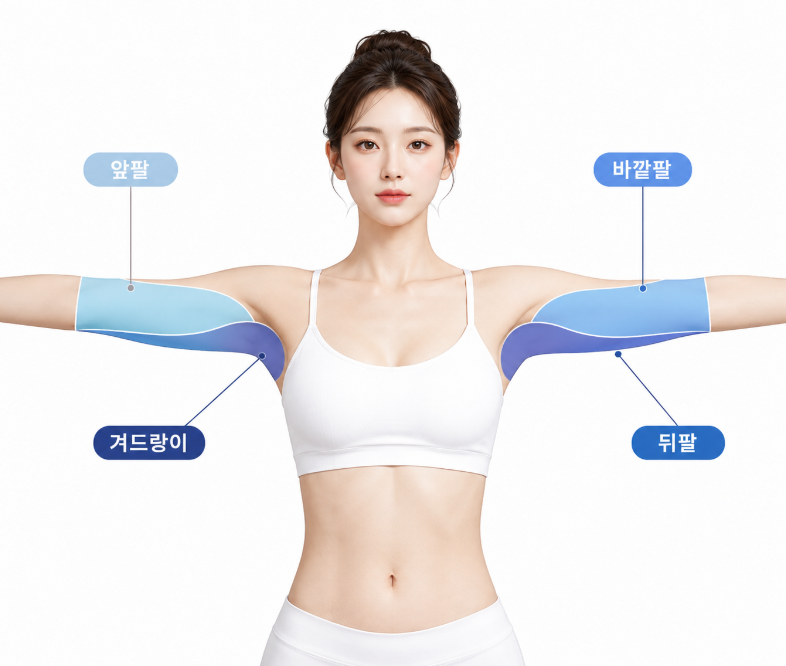
However, during an actual consultation, it is often necessary to examine not only the forearms but also the shoulders, armpits, accessory breast tissue, and sides of the chest.
This is because body types vary: some people have more fat concentrated toward the front of the forearms, some have thicker areas toward the back, and others have evenly distributed fullness throughout the arms.
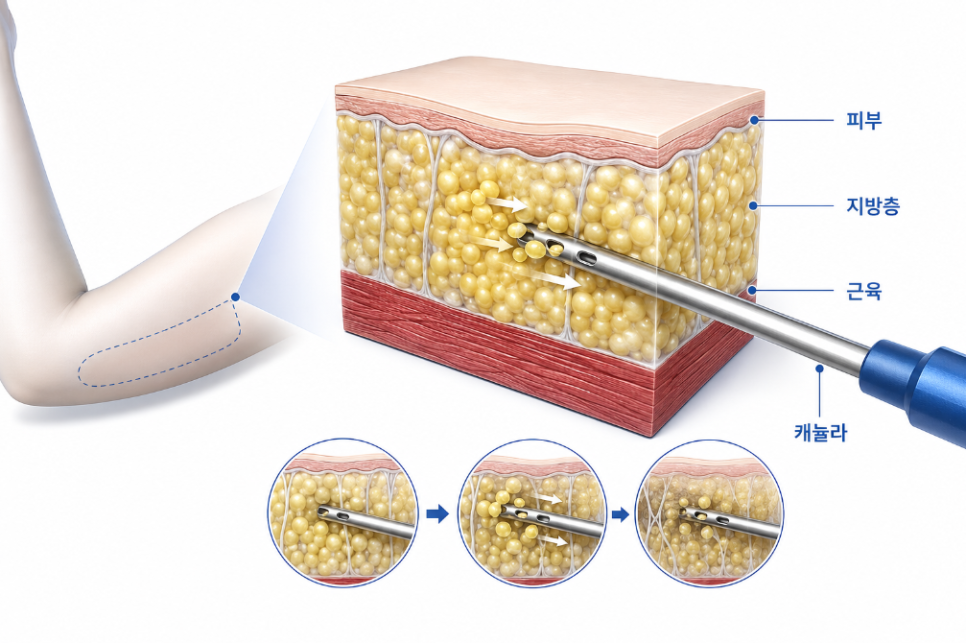
In addition to the amount of fat, skin elasticity and muscle mass also have a significant impact on the design.
When the skin has sufficient elasticity, it may be possible to create a relatively slim contour.
However, when elasticity is reduced, considering overall balance rather than removing an excessive amount of fat may lead to a more natural result.
In other words, forearm liposuction is not performed using the same approach for everyone; a plan tailored to each individual's body type is important.
- Design by Body Type
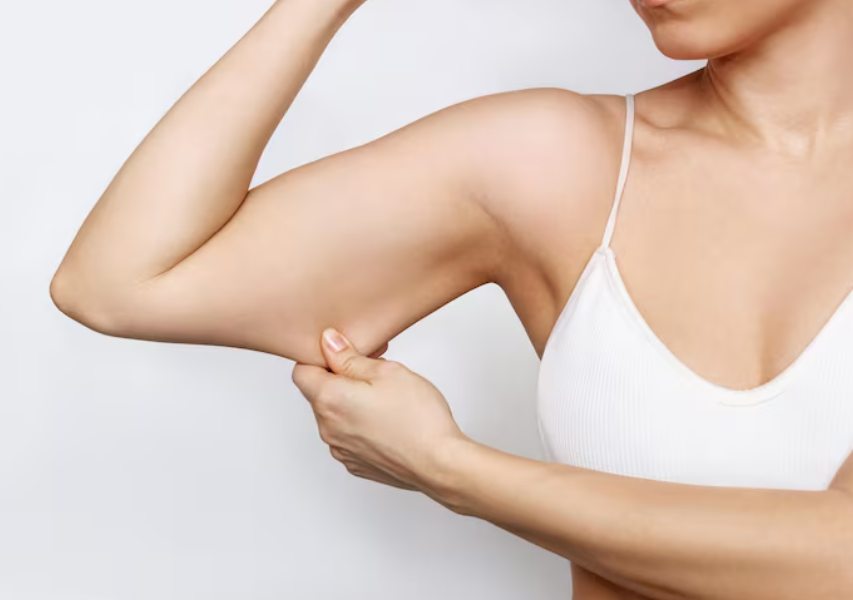
The most important consideration in forearm liposuction is not how much fat is removed, but what kind of contour is created.
For example, if a person has a slim upper-body type, making only the arms excessively thin may instead make the shoulders appear wider.
Conversely, for a body type with more upper-body volume, the entire arm must be refined in balance so that the silhouette transitions naturally.
In particular, the area connected to the armpit is the boundary where the arm meets the torso, so how this area is designed can significantly change the impression from the side.
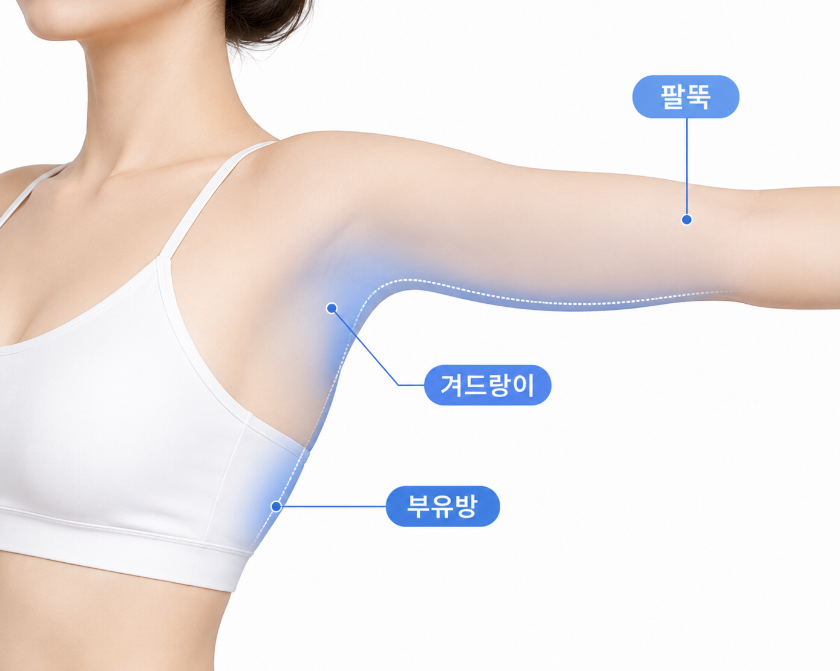
The curve that naturally continues toward the elbow should also be considered to avoid an artificial appearance.
Therefore, it is best to understand forearm liposuction not as a simple fat-removal procedure, but as a design process that considers the body's overall proportions.
- Standards for Attractive Contours
Many people say that they want their arms to be as thin as possible,
but results that achieve balanced contours often provide greater satisfaction in practice.
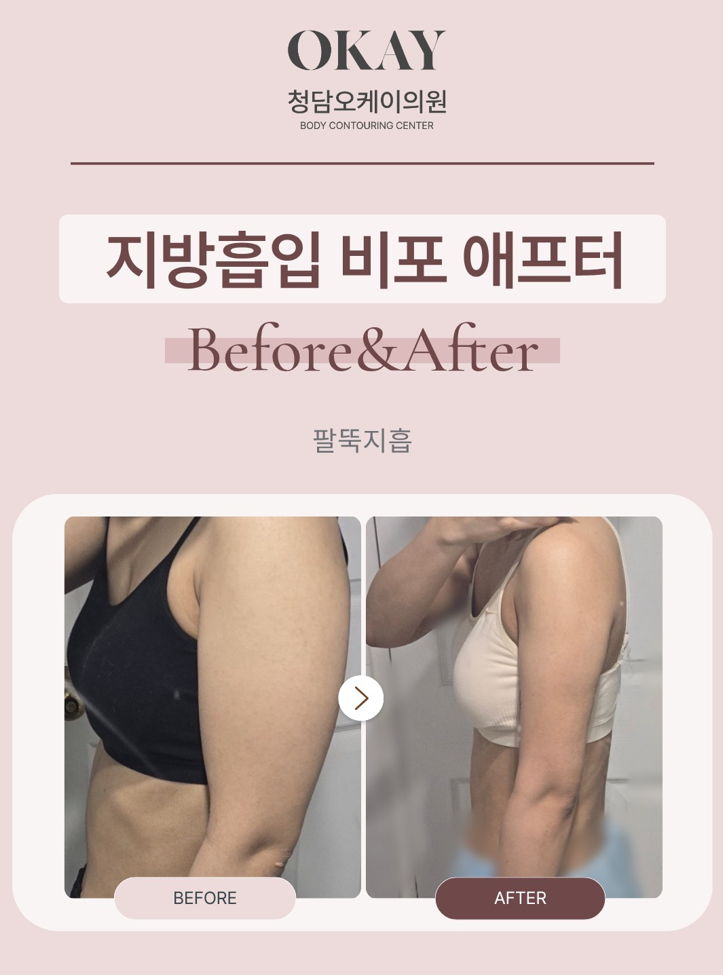
This is because natural curves must be maintained not only when viewed from the front, but also from the side and back.
For this, it is important to regulate the thickness of the fat layer evenly and perform liposuction without being overly aggressive so that the skin can adapt smoothly.

Left-right symmetry is another aspect that should not be overlooked.
Because differences in how each arm is used can also lead to differences in fat distribution,
it is necessary to design the procedure while checking overall balance rather than using only one side as the standard.
Ultimately, the key measure of successful forearm liposuction is not the amount of fat removed, but how naturally the continuity of the contours and the proportions have been created.
- Points to Check Before Surgery
If you are planning forearm liposuction, it is advisable to review the consultation process as well rather than comparing only prices or the amount of fat to be removed.

It may be helpful to check whether a thorough body-type analysis is performed,
whether the shoulders, accessory breast tissue, and armpit contours are designed together,
and whether the surgical plan takes skin elasticity and the fat layer into account.
After surgery, swelling and bruising require time to gradually improve, so wearing compression garments and managing daily activities may also affect the result.
Most importantly, rather than trying to replicate someone else's result exactly, it is important to find a design suited to your own body type.
Forearm liposuction is not simply about making the arms thinner. Considering the overall proportions and harmony of the upper body can help achieve a more natural change.

Therefore, if you are considering forearm liposuction, thoroughly analyzing your body type and fat distribution and establishing a design direction suited to you can be an important starting point for improving satisfaction.
↓↓↓ Related Content ↓↓↓
-Operating Hours-
| Weekdays 10:00–19:00 (last registration at 18:30) Saturdays 10:00–16:00 (last registration at 15:30) Public holidays / Wednesdays and Sundays: closed |
-Contact-
| ▶ 청담오케이의원 |
|---|
| Consultation: 02-3446-7588 Contact us via KakaoTalk |
-Directions-