※ This post is content provided for medical information purposes.
This content does not fall under the scope of review pursuant to Article 56, Paragraph 2, and Article 57 of the Medical Service Act,
and we would like to inform you that it is not a post intended for advertising purposes.
Hello,
I am Eun-kyung Seong,
director of 청담오케이의원.
| ▶ Full Member of the Korean Society of Aesthetic Plastic Surgery and Laser Medicine |
|---|
| ▶ Full Member of the Korean Society of Laser, Dermatology and Hair |
| ▶ Full Member of the Korean Society for the Study of Obesity |
| ▶ Full Member of the Korean Filler Society |
| ▶ Full Member of the Korean Society of Aesthetic Surgery |
Crown hair loss is difficult to see in a mirror,
so many people notice the changes only later.
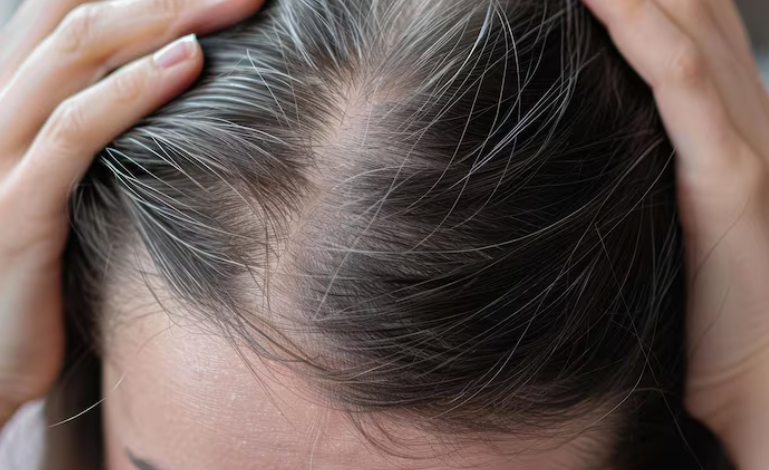
Some people begin considering crown hair transplantation
after taking a photo or noticing their scalp showing through
under lighting.
However, compared with the hairline,
crown hair transplantation is an area
that requires consideration of more factors.
Today, we will look at
why crown hair transplantation is evaluated more carefully
and what points need to be checked.
| Contents |
|---|
| 1. Why crown hair transplantation is difficult 2. Why hair direction and density are important 3. Should ongoing hair loss also be considered? 4. Checkpoints for improving satisfaction |
- Why crown hair transplantation is difficult
Crown hair transplantation is not simply
a procedure to fill an empty area.
Hair in the crown area
does not grow in a single direction;
it follows various directions in a whorl pattern.
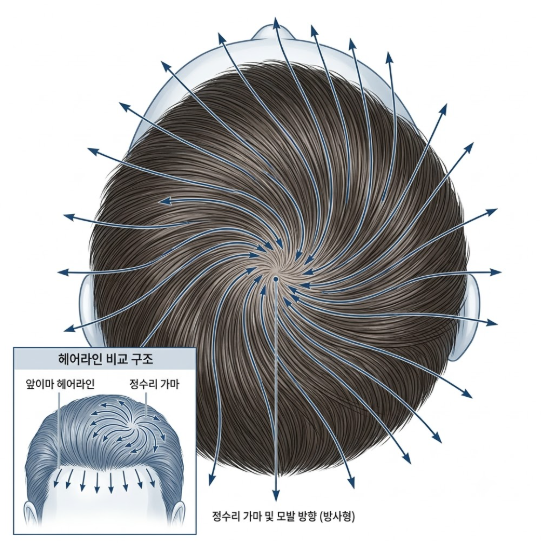
Therefore, even a slight difference in the angle or direction
at which follicles are implanted can make the appearance
look unnatural.
In addition, because the crown is often viewed from above,
differences in density may become
more noticeable when exposed to light.
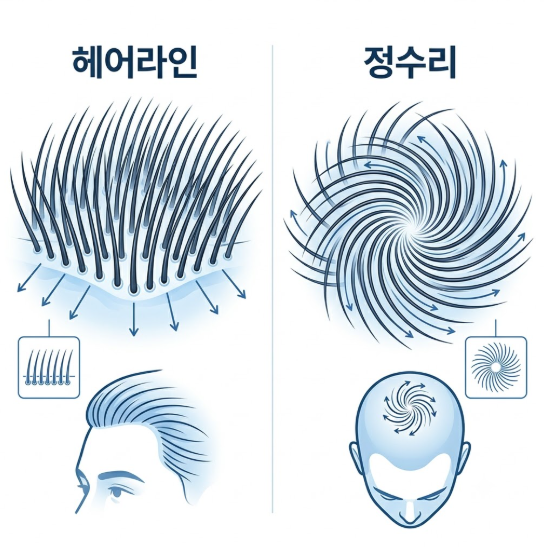
For these reasons, it often requires
more careful planning than a hairline transplant.
- Why hair direction and density are important
What matters in crown hair transplantation
is not just the number of hairs being transplanted.
Arranging them so that they grow
in the same direction as the existing hair
can affect the naturalness of the result.
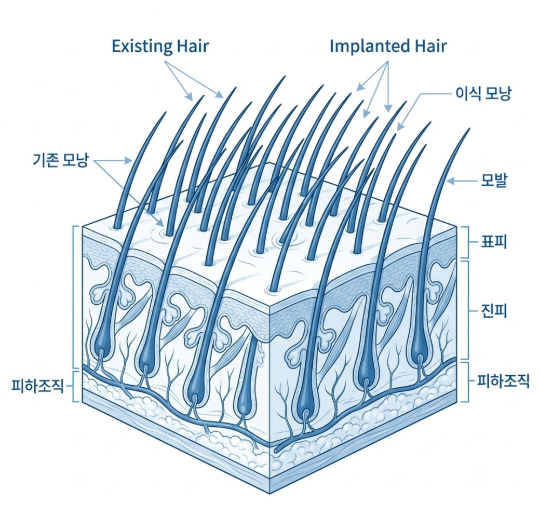
Rather than implanting as many follicles as possible,
it is important to consider the density,
thickness, and direction of the hair that remains.
In particular, because the crown has a structure
where the hair appears more layered than the bangs,
the perceived fullness may vary depending on how it is arranged.
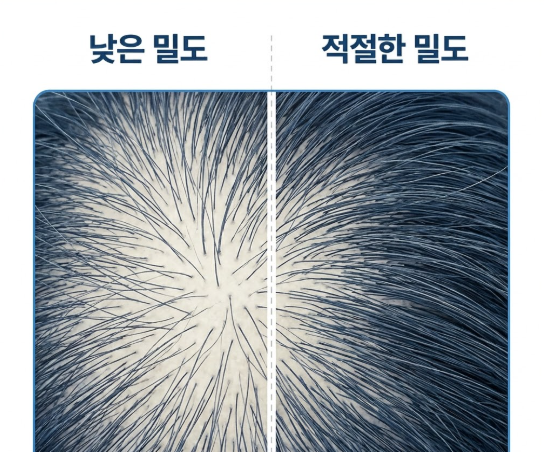
That is why it is necessary to make a plan
after thoroughly examining each person’s scalp condition.
- Should ongoing hair loss also be considered?
When planning crown hair transplantation,
it is also advisable to check
whether hair loss is currently progressing.
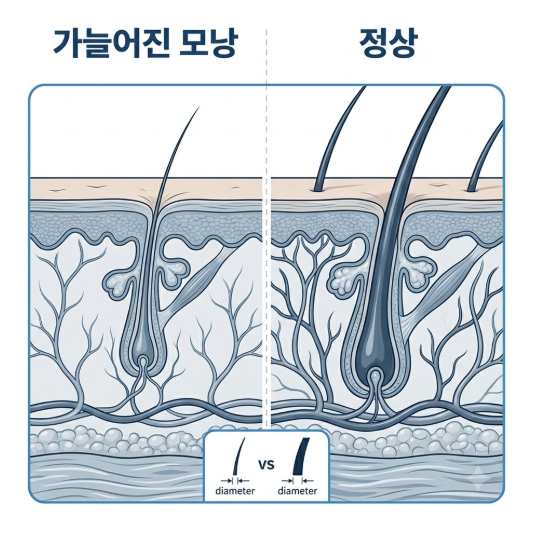
If the existing hair continues to thin,
the original hair around the transplanted hair
may also decrease further.
In this case, it may be helpful to establish a treatment plan
that considers both the current extent of hair loss
and long-term changes.
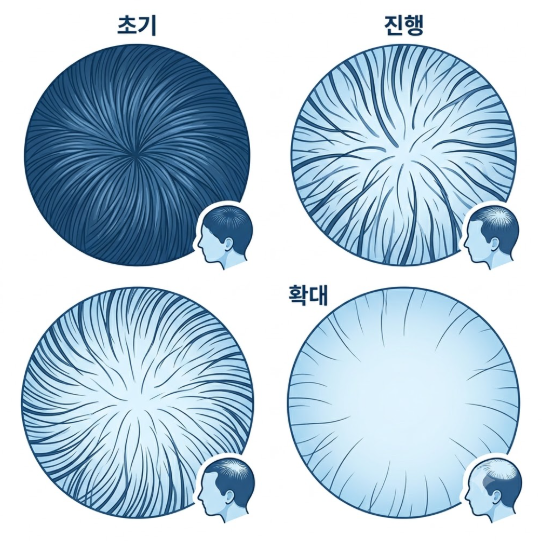
Because the rate and cause of hair loss
differ from person to person,
it is difficult to apply the same method to everyone.
Therefore, the process of assessing your current condition
through a sufficient consultation is important.
- Checkpoints for improving satisfaction
For crown hair transplantation,
it is advisable to consider the overall design
rather than checking only the number of follicles.
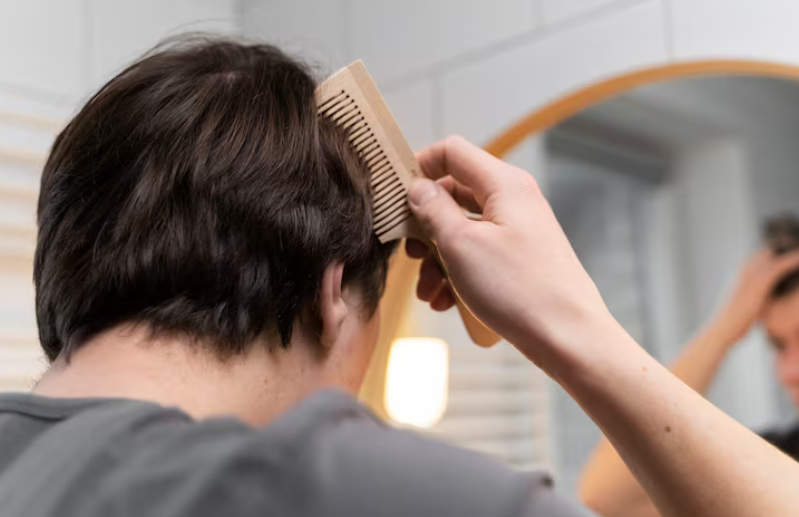
The direction of the crown whorl, the density of the existing hair,
whether hair loss is progressing, and the amount of hair available for harvesting
should all be considered together.
It is also advisable to understand the recovery process fully,
as changes may gradually appear over time
rather than immediately after surgery.
Above all, because each person’s scalp condition
and pattern of hair loss are different,
creating a plan suited to your condition
may help you achieve a natural-looking result.
Even when the area of crown hair loss is the same,
the appropriate approach may differ depending on the hair’s
thickness and direction and the condition of the remaining hair.
Therefore, if you are considering crown hair transplantation,
rather than comparing only the number of follicles, check your current scalp condition
and the extent to which hair loss is progressing,

It is important to establish a treatment plan suited to you
through a sufficient consultation.
↓↓↓ Recommended related content ↓↓↓
-Operating Hours-
| Weekdays 10:00–19:00 (last registration at 18:30) Saturdays 10:00–16:00 (last registration at 15:30) Public holidays / Closed regularly on Wednesdays and Sundays |
-Contact-
| ▶ 청담오케이의원 |
|---|
| Consultation phone: 02-3446-7588 KakaoTalk inquiry |
-How to Get Here-