※ This post is content provided for medical information purposes.
It is not subject to review under Article 56, Paragraph 2, and Article 57 of the Medical Service Act,
and we would like to inform you that this post is not intended for advertising purposes.
Hello,
I am Seun-gyeong Seong,
Director of 청담오케이의원.
| ▶ Full Member of the Korean Society of Aesthetic Plastic Surgery and Laser Medicine |
|---|
| ▶ Full Member of the Korean Society of Laser, Dermatology and Hair Research |
| ▶ Full Member of the Korean Society of Obesity Research Physicians |
| ▶ Full Member of the Korean Filler Society |
| ▶ Full Member of the Korean Society of Aesthetic Surgery |
If your forehead looks broad or the M-shaped areas appear sparse,
it may be difficult to create the impression you want
even after changing your hairstyle.
In such cases, you may look into a hairline hair transplant.
However, you should not think only about filling
the sparse areas with hair.
This is because even foreheads of the same width
may require different designs depending on the face's horizontal-to-vertical ratio,
the jawline, and the shape of the existing hairline.
For a natural-looking change, it is important to plan a hairline
that harmonizes with the face as a whole,
not just consider the number of hairs.
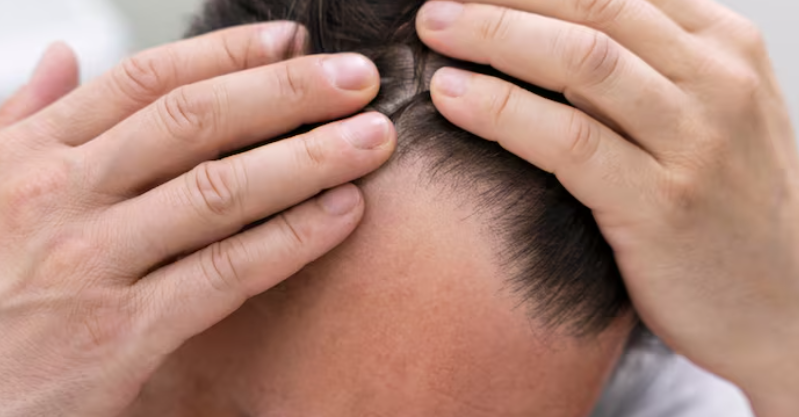
Today, we will look at
which aspects should be considered according to face shape
when planning a hairline hair transplant.
| TABLE OF CONTENTS |
|---|
| 1. Why hairline design is important 2. Differences in design according to face shape 3. Factors that determine a natural appearance 4. Points to check before transplantation |
- Why hairline design is important
A hairline hair transplant involves harvesting
hair follicles from areas such as the back of the head
and transplanting them to the necessary areas of the forehead and hairline.
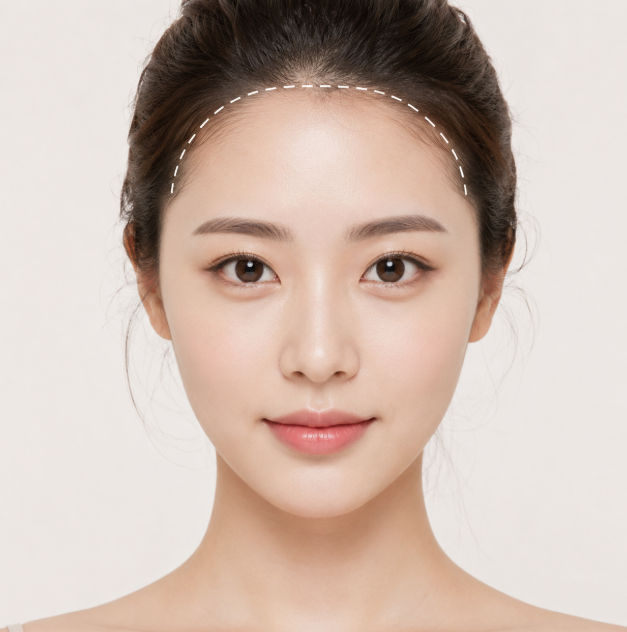
However, simply reducing the area of the forehead
does not lead to natural-looking results for everyone.
Because the hairline forms the upper boundary of the face,
even a slight difference in its height or curve
can change the overall impression.
In particular, designing the hairline excessively low
without considering the existing hairline, or filling it with a straight line,
can create an artificial appearance.
In addition to the face's length and width and the forehead's width,
it is also advisable to consider the proportions of the cheekbones and jawline.
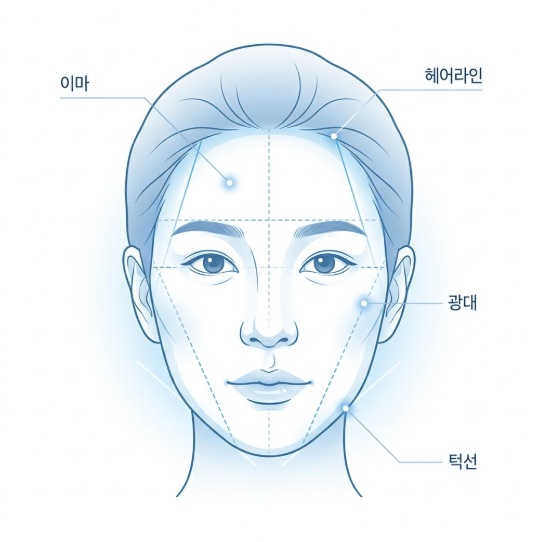
The hair distribution around the temples and the existing hairline
should also be checked to plan a design
that connects naturally with the face as a whole.
- Differences in design according to face shape
There is no single correct hairline hair transplant design
that can be applied equally to everyone.
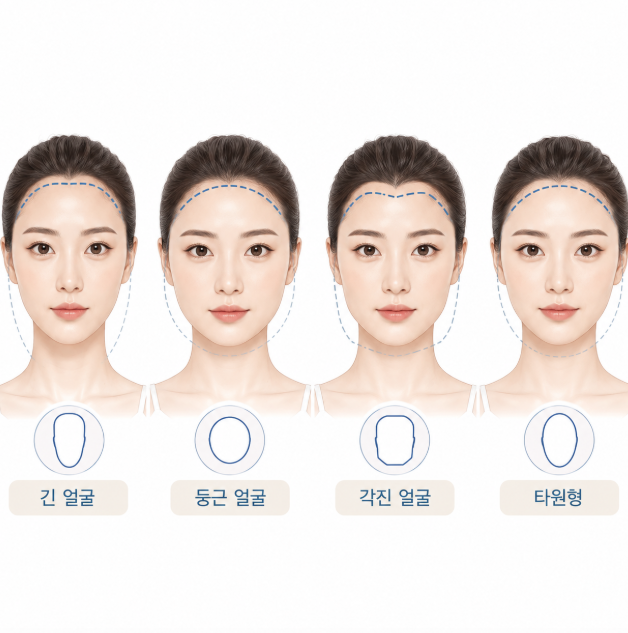
For a vertically long face, the balance can be considered
by adjusting the height of the hairline
so that the upper face does not appear excessively long.
Conversely, for a round face, rather than simply lowering the hairline,
the curves in the center and on both sides can be adjusted
to prevent the face from looking too confined.
For an angular face, it is important to examine the connection
between the temple areas and the side hairline
so that the design blends naturally with the facial outline.
Even when the M-shaped pattern is pronounced,
it should not be approached by simply filling the recessed areas.
The flow from the center toward both sides,
along with the distribution of the existing hair,
must also be considered to create a natural connection.
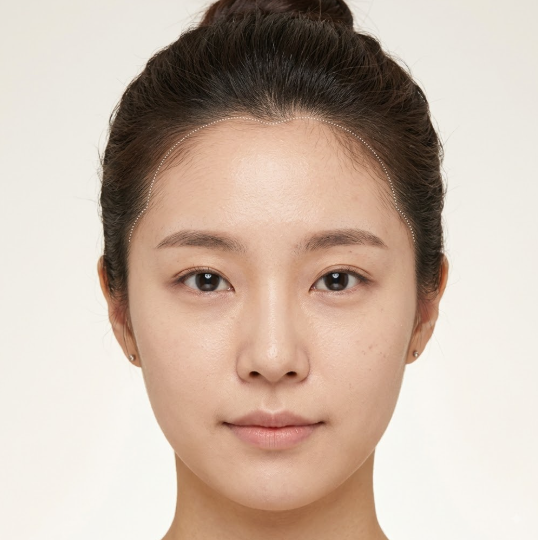
Ultimately, rather than determining a hairline hair transplant
solely by the name of the face shape,
it is necessary to plan it based on the individual's actual facial proportions.
- Factors that determine a natural appearance
For a natural-looking hairline,
not only the shape of the line but also
the way the hair is placed is important.
When you closely examine a person's natural hairline,
the hairs are not arranged at evenly spaced intervals like the teeth of a comb.
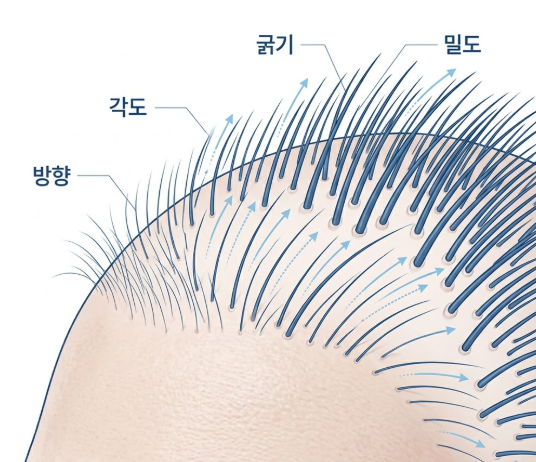
Relatively fine hairs are irregularly positioned at the front,
while the thickness and density of the hair change toward the back.
Therefore, even in a hairline hair transplant,
the transplant locations should be planned by considering
the thickness, direction, angle, and density of the existing hair.
In particular, the very front of the hairline is directly adjacent to the face,
so even small design differences can be relatively noticeable.
If the direction of the transplanted hair does not connect naturally
with the existing hair, it may feel awkward when styling the hair after it grows.
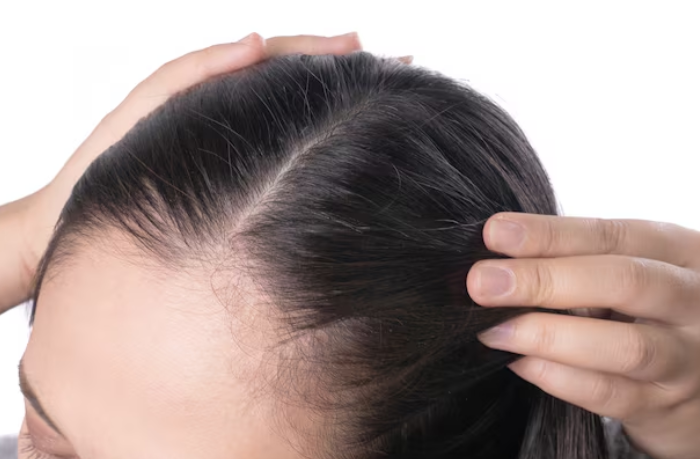
Rather than focusing simply on placing the hairs close together,
it is important to also consider the difference in density
between the front and back.
- Points to check before transplantation
If you are planning a hairline hair transplant,
it is necessary to first check the current condition of your scalp and hair
rather than deciding only on the shape you want.
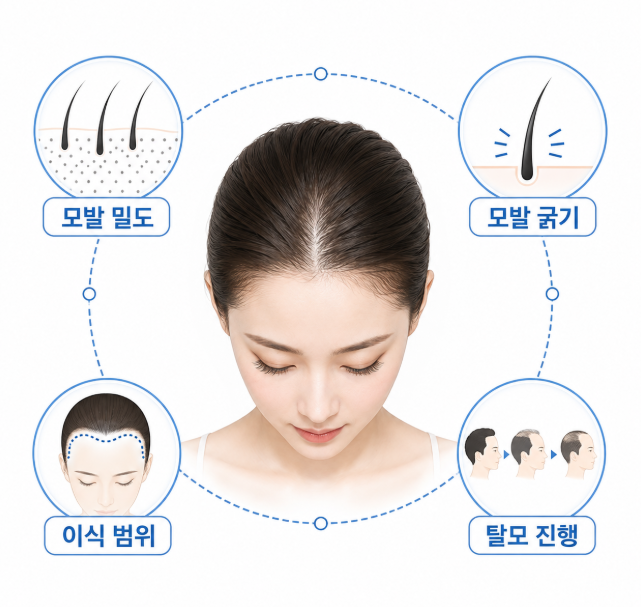
The density and thickness of the hair at the back of the head,
as well as the required transplant area,
are examined to determine the available follicles
and the appropriate transplant range.
It is also necessary to determine whether the current M-shaped hairline
or broad forehead is an inherited feature
or whether the hairline has changed as hair loss has progressed.
If the hair loss is ongoing and only the front is filled excessively,
the line may appear different later as the existing hair falls out.
Therefore, it is advisable to plan while considering
not only the hairline currently visible
but also the possibility of future changes in the hair.
Rather than transplanting an excessive number of follicles
or lowering the hairline unconditionally,
it is important to find a range suited to the current facial proportions and hair condition.
Ultimately, a hairline hair transplant
is not simply about filling an empty space.
It is a process that considers face shape, forehead proportions,
and hair characteristics together.

Since each person has a different face shape and hair condition,
it is advisable to plan a design that suits you
based on a thorough assessment.
↓↓↓ Content you may also find helpful ↓↓↓
-Operating Hours-
| Weekdays 10:00–19:00 (Last registration at 18:30) Saturdays 10:00–16:00 (Last registration at 15:30) Public holidays / Wednesdays and Sundays: Closed regularly |
-Contact-
| ▶ 청담오케이의원 |
|---|
| Consultation phone: 02-3446-7588 Contact us via KakaoTalk |
-How to Get Here-