※ This post is content provided for the purpose of sharing medical information.
Please note that it does not fall under the categories subject to review under Articles 56(2) and 57 of the Medical Service Act,
and is not a post intended for advertising purposes.
Hello,
I am Seong Hyeon-ju, director of Cheongdam OK Clinic.
| ▶ Full Member of the Korean Academy of Cosmetic Plastic Surgery (KACS) |
|---|
| ▶ Full Member of the Korean Society for the Study of Obesity (KSSO) |
| ▶ Full Member of the Korean Association for Aesthetic and Metabolic Medicine (KAAM) |
| ▶ Full Member of the Korean Society of Liposuction and Aesthetic Surgery (KSSL) |
| ▶ Full Member of the Korean Society of Aesthetic Surgery (KSAS) |
Some people are particularly concerned that their shoulder lines look rounded
or sloped downward when taking pictures or wearing off-the-shoulder tops or camisoles that expose the shoulders.
Recently, rather than a line that slopes smoothly from the neck to the ends of the shoulders,
many people prefer so-called “square shoulders,” which are closer to horizontal and have naturally defined shoulder ends.
As a result, more people are searching for Jennie shoulder filler and wondering whether
the desired shoulder line can be created with filler alone.
Shoulder filler should not be approached simply as a way to make a particular area larger.
Instead, the shoulder’s current bone structure, muscles, and degree of hollowing should be assessed before supplementing the contours where necessary.
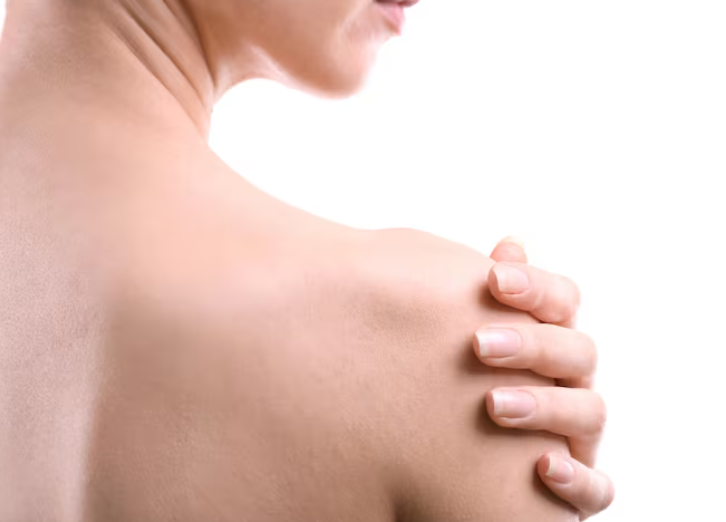
Today, we will look at which areas should be assessed when considering Jennie shoulder filler
and how it differs from trapezius muscle Botox.
| Table of Contents |
|---|
| 1. What is Jennie shoulder filler? 2. Where should filler be added to create square shoulders? 3. How does it differ from trapezius muscle Botox? 4. What should be checked before the procedure? |
- What Is Jennie Shoulder Filler?
The procedure commonly referred to as Jennie shoulder filler
means supplementing insufficient volume in the shoulder line with filler to create a smoother silhouette.
The shape of a person’s shoulders varies depending on factors such as the length and angle of the clavicles, the position of the acromion, the volume of the deltoids, and the degree of trapezius muscle development.
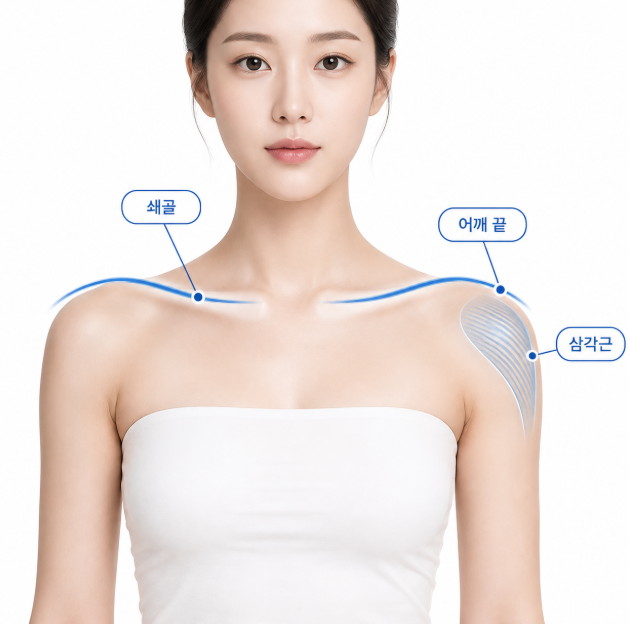
In particular, if there is insufficient volume at the ends of the shoulders or a pronounced hollow between the clavicles and the arms,
shoulders may look narrow and rounded regardless of the actual bone structure.
Appropriately supplementing the deficient contours can make the line from the neck to the shoulder ends appear more defined.
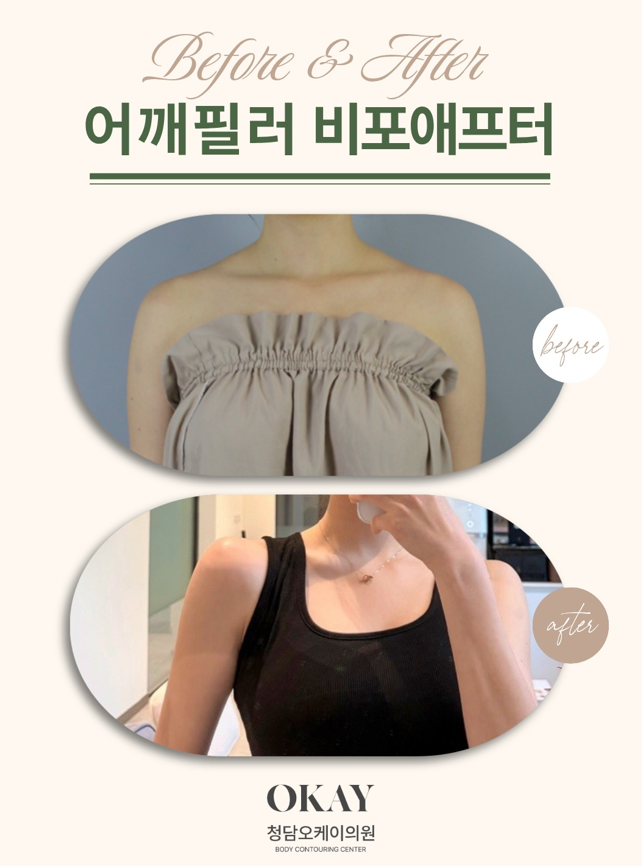
However, this procedure is not intended to reproduce a particular celebrity’s body shape exactly. It is important to find natural proportions based on each individual’s body type.
- Where Should Filler Be Added to Create Square Shoulders?
The important point in Jennie shoulder filler is not simply to inject a large amount throughout the upper shoulder area.
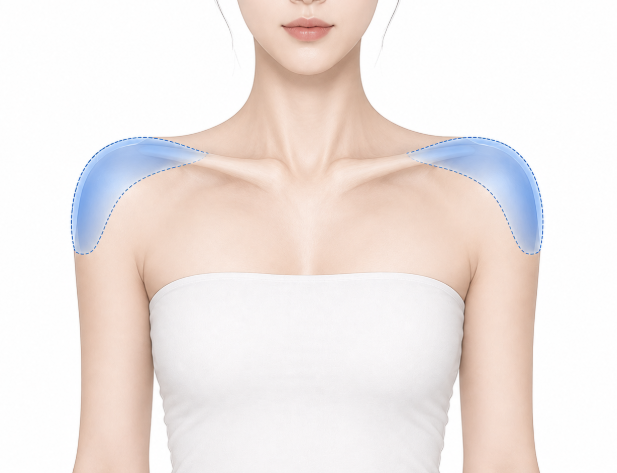
Generally, the degree of hollowing around the shoulder ends and deltoids,
the contours extending from the clavicles to the shoulders, and other areas are examined.
A plan can then be made to supplement the volume where needed.
For example,
if the shoulders slope sharply downward at the ends,
supplementing the contours in that area may be considered to create a visually more horizontal line.
Conversely, if the shoulder muscles are already sufficiently developed,
adding excessive volume may make the shoulders look broad or bulky.
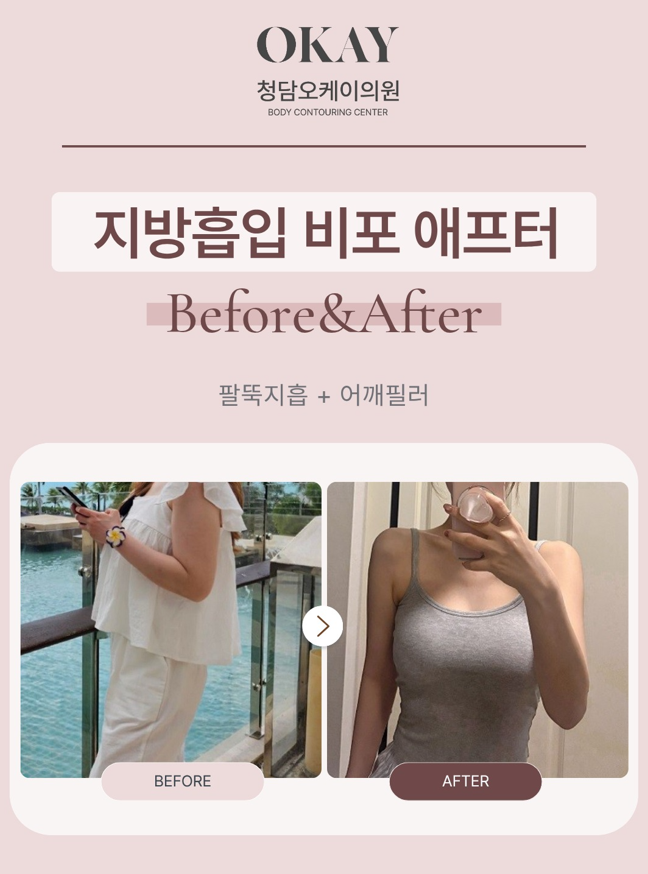
Therefore, with Jennie shoulder filler, it is necessary not only to consider “where to inject,”
but first to identify which areas of the current shoulders lack volume.
- How Does It Differ from Trapezius Muscle Botox?
When searching for square shoulders, people often come across trapezius muscle Botox along with Jennie shoulder filler.
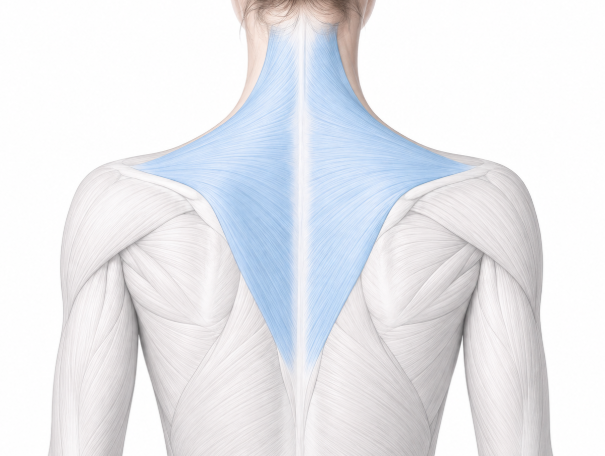
The two procedures are based on different approaches.
While filler supplements insufficient volume and contours,
trapezius muscle Botox reduces movement in developed muscles, encouraging their volume to decrease over time.
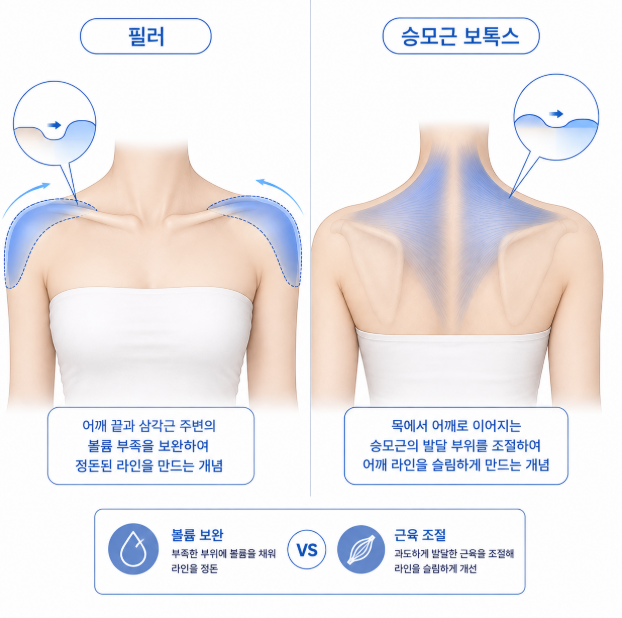
If developed trapezius muscles make the boundary between the neck and shoulders appear raised,
Botox may be considered.
If the shoulders look rounded because of insufficient volume or hollowing at the shoulder ends,
filler may be considered.
In some cases, both characteristics may appear together. Therefore, rather than insisting on just one procedure,
it is important to assess the shoulder structure first.
- What Should Be Checked Before the Procedure?
If you are planning Jennie shoulder filler, you should assess the overall proportions of the upper body from the front, back, and sides,
rather than making a decision based only on the frontal appearance.

This is because a natural design can be planned only by assessing the clavicle angle, shoulder width, degree of trapezius muscle development,
deltoid volume, and any asymmetry between the left and right sides together.
In particular, the shoulders are an area with a wide range of movement and important anatomical structures, such as blood vessels and nerves.
Therefore, the medical professional must carefully determine the treatment area, injection depth, and amount used.
In addition, after a filler procedure,
swelling, bruising, and pain may occur. In rare cases, serious side effects such as vascular complications may also develop, so it is necessary to receive a thorough explanation.
Ultimately, the key to Jennie shoulder filler is not creating as much volume as possible,
but finding the areas that lack volume in your body type and creating overall balance.
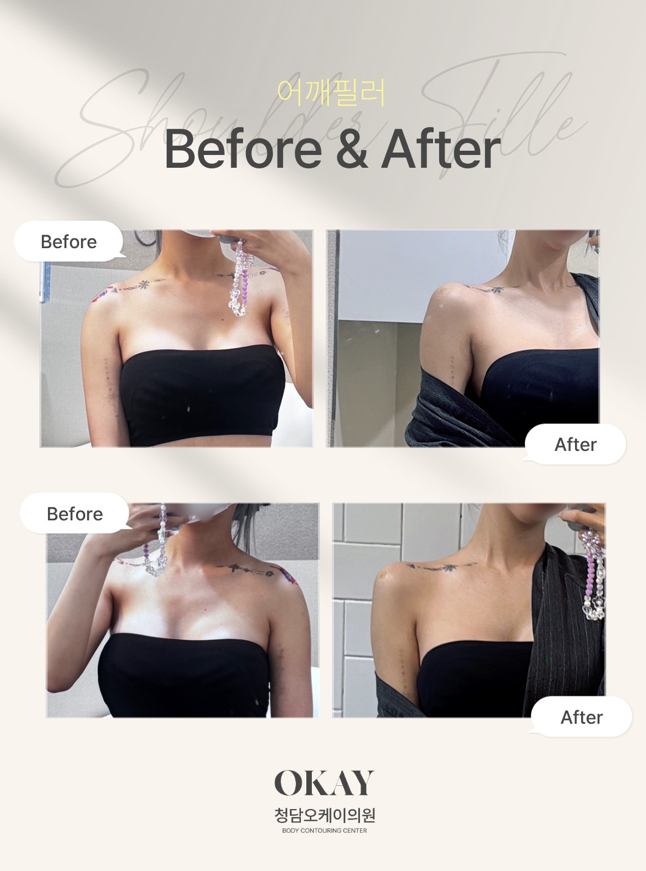
If you want square shoulders,
rather than copying the shape in a particular photo exactly, it is advisable to accurately assess your own bone structure, muscles, and shoulder line before consulting about an appropriate procedure.
↓↓↓ Related content ↓↓↓
-Operating Hours-
| Weekdays 10:00–19:00 (last registration at 18:30) Saturdays 10:00–16:00 (last registration at 15:30) Public holidays / Wednesdays and Sundays: Closed regularly |
-Contact-
| ▶ Cheongdam OK Clinic |
|---|
| Consultation phone: 02-3446-7588 Contact us via KakaoTalk |
-Directions-