※ This post is content provided for medical information purposes.
It does not fall under the content subject to review under Article 56, Paragraph 2 and Article 57 of the Medical Service Act,
and we would like to inform you that this post is not intended for advertising purposes.
Hello,
I am Seong Hyeon-ju, director of Cheongdam OK Clinic.
| ▶ Full Member of the Korean Society of Aesthetic Plastic Surgery (KACS) |
|---|
| ▶ Full Member of the Korean Society for the Study of Obesity (KSSO) |
| ▶ Full Member of the Korean Academy of Aesthetic Medicine (KAAM) |
| ▶ Full Member of the Korean Society of Liposuction Surgery (KSSL) |
| ▶ Full Member of the Korean Society of Aesthetic Surgery (KSAS) |
Even after repeated dieting, if a significant amount of fat remains in specific areas such as the abdomen, thighs, or arms,
you may begin considering liposuction.
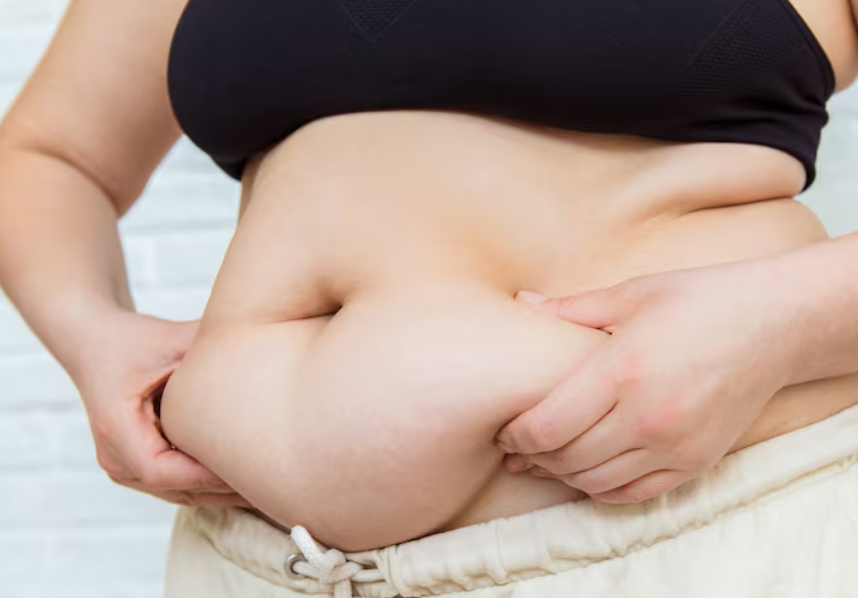
In particular, if you have a high body weight or a large amount of subcutaneous fat,
you may also look into large-volume liposuction.
However, when considering liposuction for severe obesity, you should not make a decision based simply on
“how much fat can be removed.”
This is because the areas that need to be checked before surgery and the recovery process may differ
as the treatment area becomes larger and the amount of fat increases.
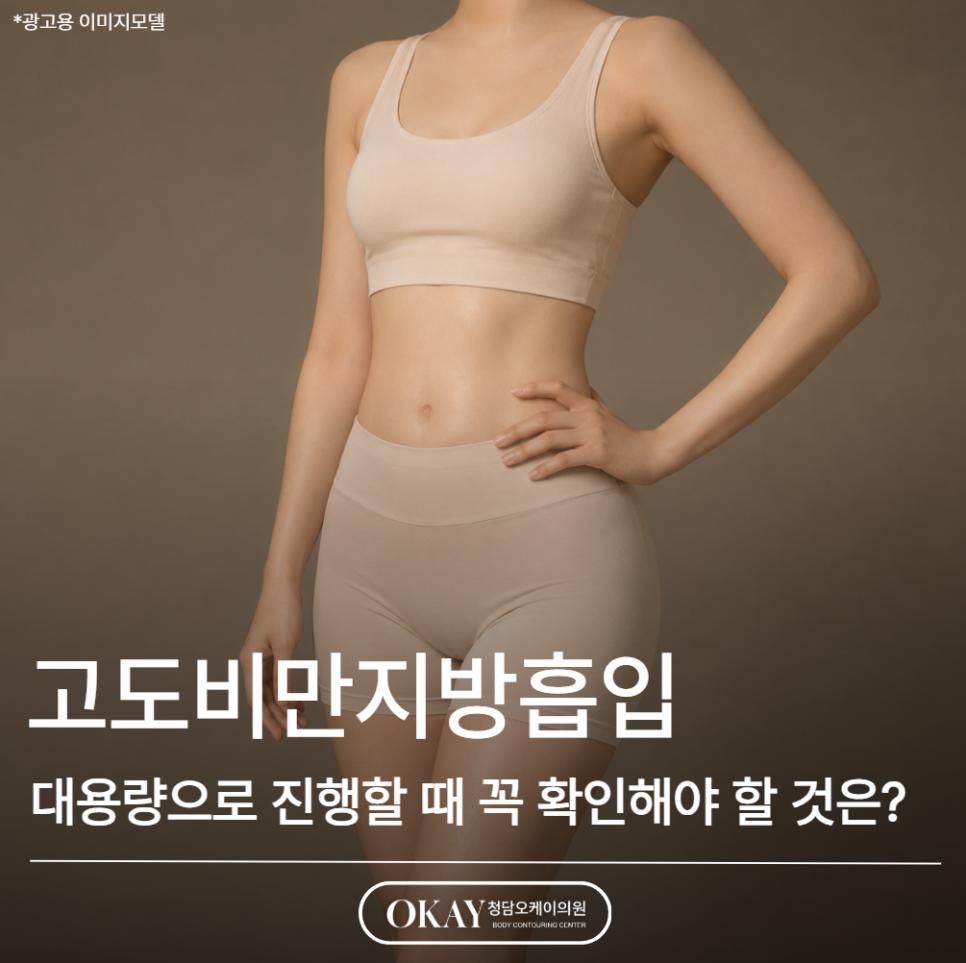
Today, we will look step by step at what should be checked first when considering liposuction for severe obesity.
| TABLE OF CONTENTS |
|---|
| 1. What Is Large-Volume Liposuction? 2. Checking Your Health Before Surgery 3. Checking the Amount and Areas of Fat Removal 4. Recovery and Aftercare |
- What Is Large-Volume Liposuction?
Liposuction for severe obesity is a general term used when fat accumulated in certain areas is removed over a relatively wide area.
If fat has accumulated not only in the abdomen but also in areas such as the flanks, back, and thighs,
the surgical area may also become more extensive.
The first thing to understand is that liposuction is not a procedure intended primarily for weight loss itself.
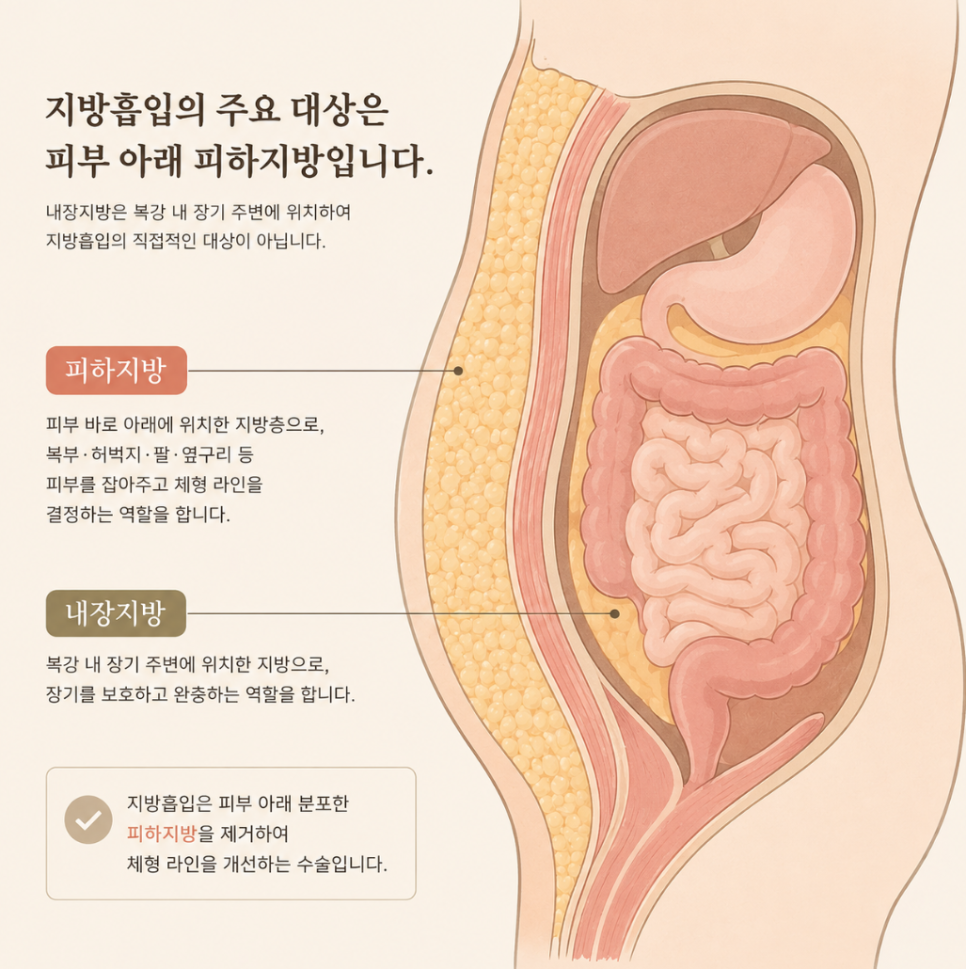
Liposuction is closer to a body-contouring method that mainly removes subcutaneous fat
to improve the body's circumference and silhouette.
Therefore, rather than reducing the number on the scale,
it is important to consider where fat is concentrated and what kind of lines you want to create.
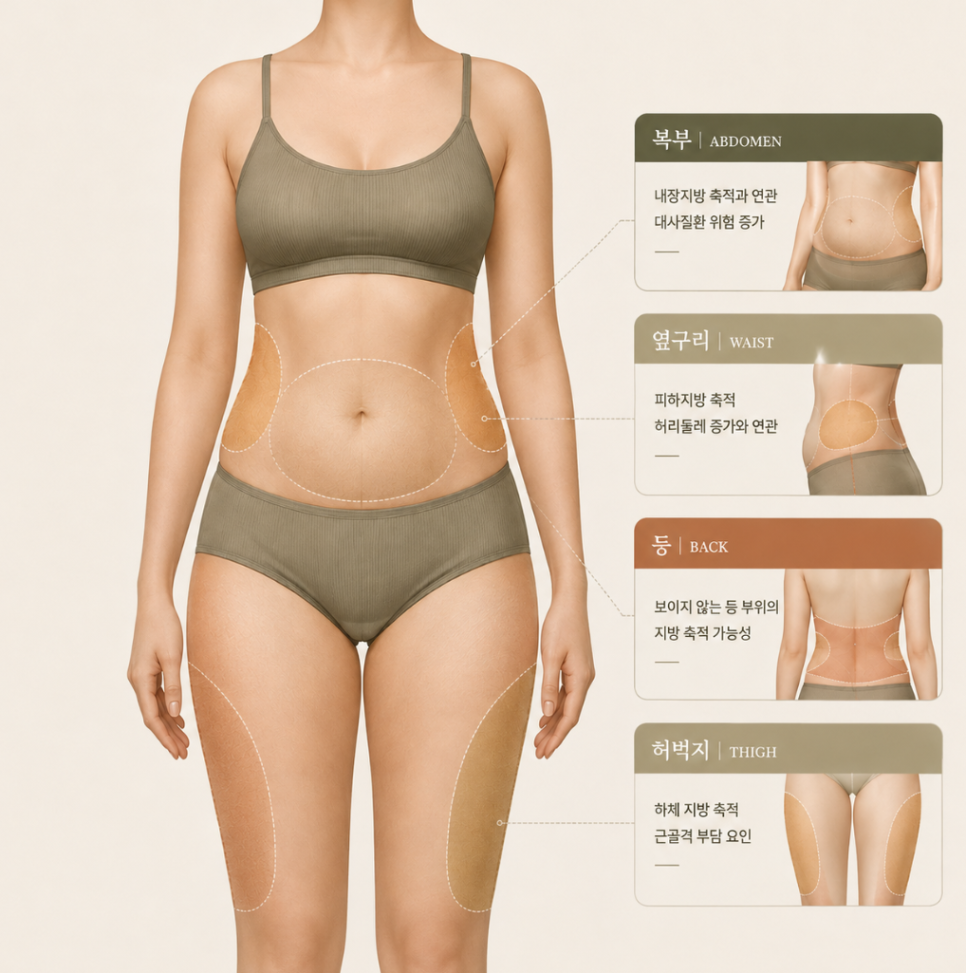
With liposuction for severe obesity as well, you should analyze your current fat distribution and body shape together,
rather than using only the number of kilograms lost as the standard.
- Checking Your Health Before Surgery
If you are planning to have a large amount of fat removed,
the process of checking your overall health before surgery is especially important.
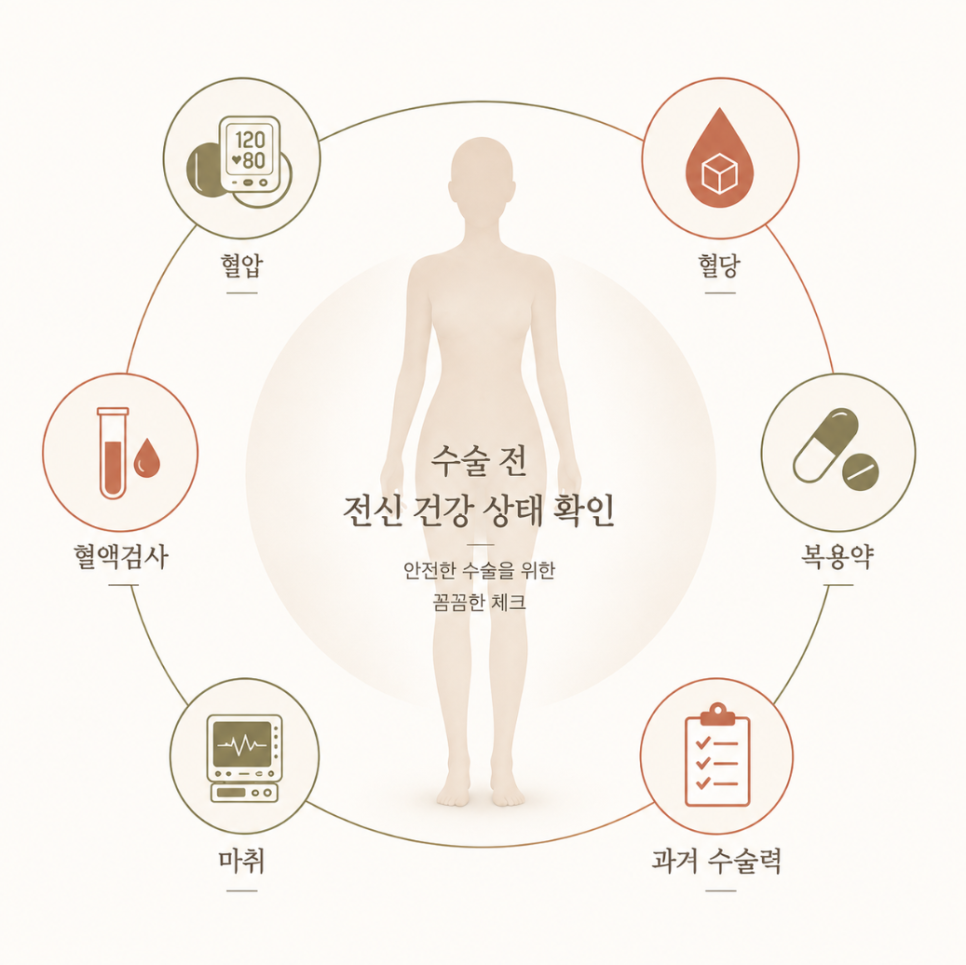
Your blood pressure and blood sugar, medications you are currently taking,
as well as your history of surgery and anesthesia should be reviewed, and any necessary tests should be performed.
In particular, with liposuction for severe obesity, you should also consider the possibility that,
depending on the situation, the surgical area may be extensive and the operating time may be longer.
Therefore, you should decide whether to proceed only after sufficiently considering the anesthesia method, surgical plan,
and the recovery process after surgery.
In addition, depending on the individual's condition, there may be obesity-related risk factors before or after surgery,
so these also need to be assessed.
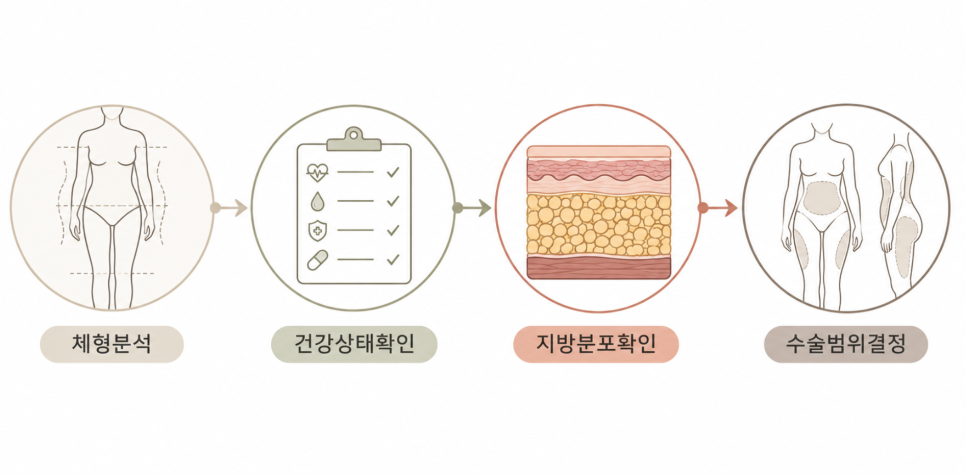
Rather than simply looking for a clinic that “removes a lot,”
the priority is to determine how much can be safely done given your current physical condition.
- Checking the Amount and Areas of Fat Removal
“How many cc can be removed at one time?”
This is one of the questions people often have during consultations for liposuction for severe obesity.
However, it is difficult to set one number as the appropriate amount of fat removal and apply it to everyone.
This is because body weight and body shape, as well as fat distribution, skin elasticity,
the surgical areas, and overall health must all be considered comprehensively.
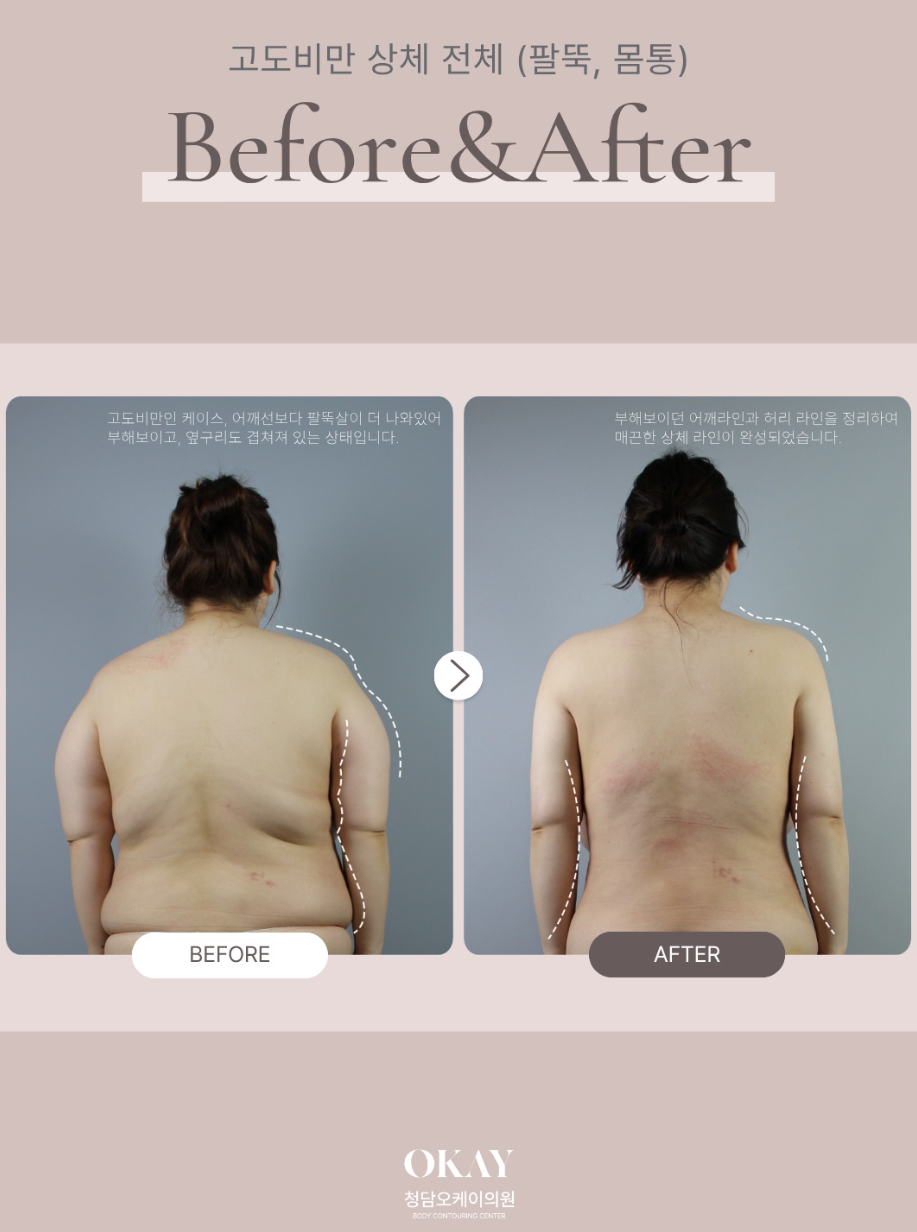
Removing a large amount simply because there is a lot of fat does not necessarily create a smoother body shape.
If a specific area is suctioned excessively,
the lines connecting it to the surrounding areas may look unnatural,
or the skin surface may become irregular.
For example, when removing abdominal fat,
you should not look at the abdomen alone but also consider the lines extending through the flanks, waist, and back.
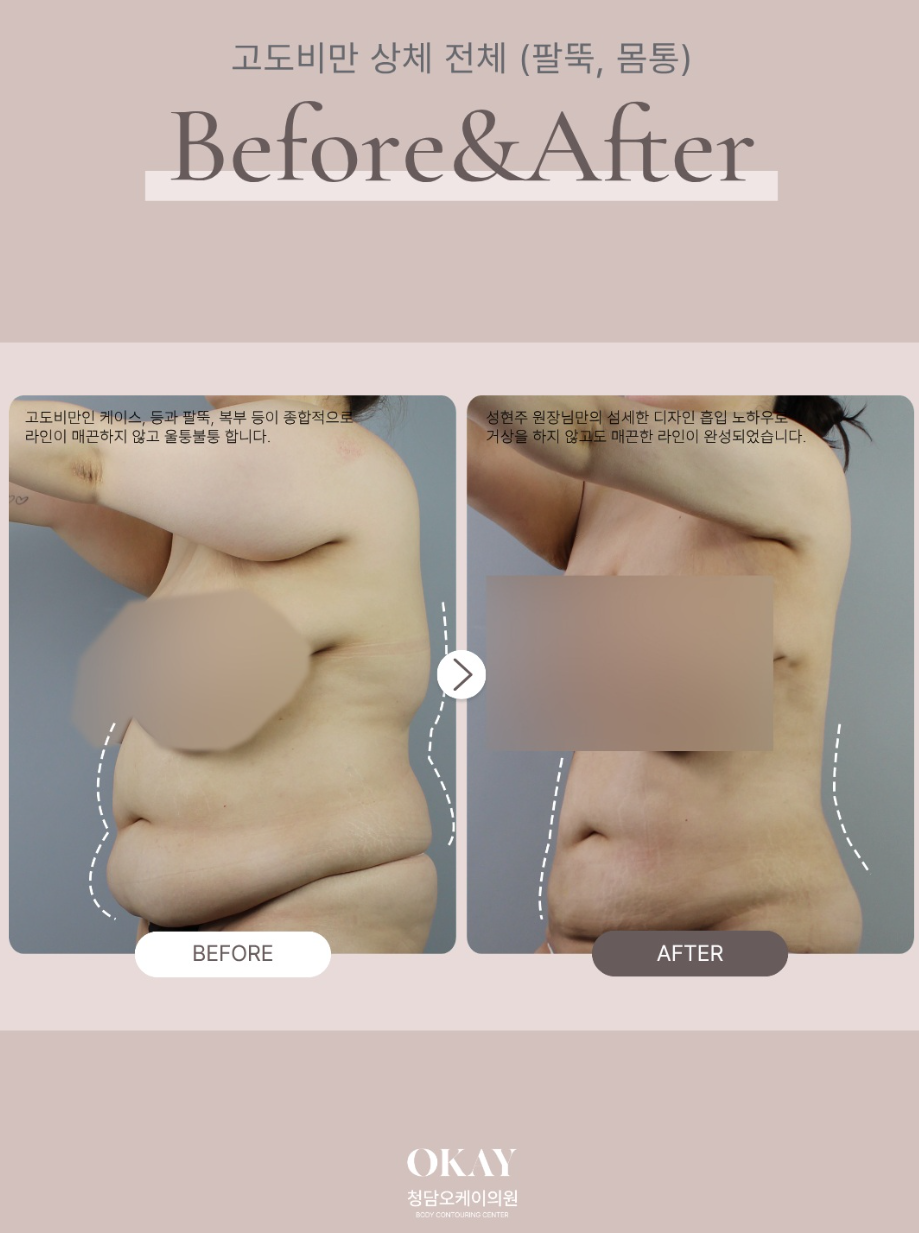
Ultimately, in liposuction for severe obesity,
overall body contouring is important in addition to the amount of fat removed.
- Recovery and Aftercare
With large-volume liposuction, the entire process does not end when the surgery is over.
After surgery, swelling, bruising, tightness, or changes in sensation may occur temporarily,
and recovery time varies from person to person.
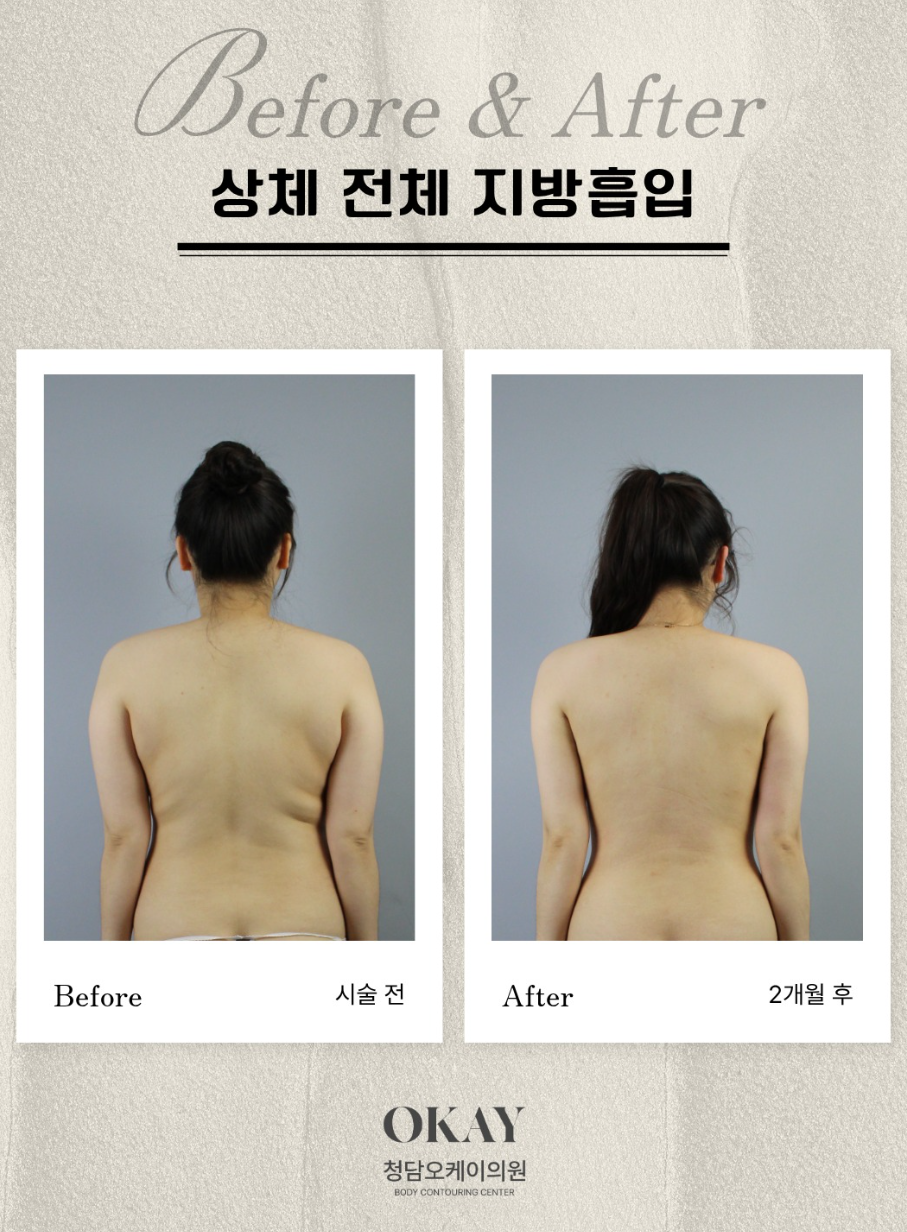
In particular, if the surgical area is extensive, as with liposuction for severe obesity,
it is advisable to check the recovery plan in advance as well.
Depending on the stage of recovery, care such as wearing compression garments according to the medical staff's instructions
and moving within a comfortable range without overexertion may be necessary.
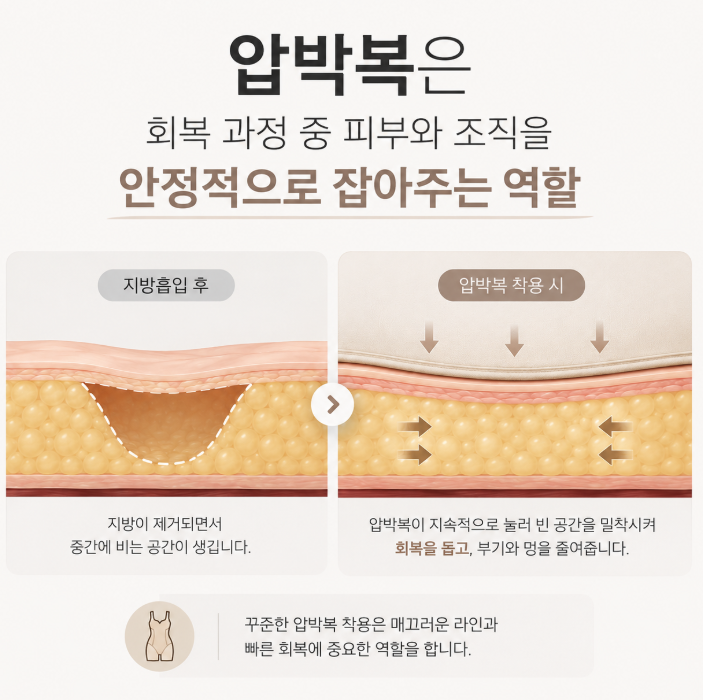
If a large amount of fat was present or skin elasticity is reduced,
how the skin settles after the fat is removed should also be monitored continuously.
Ultimately, it is difficult to assess the results of liposuction for severe obesity based only on
“how many cc were removed.”
Your current health, the appropriate extent of fat removal,
design suited to your body shape, and recovery care all need to be considered together.
If you are considering large-volume liposuction,
rather than making the removal of the maximum possible amount your goal,
check what extent of surgery is appropriate for you.
It is important to establish a plan suited to your current body shape and health condition
based on sufficient examinations and consultation.
↓↓↓ Related content you may find helpful ↓↓↓
-Clinic Hours-
| Weekdays 10:00–19:00 (last registration at 18:30) Saturdays 10:00–16:00 (last registration at 15:30) Public holidays / Wednesdays and Sundays: Closed regularly |
-Contact-
| ▶ Cheongdam OK Clinic |
|---|
| Consultation phone: 02-3446-7588 KakaoTalk inquiries |
-Find Us-