※ This post is content provided for medical information purposes.
It is not subject to review under Article 56, Paragraph 2 and Article 57 of the Medical Service Act,
and we would like to inform you that it is not a post intended for advertising purposes.
Hello,
I am Seong Hyeon-ju, director of Cheongdam OK Clinic.

| ▶ Full Member of the Korean Academy of Aesthetic Plastic Surgery (KACS) |
|---|
| ▶ Full Member of the Korean Society for the Study of Obesity (KSSO) |
| ▶ Full Member of the Korean Academy of Aesthetic Medicine and Body Contouring (KAAM) |
| ▶ Full Member of the Korean Society of Liposuction Surgery (KSSL) |
| ▶ Full Member of the Korean Society of Aesthetic Surgery (KSAS) |
As facial volume decreases,
the temples or front cheeks may appear sunken,
and the nasolabial folds may become more prominent.
For this reason, many people consider facial fat grafting
to restore insufficient volume.
At this point, a common thought is:
“Since some of it is absorbed anyway,
wouldn’t it be better to add a lot from the beginning?”
However, a face does not necessarily look younger or more three-dimensional
simply because it has more volume.
In fact, injecting more than necessary may make the face look larger,
or cause only certain areas to protrude,
making the overall balance appear unnatural.
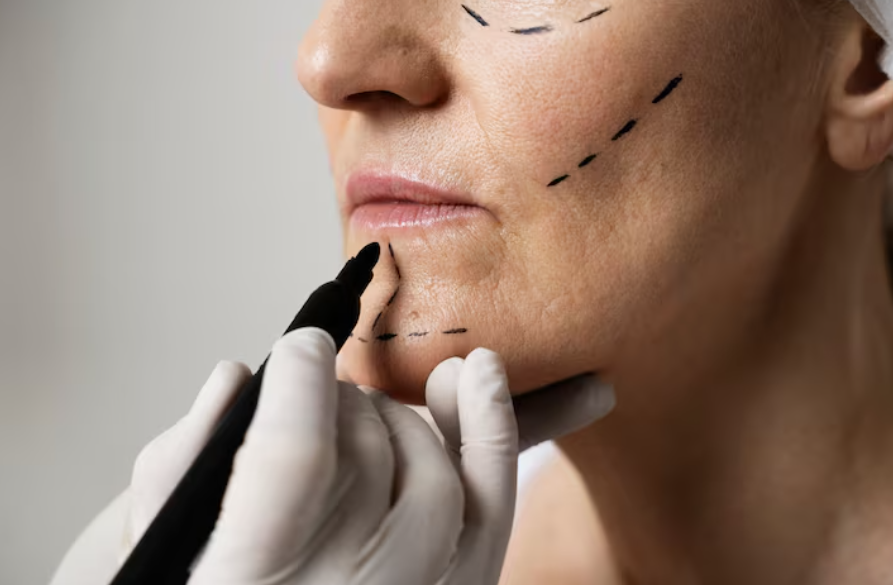
Today, we will look at why, when planning facial fat grafting,
“where and how” is more important than “how much.”
| Contents |
|---|
| 1. Will adding more make you look younger? 2. Why can too much look unnatural? 3. The volume needed differs by area 4. Checkpoints for natural-looking results |
- Will adding more make you look younger?
As we age, the distribution of facial fat changes,
and as skin elasticity decreases,
some areas, such as the temples or front cheeks, may appear sunken.
Adding an appropriate amount of volume to these areas
through facial fat grafting may help make the contours of the face
appear smoother.
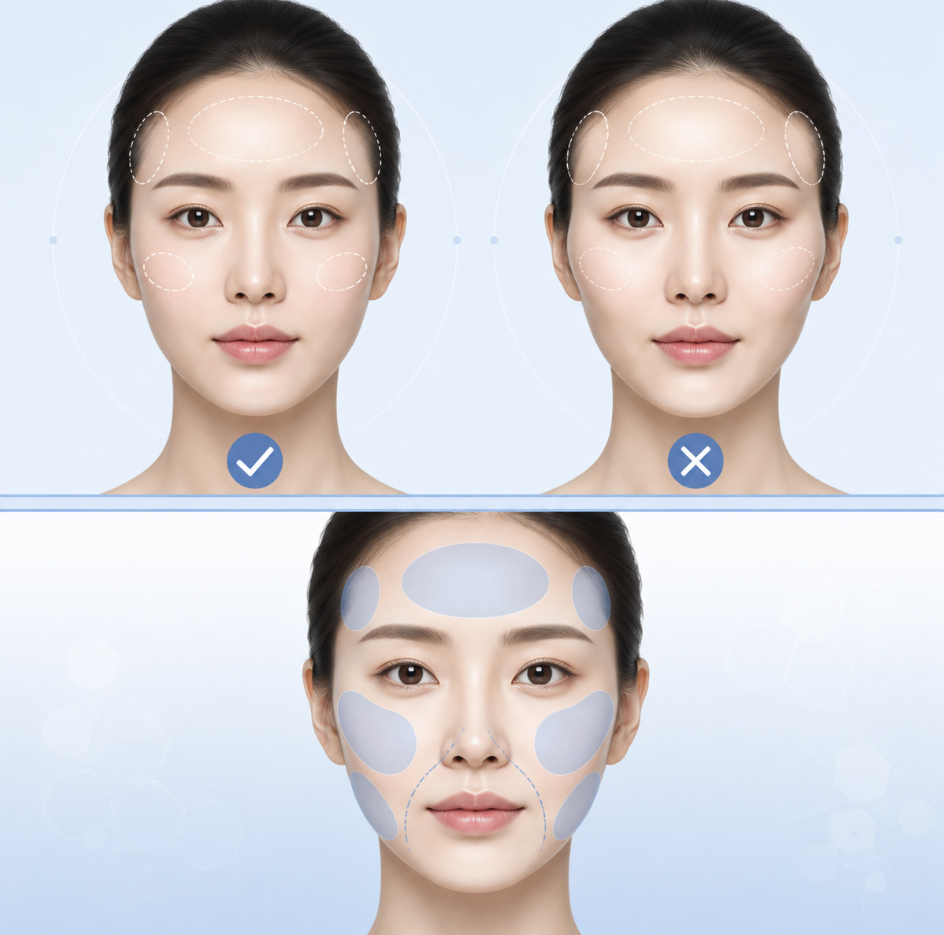
However, what is important here
is not to fill the face with as much volume as possible.
The face has different structures and volume distributions
in areas such as the forehead, temples, front cheeks, and side cheeks.
If fat is added beyond what is necessary
even in areas that already have sufficient volume,
the face may appear generally swollen or puffy.
In particular, although it may look natural from the front,
certain areas may appear prominent when viewed at a 45-degree angle or from the side.
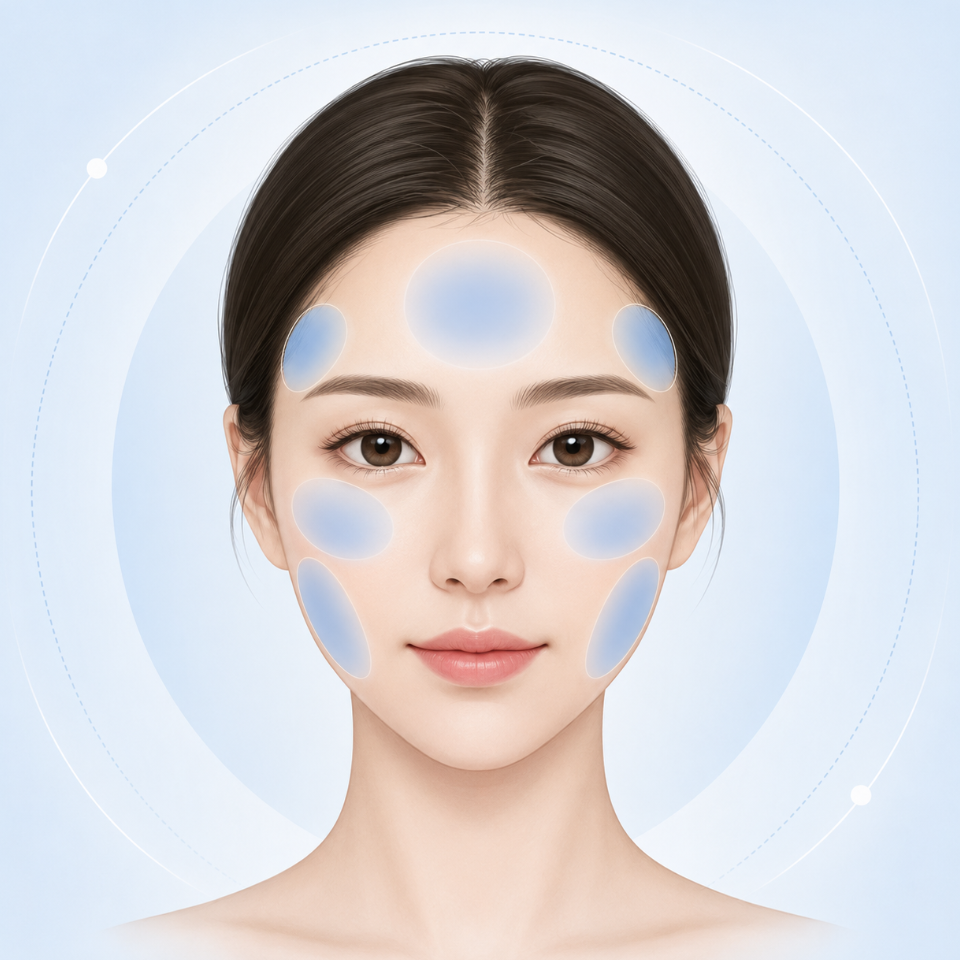
Therefore, with facial fat grafting,
it is important to identify the areas that currently lack volume
rather than simply increasing the amount injected.
- Why can too much look unnatural?
A natural-looking face does not have every area
that is equally rounded or convex.
The raised and recessed areas must blend appropriately
for the three-dimensional appearance of the face to look natural.
However, if the forehead, temples, and front cheeks
are filled excessively with facial fat grafting,
the contours originally present may become less distinct.
For example, if a large amount is added to the front cheeks,
the face may look fine normally, but the volume may become
more pronounced when smiling.
This may make the center of the face appear heavy
or give the cheeks an excessively full appearance.
Likewise, if the focus on filling sunken temples
leads to excessive volume,
the face may appear wider.
Ultimately, naturalness is determined not by how much is added,
but by how well it harmonizes with the existing face.
- The volume needed differs by area
When considering facial fat grafting,
rather than viewing the entire face as one area,
the characteristics of each area should be considered separately.
For the forehead, instead of simply making it more convex,
it is important to plan the volume while considering the overall curve
that continues from the brow bone to the temples.
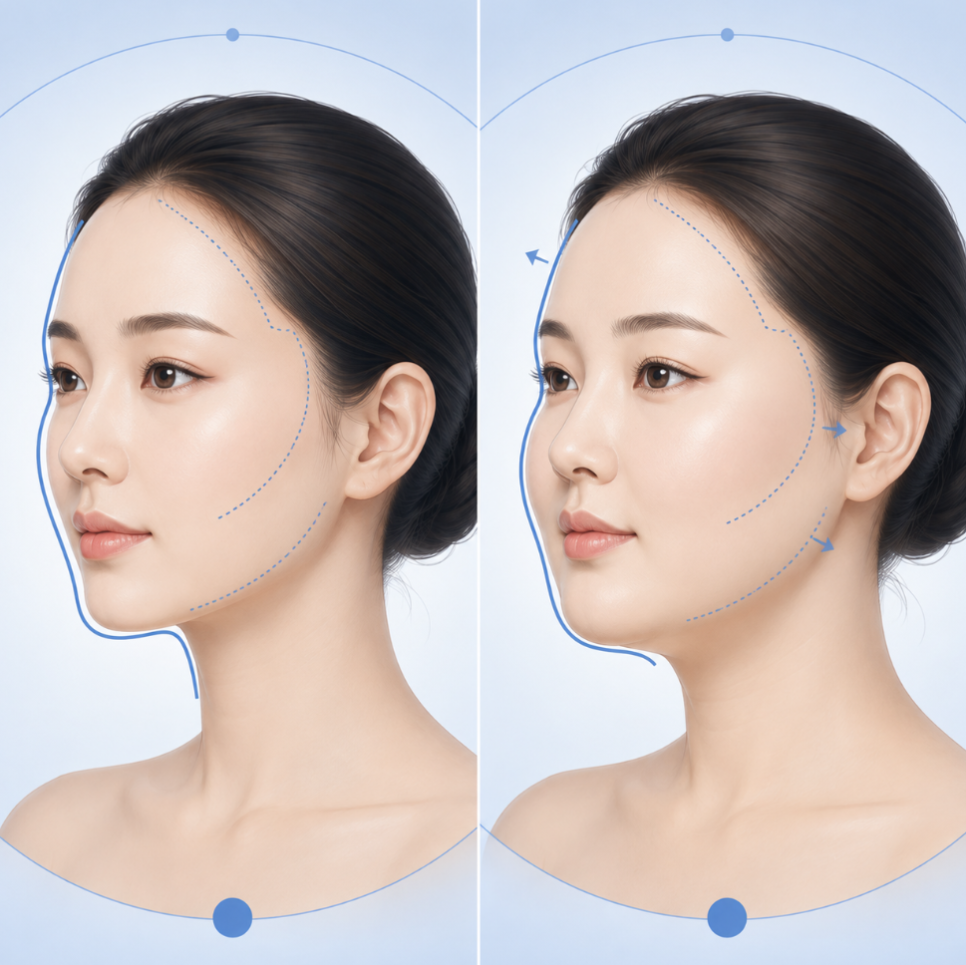
For the temples, the focus should be on how naturally
the area between the cheekbones and forehead connects.
The front cheeks also affect the three-dimensional appearance of the face,
but if they already have sufficient fat volume,
additional injection may not be necessary.
In addition, the bone structure and fat volume
are often not completely identical on the left and right sides of the face.
Even if one side is slightly more sunken,
injecting the same amount on both sides
is not always the most natural approach.
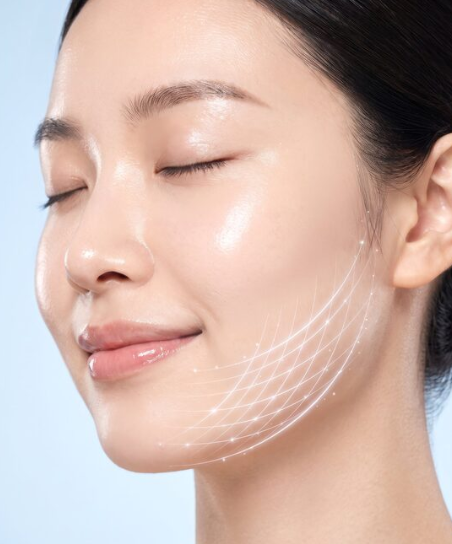
The overall balance should be assessed by examining
not only the front view but also the 45-degree and side views,
to determine which areas lack volume and which have enough.
- Checkpoints for natural-looking results
Facial fat grafting involves harvesting your own fat
and injecting it into areas that need it.
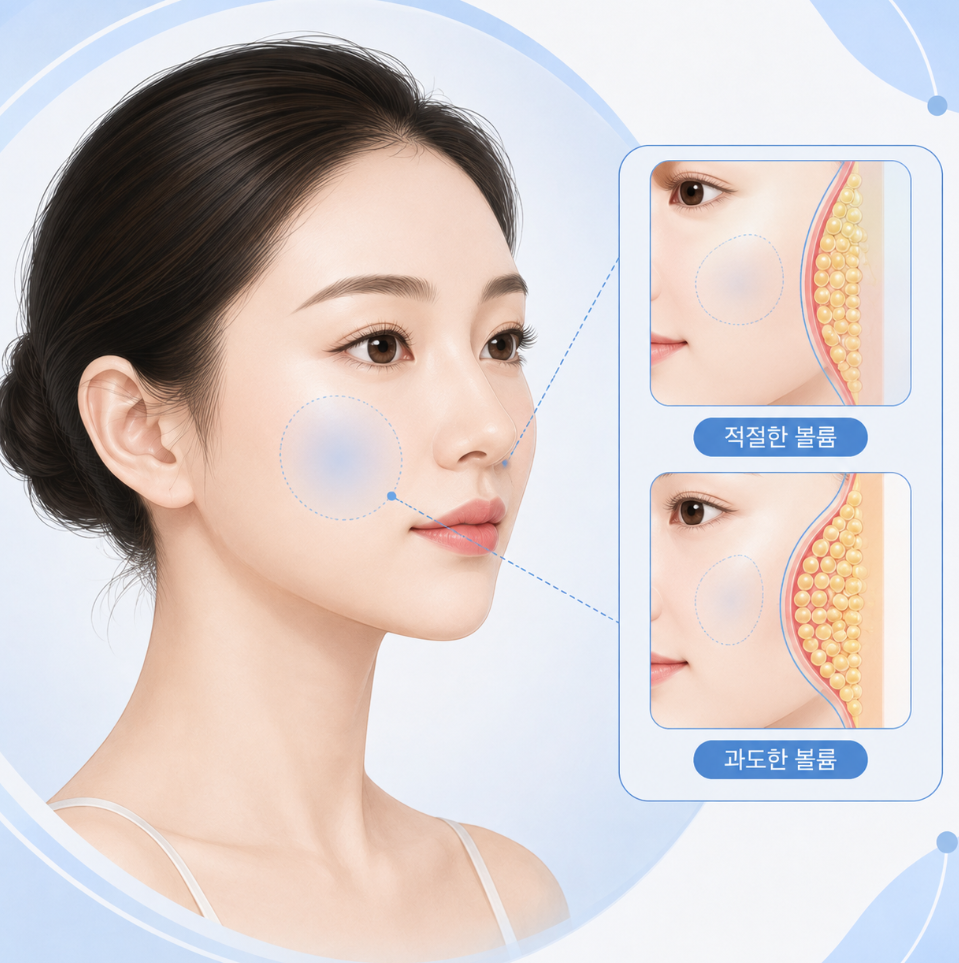
Therefore, it is important to consider not only
how much fat can be harvested,
but also the injection site and amount.
Not all of the injected fat remains unchanged,
and some of it may be absorbed depending on the individual.
However, anticipating absorption does not mean
that injecting an excessive amount from the beginning
will necessarily lead to a better result.
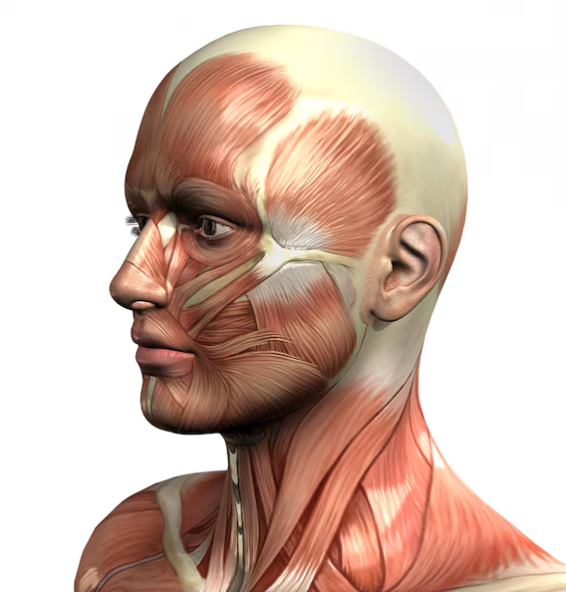
It is important to plan an appropriate amount of volume
by comprehensively considering the facial bone structure,
existing fat volume, skin thickness,
and the location and degree of hollowing.
Ultimately, the key to facial fat grafting
is not “filling as much as possible,”
but “filling the necessary areas with the necessary amount.”
A younger-looking face does not necessarily mean
a face with a large amount of volume.
A harmonious impression can be expected
when the face’s original contours and proportions
are maintained naturally while only insufficient areas are supplemented.
Therefore, before the procedure, rather than focusing only on the desired volume,
you should assess your current facial bone structure and fat distribution
and consult about the range and amount appropriate for you.
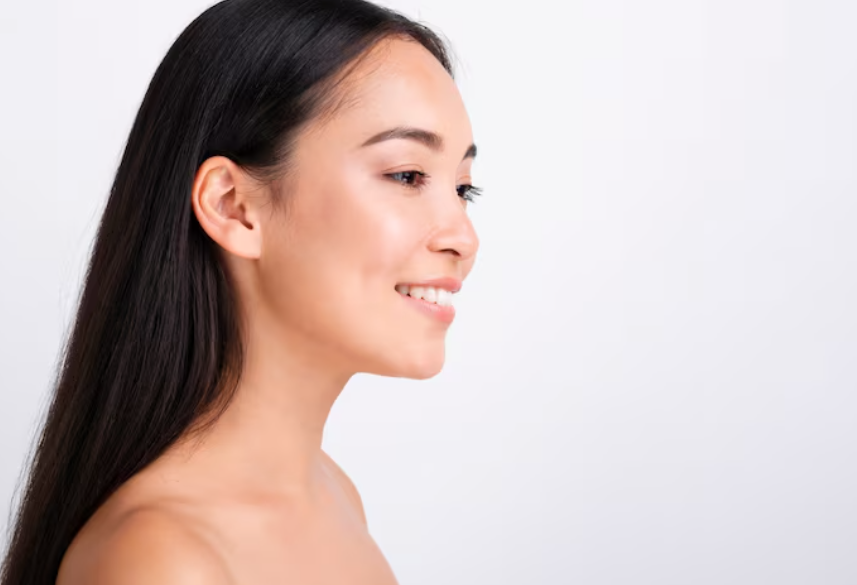
The appropriate approach may differ depending on an individual’s facial structure and skin condition,
so it is advisable to make a plan after receiving a sufficient consultation.
↓↓↓ Related content you may find helpful ↓↓↓
-Operating Hours-
| Weekdays 10:00–19:00 (last registration at 18:30) Saturdays 10:00–16:00 (last registration at 15:30) Public holidays / Wednesdays and Sundays: Closed |
-Contact-
| ▶ Cheongdam OK Clinic |
|---|
| Consultation phone: 02-3446-7588 KakaoTalk inquiry |
-How to Get Here-