Why do celebrities’ teeth look more beautiful? 👀
The answer may not simply be “white teeth.”
✔ Natural coloring
✔ Subtle translucency
✔ Harmony with the face
Good esthetics is not just about increasing brightness;
it lies in achieving harmony between color, translucency, and the overall appearance.
Healthy, beautiful teeth that suit you,
and a naturally lasting smile, are worth considering.✨

Do all three above look like
the exact same shade of white to you? 🦷
The “white” we talk about is actually not just one color.
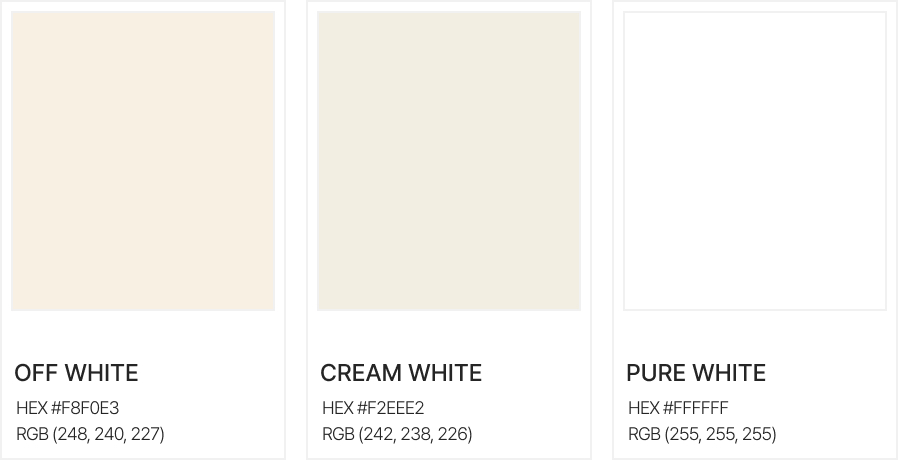
Depending on subtle differences in value and chroma,
the depth and atmosphere perceived visually can be completely different.
Even with the same color, there are many ways to express it.
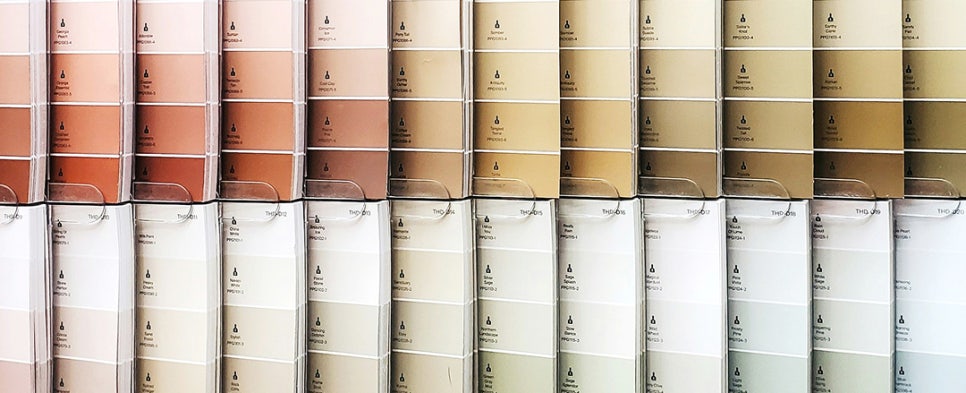
The Pantone color system, which many of you have probably heard of,
distinguishes colors by giving them names such as “Cloud Dancer” and “Off-White,”
even when they belong to the same color family.
HEX codes such as #FDDE01 can also be used
to quantify and express colors more precisely.
Each industry uses its own standards and coding systems
to communicate colors more accurately.
What are some of the leading ways to express color?
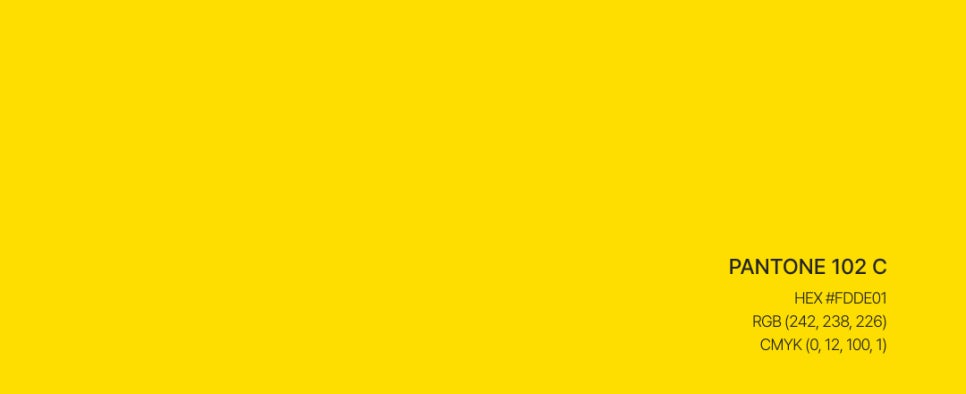
From the globally popular Pantone (PANTONE) standard,
to CMYK, which is essential for printed media,
and RGB and HEX, which serve as standards for digital displays.
These are all systems that have evolved to reproduce accurate colors in their respective fields.
Then how is white expressed in dental esthetics?

In dental esthetics, dentists do not simply use Pantone or RGB codes.
To capture the subtle spectrum of living teeth,
dedicated Shade Guides are used.
This is because teeth vary so much in value, chroma, and hue that they are difficult to describe simply as “white.”
Let’s first look at
the “three key elements that determine tooth color.”
Value

This indicates how bright and white the teeth appear.
In general, the higher the value, the whiter and cleaner the teeth look; the lower the value, the calmer and more natural the appearance.
Chroma

This refers to the intensity or saturation of the color in the teeth.
The higher the chroma, the more vivid and intense the color appears; the lower the chroma, the softer and lighter it looks.
Hue

This refers to the basic color family of the teeth.
For example, even teeth with the same value may have a warm yellowish tone in one person and a calm grayish tone in another.
The long-standing clinical standard in dentistry: VITA Classical Shade Guide
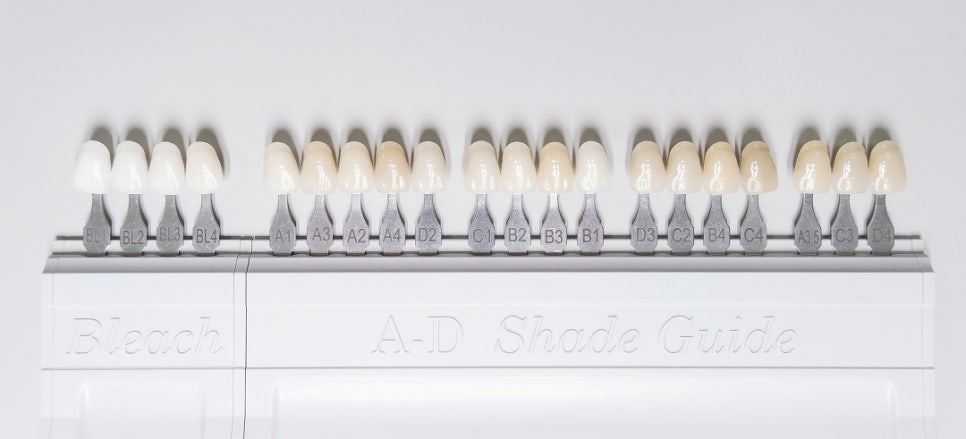
This has long been the most widely used reference point
for systematically expressing the three elements that make up tooth color.
By assigning unique guides such as A1, A2, and B1,
it helps dental professionals and dental technicians around the world communicate color objectively and consistently.
The complicated-looking letters and numbers—
what do they mean?
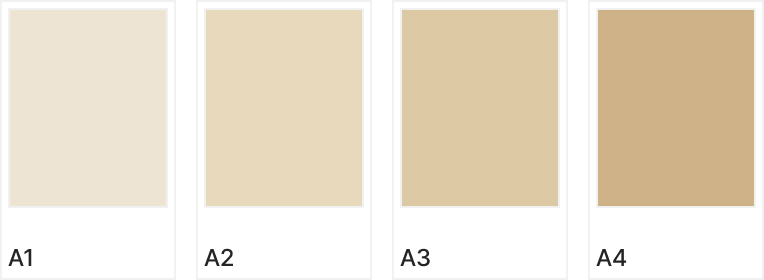
The VITA Classical Shade Guide is organized based on hue.
A = Reddish Brown
B = Reddish Yellow
C = Grey
D = Reddish Grey
The numbers
indicate chroma.
For example,
A2 is a VITA Classical Shade Guide shade with a chroma level of 2 in the reddish-brown family.
Limitations of the VITA Classical Shade Guide
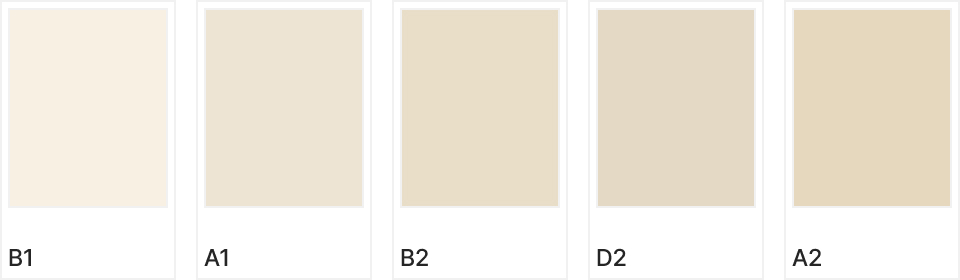
When looking at the codes, it is easy to assume that A1 is the brightest,
but in actual clinical practice, B1 is the brightest shade.
Because the VITA Classical Shade Guide is designed around hue,
rather than value, which humans perceive first,
it has limitations when it comes to intuitively selecting the optimal brightness for each person.
That is why the VITA 3D-Master Shade Guide was introduced
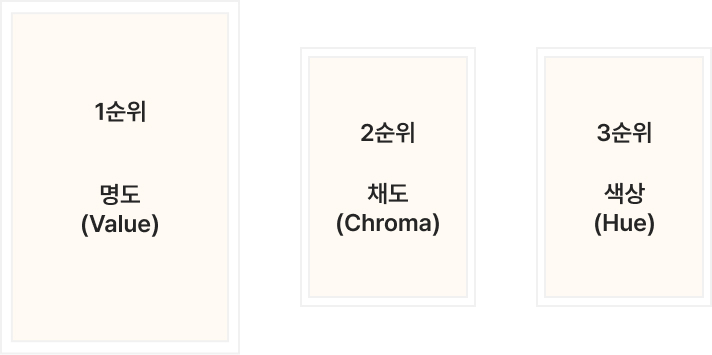
This system was introduced to fully address the traditional limitations of the VITA Classical Shade Guide.
By subdividing value, which is visually the most important factor, as the top priority,
it intuitively shows which color will appear clearest and brightest against your face.
A representative example is
the 0M1 shade, one of the most popular shades in esthetic dentistry.
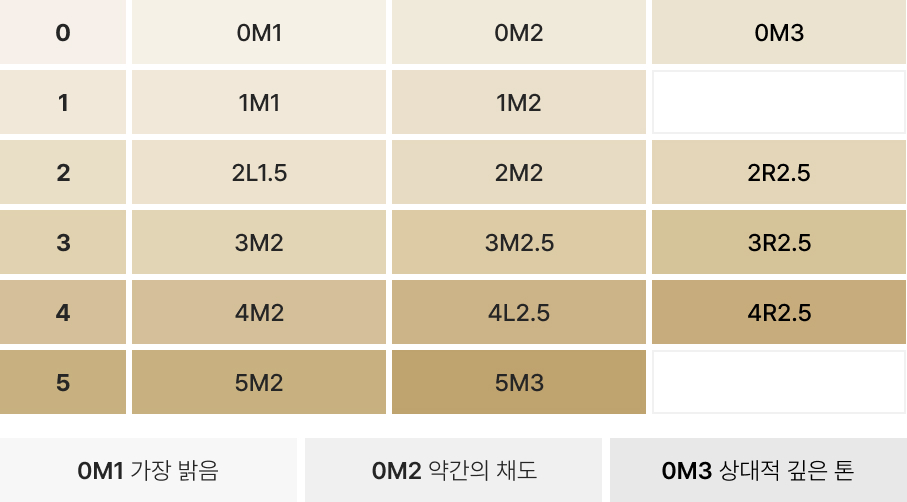
0 (Value) | Highest brightness: A dazzlingly clear and radiant Bleach shade without an artificial dullness
M (Hue) | Standard hue: A Medium Hue that is not skewed in either direction and appears most natural for Korean patients
1 (Chroma) | Pure intensity: Lowest Chroma, removing a dull appearance and maximizing clarity
This is the key shade in premium esthetic dentistry for a radiant appearance without dullness.
When receiving esthetic dental treatment,
how can you find the color that harmonizes best with you?
When determining the ideal tooth brightness in dental esthetics,
the patient’s “sclera (the white of the eye)” is used as a very important reference.
In the human facial structure, the sclera is an area that serves as a visual reference for brightness.
If the teeth become excessively brighter than the sclera,
an artificial “optical illusion” may occur, making the teeth appear to float separately from the face.
Conversely, teeth with a brightness that naturally balances with the sclera
create a harmonious and stable esthetic appearance across the face.
Therefore, at the dental clinic,
it is advisable to compare your teeth with the color of your sclera using Shade Guides such as
the VITA Classical Shade Guide and the VITA 3D-Master Shade Guide,
and then find the ideal tooth brightness and hue.
And here is another important fact!
In dental esthetics,
there is something as important as a color guide.
That is “translucency.”
The enamel layer,
which is the outermost layer of natural teeth,
has the characteristic of allowing light to pass through naturally.
In dental esthetics,
this is called translucency.
This translucency is the most important element in reproducing ideal natural teeth,
particularly the enamel layer.
The reason it is important in dental esthetics
is that translucency should be reproduced naturally, like a radiant gemstone.
When the ideal color and translucency are in harmony,
natural and beautiful teeth can be created.
ZERONATE pursues an ideal natural beauty by considering all of these elements.

From value, chroma, and hue
to translucency,
ZERONATE considers every element that makes up natural teeth.
To create ideal teeth,
esthetic dentists and master ceramists collaborate,
and design the color and shape of the teeth together
based on advanced equipment and precise communication.
How does ZERONATE
create the ideal tooth color?
- Shade Taking
The individual characteristics of the teeth are precisely analyzed,
including value, chroma, hue,
and translucency.
- ZERONATE LAB Design
Based on the analyzed data,
esthetic dentists and master ceramists
design the color, shape, and translucency of the teeth together.
- Completion of ZERONATE
Value, chroma, hue, and translucency.
Taking all of these elements into consideration,
master ceramists complete ZERONATE,
bringing the beauty of ideal natural teeth to life.
What shade do your teeth have?
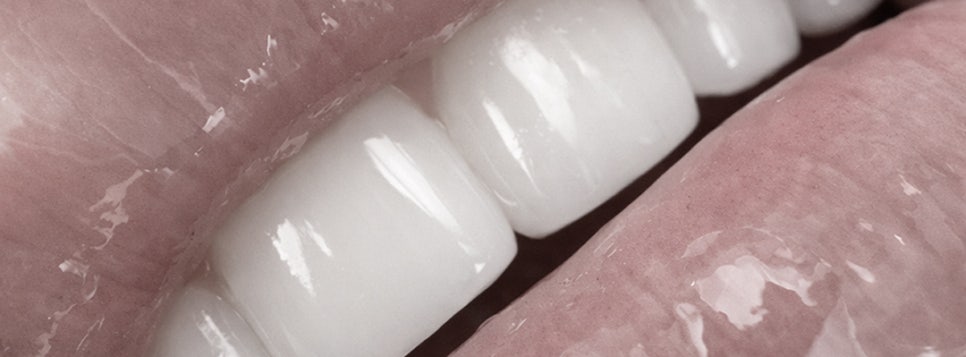
TU Dental designs ideal natural teeth by considering
value, chroma, hue,
and translucency.
If you are curious about your own shade of white,
find out through a professional Shade Guide assessment.