Post-Implant Pain: Causes, Ways to Reduce Pain, and Precautions
Are you worried about pain after an implant?!
Anyone would have concerns about implant treatment. In particular, the biggest worry is whether it will hurt. Today, let’s take a detailed look at the causes of pain after implant treatment and how to manage it.
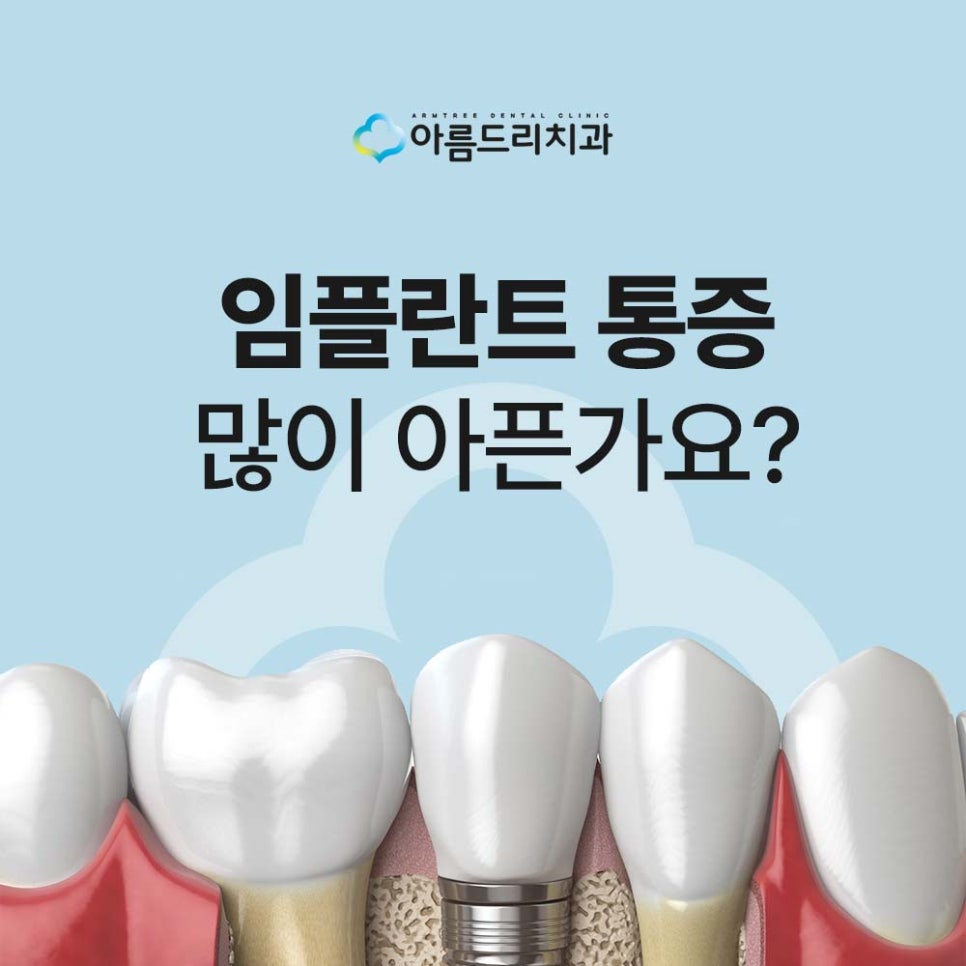
Causes of pain after implant treatment
The main cause of pain after an implant procedure is related to the gum incision.
Many people think that implants are painful because they are placed into the bone using a drill, but in fact, there is almost no pain when the drill is used during the implant placement process. That’s because bones do not have nerves that feel pain.
“Wait, what? People around me who had implants said it hurt a lot??”
Yes, that doesn’t mean implant treatment itself is painless. There are cases where it hurts. Let me tell you when pain can occur.

First. Gum incision
To perform an implant procedure, the gums must be incised. The degree of this incision makes a big difference in pain.
In particular, when bone grafting is needed, the gum incision becomes larger, and especially in cases where a lot of bone grafting is required, such as sinus lift surgery (especially the lateral approach), a greater amount of gum incision is unavoidable. Because the gums contain many blood vessels and nerves, pain, swelling, and bruising can occur.
Therefore, the amount of pain can vary greatly depending on how much the doctor tries to minimize the incision.
A larger incision is more convenient for the doctor performing the procedure. On the other hand, if the incision is kept small, it becomes more difficult for the doctor, and the direction of implant placement may not be properly controlled. Therefore, this is closely related to the doctor’s skill.
The more incisions there are, the more pain, swelling, and bruising will occur, which is only natural.
Second. Inflammation
If there is significant inflammation in the area where the implant needs to be placed, this can also be a cause of pain. Areas with a lot of inflammation have many blood vessels, so there is more bleeding, and because of the inflammation, anesthesia does not work as well. Therefore, the procedure should be performed at the proper time before the inflammation becomes too severe in order to prevent pain after the procedure.
In addition, in rare cases, pain may occur due to causes such as heat generated during the implant placement process. However, such cases are uncommon.

Pain progression stages
Stage 1
In most cases, for about 3 to 4 hours after the procedure, you will feel a “pulsating pain” with each heartbeat. After that, a dull aching pain may continue for up to about 3 days. However, this initial pain can be sufficiently managed with ice packs and painkillers. Ice packs are especially important after the procedure. Ice packs not only relieve pain but are also effective in preventing swelling and bruising, so it is a good idea to apply them well during the first 48 hours.
Stage 2
If the inflammation is severe or the incision is extensive, the pain may last for more than a week. In such cases, it is important to take antibiotics properly. Unlike painkillers, antibiotics should not be taken on and off. It is important to finish all of the prescribed antibiotics. In some cases, side effects from antibiotics such as diarrhea, constipation, or nausea may occur. If that happens, contact the dental clinic as soon as possible and it is better to change the type of antibiotic and continue taking it.
Stage 3
Sometimes abnormal pain may occur.
Signs of abnormal pain include the following:
- The pain becomes worse over time
- The pain does not decrease even after taking painkillers
- Severe swelling or bleeding is accompanied
- Fever of 38°C or higher
In such cases, it is best to visit the dental clinic that performed the procedure as soon as possible. Also, because this kind of abnormal pain is severe and lasts a long time, it is better to receive treatment quickly. Since it usually occurs when the surgical site becomes infected, it is important to manage the area carefully so that it does not become infected.
To reduce pain
- Take the prescribed painkillers and antibiotics on schedule.
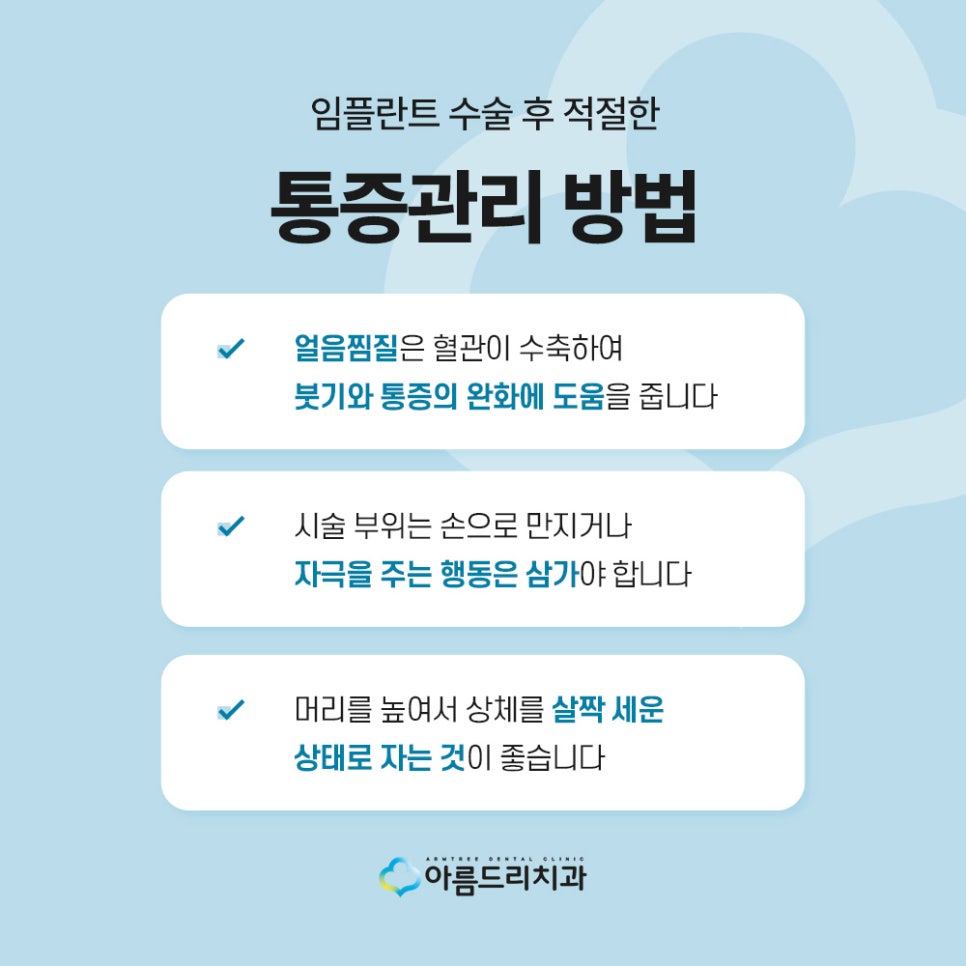
- Apply ice packs. Cooling the surgical area can help reduce swelling and pain.
- Be careful not to irritate the surgical area. (Avoid hard and刺激적인 foods.)
- Keep the area clean.
If you are afraid to touch the surgical area and do not brush properly, or if you brush too hard, that can cause problems. Use a soft toothbrush (some places also sell toothbrushes designed for after surgery) and gently brush without causing pain in the surgical area, and carefully clean the teeth around the surgical site. It is also better to use the prescribed mouthwash.
Painkillers: anti-inflammatory pain relievers such as ibuprofen are effective in reducing swelling and pain.
Pain normally starts to decrease within 3 days, but if it lasts longer than 3 days or gradually gets worse, there may be a possibility of infection. In that case, it is better to visit the dental clinic to find the cause of the pain and address it.
Precautions after implant procedure
- Apply ice packs well for about 48 hours.
- It is better to eat soft foods.
- Keep the surgical area clean.
- Smoking is fatal to the surgical area. Be sure to avoid it.
- Alcohol increases inflammation. Avoid it for at least 1 week.
- Avoid strenuous exercise or activity for about 3 days, and it is important to get enough rest.
- Be sure to take all prescribed medication until the end.
- If bleeding does not stop or the pain is severe, contact the dental clinic.
Pain and bleeding after an implant procedure can be sufficiently managed through proper care and appropriate measures. Above all, if pain or bleeding continues or worsens, do not hesitate—visit the dental clinic as soon as possible and receive help from the medical staff. For the health of your teeth, please do your best with post-procedure care.