Hello,
I’d like to introduce Invisalign Lite orthodontic treatment for a middle-aged patient in their 40s.
During Invisalign treatment, many patients complain of discomfort because their molars do not touch.
Unlike wire braces, which attach appliances only to the outer surfaces of the teeth, Invisalign is designed to cover the biting surfaces, so this is unavoidable due to the nature of the appliance, and it is an issue seen during treatment in most Invisalign patients.
According to research papers, regardless of whether it is Invisalign Lite or Comprehensive, an average of 0.9 mm of posterior intrusion inevitably occurs during treatment.
If you usually clench your teeth tightly or bite with strong force, the amount would be even greater.
The solution is simple.
This patient in their 40s underwent Invisalign treatment to align the front teeth.
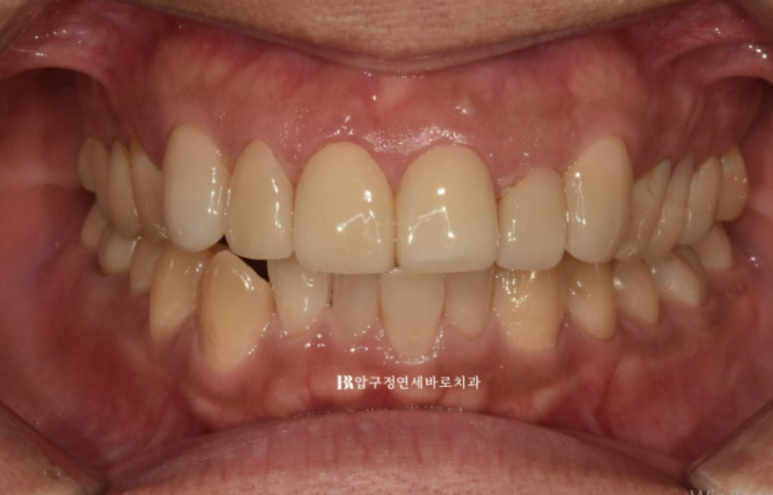
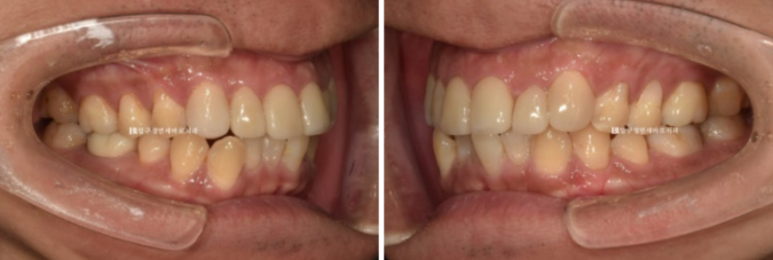
The molar bite is good.
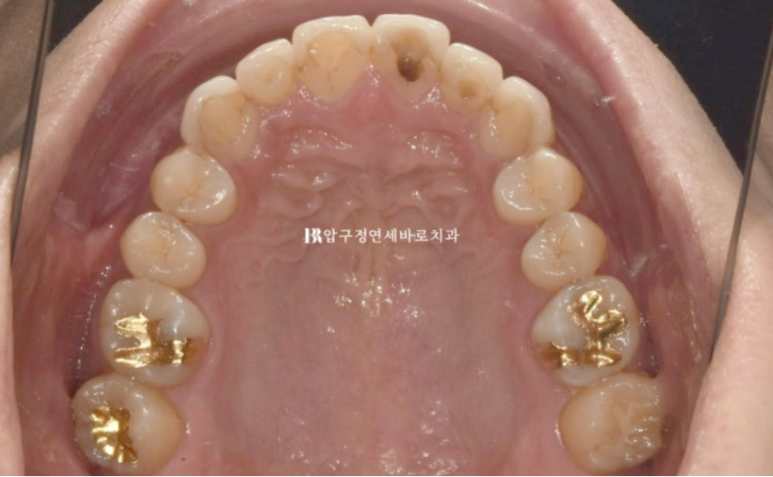
The upper teeth look neat because they have laminate veneers.
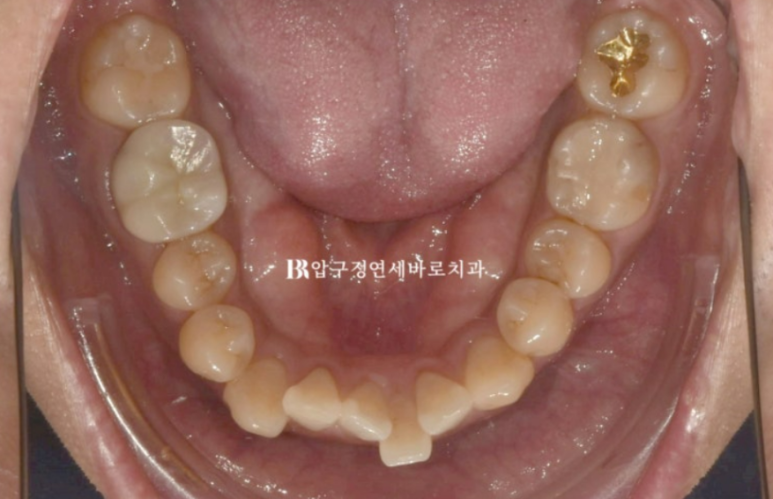
But the lower teeth are crooked.
Looking at this alignment closely for a long time, it almost looks like the middle finger.
Since it was possible with Invisalign Lite, I recommended Invisalign Lite and the appliance was ordered.
The patient started wearing the first appliance in March 2024, and finished wearing all 14 aligners in June 2024.
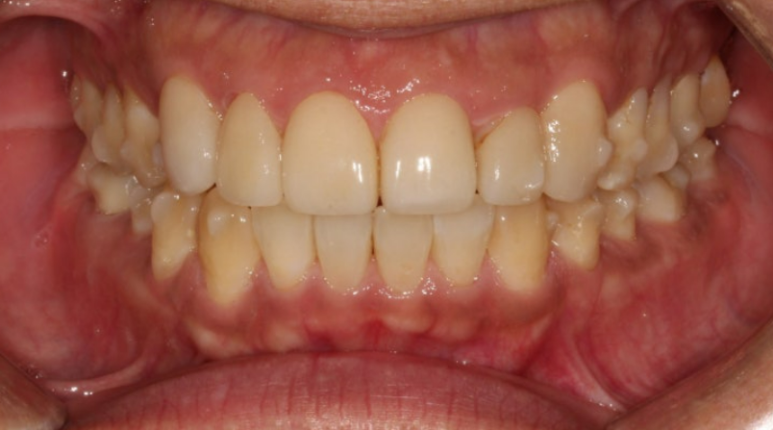
The alignment is neat, right? The midline is still not aligned, though.
To improve the midline, additional aligners were made, and the patient started wearing the additional aligners in July 2024.
After wearing one more set of additional aligners for two months, treatment was finally completed in September 2024.
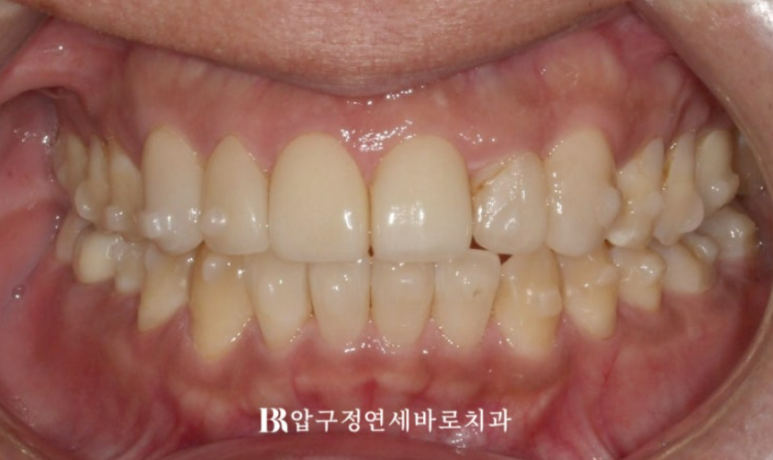
The midline is well aligned.
The six laminate veneers on the upper front teeth were old, and the patient wanted them remade, but due to scheduling issues, they decided to proceed at another clinic.
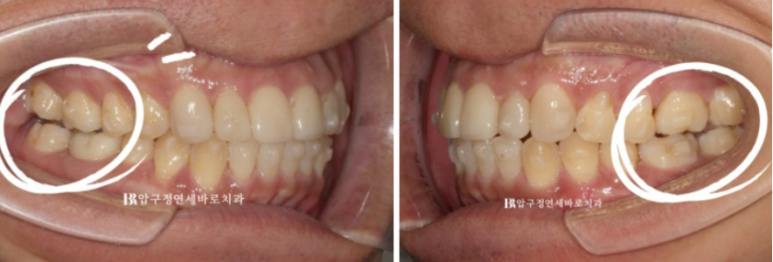
Looking at the bite at the end of treatment, you can see that the bite on the back molars is open.
This is actually the area the patient felt did not come together well.
I explained that this was an unavoidable part of the Invisalign treatment process, and by cutting the final aligner so that only the front-tooth portion remained, the patient wore it for a few weeks to help the bite stabilize naturally.
Usually, the length of this bite-stabilization period varies from person to person, but for patients with strong biting force, if they wait two weeks, the molars that had been intruded by the thickness of the aligner due to biting on the Invisalign appliance return to their original position.
If the biting force is somewhat weak, we may monitor it for about a month.
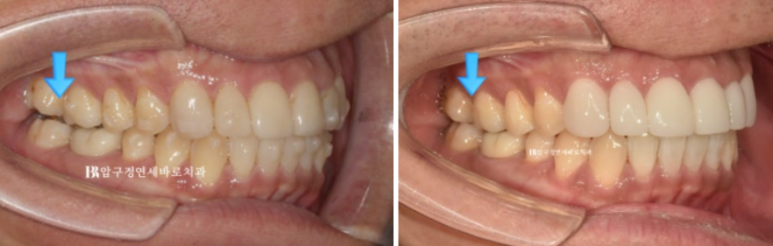
24.09~24.10
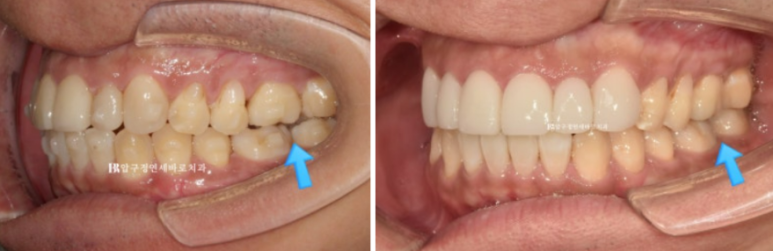
24.09~24.10
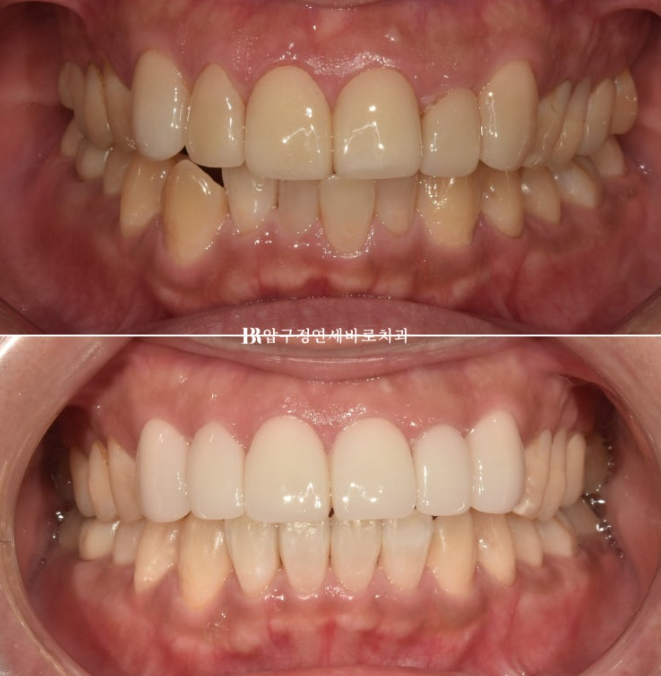
These are before-and-after photos from about two weeks of inducing bite stabilization.
The large molar area that had been open is now contacting well again.
A solid bite was created, firm enough that articulating paper could not be pulled out.
In some cases, rubber bands are used to help stabilize the bite, but for this patient, simply cutting the aligner was enough.
In the meantime, they had the six front veneers treated at another clinic.
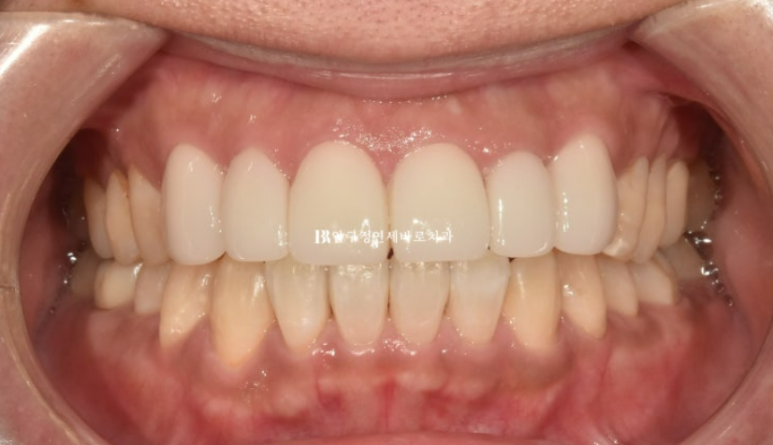
24.10
They are now being fitted for Vivera retainers.
Here is a before-and-after comparison.
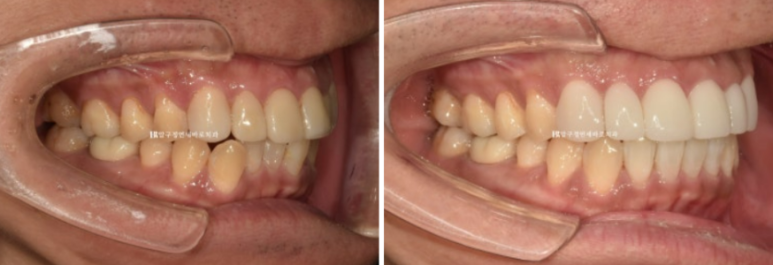
24.02~24.10
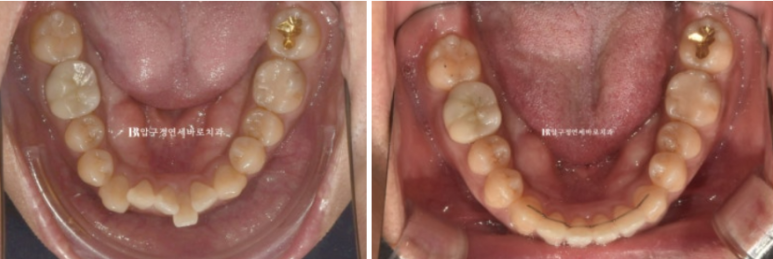
24.02~24.10
The improvement in the lower teeth is dramatic, right?
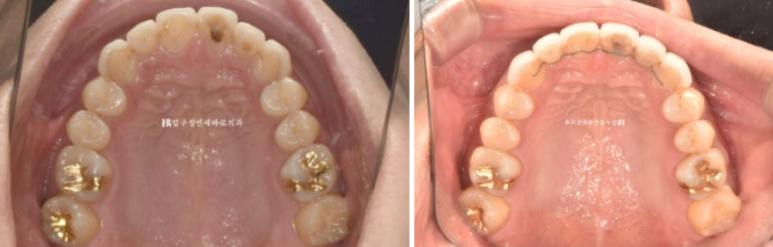
24.02~24.10
The time from start to finish was 8 months, and excluding the waiting time for intermediate appliance fabrication, the actual treatment period was about 6 months.
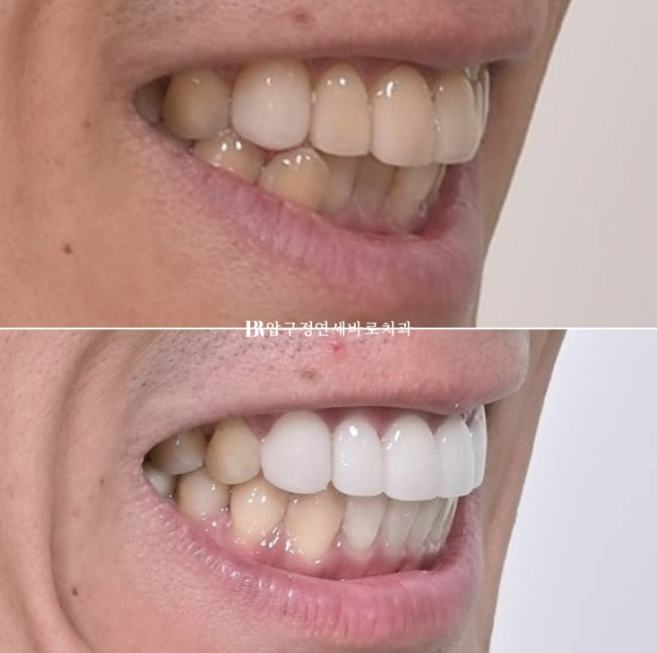
24.02~24.10
The rumor that molars lift up during Invisalign treatment is true.
However, it is only a temporary phenomenon during the process, and the final bite can be made as good as desired.
Thank you for reading this long post today.