Hello,
This is Apgujeong Orthodontic Clinic.
Over the years, we have posted in various ways about the process of finishing treatment with orthodontics without implants when teeth are missing.
However, if two teeth are missing in a row in the same quadrant, it is better to place at least one implant.
Otherwise, because there are two missing teeth, it is impossible to avoid the midline shifting and the front teeth moving too far backward, resulting in an overbite.
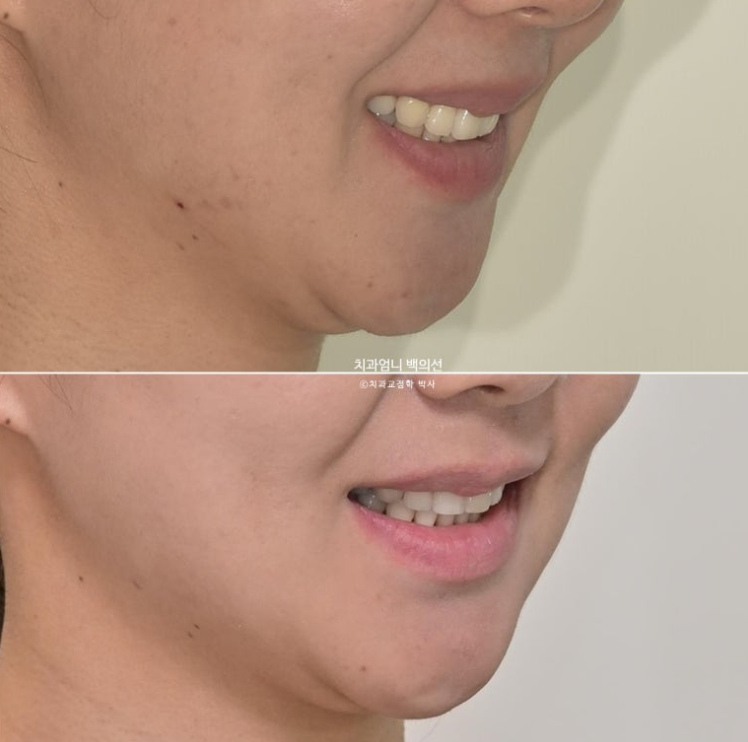
23.08~25.06
If the front teeth move too far backward and become overly protrusive inward, it is not only unappealing aesthetically, but the lower jaw may also be pushed backward, which can worsen the jaw joint.
Today, I will show how retreatment, especially reverse correction, is carried out in such cases.
This patient visited us in August 2023 for retreatment.
The patient wanted retreatment because when biting all the way down so the molars touched, the lower jaw would be pushed backward.
In addition, because the lower jaw was being pushed backward, the patient also wanted to improve the appearance of the lower front teeth looking too far back.
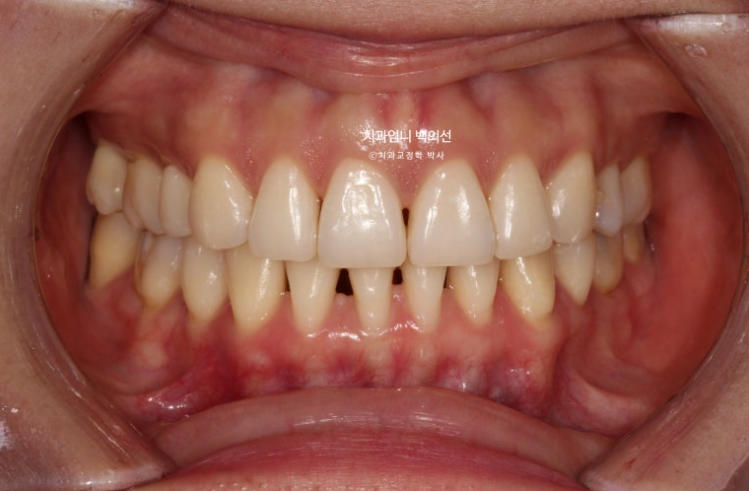
23.08
Black triangles and midline discrepancy are visible.
Because the gums are relatively thin, gum recession is also visible in the premolar area.
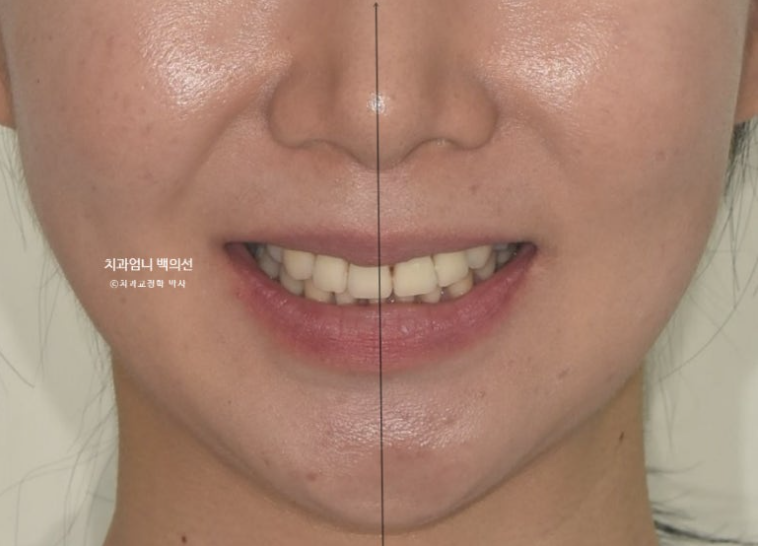
Compared with the face, the center line of the upper front teeth is rotated to the left,
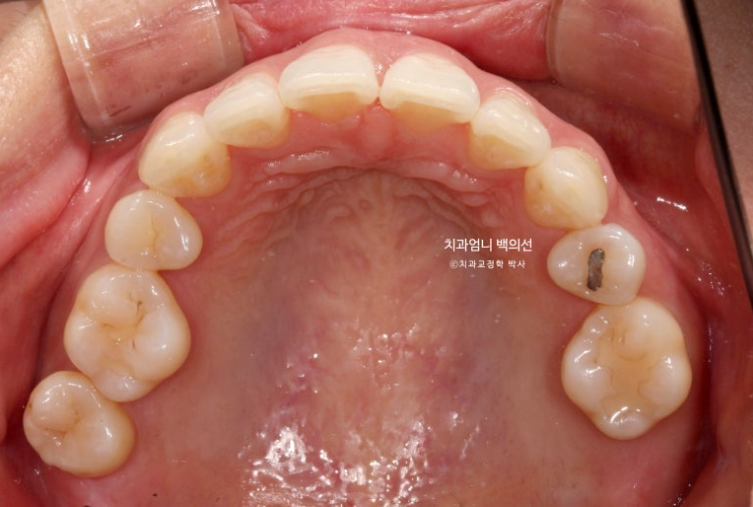
the reason was the difference in the number of teeth on the left and right.
Due to extraction orthodontic treatment done long ago, four premolars are missing, and there is one additional missing first molar on the left side.
There are two missing teeth only in the upper left.
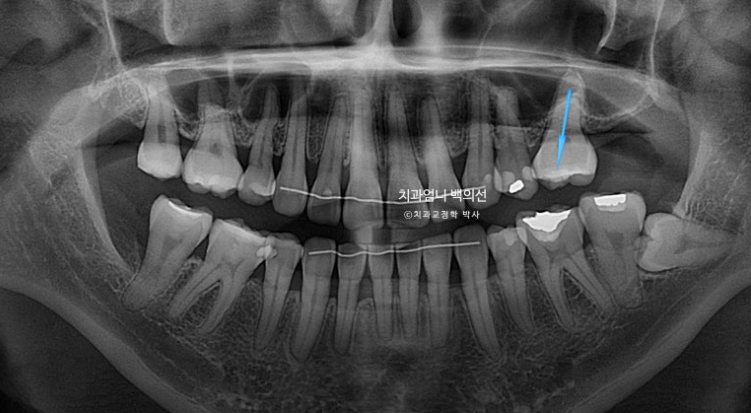
23.08
On the X-ray, you can see that the second premolar has tipped toward the upper left first premolar, eliminating the space.
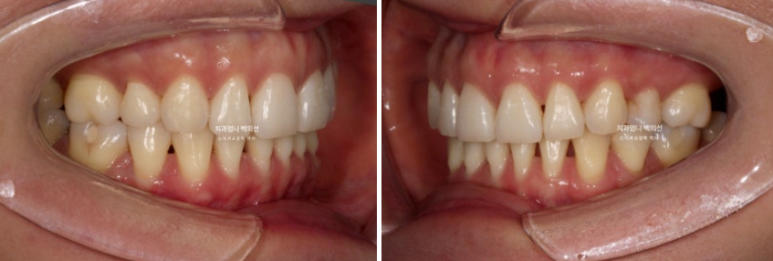
The molar occlusion relationship is Class II.
Whether to proceed with reverse correction must be considered carefully.
After extraction orthodontic treatment, many patients come in for retreatment consultations to improve an overbite or their lip profile.
However, in actual practice, it is very rare to recommend reverse correction to a patient. This is because as the teeth move forward again,
you must keep in mind the possibility of gum recession.
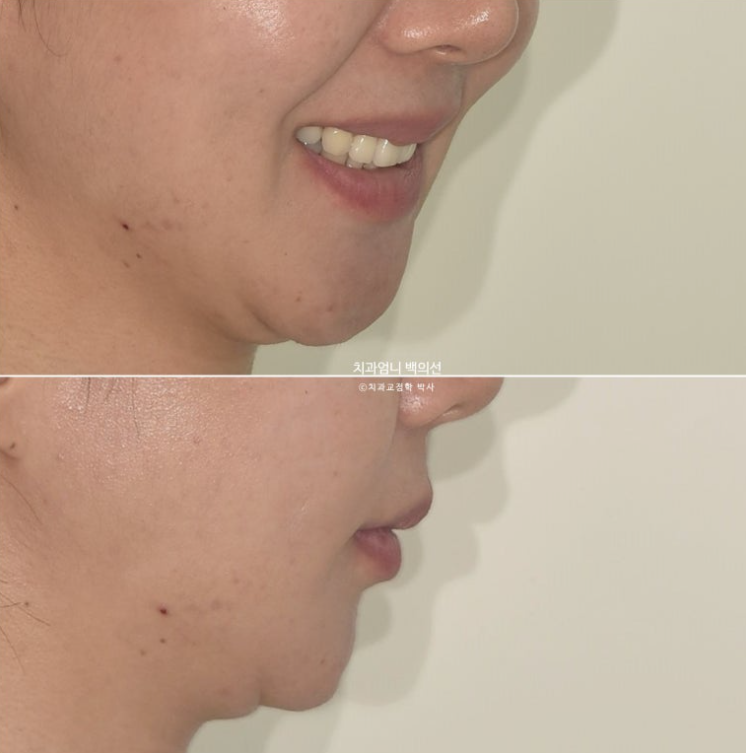
23.08
But this case is different from situations where reverse correction is needed for purely aesthetic reasons such as an overbite or lip profile.
Because the previous orthodontic treatment involved excessive retraction of the upper teeth, the lower jaw was clearly pushed backward, seriously affecting the facial profile and placing strain on the temporomandibular joint. In such a case, it is better to improve the jaw position even if reverse correction is needed.
To restore the upper front tooth midline and improve the balance of the tooth count and occlusion, we decided to reopen space orthodontically for one missing first molar and place an implant.
Because the patient’s gums are relatively thin, treatment must be done carefully to prevent gum recession and to keep the black triangles from getting larger.
The patient chose Clippy-C orthodontics, and treatment began.
There was more to do in the upper arch than in the lower arch, so we attached the appliance to the upper teeth first and started treatment there.
It is better to attach the lower appliance as late as possible to reduce discomfort and lessen the burden on the gums from retreatment.
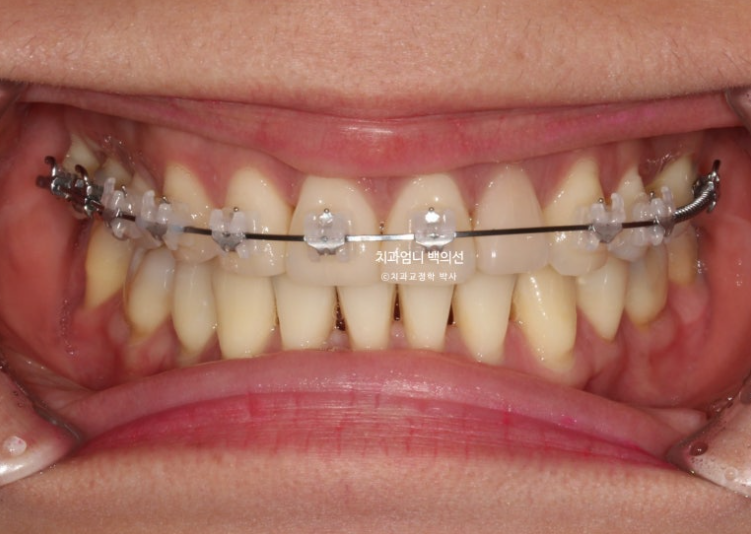
24.04
This is what things looked like 6 months after treatment began.
Treatment was carried out with appliances attached only to the upper teeth.
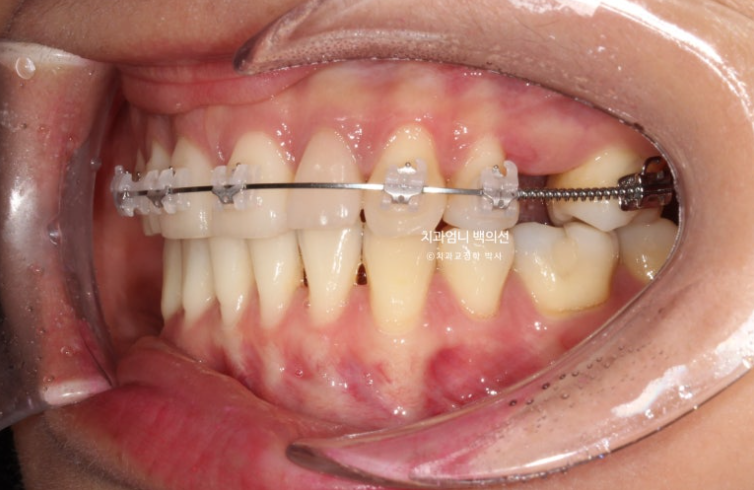
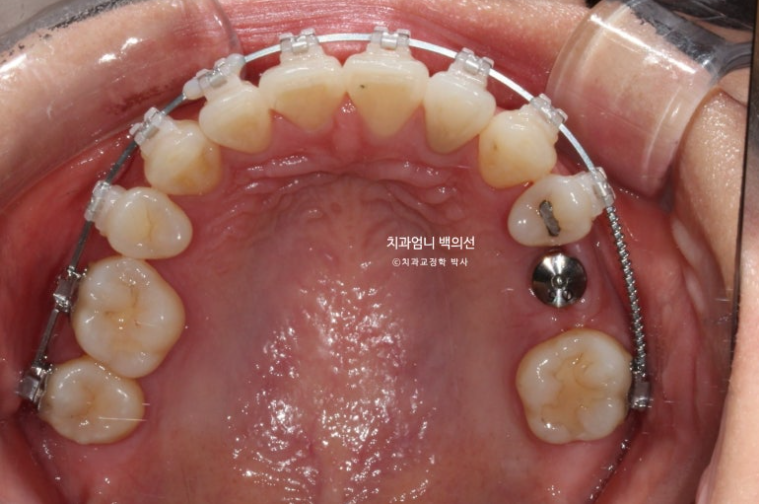
While restoring the molar space.
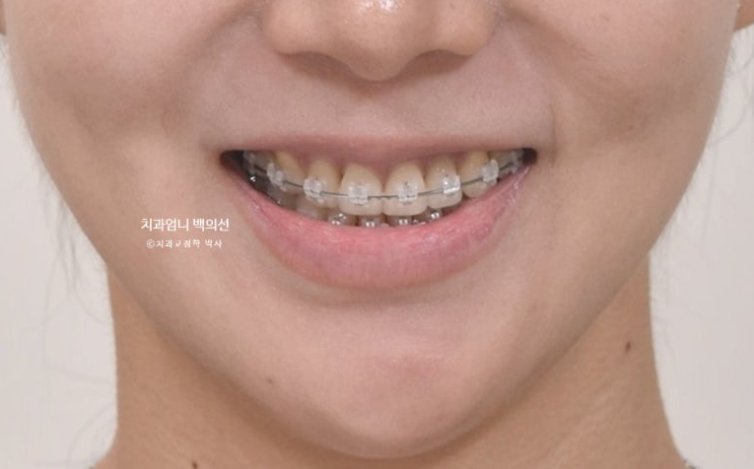
24.08
It was 1 year after treatment began that the upper front tooth midline matched the nose, philtrum, and face.
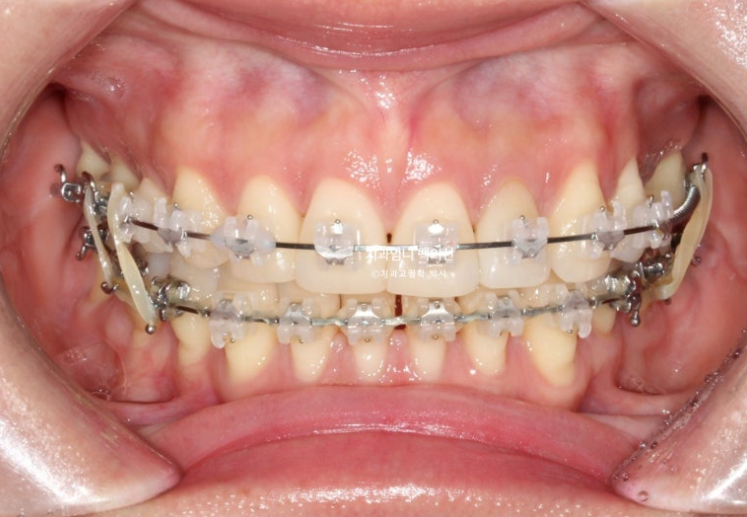
From that point, we also attached Clippy-C appliances to the lower teeth and began alignment.
At 1 year and 3 months after treatment began, enough space had been secured for the missing first molar, and the implant was finally placed.
24.11
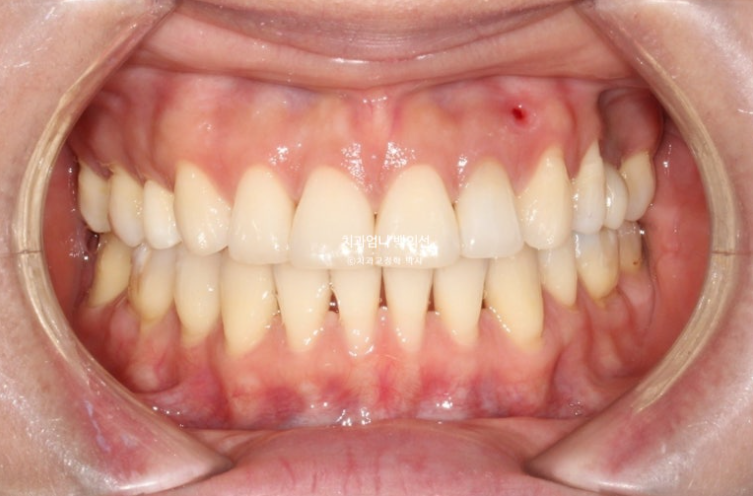
After stabilizing the occlusion and completing the finishing process, retreatment was finally completed in June 2025.
25.06
The total treatment period was 1 year and 10 months.
25.06
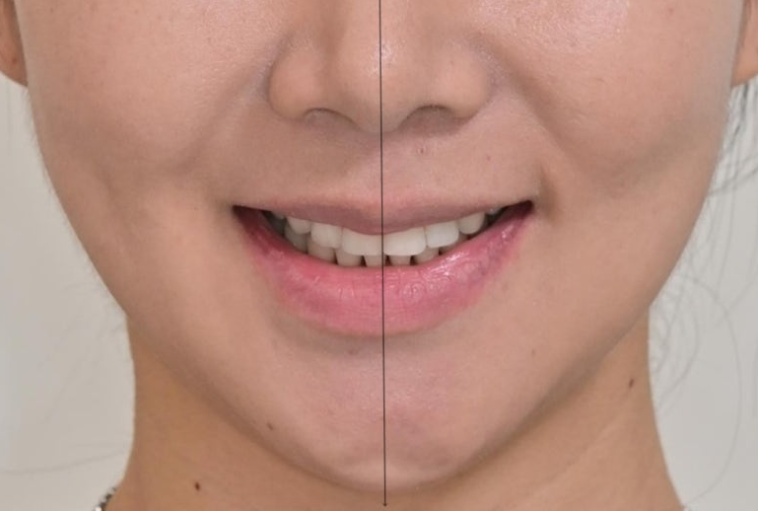
Now the upper front tooth midline aligns exactly with the nose and philtrum.
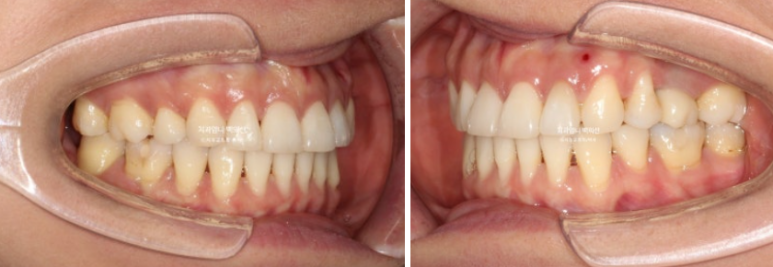
The Class II molar occlusion on both sides finally became Class I.
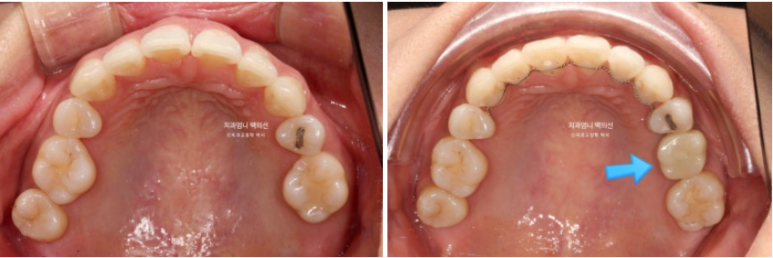
23.08~25.06
As the implant shown by the blue arrow was placed, the number of teeth on the left and right became balanced.
Thanks to this, the midline was improved, the molar occlusion became Class I, and the overbite caused by the backward-leaning front teeth could also be corrected.
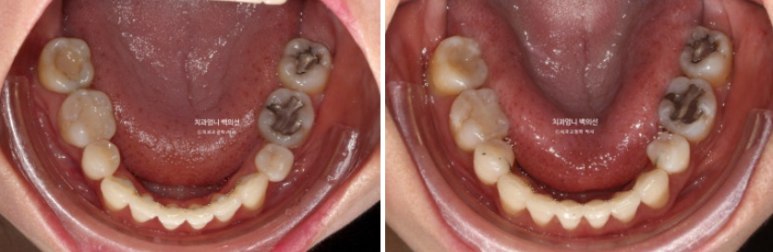
23.08~25.06
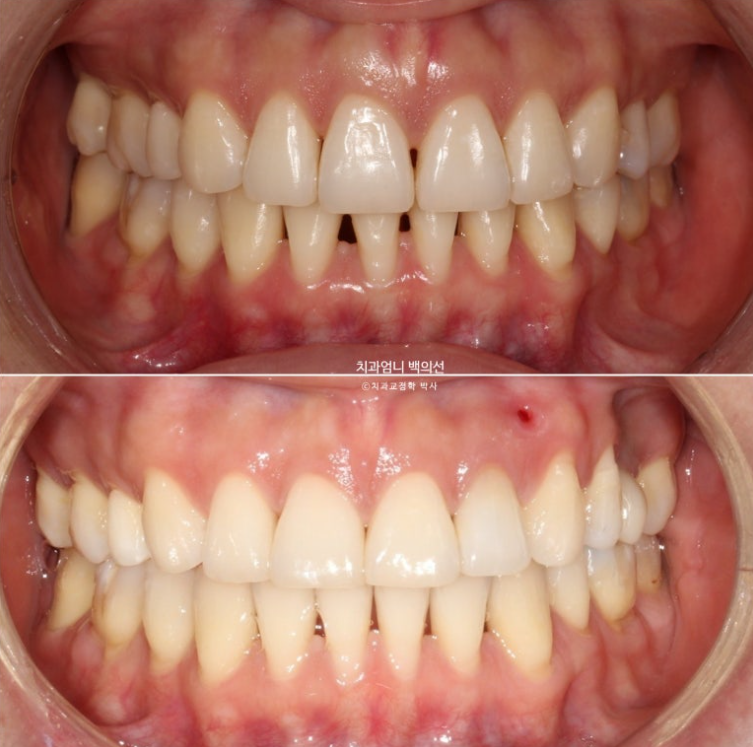
23.08~25.06
A small amount of interproximal reduction was done to reduce the size of the existing black triangles.
Now let’s look at the facial profile comparison.
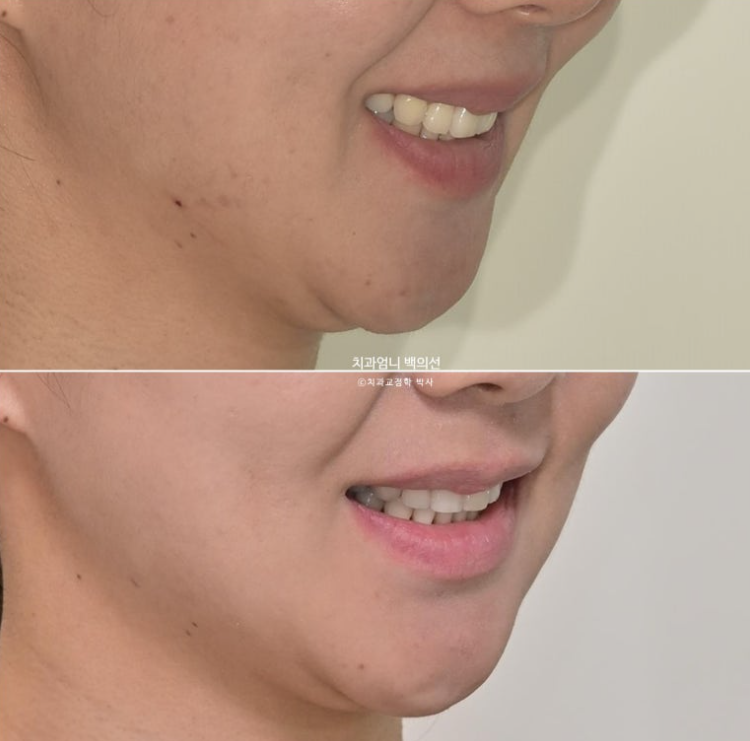
23.08~25.06
There is a clear improvement in the angle of the upper front teeth, which had an overbite, and the facial profile improved as the lower jaw, which had been pushed backward, moved forward again.
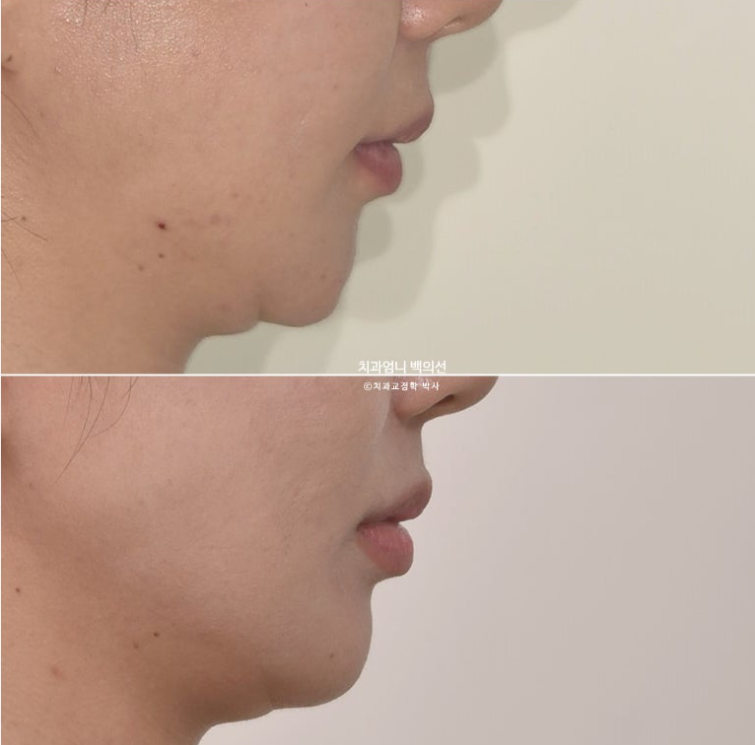
23.08~25.06
From the side view, the change in the lower jaw position is even more clearly visible.
The upper front teeth, which had an overbite, were improved to normal through reverse correction, so when biting down, the lower jaw that had been pushed backward now closes comfortably.
The part that had looked like a weak chin because the lower jaw was pushed backward was also improved.
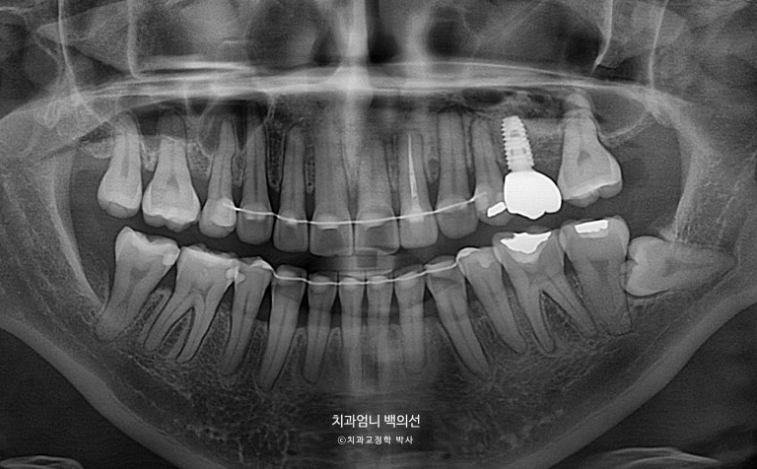
During the 1 year and 8 months of retreatment, there was no additional root resorption, and the root parallelism improved compared with the beginning.
Retreatment, especially reverse correction, must be approached carefully.
However, if treatment is needed not just for aesthetic improvement but also functionally, in terms of temporomandibular joint health, then careful treatment can produce good results without side effects.
I hope this post is helpful for those considering reverse correction.