Hello.
This is Apgujeong Yonsei Baro Dental Clinic.
Many people are bothered by the two front teeth looking especially prominent when they smile,
a condition commonly called “bunny teeth.”
Partial front-tooth correction for bunny teeth can also be treated with Invisalign.
Invisalign has three main categories of programs depending on the difficulty of treatment.
Did you know that Invisalign also comes in different types?
Invisalign is broadly divided into three programs according to treatment difficulty.
-
Invisalign Express
Up to 7 aligners
Relatively simple partial orthodontic treatment
Focused on improving front-tooth alignment
-
Invisalign Lite
Up to 14 aligners
Moderate-difficulty orthodontic treatment
-
Invisalign Comprehensive
No limit on the number of aligners
Extraction cases, protrusive mouth, full orthodontic treatment for high-difficulty cases
In other words,
not all Invisalign treatments mean a long treatment period.
Simple partial front-tooth correction can often be treated quickly with Express.
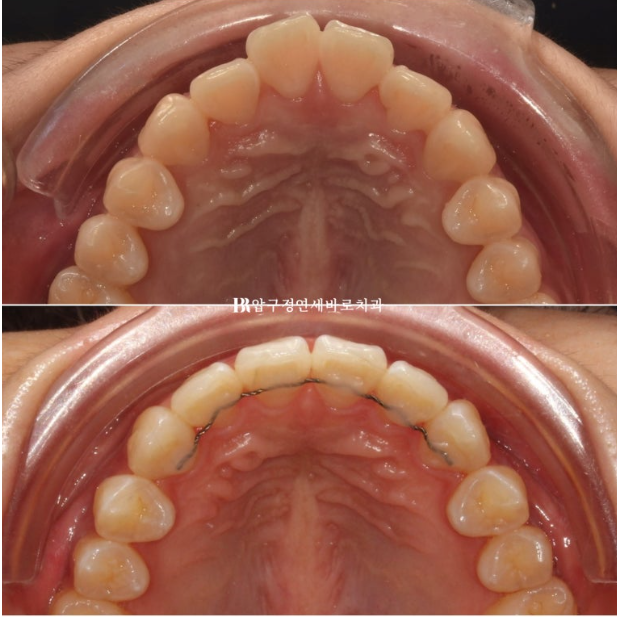
Invisalign Express 24.02~24.07
Today, let’s look at and talk about a case of treating protruding front teeth with Invisalign Express.
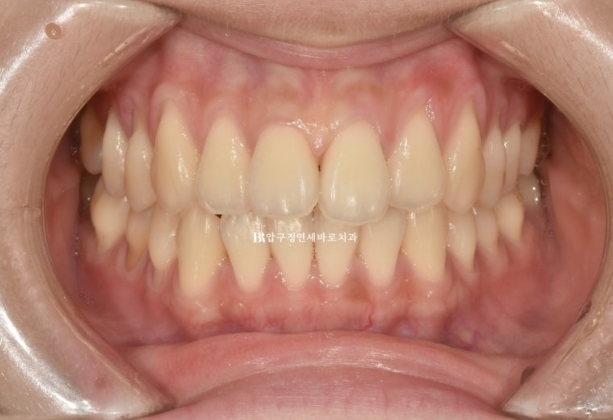
24.02
In February of this year, the patient came in to treat crowded front teeth.
From the front, there doesn’t seem to be much of a problem, right?
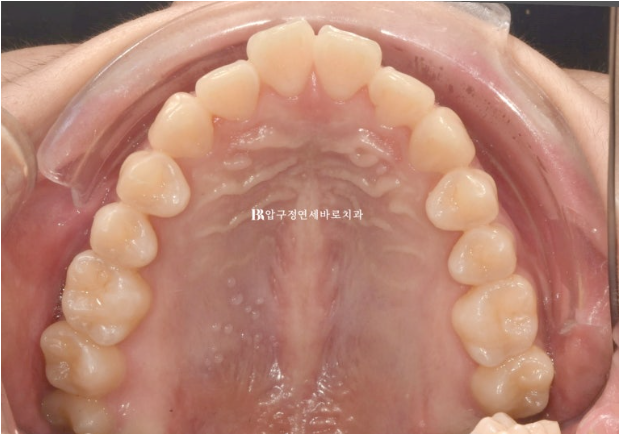
This is bunny teeth with the two front teeth protruding.
In particular, the right front tooth is quite elevated.
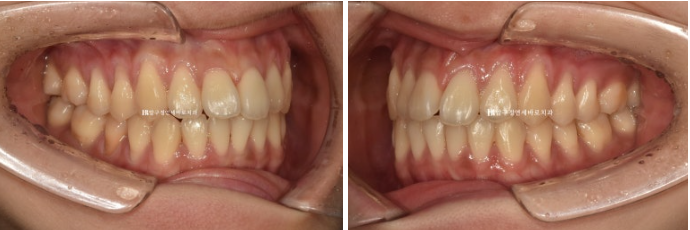
Since the molar bite was in good condition, we recommended Invisalign Express.
Invisalign Express comes with only 7 aligners, and there is one chance for remake.
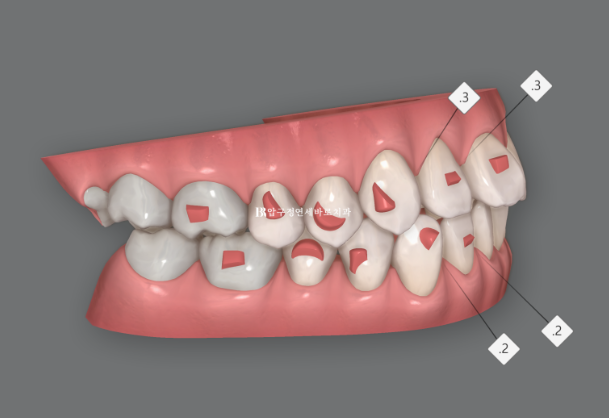
The Invisalign treatment plan is called ClinCheck.
Here is this patient’s ClinCheck.
For partial front-tooth orthodontic treatment, interproximal reduction was arranged at 0.2–2.3 mm per area between the front teeth for two purposes: to create a small amount of space for the teeth to align, and to reduce the black triangles that inevitably occur after orthodontic treatment in adults.
Another point to note in the ClinCheck is that the molars were set to no movement in order to preserve the good molar bite.
Teeth marked in dark gray are teeth that do not move at all before and after treatment.
There are quite a few cases where this no-movement setting is needed.
As in this patient’s case, it is also used to minimize unnecessary tooth movement in order to achieve good results within 7 stages, and if there is an implant, the implant tooth may also be set to no movement.
In cases where a deciduous tooth is being preserved for as long as possible due to missing permanent teeth, the baby tooth is also set to no movement so that it does not receive orthodontic force.
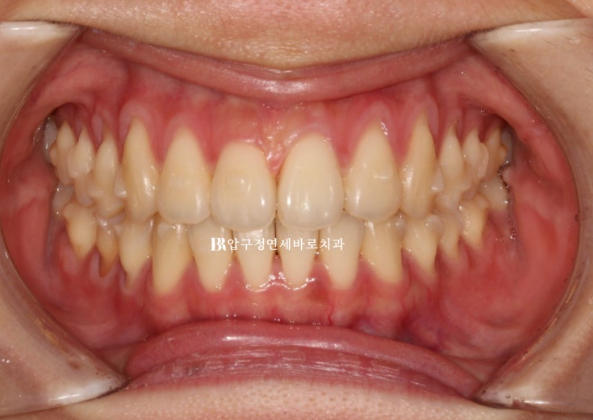
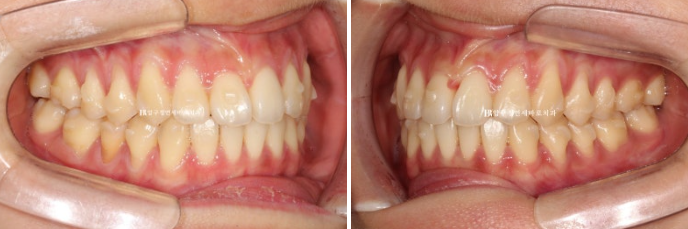
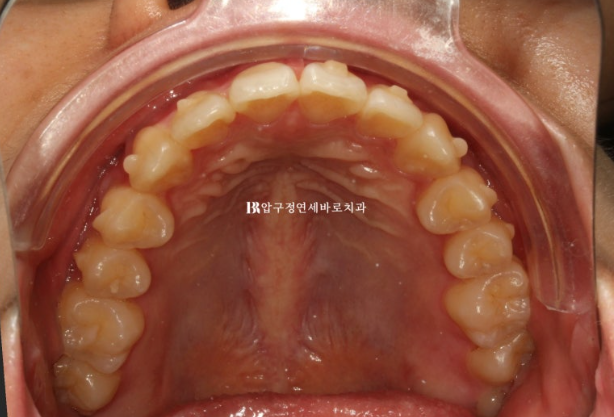
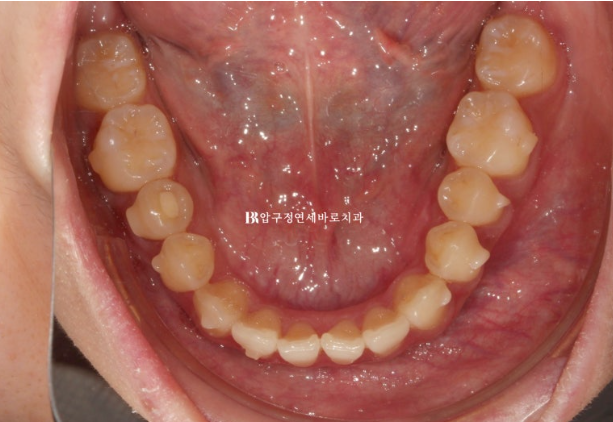
From March 2024 to April 2024, the patient wore all 7 aligners of the first set over two months.
24.04
24.04
24.04
24.04
Front-tooth alignment was about 97% complete.
To finish the teeth that had rotated slightly less and the small remaining spaces, an additional remake was started.
The waiting time for the aligners after remake is one month.
For that month, the patient took a break by wearing only the last 7th aligner of the previous set while sleeping.
In that way, treatment was completed after wearing the additional aligners made through July 2024.
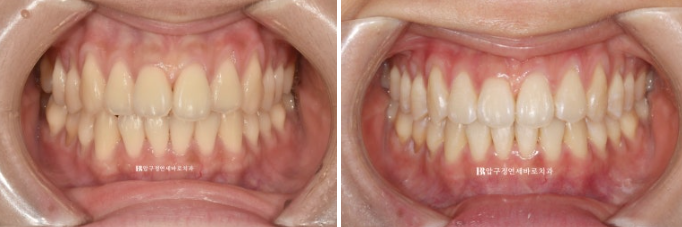
Here is a comparison photo before and after treatment.
Initial visit 24.02 / Treatment completed 24.07
24.02~24.07
Treatment was completed without black triangles with a small amount of interproximal reduction.
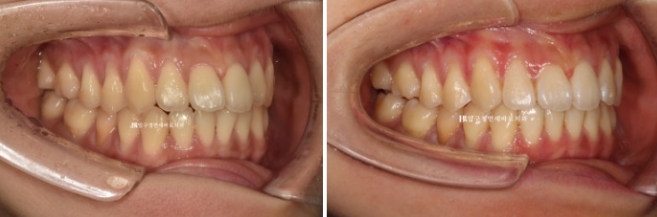
24.02~24.07
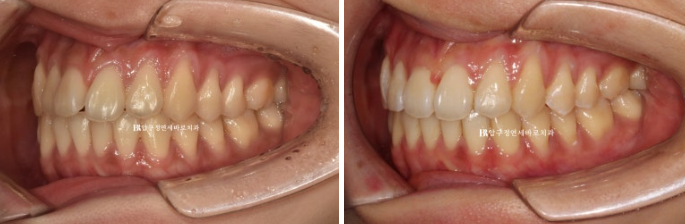
24.02~24.07
The good bite was maintained,
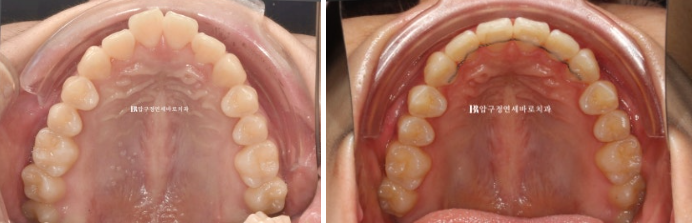
24.02~24.07
and the bunny teeth also returned to normal alignment.
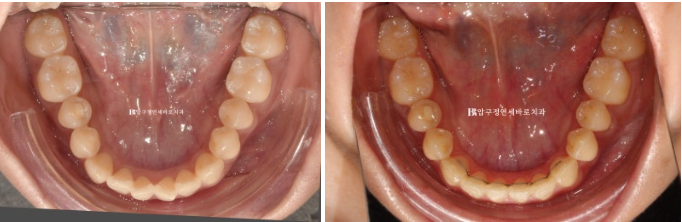
24.02~24.07
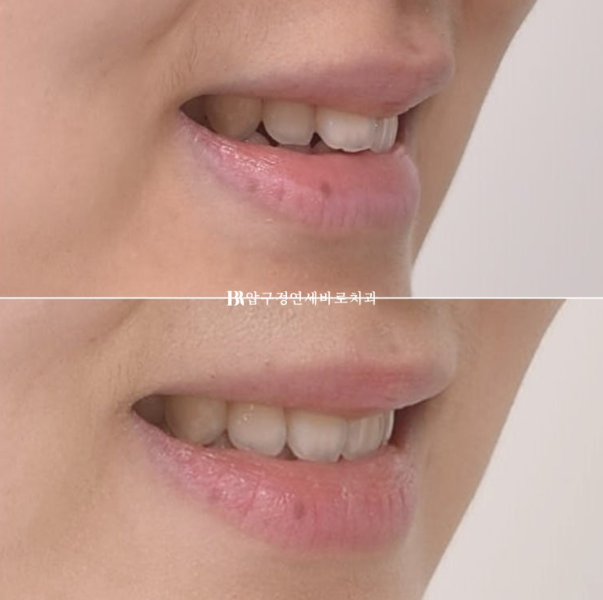
A cleaner smile
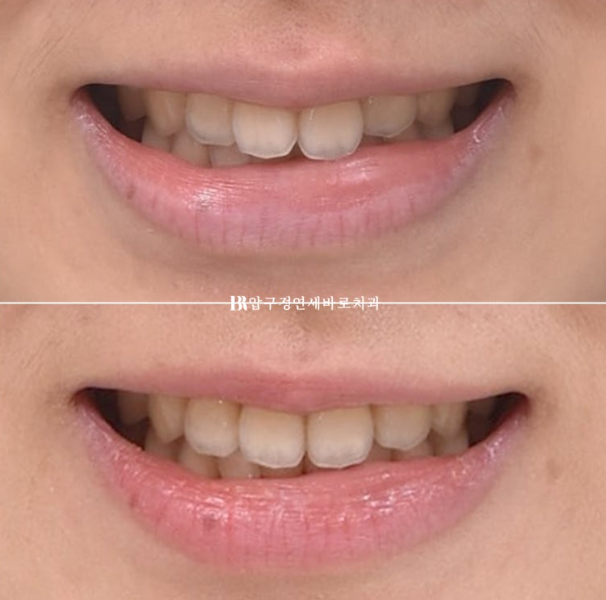
Excluding the aligner manufacturing period, the actual treatment period was 4 months total, in two 2-month periods.
I hope this helps those who want to correct bunny teeth but feel burdened by visible appliances and think orthodontic treatment always takes a long time.
#ApgujeongYonseiBaroDentalClinic #ApgujeongOrthodonticClinic #PartialOrthodontics #BunnyTeethCorrection