Hello.
This is Yonsei Baro Dental Clinic, an orthodontic clinic in Apgujeong.
Q. Since no-prep veneers do not involve shaving down the teeth, aren't they automatically a good treatment?
Many people think of no-prep veneers as a "safe treatment that does not involve shaving down the teeth."
Of course, preserving healthy teeth is a significant advantage. However, because no tooth reduction is performed at all, unexpected discomfort or aesthetic dissatisfaction may occur instead.
Typical examples include:
✔ Teeth that look too large
✔ Front teeth that appear more protruded
✔ A sensation that the lips catch on the teeth or feel thicker
and so on.
Today, I will explain three representative cases of regret involving no-prep veneers that we frequently encounter during actual consultations, and explain why the fitting process is important in preventing them.
If you are considering no-prep veneers, please be sure to refer to this before deciding on treatment.
Yonsei Baro Dental Clinic is fundamentally an orthodontic specialty clinic.
However, collaboration between orthodontics and veneers is needed in more cases than you might expect—for example, when restoring worn areas of the front teeth after orthodontic treatment, treating discoloration that cannot be resolved with whitening, treating small teeth, or improving the aesthetics of the front teeth when they still fall slightly short after orthodontic treatment.
Conventional veneers require a tooth-reduction process, whether minimal preparation or otherwise, whereas no-prep veneers are made extremely thin and bonded to the outer surface of the teeth without shaving them down at all.
It is much like applying a nail tip.
If the veneer breaks or you want to have it removed, the intact tooth remains underneath, making Gelami a less burdensome treatment than veneers that involve tooth reduction.
Of course, compared with such beneficial no-prep veneers, Gelami is a less burdensome treatment.
"Once they were attached, my teeth looked too large. They look like xylitol."
"My front teeth look too protruded."
"Now that my front teeth are thicker, my lips feel uncomfortable."
For these reasons, many people regret their decision even though they received no-prep veneers.
I will explain each of these three points one by one.
First, this is the most common complication.
Once they were attached, my teeth looked large.
They look like xylitol.
Depending on the technician's level of skill and the design, no-prep veneers may fail to reproduce the natural shape of teeth, which become thinner toward the gumline. In this case, the teeth may look excessively square and give the impression of xylitol.
Square-shaped front teeth look especially awkward on people with slender faces.
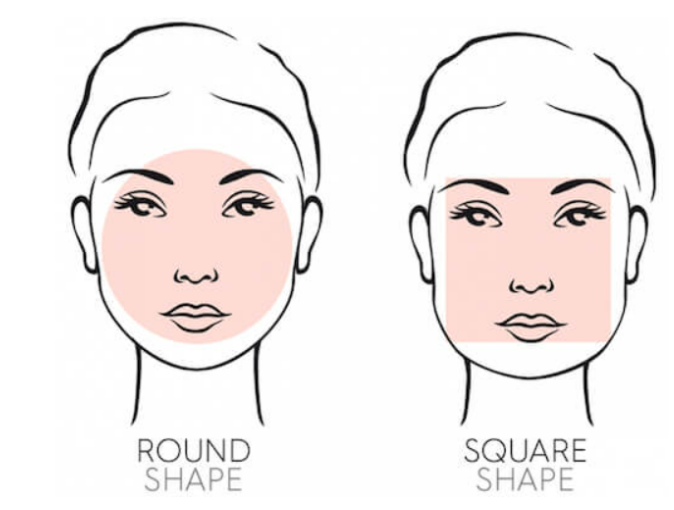
Source: Google
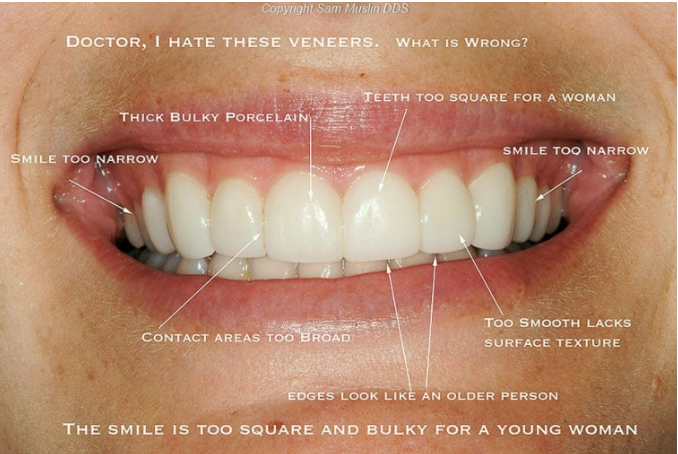
Source of xylitol veneers: Google
The lips feel uncomfortable because the front teeth become thicker.
Because no-prep veneers do not involve any tooth reduction, they may feel slightly thicker than before, no matter how thin the veneers are made.
If you dislike the feeling of thicker teeth, the outer surface can be shaved down by one layer, but it is better not to reduce the teeth.
Whether this subtle difference falls within an acceptable range for the patient can only be determined by actually attaching veneers of the intended thickness to the teeth.
The front teeth look protruded.
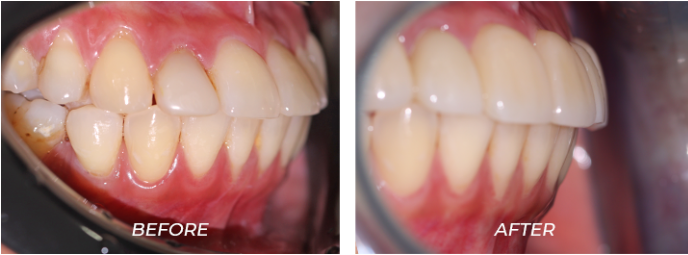
Veneers that make the front teeth thicker and further accentuate their protrusion. Source: Google Images
One of the things orthodontists routinely do is make fine adjustments to the angle of the front teeth.
They can detect the angle of the front teeth very sensitively.
For people whose front teeth are even slightly flared, protruded, or inclined to appear protruding in relation to their facial features or lips, attaching veneers to the teeth can amplify the feeling that the teeth are flared or protruding.
No-prep veneers basically require the front teeth to be properly aligned.
Alignment and protrusion are separate issues, so teeth that are aligned but flared, as in the photo above, can still pose a problem.
The three problems described above can be easily resolved with conventional veneers involving tooth reduction.
No-prep veneers are much more difficult to make attractive than veneers that involve shaving down the original teeth.
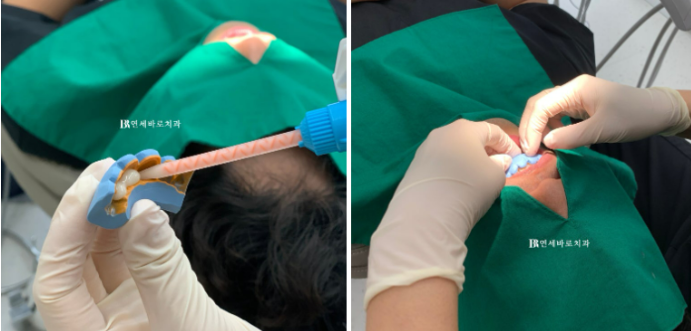
Fitting veneers
To prevent these problems in advance, you can try a fitting before receiving no-prep veneers.
Temporary plastic veneers with the same shape as the final veneers are attached directly, allowing you to check everything, including the color, the roundness of the incisal edges, the spaces between the teeth, the sense of thickness, the shape, the length, and the angle.
You can also smile to check the smile line, speak, and carefully check every detail, including areas where the lips may catch.
After trying the fitting, you may conclude that conventional veneers involving tooth reduction would be better because of the thickness. If you say, "I absolutely do not want any tooth reduction," you may instead conclude that it would be better not to have veneers at all.
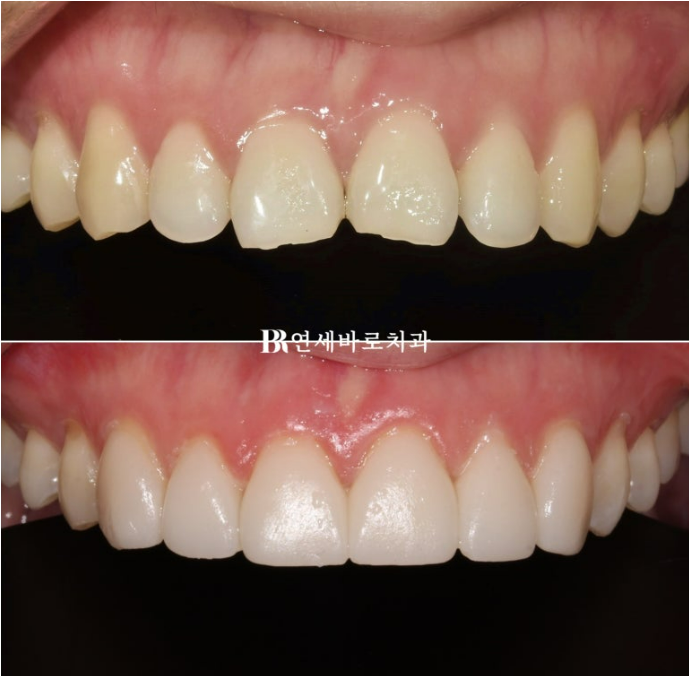
A no-prep veneer fitting
For these reasons, we strongly recommend having a fitting before receiving no-prep veneers.

#NoPrepVeneers #Gelami #Veneers #FrontTeethAesthetics #AestheticTreatment #SmallTeeth #ToothDiscoloration #DentalAesthetics #ApgujeongDentalClinic #ApgujeongOrthodonticClinic #YonseiBaroDentalClinic #OrthodonticsAndVeneers #AestheticOrthodontics #VeneerReview #VeneerSideEffects #NoPrepVeneerReview #TeethWhitening #FrontTeethOrthodontics #SmileLine #DentalConsultation #GangnamDentalClinic #RecommendedApgujeongDentalClinic #AestheticDentistry #DentalMichelin