Hello.
This is Yonsei Baro Dental Clinic in Apgujeong, introducing no-prep veneers.
Yonsei Baro Dental Clinic in Apgujeong specializes in orthodontics and no-prep veneers.
Q. Can anyone get no-prep veneers?
Hello. This is Yonsei Baro Dental Clinic in Apgujeong, where we provide no-prep veneer treatment.
Recently, more people have been seeking no-prep veneers that do not require the teeth to be filed down.
However, there is one question many people ask:
"Can I get no-prep veneers without removing any tooth structure at all?"
To give you the conclusion first,
no-prep veneers are not a treatment that is suitable for every tooth.
Depending on the alignment of the teeth and the bite, orthodontic treatment may be necessary before veneers.
Today, I would like to introduce an actual case of a patient who visited us for no-prep veneers but first underwent partial orthodontic treatment on the front teeth.
There are quite a few cases in which veneers are needed after orthodontic treatment.
In particular, when the front teeth include undersized teeth, it is difficult to create a proper bite for the front teeth without veneers.
For this reason, it is common to adjust the space through orthodontic treatment so that veneers can be placed in harmonious proportions, and then, once orthodontic treatment is complete, refer the patient to a prosthodontist or general dentist for the veneers. Even today, many orthodontists proceed in this way.
However, the orthodontist is the doctor who has communicated with the patient throughout the orthodontic treatment. Therefore, it is also true that the orthodontist is better able to reflect the patient's needs and preferences.
Orthodontists also routinely focus on differences of less than 0.5 mm.
When an orthodontist's meticulous aesthetic sense and a skilled dental laboratory work well together, they can produce a very impressive result.
For these reasons, I believe it is best when the orthodontist also provides the veneers after completing the orthodontic treatment.
Today, I will show you the six-month treatment process of a patient in their 60s who visited us for no-prep veneers.
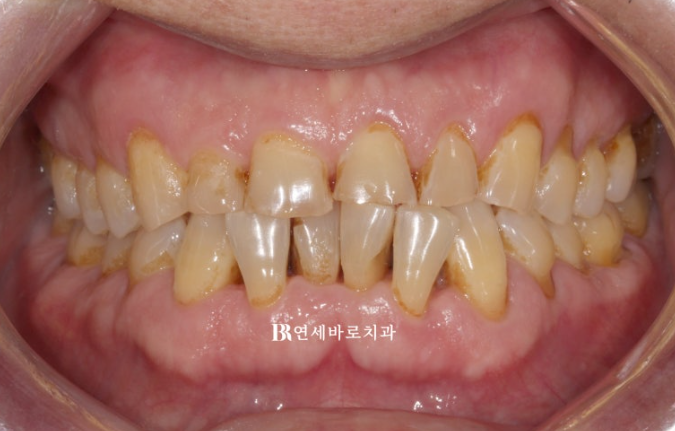
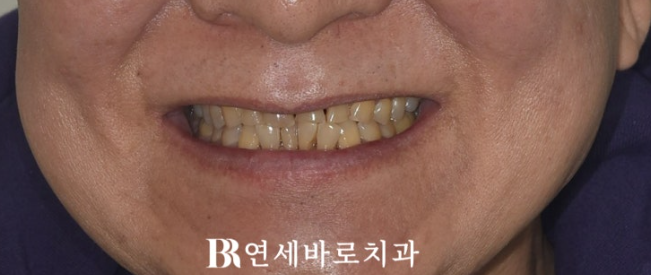
This patient in their 60s visited us for no-prep veneers.
Because the upper and lower teeth met edge to edge in an edge-to-edge bite, the edges of the upper teeth had been worn down and had many chipped areas.
If a malocclusion such as an edge-to-edge bite is left untreated for a long time, the teeth can easily chip from the forces generated during chewing.
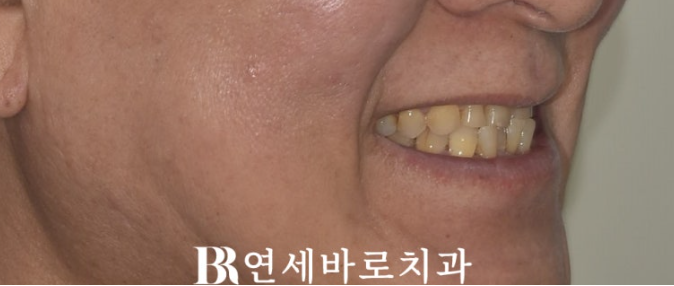
No-prep veneers cannot be placed while the bite remains edge to edge.
They can be placed, but they will inevitably break, or the lower teeth will contact the veneers first and wear them down, leading the patient to return with problems.
There would be no such problem if the areas contacting the lower teeth were filed down. However, the patient specifically came for no-prep veneers because they did not want any tooth reduction, so that was not an option.
After fully explaining that a normal bite—in which the upper teeth cover the lower teeth from the front—is necessary for the veneers to be maintained comfortably and for a long time without tooth reduction, damage to the lower teeth, or veneer fractures, we recommended partial orthodontic treatment on the front teeth.
Partial orthodontic treatment on the front teeth is usually completed within six months at most. However, older patients often find even this treatment quite uncomfortable.
Fortunately, the molar alignment and bite were already very good, so partial orthodontic treatment limited to the front teeth was sufficient.
Therefore, we decided to place appliances only on the front teeth and use a minimally invasive, short-term five-month orthodontic treatment to resolve the edge-to-edge bite and create suitable conditions for no-prep veneers, while also aligning the crooked lower front teeth.
We placed Clippy-C appliances on the six upper teeth from canine to canine and 2D appliances on the six lower front teeth, then proceeded with orthodontic treatment on the front teeth for five months.
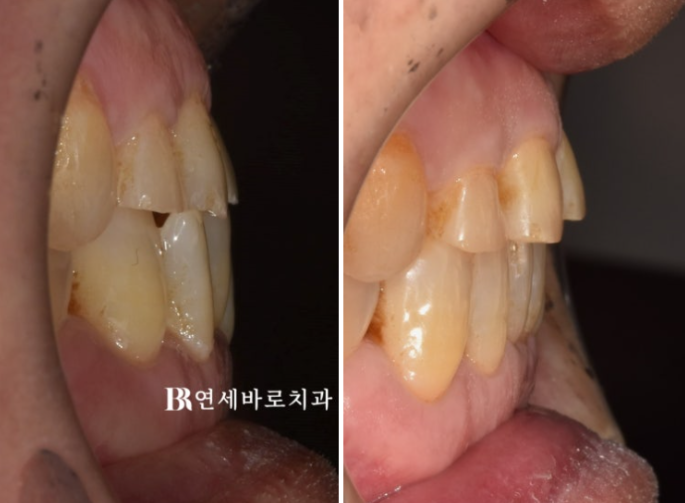
23.02–23.07
The edge-to-edge bite was resolved, and the upper teeth came to cover the lower teeth.
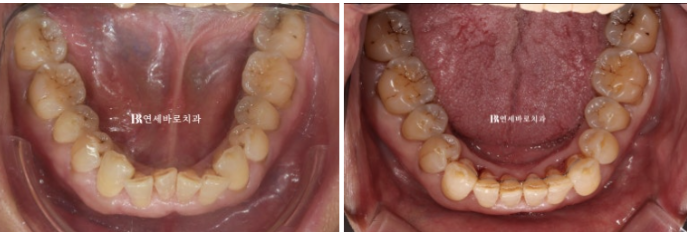
23.02–23.07
The lower front teeth also became nicely aligned.
Now that orthodontic treatment had created a good foundation, we began preparing for the no-prep veneers.
Through the fitting process, it was necessary to communicate thoroughly about possible lip discomfort caused by the veneer thickness, lip volume, tooth length, and color.
Because the patient's back molars were also visible when smiling, we decided to place a total of eight no-prep veneers on the upper teeth only, extending to the premolars behind the canines.
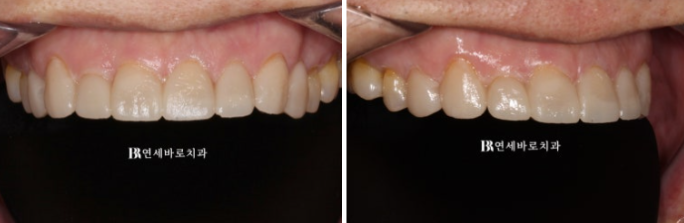
No-prep veneer fitting
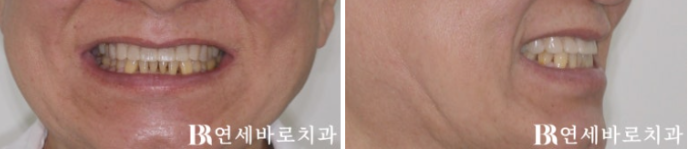
No-prep veneer fitting
During the fitting, we reduced the length according to the patient's wishes.
To reduce the difference in color from the lower teeth, we also decided to make the veneers one shade darker than they appeared during the fitting.
If we had skipped the fitting, the veneers might have been completed without considering these details and the patient might not have been satisfied.
"Please make them look pretty however you think is best."
That approach can be risky.
The dentist's aesthetic perspective and the patient's perspective may be different.
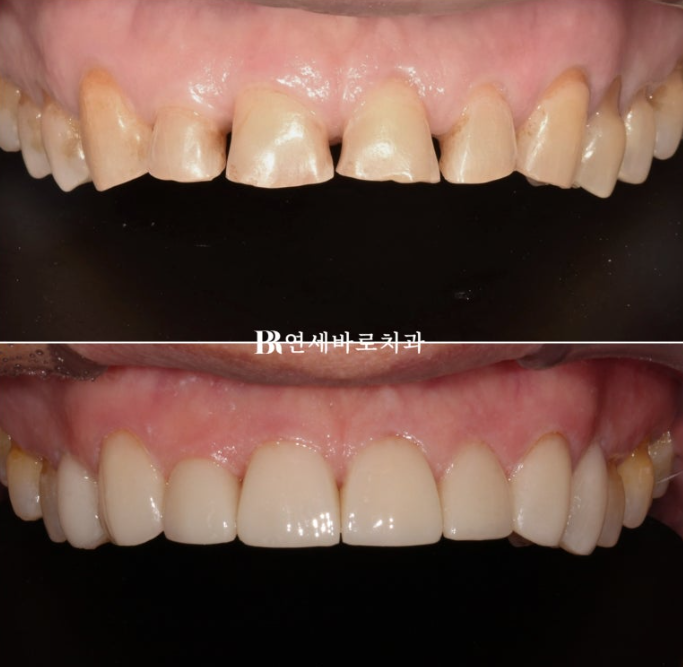
Immediately after orthodontic treatment – No-prep veneers completed – 23.07–23.08
The fitting and final no-prep veneers took a total of three weeks.
It took 10 days from the completion of orthodontic treatment to the fitting appointment, and another 10 days from the fitting to the fabrication of the veneers.
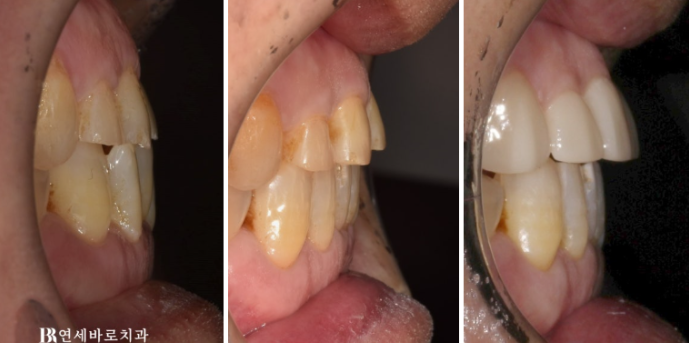
23.02–23.07–23.08
This shows the patient before orthodontic treatment, after orthodontic treatment, and after the no-prep veneers were completed.
The entire process took six months.
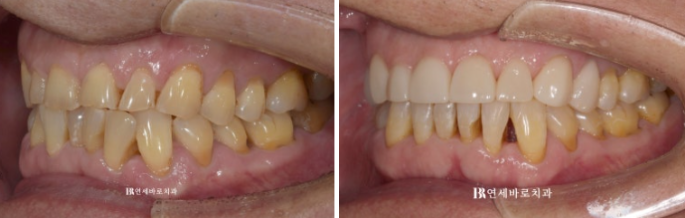
Once the edge-to-edge bite was resolved, the no-prep veneers fit beautifully without filing down the areas that would otherwise contact the lower teeth first.
Because the bite was established so that the upper teeth appropriately covered the lower teeth from the front, the veneers should not fracture from being supported against the lower teeth.
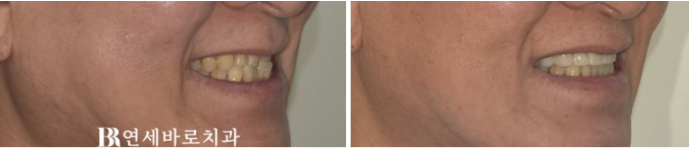
It was good that the no-prep veneers made the teeth look cleaner and brighter. In addition, the partial orthodontic treatment that moved the front teeth forward, together with the thickness of the no-prep veneers, restored volume around the upper lip and philtrum, making the patient look much younger.
As people age, the soft tissue becomes thinner and lip support decreases, making the philtrum and lip area appear sunken. Partial orthodontic treatment on the front teeth and no-prep veneers, without plastic surgery, can also help supplement volume in this area.
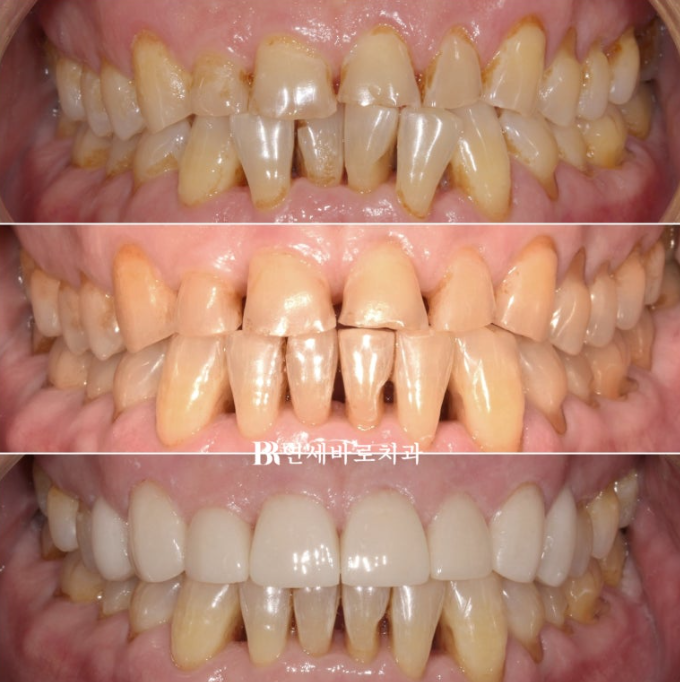
23.02–23.07–23.08
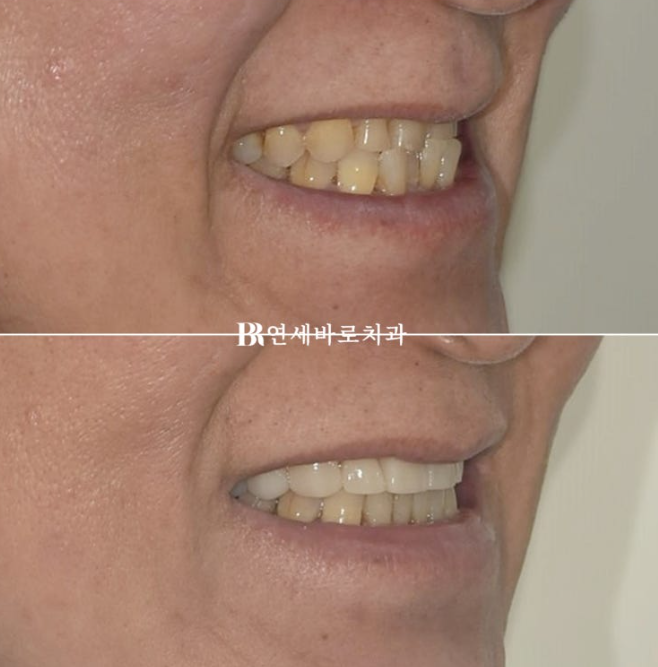
23.02–23.08
Q. If you are considering no-prep veneers, what should you check first?
The success of no-prep veneers is not simply about making the teeth look attractive.
"Has a bite been created that can be used for a long time?"
This is the most important consideration.
More important than avoiding tooth reduction is accurately analyzing:
Depending on the case, short-term partial orthodontic treatment, as in this case, may actually produce a better result.