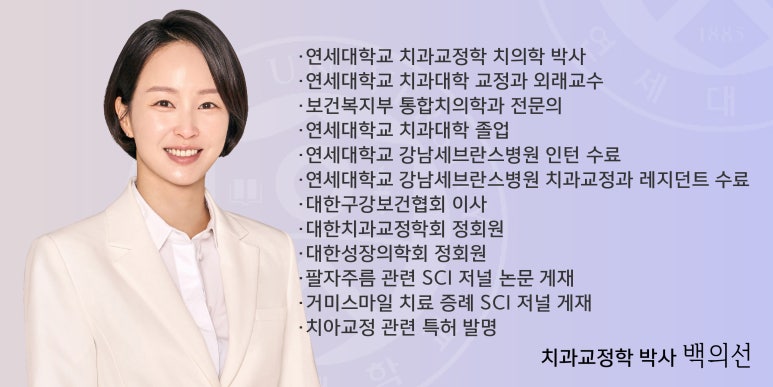
Hello.
This is Yonsei Baro Dental Clinic, an orthodontic clinic in Apgujeong.
Many brides- and grooms-to-be prepare extensively for skincare and teeth whitening, but surprisingly, many give up on orthodontic treatment because they think it is too late to start.
However, if you have about six months left before your wedding, noticeable cosmetic improvement may be possible through partial orthodontic treatment focused on the front teeth.
In practice, depending on the level of difficulty, partial orthodontic treatment for the front teeth is often completed in as little as three months, and usually within six months even in more time-consuming cases.
Therefore, once your wedding venue has been decided, we recommend receiving an orthodontic consultation along with your wedding preparations.

Depending on the level of difficulty, partial orthodontic treatment for the front teeth can be completed in as little as three months and within six months even when it takes longer.
Once your wedding venue is booked, we recommend receiving an orthodontic consultation at the same time as making your venue reservation.
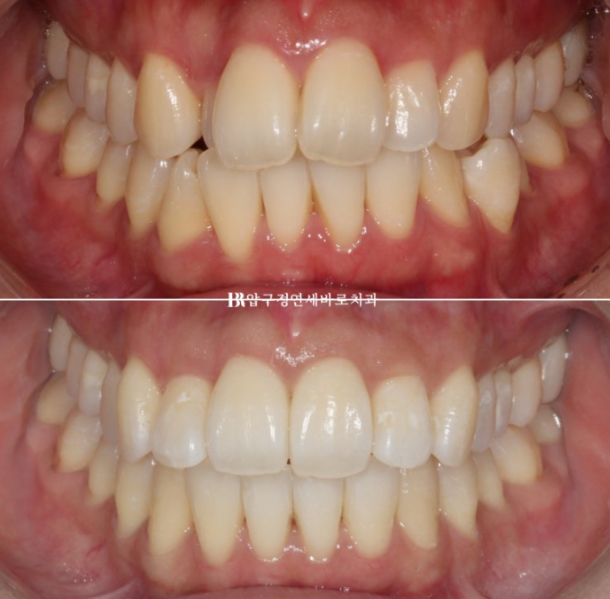
24.02–24.08
Today, we will show how partial orthodontic treatment for the front teeth can be performed in a complex case involving an anterior crossbite and other issues.
A bride-to-be visited us for partial orthodontic treatment of her front teeth.
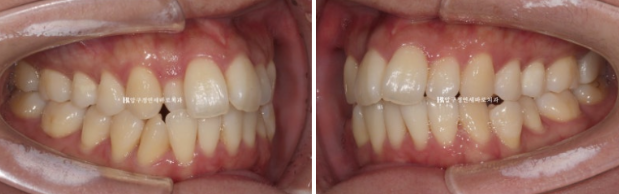
24.02
The crowded lateral incisor shows a crossbite, biting behind the lower teeth.
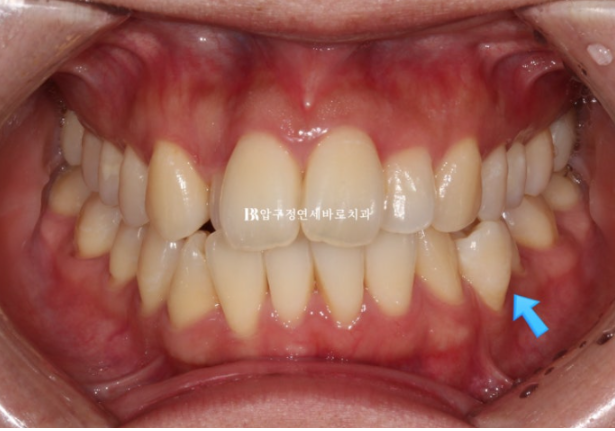
The premolar in the area indicated by the blue arrow on the opposite side was also positioned outside the dental arch, resulting in a crossbite in which it bit behind the upper teeth.
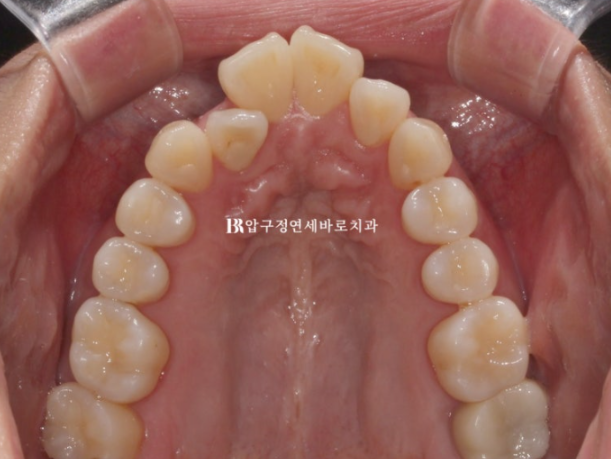
24.02
The lateral incisor positioned against the palate
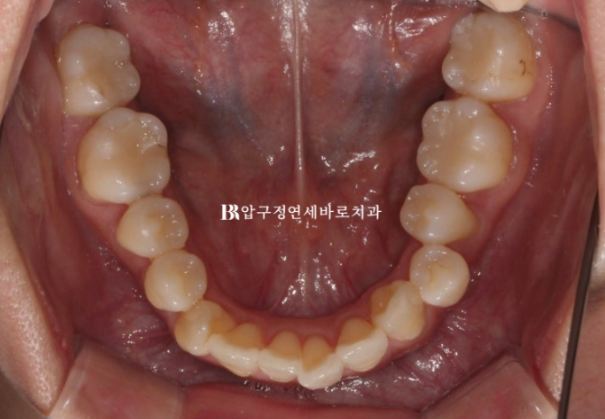
24.02
The case was too difficult to resolve with partial orthodontic treatment of the front teeth alone because of the crooked front teeth and the crowded premolar.
Since only six months remained before the wedding ceremony, treatment was started promptly.
For the upper teeth, we recommended lingual 2D appliances, which are not visible from the front. For the lower teeth, we recommended MTA appliances to align the teeth, including the crowded premolar.
The lingual appliances were placed on the upper teeth, so having an intermediate studio photo shoot should not be a problem.
This is what the teeth looked like five months after treatment began.
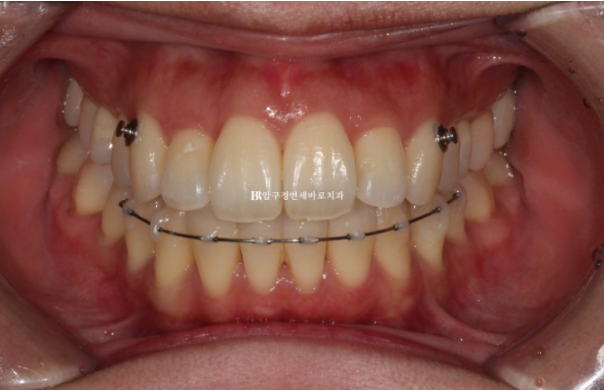
24.07
The item attached to the canine is a button for hooking an elastic.
Elastics were worn during the final month to balance the width between the upper and lower canines.
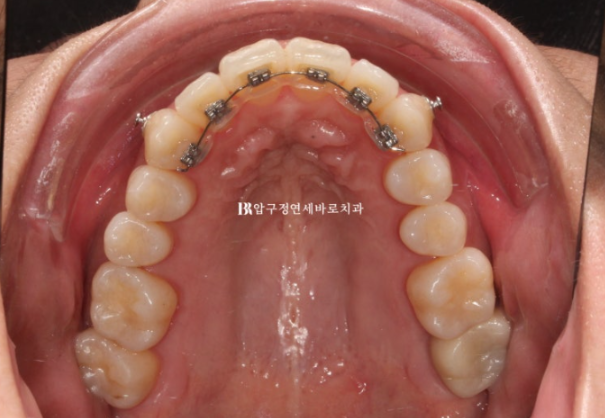
2024.07 2D Lingual Appliance Orthodontic Treatment
This is a 2D appliance designed for lingual partial orthodontic treatment.
Because it is attached to the back of the teeth, it remains invisible throughout the orthodontic treatment period.
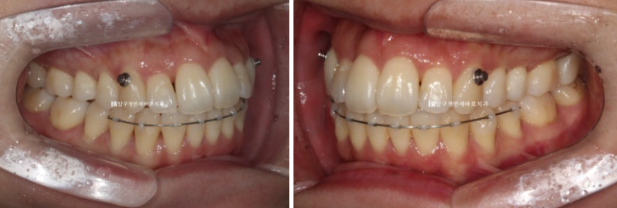
24.07
To move the crowded premolar into its proper position, MTA appliances were attached to nine lower teeth, including the front teeth, and the teeth were aligned.
After two months of finishing orthodontic treatment, treatment was completed six months after it began.
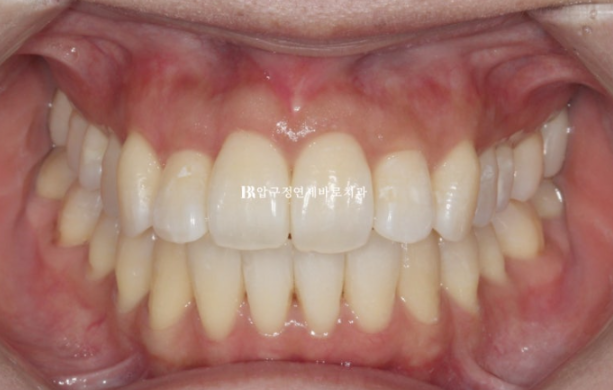
24.08
The dental midlines align precisely.
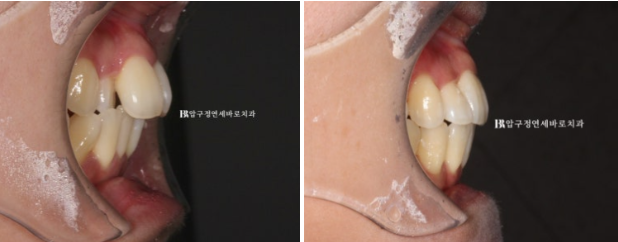
24.02–24.08
The crowded tooth that had been biting in crossbite was corrected.
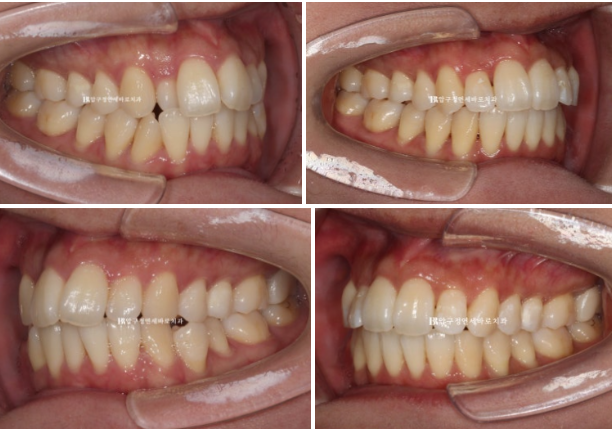
24.02–24.08
Alignment was completed through the premolar.
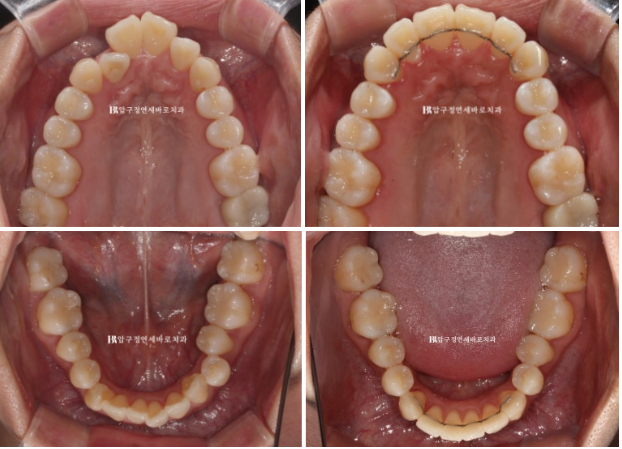
24.02–24.08
The treatment was planned with the goal of achieving an effect comparable to that of comprehensive orthodontic treatment.
Partial orthodontic treatment for the front teeth may appear short and simple, but it is not easy to achieve the same effect as comprehensive orthodontic treatment.
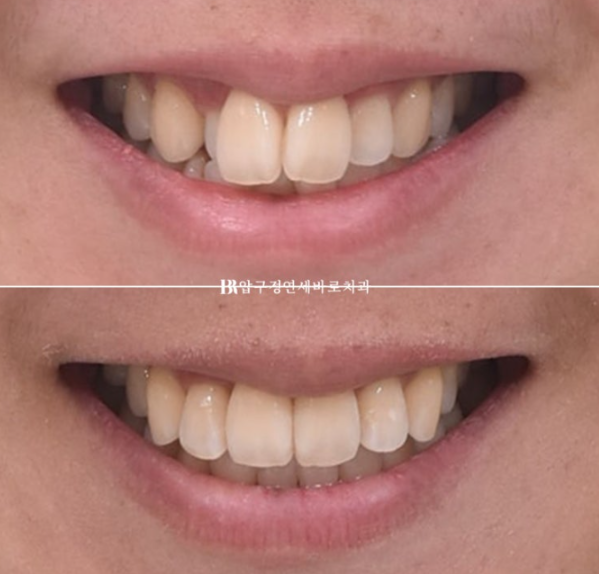
24.02–24.08
The front teeth that had descended and appeared bucktoothed were brought to the same height, and their angulation also improved through adjustment of the tooth axes.
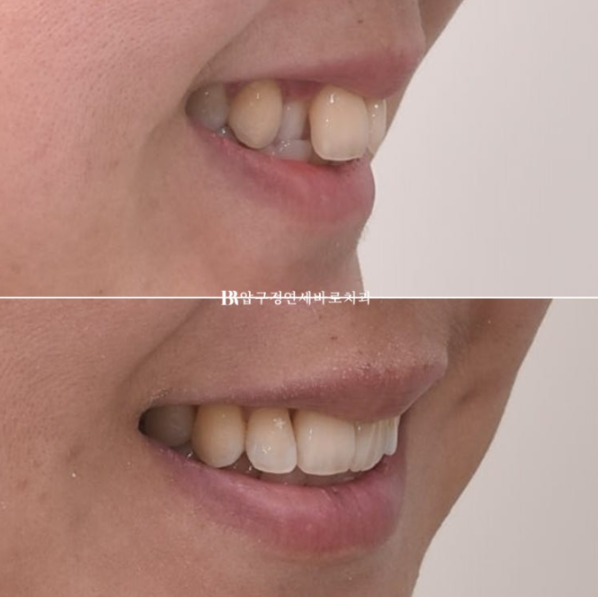
24.02–24.08
The front tooth that had been catching against the opposing tooth also returned to its proper position.
Partial orthodontic treatment may appear short and simple, but in reality, highly precise planning is required to achieve an aesthetic result comparable to that of comprehensive orthodontic treatment.
Of course, not every patient can achieve the same result as comprehensive orthodontic treatment through partial orthodontic treatment alone.
Depending on the condition of the alignment, the occlusal relationship, and the degree of space deficiency, comprehensive orthodontic treatment may be more appropriate.
However, if suitable cases are selected and an accurate treatment plan is established, it is possible to expect a sufficiently satisfactory result even within the short period before a wedding.
We hope this case was helpful to brides- and grooms-to-be who are considering orthodontic treatment before their wedding.