Hello,
This is Apgujeong Yonsei Baro Dental Clinic, a Gangnam orthodontic clinic.
Today, we will discuss treatment for inward-tilted teeth.
Q. Can inward-tilted teeth be improved with orthodontic treatment?
Have you ever been told that your front teeth are tilted inward, or that your teeth look shadowed when you smile?
This type of tooth alignment is commonly referred to as inward-tilted teeth.
Inward-tilted teeth are not simply a matter of crooked teeth. Because the front teeth lean toward the palate, they may look smaller and make the area around the mouth appear constricted when smiling.
When many people consult an orthodontist about treatment for inward-tilted teeth, they are often presented with a long-term treatment plan involving wisdom tooth extraction followed by moving the molars backward. However, not every case requires a long treatment period or extractions.
Today, through the actual case of a patient who chose Invisalign Lite after consulting several orthodontic clinics, we will take a detailed look at:
✔️ The causes of inward-tilted teeth
✔️ Why Invisalign can be used to treat inward-tilted teeth
✔️ How much the bite and dental midline can be improved
✔️ What changes occurred in nine months
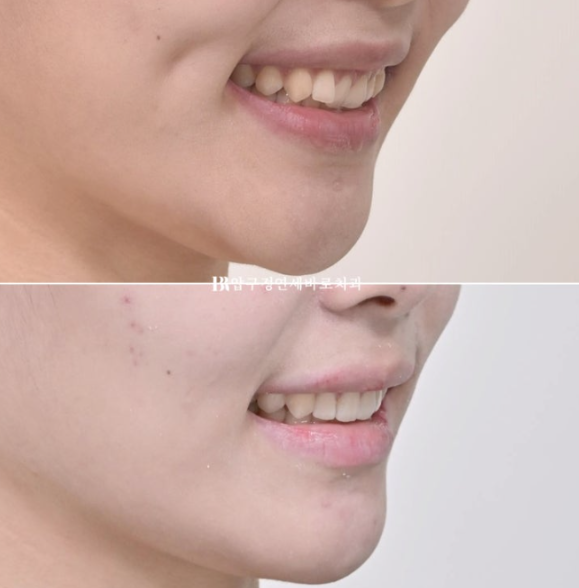
Inward-tilted teeth are a condition in which the front teeth lean backward.
The teeth may appear shadowed, and the smile may look somewhat narrow or constrained.
See how treatment for inward-tilted teeth progresses with Invisalign Lite, a short-term Invisalign program.
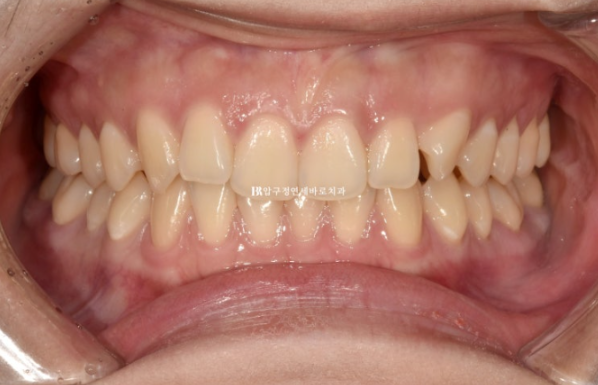
24.02
This patient visited us last February for orthodontic treatment.
The patient wanted to improve the alignment of the front teeth.
They had already visited five orthodontic clinics for consultations.
They came to us after being advised to have the wisdom teeth extracted and the molars moved backward.
The upper and lower dental midlines differed by approximately 2 mm, and crowding was visible around the lateral incisors and canines.
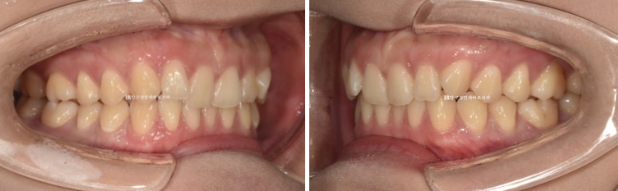
24.02
From the side, the three central front teeth can be seen tilting backward.
The occlusal relationship on the right side was Class II.
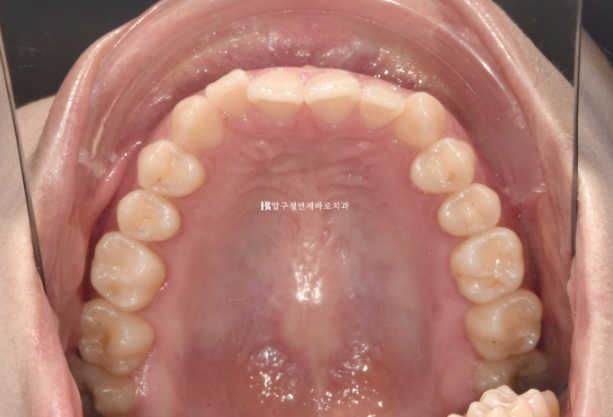
24.02
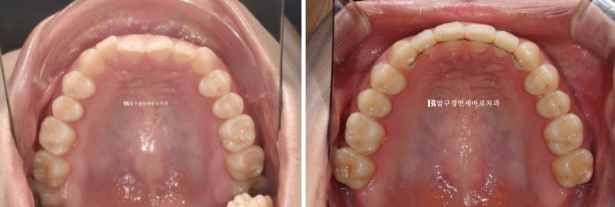
The three front teeth were positioned toward the palate.
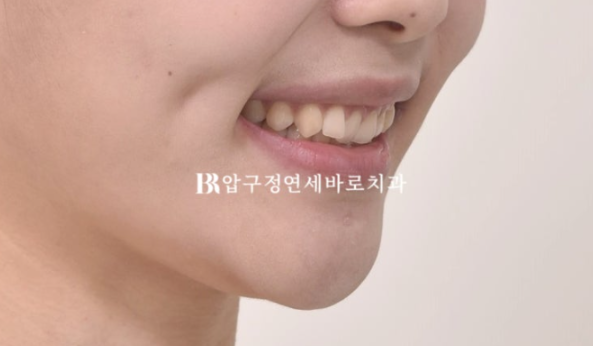
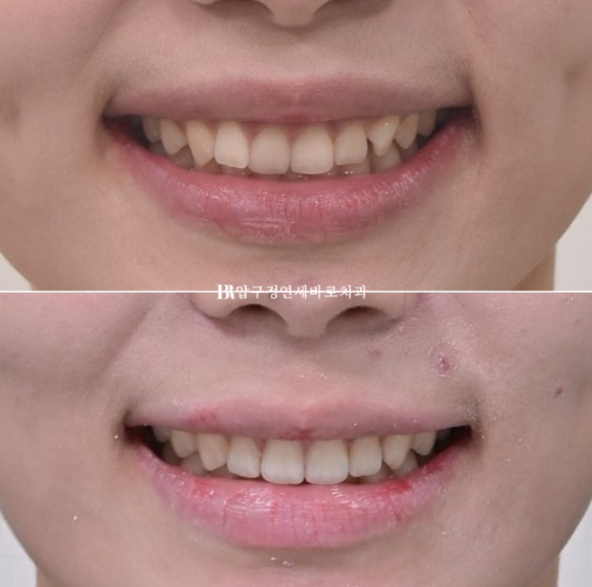
When the front teeth tilt backward while smiling, they look shadowed and the smile looks less attractive.
Since the right molars showed a Class II occlusal relationship, following the conventional approach and the diagnosis from the other clinics would have required Invisalign Comprehensive treatment lasting more than a year and a half, with movement of all the molars.
However, the patient considered treatment duration and simplicity more important, so treatment was carried out with Invisalign Lite, with a target duration of approximately nine months.
This reduced the cost and treatment period by accepting a slight discrepancy in the midline and occlusion.
On the right side, where a Class II occlusal relationship was present, we decided to guide the bite as close as possible to Class I by using elastics.
24 February: The aligners were ordered, received in March, and treatment began.
Invisalign Lite provides a maximum of 14 aligners. The patient wore the aligners for four months, from March through June.
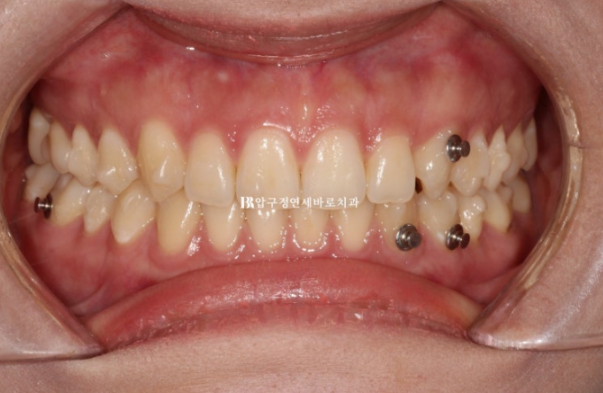
24.06
The alignment and crowding had improved.
There was still only minimal improvement in the midline.
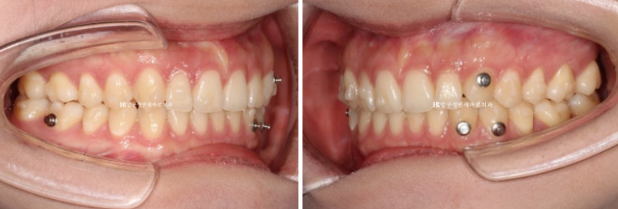
The occlusal relationship also improved somewhat after diligently wearing the Class II elastics on the right side.
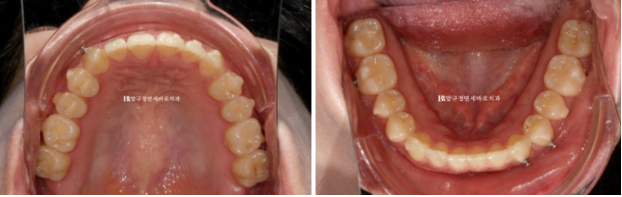
24.06
Improved alignment and inward-tilted teeth
We decided to further improve the right molar occlusal relationship with elastics and to upright the front teeth a little more.
Additional aligners were started.
The patient wore the additional aligners from June to November 2024 and continued to wear the elastics diligently.
Treatment was finally completed in November 2024.
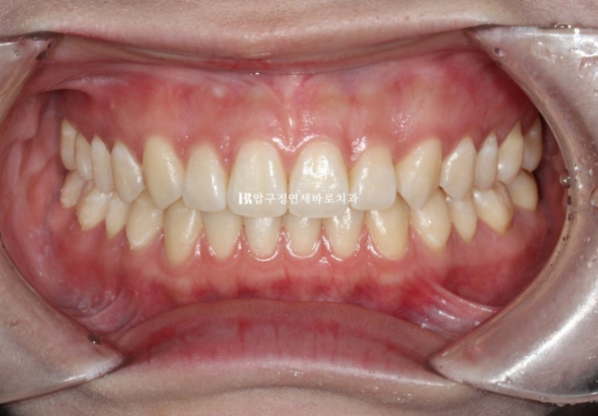
November 2024
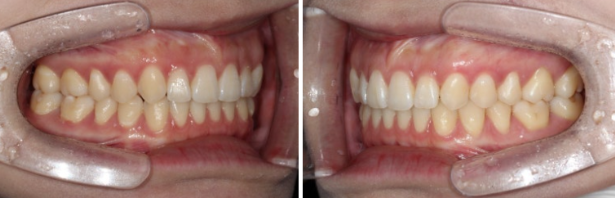
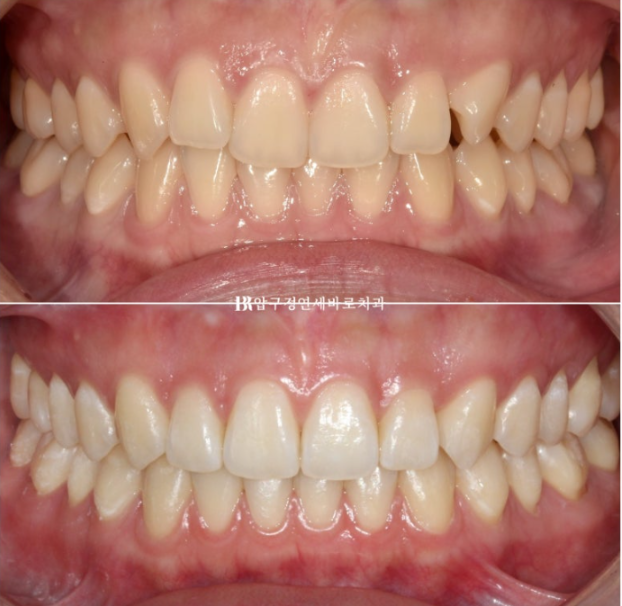
A tight occlusion with virtually no gaps can be seen.
During the final one to two weeks, the aligners were left only around the front teeth, while the molar sections were cut off before wearing them to promote natural stabilization of the bite.
We post cases like this in an effort to challenge the misconception that Invisalign treatment ends with a poor bite.
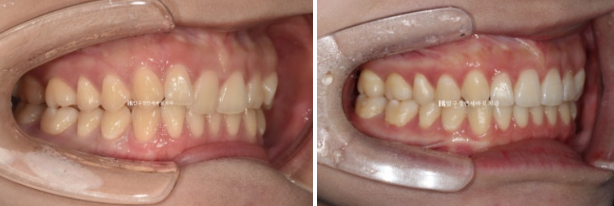
24.02-24.11
The problematic Class II occlusal relationship on the right side improved to nearly Class I.
This was thanks to diligently wearing the elastics.
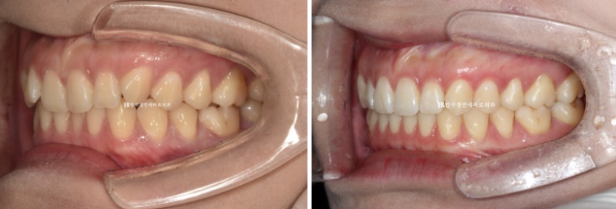
24.02-24.11
The occlusion on the left side was originally Class I, and the upper and lower molars came into closer contact.
24.02-24.11
As the front teeth that had been tilted backward moved forward, the shape of the dental arch changed from square to round.
24.02-24.11
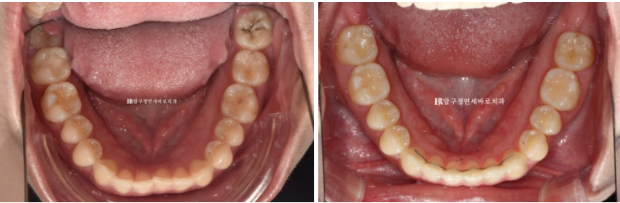
The shape of the lower dental arch also improved.
24.02-24.11
The midline still differed by approximately 1 mm, but it had improved compared with the beginning.
24.02~24.11
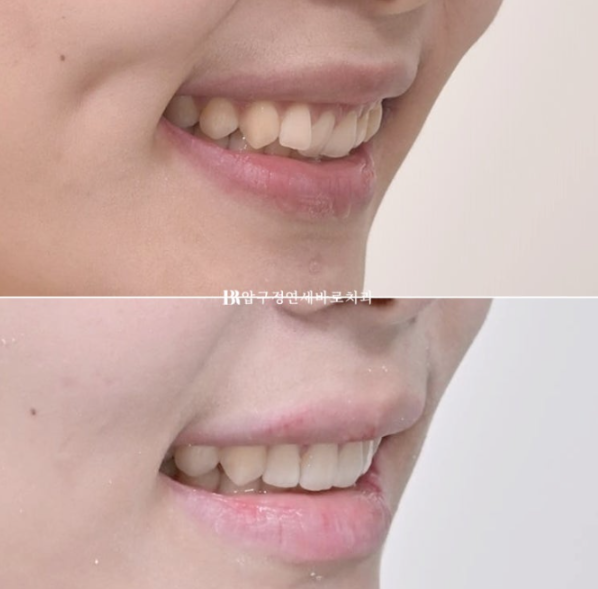
24.02~24.11
Once the inward-tilted teeth and crowding were corrected, the smile looked much cleaner and brighter.
Q. Why can Invisalign be advantageous for treating inward-tilted teeth?
With Invisalign, front-tooth torque can generally be adjusted precisely according to each person’s individual bone condition.
In fact, this can be even more precise than conventional bracket-and-wire orthodontic treatment.
We hope this post is helpful to those who are concerned about inward-tilted teeth.