Hello,
This is Apgujeong Yonsei Baro Dental Clinic, a Gangnam orthodontic dental clinic.
As summer vacation approaches, we are receiving more inquiries about orthodontic treatment for children.
Today, we would like to introduce Invisalign First clear aligner treatment for correcting a receding lower jaw in children.
This is growth modification treatment for skeletal Class II malocclusion in children—in other words, treatment for a receding lower jaw.
Q. Can Invisalign First only be used to straighten teeth?
No.
When the MA function is used, it can also be used for growth modification in skeletal Class II malocclusion, such as a receding lower jaw.
Q. When is the best time to begin orthodontic treatment for children?
The earlier treatment begins during a period of active growth, the better the potential for guiding lower-jaw growth.
Summer and winter vacations are good times to begin examinations and treatment.
Some children visit an orthodontic clinic because their upper front teeth appear protruded, even though there may be nothing wrong with the upper teeth themselves.
When the lower jaw is small, the gap between the upper and lower teeth can be large, making the upper teeth appear relatively protruded.
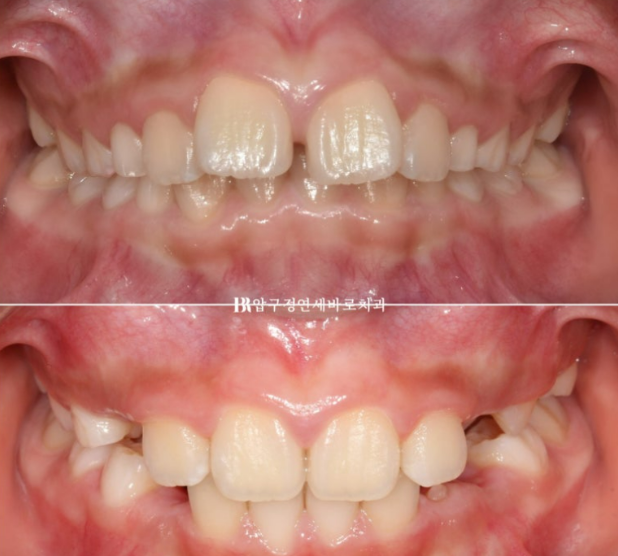
This child also visited us for correction of protruding teeth, but the cause was a small lower jaw—in other words, a receding lower jaw—and growth treatment for the lower jaw was provided.
23.04
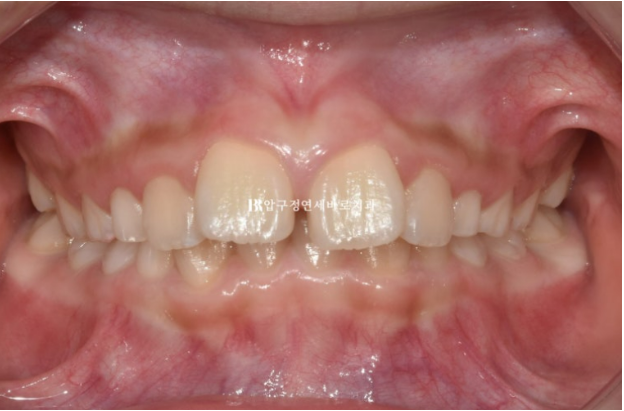
The most noticeable feature is the gap between the front teeth, but this gap may close as the canines erupt, so it is not a major concern.
More importantly, the upper teeth cover much of the lower teeth, making the lower teeth difficult to see.
This is called a deep bite.
A discrepancy between the upper and lower dental midlines is also visible.
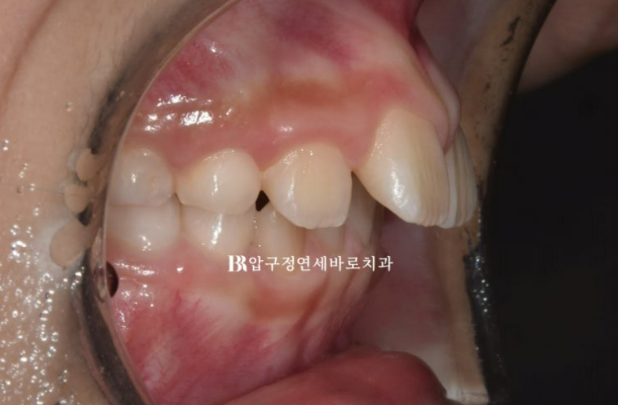
23.04
From the side, the upper teeth appear significantly protruded.
However, skeletal analysis showed that this appearance was due to the small lower jaw.
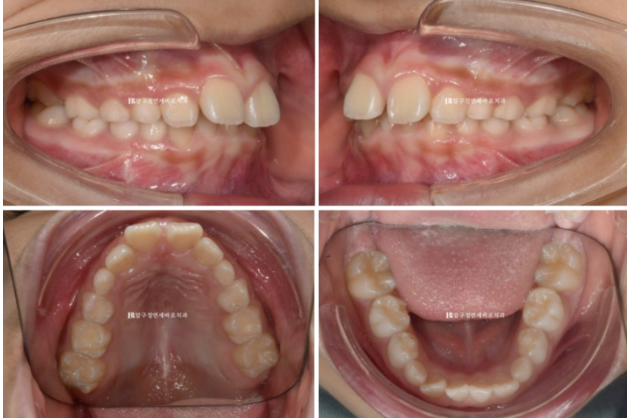
23.04
The palate was narrow, and the front teeth were crooked.
A hand growth-plate X-ray showed that the peak growth period had not yet passed.
After explaining Invisalign First treatment, we began treatment with the goals of expanding the dental arch, aligning the teeth, improving the deep bite, and guiding lower-jaw growth.
Invisalign First has a function called MA that is useful for treating a receding lower jaw.
It serves a role similar to functional orthopedic appliances that control jaw position and growth, such as activators, Frankel appliances, and bionators.
The principle is that a part called a “wing” is added to the clear Invisalign aligner. The upper and lower wings engage with each other and guide the jaw into the proper position.
Its effectiveness is not inferior to that of conventional orthopedic appliances. In fact, it tends to cause fewer dental side effects, such as flaring of the lower front teeth, so it is widely used to treat receding lower jaws and asymmetry.
Typically, arch expansion, alignment of the front teeth, and improvement of the deep bite are completed first, followed by the MA phase during the middle of treatment.
From April 2023 to September 2023, the child wore stages 1 through 25 for six months, completing arch expansion, front-tooth alignment, and improvement of the deep bite.
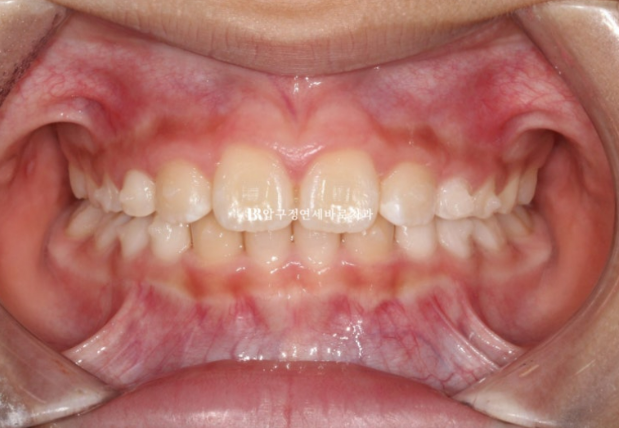
23.09
The upper and lower dental midlines were aligned, and the deep bite improved.
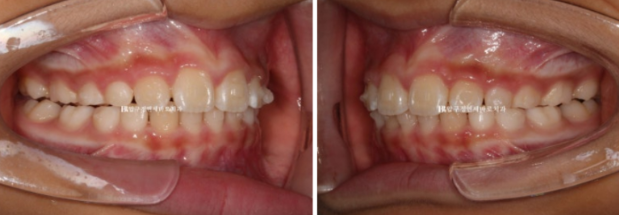
23.09
The protruding front teeth also moved into their proper positions.
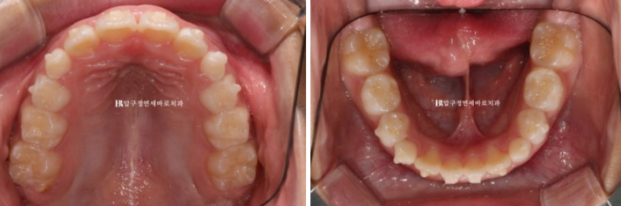
23.09
The previously narrow palate and dental arch had expanded, and the front teeth had become aligned.
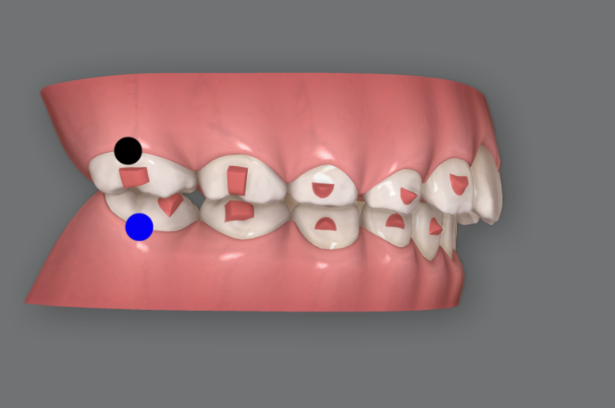
According to the ClinCheck treatment plan, this is the expected dentition at stage 25, and because treatment progressed well, the actual condition inside the mouth was similar.
It was now time to begin full-scale growth modification for the receding lower jaw.
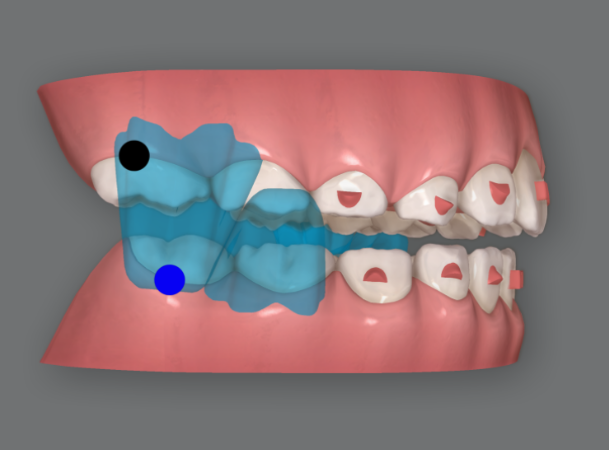
Stages 26 through 57 were the MA phase, which guided the position of the lower jaw. Looking at the aligners, you can see two pairs of blue “wings” protruding from both the upper and lower aligners.
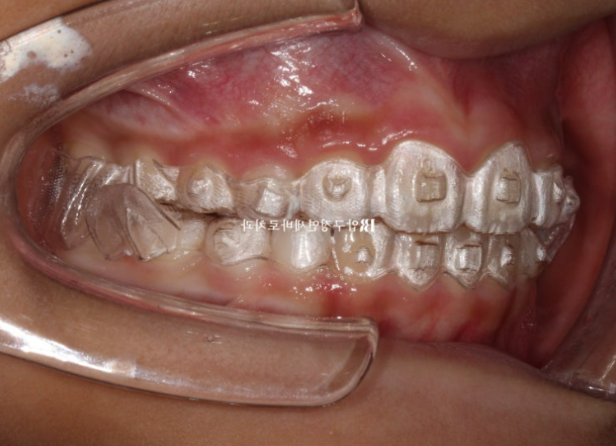
23.09
This is how they were actually implemented inside the mouth. Unless the lower jaw was brought forward to bite, the wings interfered with each other and prevented the mouth from closing.
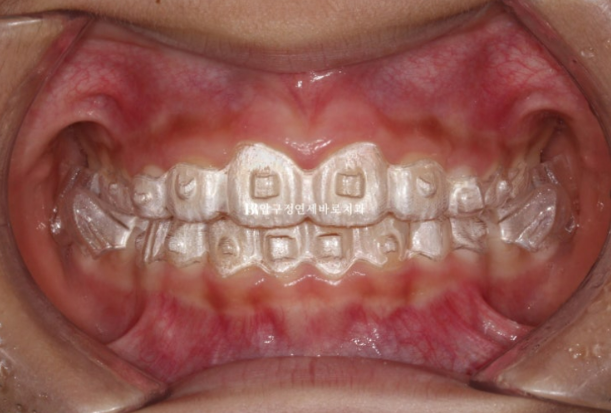
23.09
This is what it looked like from the front.
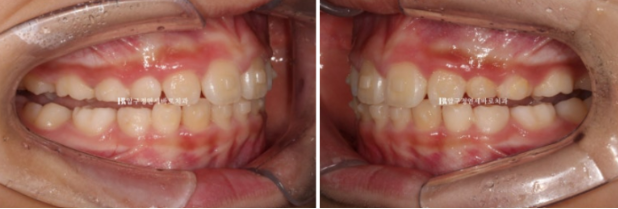
24.02
This photo was taken midway through the sixth month of MA treatment.
During the MA treatment phase, the front teeth contact each other first while the molars remain apart.
This is an unnecessary temporary occurrence during the process.
The molars naturally come back into contact when the molar sections of the aligners are cut off and worn during the latter part of MA treatment.
There is another reason to cut away the molar sections during the latter part of MA treatment.
If treatment for the receding lower jaw has been successful, the jaw position should remain stable even without the wings on the aligners.
This is also done to check that point.
If removing the wings eliminates the part that helps bring the lower jaw forward and the jaw shifts backward again when biting, the MA phase will need to be continued for longer.
For this patient, stages 53 through 57, the final treatment aligners, were worn after cutting away the molar sections so that only the front-tooth sections remained.
After wearing all 57 aligners over a total of 15 months—six months of orthodontic treatment and nine months of MA treatment—this was the result.
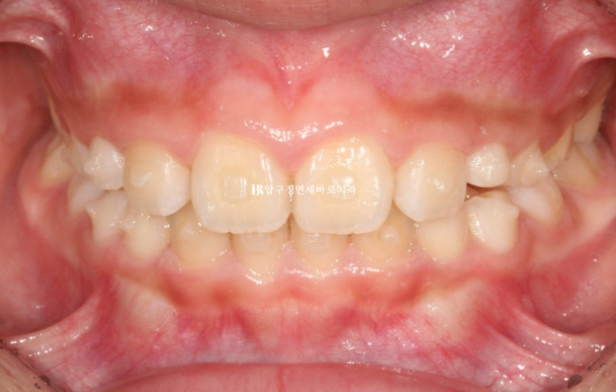
24.06
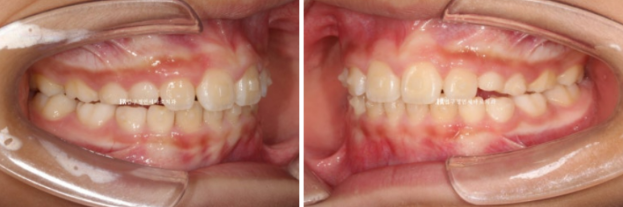
24.06
For the final five aligners, stages 53 through 57, the molar sections were cut away to help stabilize the bite. Unlike in the photo from the previous February, the molars were now contacting properly.
In addition, even after wearing the aligners with the wings cut away for more than a month, the lower jaw did not shift backward or return to its previous bite position. We confirmed that the lower-jaw position was very stable.
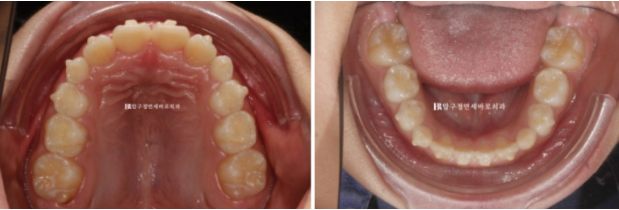
24.06
Although everything looked good, we expected that there might be slightly insufficient space for the canines to erupt, so we decided to make one additional set of aligners.
From July 2024 to January 2025, the child wore all the aligners in the second set for seven months to create additional space for the canines, after which treatment was completed.
Here are the post-treatment photos.
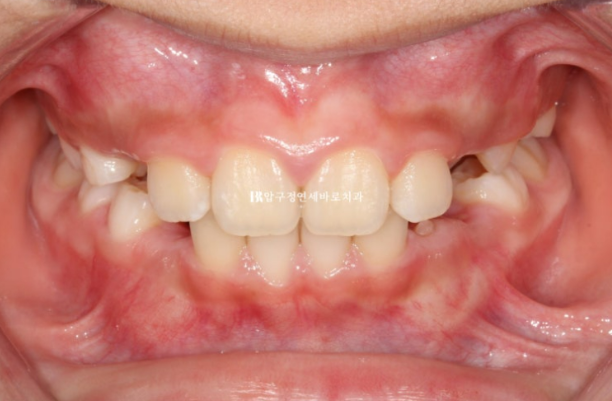
24.01
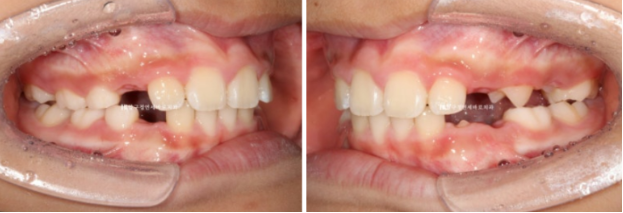
24.01
The molar occlusion was good, and as many of the remaining primary teeth had fallen out during treatment, the permanent teeth were beginning to erupt.
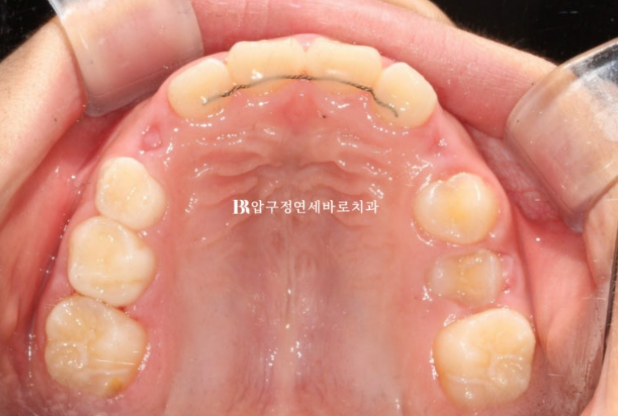
24.01
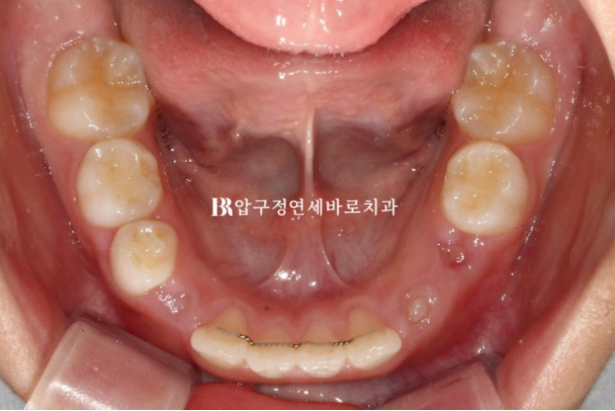
24.01
Sufficient space was created for the canines to erupt.
A fixed wire retainer was attached to the four front teeth, and a removable appliance was also provided to maintain the space and prevent it from narrowing again.
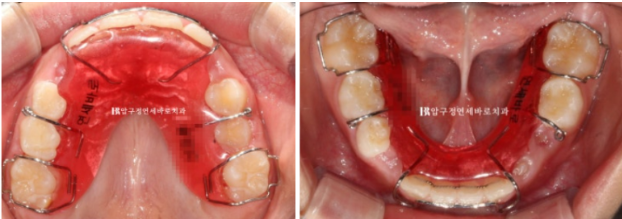
24.01
Retainers are important after adult orthodontic treatment as well, but thorough retention is particularly important for children because the oral environment changes rapidly as primary and permanent teeth coexist and transition.
Let us compare the condition before and after treatment below.
The total treatment period was 22 months.
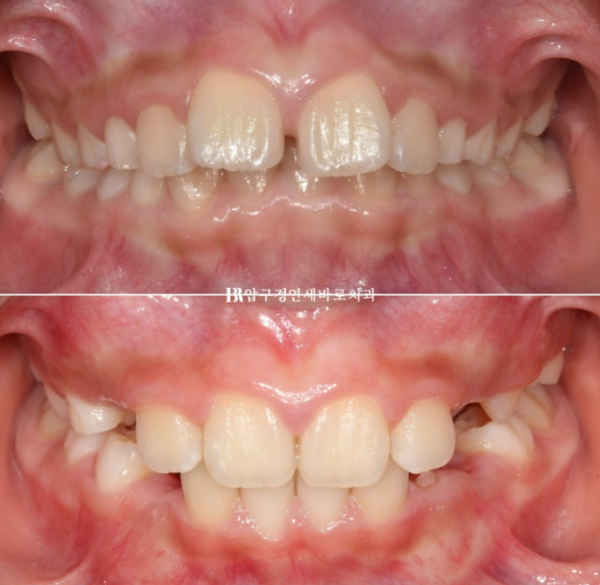
23.04~25.01
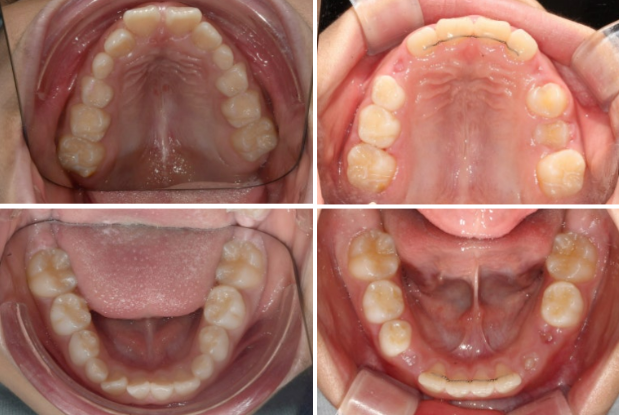
23.04~25.01
Aligned front teeth and sufficient space for the permanent teeth
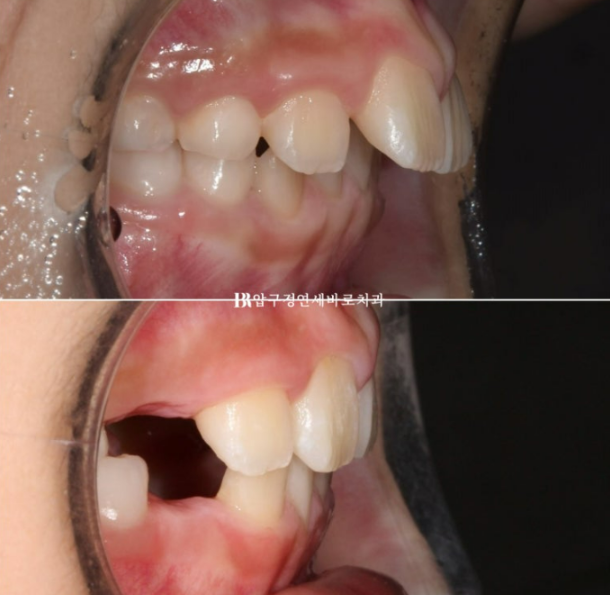
23.04~25.01
The protrusion of the upper teeth improved significantly.
It may appear that the protruding upper teeth were moved backward, but in fact, the upper teeth were not moved backward. Rather, the lower jawbone containing the lower teeth grew and moved forward.
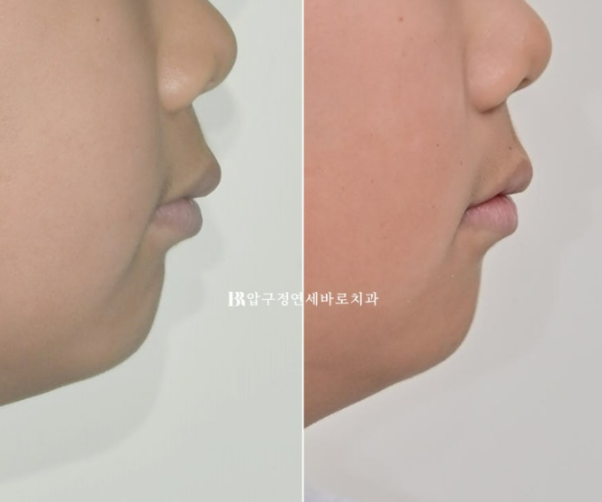
23.04~25.01
Improvement in facial appearance
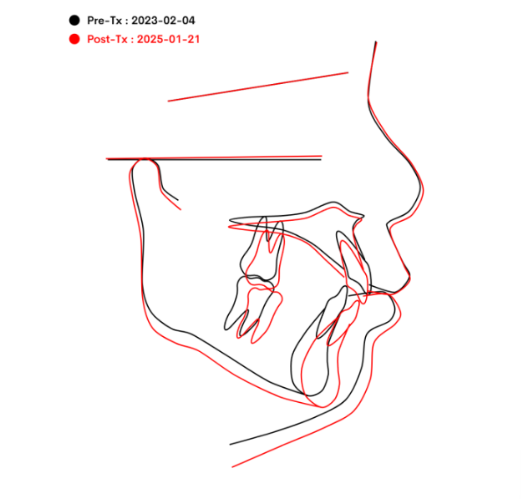
23.04~25.01
Before treatment, the ANB value indicating the skeletal receding lower jaw was 6.1. It decreased to 3.9, which is within the normal range, and the growth of the upper and lower jaws proceeded favorably.
Invisalign First clear aligner treatment can address complex skeletal problems beyond simply straightening the front teeth.
For children whose upper teeth appear protruded because of a receding lower jaw, growth-based orthodontic treatment may be much more important than simply aligning the teeth.
As in this case, appropriately using the MA function of Invisalign First may allow not only tooth alignment but also guidance of lower-jaw growth and improvement in facial appearance.
If you are concerned about your child’s receding lower jaw or growth modification, consult a professional and confirm the most suitable time for treatment through an accurate diagnosis.