Gummy Smile Correction Review | Natural Improvement of Gummy Smile and Buccal Corridors Through Extraction Treatment for Protruding Teeth
Hello. This is Yonsei Baro Dental Clinic, an orthodontic clinic in Apgujeong and Gangnam.
Many people are concerned about Gummy Smile, a condition in which a significant amount of gum is visible when smiling.
However, a gummy smile is often influenced not only by the gums themselves, but also by protruding teeth, the position of the front teeth, lip movement, and overall smile balance.
Today, we would like to introduce an actual treatment case in which a gummy smile, buccal corridors, and lip incompetence were improved together through extraction treatment for protruding teeth.
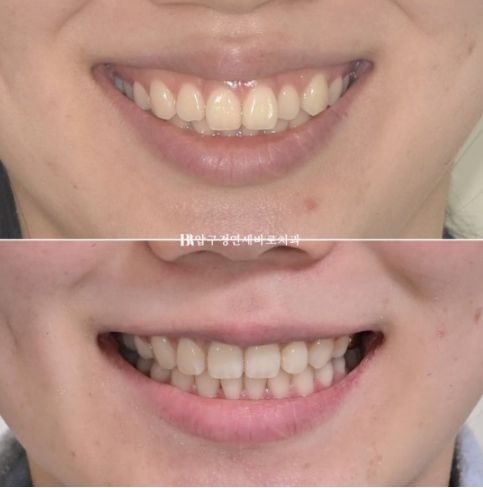
23.06–25.01
For today’s post, it may be helpful to focus on the changes in the gummy smile and buccal corridors.
We will explain how a gummy smile and buccal corridors affect smile aesthetics.
This patient visited us in June 2023 to improve protrusion and tooth alignment.
Q. Why does a gummy smile occur?
A gummy smile refers to a condition in which an excessive amount of gum is exposed when smiling.
There are various causes, but common contributing factors include protruding front teeth, deep bite, the position of the upper jaw, short lips or lips that rise significantly when smiling, and teeth that are tilted forward. Multiple factors may work together.
Therefore, it is important to accurately diagnose the cause rather than simply treating the gums.
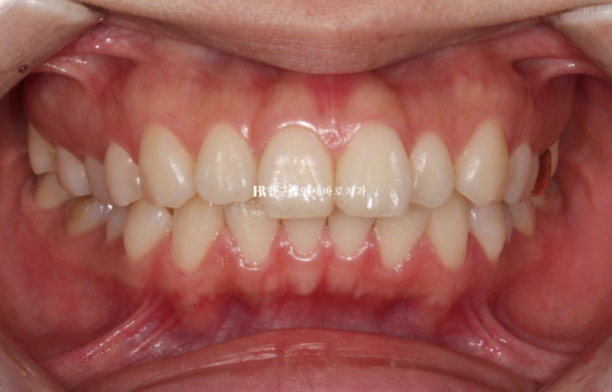
23.06
A midline discrepancy is visible.
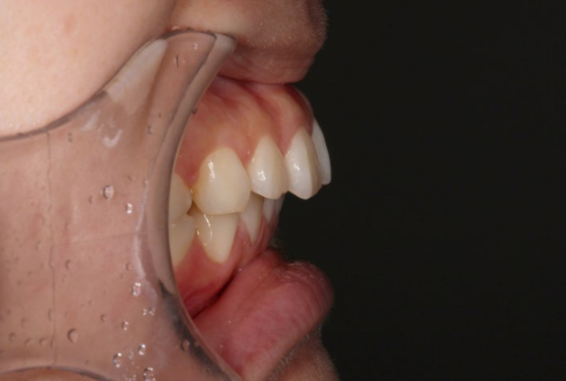
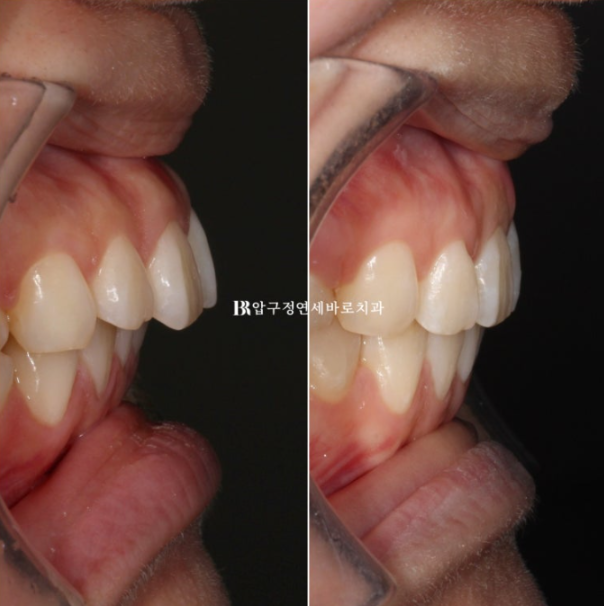
There is a large gap between the upper and lower teeth due to the protrusion of the upper teeth.
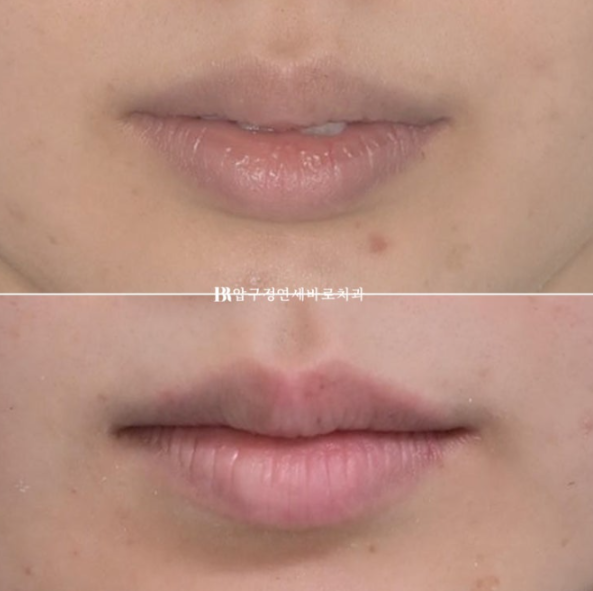
When the front teeth come together in this way, the lips cannot close comfortably.
This can cause lip incompetence.
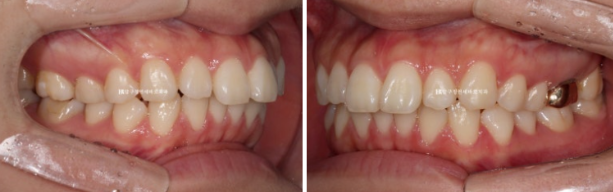
23.06
Because the front teeth were significantly protruded, we planned treatment involving extraction of the two upper premolars and proceeded with treatment.
Based on the patient’s initial facial appearance, we anticipated that moving the lower lip too far backward would not be desirable. Therefore, for the lower arch, we planned to extract the impacted wisdom teeth and move the teeth slightly backward using mini-screws, without extracting the lower premolars.
The patient chose Clippy-C orthodontic treatment.
Q. Why was extraction treatment performed only on the upper teeth?
The most important consideration in this treatment was the balance of the lips and profile.
Because the upper teeth were significantly protruded, the two premolars were extracted to create space.
For the lower jaw, however, we chose to extract the impacted wisdom teeth and move the teeth backward using mini-screws, without extracting the premolars.
If the lower premolars had also been extracted, the lower lip could have moved excessively backward, making the profile appear sunken.
The treatment plan was determined by considering not only tooth alignment but also the overall balance of the face.
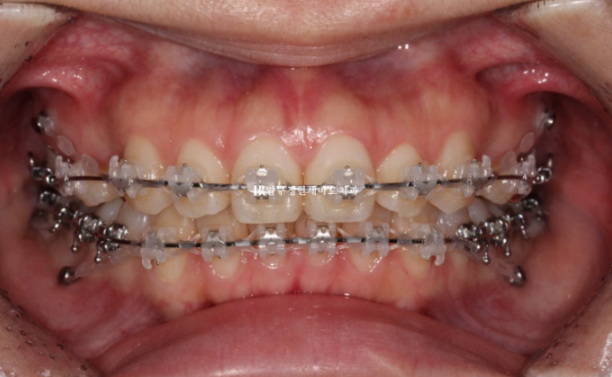
23.11
Treatment proceeded after placing mini-screws.
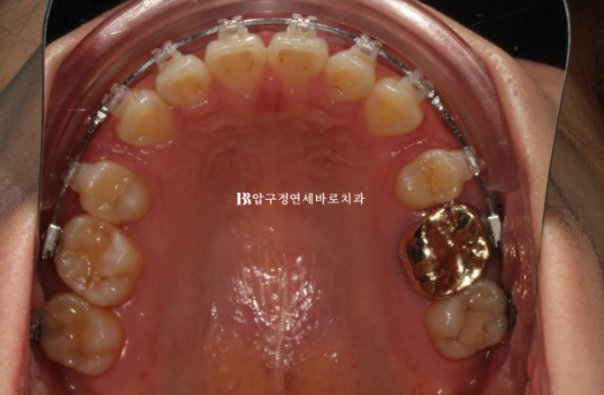
24.03
At this point, approximately half of the extraction space remained.
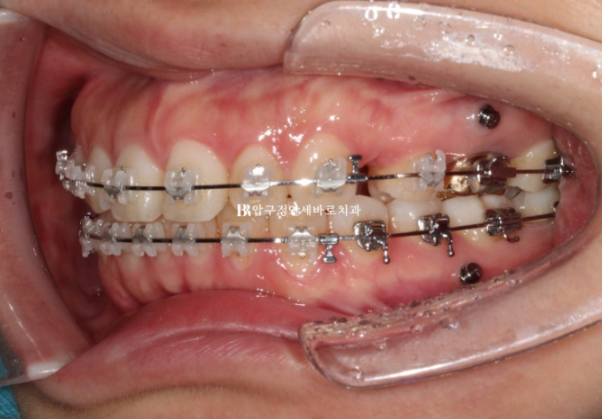
24.03
Orthodontic treatment continued for 1 year and 8 months, and treatment was completed in January 2025.
Summary of Treatment Results
✔ Treatment period: approximately 1 year and 8 months
✔ Extraction treatment involving the upper premolars
✔ Lower treatment: wisdom tooth extraction + mini-screw treatment
✔ Improved midline
✔ Improved deep bite
✔ Improved protruding profile
✔ Improved gummy smile
✔ Formation of buccal corridors
✔ Improved lip incompetence
✔ Natural lip and profile balance maintained
✔ Stable occlusion achieved
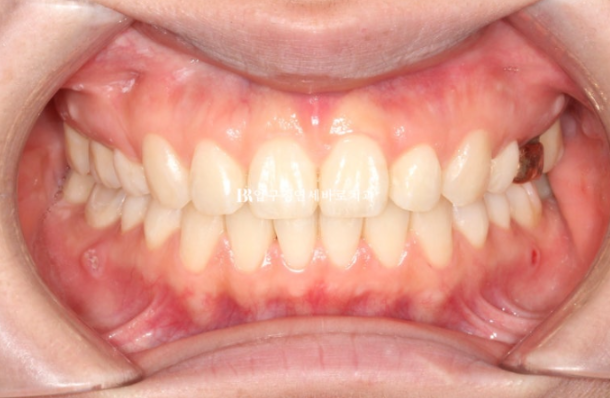
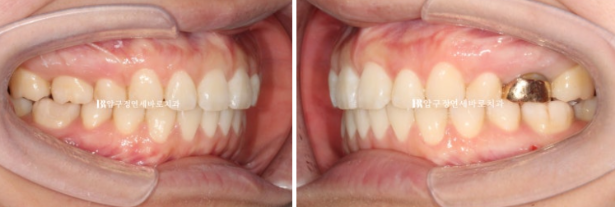
25.01
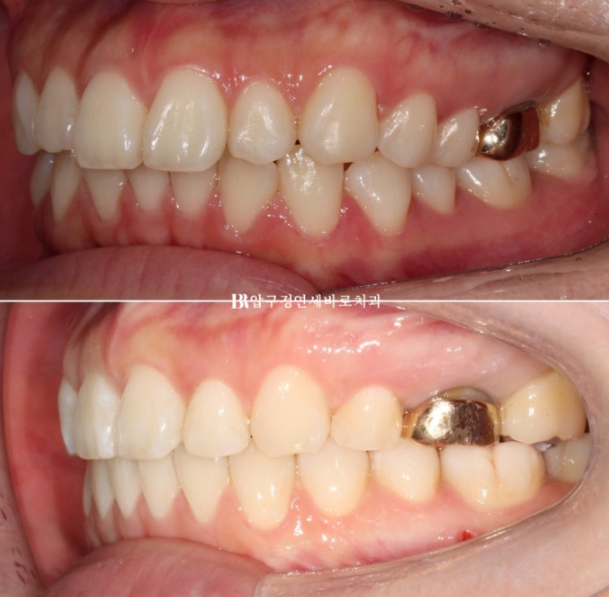
The midlines now coincide,
25.01
and the molar occlusion is also good.
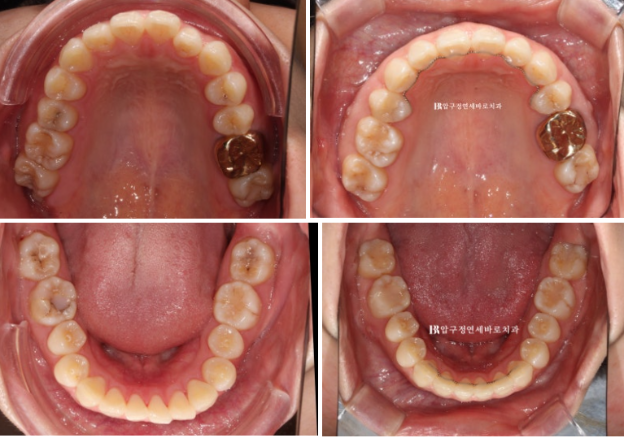
23.06–25.01
This is the final result, including the retainers.
Let’s look at the before-and-after comparison photos.
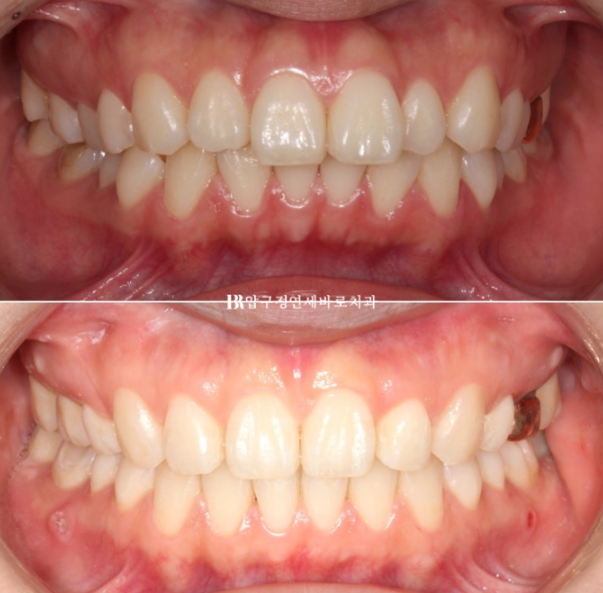
23.06–25.01
Improvement in the midline and deep bite
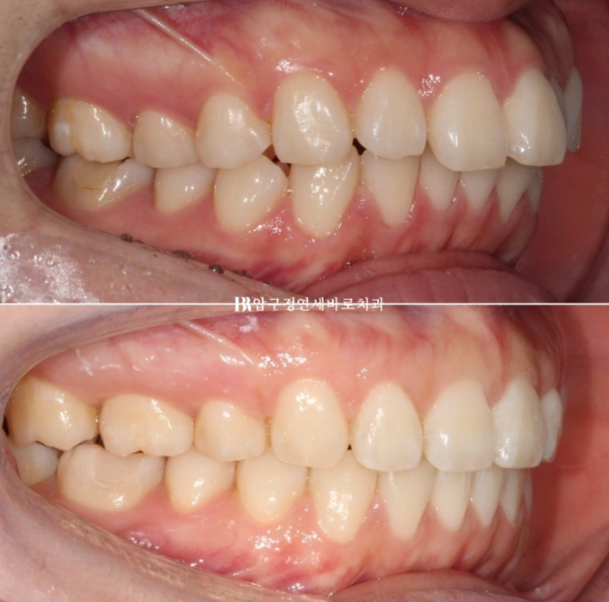
23.06–25.01
23.06–25.01
Treatment was performed with the goal of achieving a tight, stable occlusion.
23.06–25.01
As the protrusion of the upper teeth was resolved, the gap between the upper and lower teeth decreased.
23.06–25.01
When the upper teeth are significantly protruded, the lower lip can become caught between the upper and lower teeth, causing the upper teeth to show slightly between the lips when the mouth is closed.
As the protrusion of the upper teeth was resolved, the lips that previously could not close comfortably now close with ease.
23.06–25.01
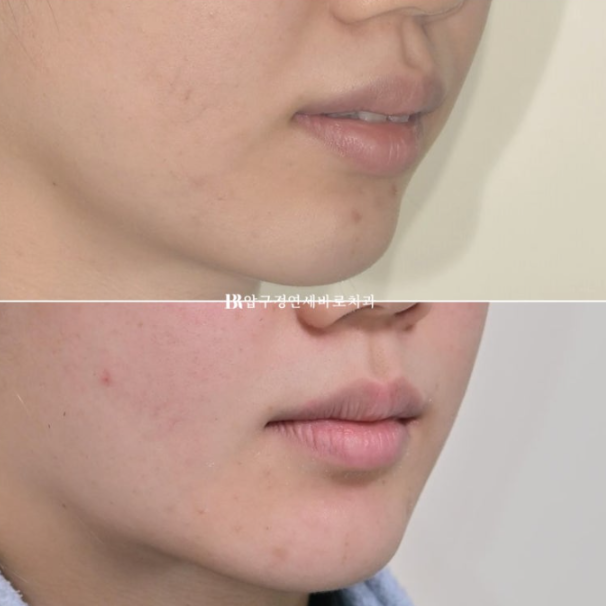
Lip incompetence was resolved.
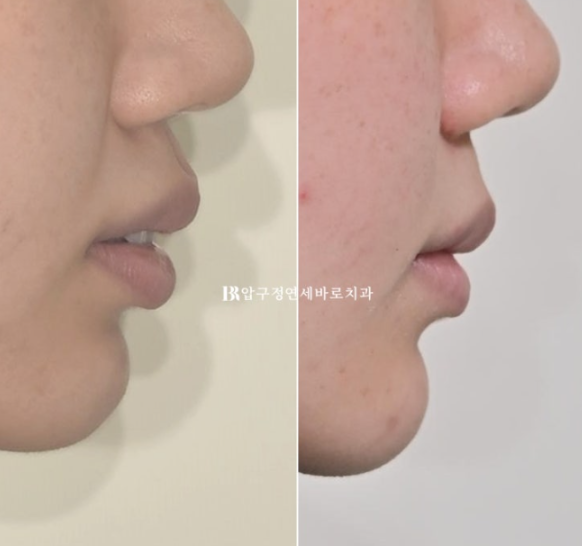
23.06–25.01
Although extraction treatment was performed, the volume of the lips was well maintained.
If the lower premolars had also been extracted, the lower lip would have appeared to move excessively backward.
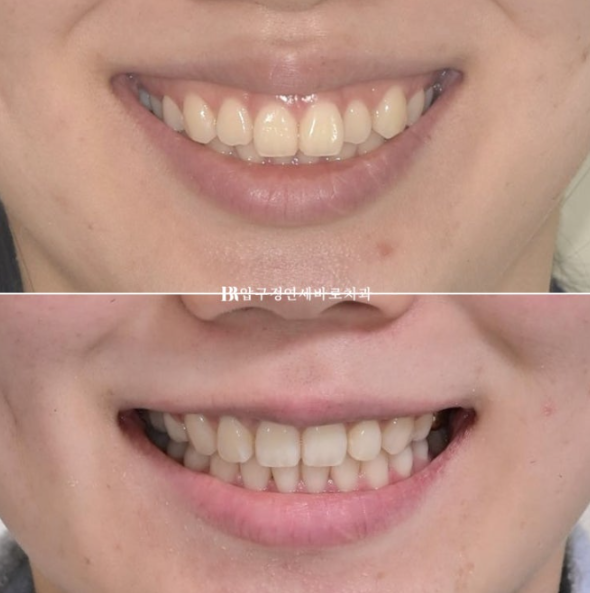
23.06–25.01
The gummy smile was improved, and buccal corridors that were not previously visible were formed.
What changed after the buccal corridors were formed? The smile changed from a somewhat crowded appearance, in which the gums and teeth looked tightly packed when smiling, to a more compact and neat-looking smile.
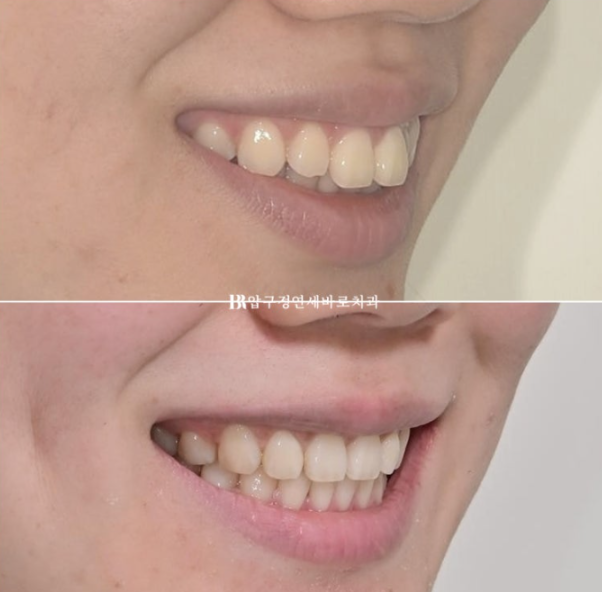
23.06–25.01
The protruding appearance of the front teeth was improved.
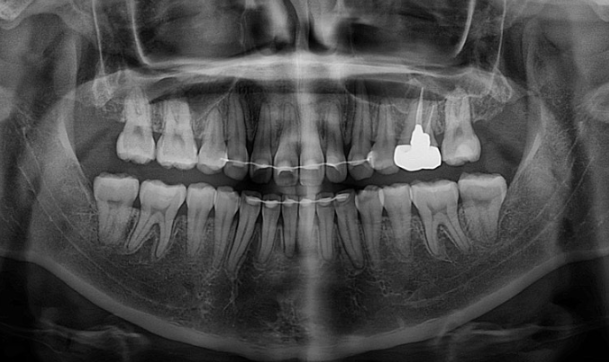
23.06–25.01
No root resorption was observed, and root parallelism was also satisfactory.
The total treatment period was 1 year and 8 months, less than two years.
For those who are considering extraction treatment because of protruding teeth but are concerned about changes to their lip and profile balance, we hope this post helped you understand the treatment. We will conclude this post here.
Frequently Asked Questions (FAQ)
Q. Can a gummy smile be improved with orthodontic treatment alone?
If the cause is protruding front teeth or the position of the teeth, gum exposure can often be reduced through orthodontic treatment alone.
However, depending on the cause, other treatments such as gum contouring or jaw surgery may be necessary, so an accurate diagnosis is important.
Q. Will extraction treatment make the mouth move too far backward?
Not all extraction treatments produce the same results. By planning whether extraction is needed and how far the teeth should be moved while considering the facial shape, lip thickness, and jaw position, it is possible to improve the protruding appearance while maintaining a natural lip and profile balance.
Q. Does forming buccal corridors make the smile look more attractive?
Appropriate buccal corridors add dimension to a smile and help reduce a crowded appearance.
However, excessive buccal corridors can have the opposite effect, so achieving a balance suited to each individual’s facial shape is important.