Hello.
This is Apgujeong Yonsei Baro Dental Clinic, a Gangnam orthodontic dental clinic.
Today, we would like to introduce an actual treatment case in which the space between the front teeth was first corrected with Invisalign Lite and then completed with no-prep veneers, “Gelami.”
When there are gaps between the front teeth, many people immediately consider veneers. However, depending on the condition of the teeth, undergoing orthodontic treatment first may provide a more natural result while preserving the teeth.
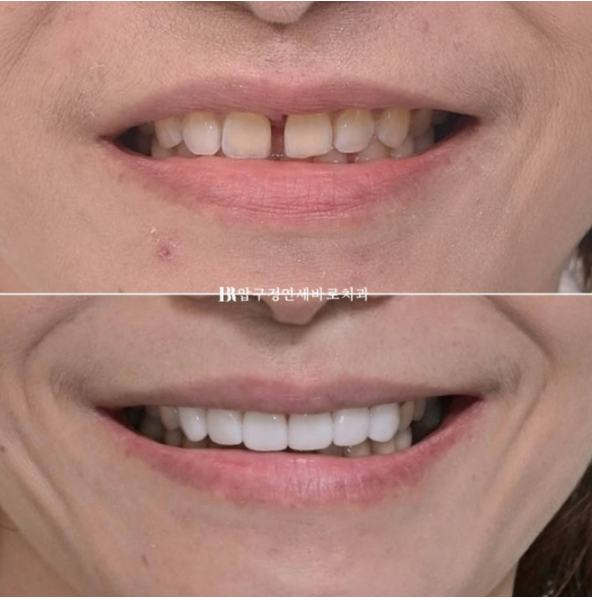
24.01~25.01
To achieve a highly refined result, today we will also show you a case that began with a simple Invisalign treatment and was completed with no-prep Gelami veneers.
This foreign patient visited us for no-prep Gelami veneers.
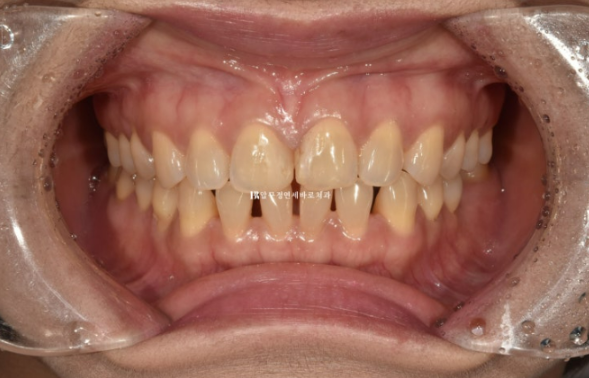
24.01
Until then, the patient had been having the space between the front teeth filled with composite resin.
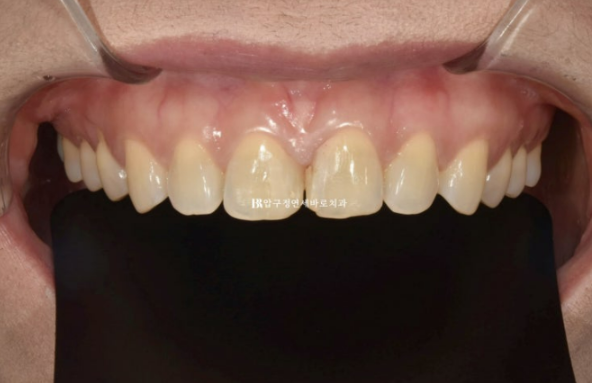
24.01
If veneers were placed immediately in this condition, the front teeth would look too large.
Because the arrangement of the teeth is strongly influenced by perspective, even making the color brighter can make the front teeth appear larger and more prominent.
Q. If there is a gap between the front teeth, can’t veneers be placed right away?
In some cases, this is possible.
However, if the space between the front teeth is closed with veneers alone, the teeth become wider, which can make the front teeth look large and bulky.
In particular, if the tooth color is also made brighter, attention is drawn more strongly to the front teeth, and they may appear larger than they actually are.
If you want a more natural result, it may be more appropriate to close the space with orthodontic treatment first and then proceed with veneers.
To achieve a refined result, we recommended removing the resin, first eliminating the gap through orthodontic treatment, and then placing no-prep veneers.
The space could be adequately treated with Invisalign Lite.
We explained that this would allow us to achieve a 4:5 width-to-height ratio for the front teeth. The patient agreed, so we began with Invisalign Lite treatment followed by Gelami treatment.
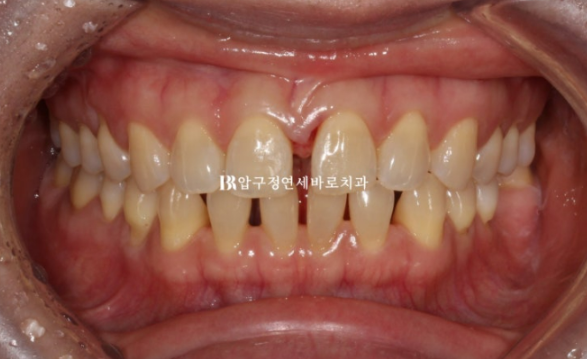
24.01
This is what the teeth looked like after removing the old resin that had been filling the gap between the front teeth.
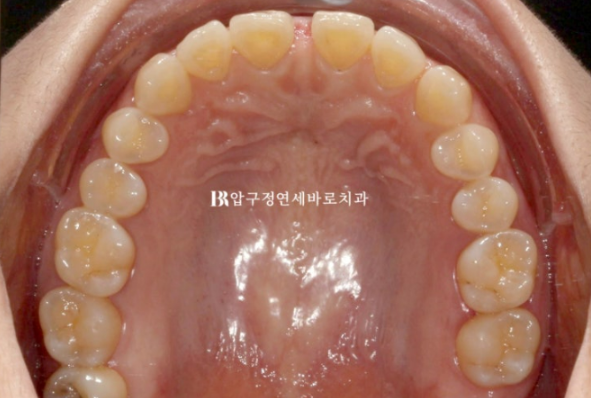
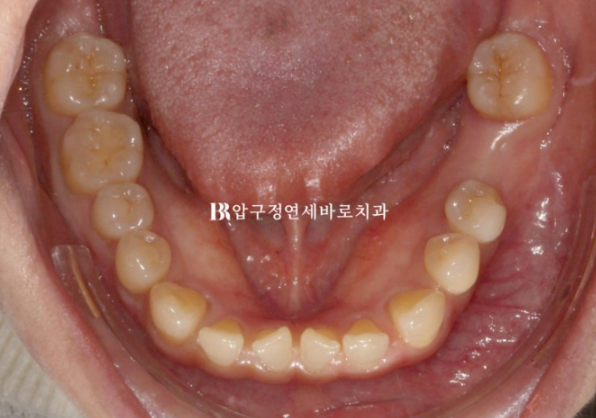
24.01
There were also considerable gaps between the lower teeth.
In this condition, we took an intraoral scan and ordered the aligners to begin Invisalign Lite treatment.
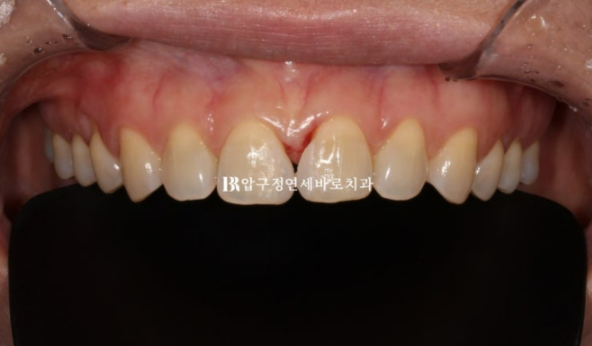
24.01
After ordering the Invisalign aligners, the usual waiting period is about a month and a half.
Since the patient could not remain with the gap between the front teeth during this period, we temporarily filled it with resin.
After waiting a month and a half, the patient began wearing the Invisalign aligners in February 2024.
Invisalign Lite can be manufactured with up to 14 aligners.
This is how the teeth looked in July 2024, after wearing all 14 aligners in the first set over six months.
As the patient lived abroad and entered the country only for orthodontic appointments, the aligners were changed every 10 days.
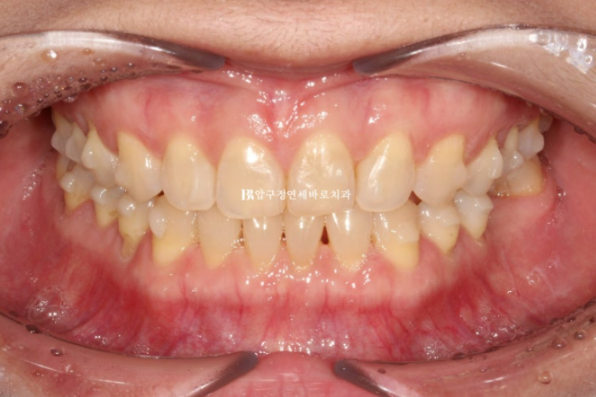
24.07
The gaps between the front teeth had completely closed.
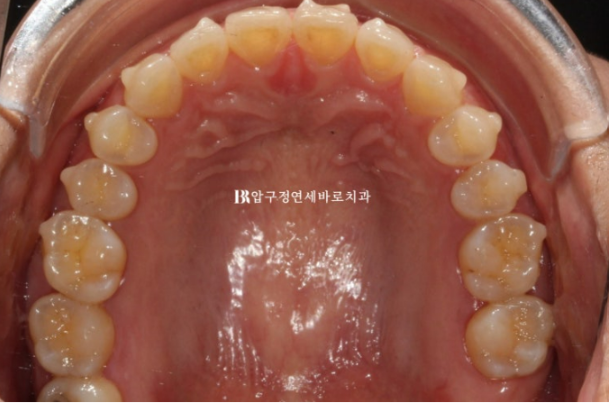
24.07
The alignment had also improved.
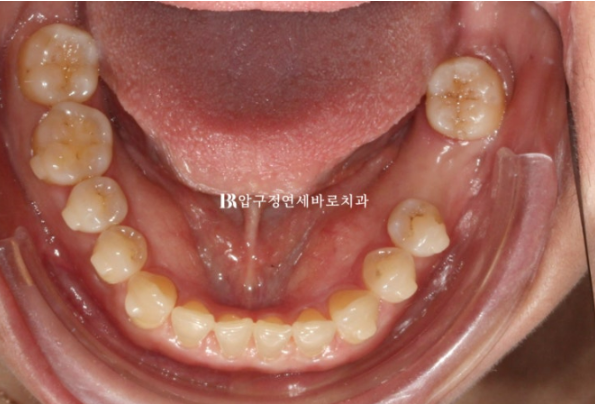
24.07
One of the lower front teeth was still slightly rotated, so we decided to order one additional set of aligners.
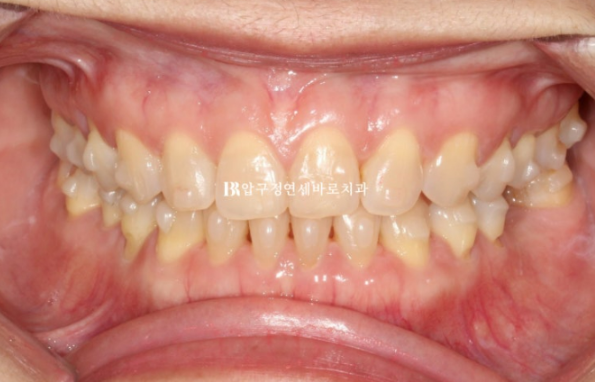
24.12
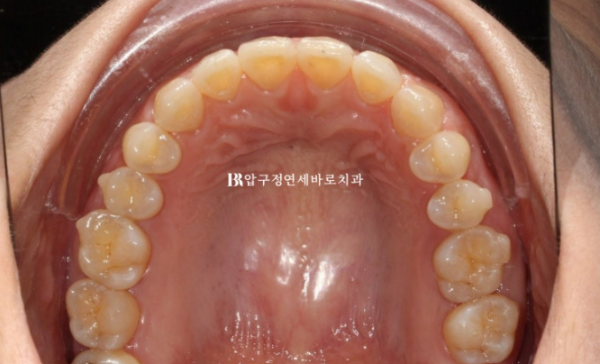
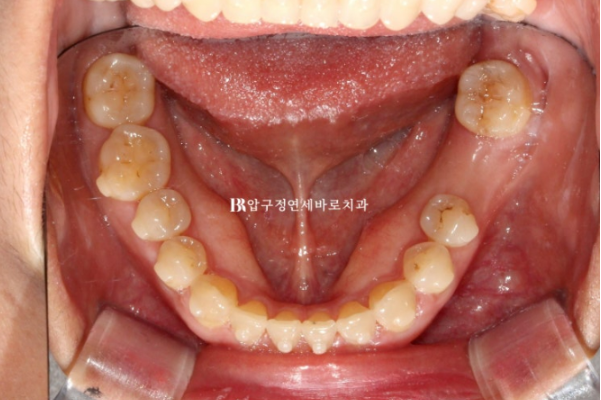
This is how the teeth looked after completing the additional aligners from August through December 2024.
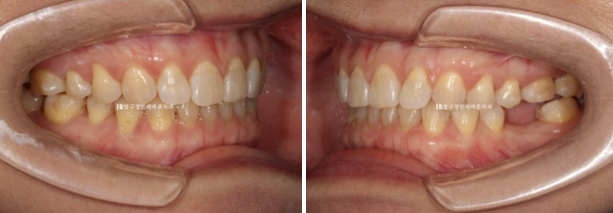
24.12
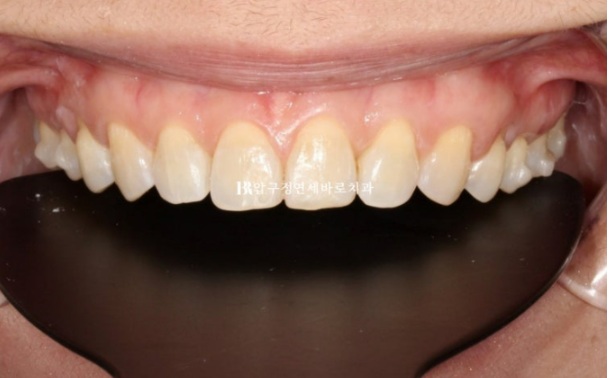
The spaces had been closed and the alignment was complete.
24.12
Now it was time to prepare for the no-prep veneers.
Although the teeth were straight, the edges of the front teeth had worn down at an angle.
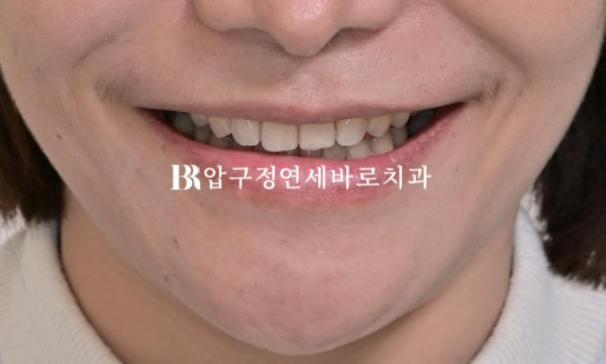
24.12
In the facial photographs, slight canting could be seen, making the occlusal plane appear tilted because of the worn front teeth.
Why no-prep veneers were possible at this stage
After orthodontic treatment, the teeth were aligned, but
the edges of the front teeth had worn down asymmetrically.
As a result, canting—the slight tilting of the occlusal plane—could be observed when the patient smiled.
We decided to improve this area naturally using no-prep Gelami veneers.
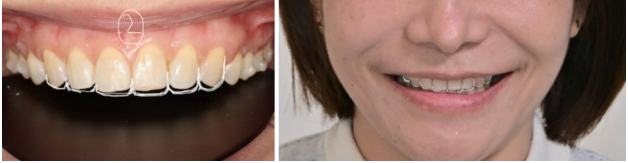
This is the design material actually sent to the dental laboratory.
Because of the patient’s schedule as an overseas resident, we proceeded directly with Gelami fabrication without a fitting appointment.
This is how the teeth looked immediately after the Gelami veneers were bonded in January 2025.
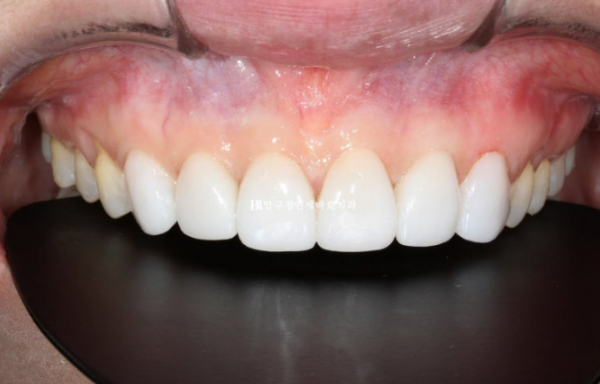
25.01
Personally, I do not prefer veneers that are excessively white,
but the patient wanted the whitest and brightest color, so we made them in the brightest shade.
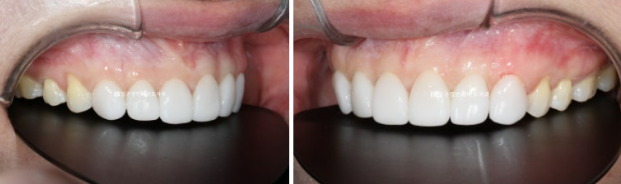
25.01
Six veneers were made, extending from canine to canine.
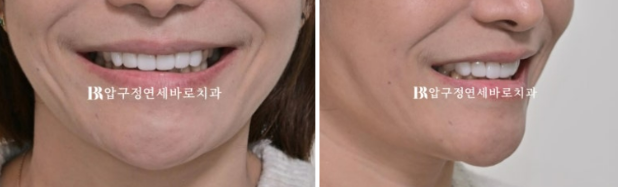
25.01
The canting was no longer visible after the Gelami veneers were bonded.
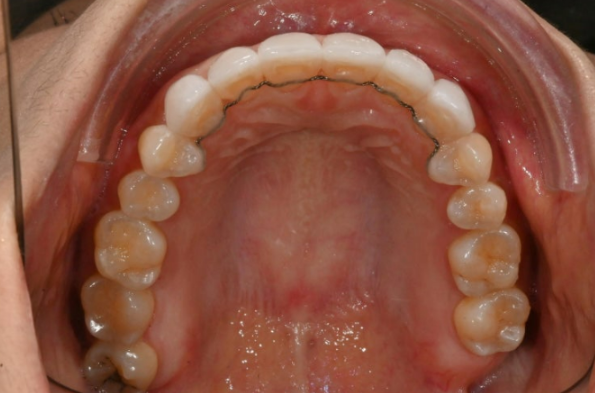
This is how the teeth looked after the retainer was attached.
This photograph shows the thickness of the Gelami veneers.
They are thin enough that there is almost no difference in thickness compared with the original teeth.
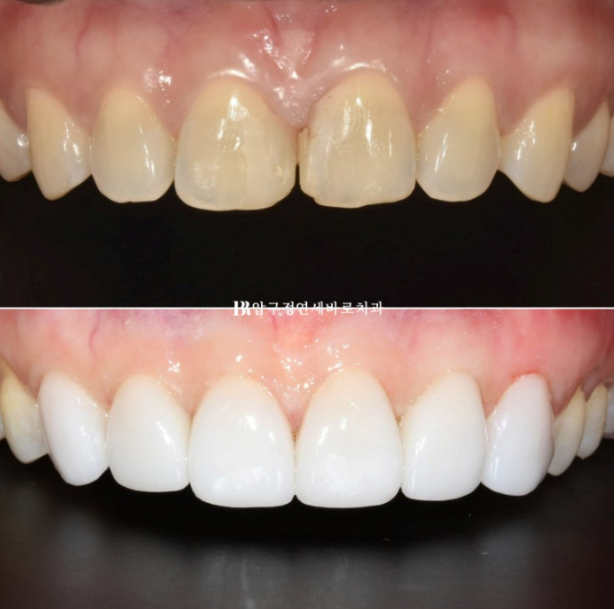
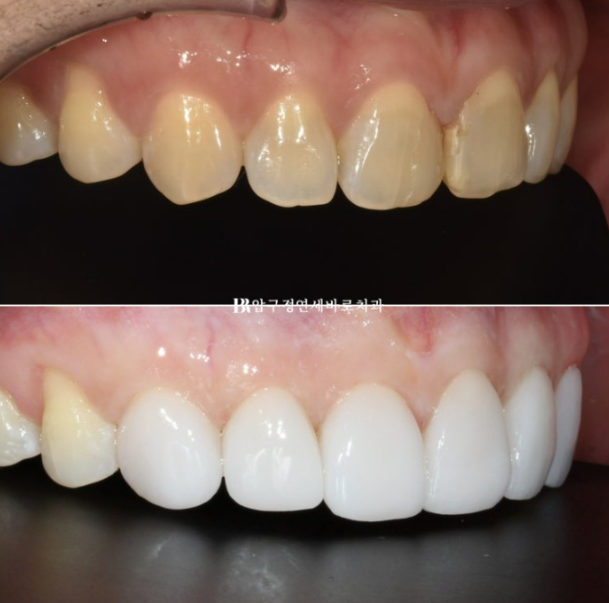
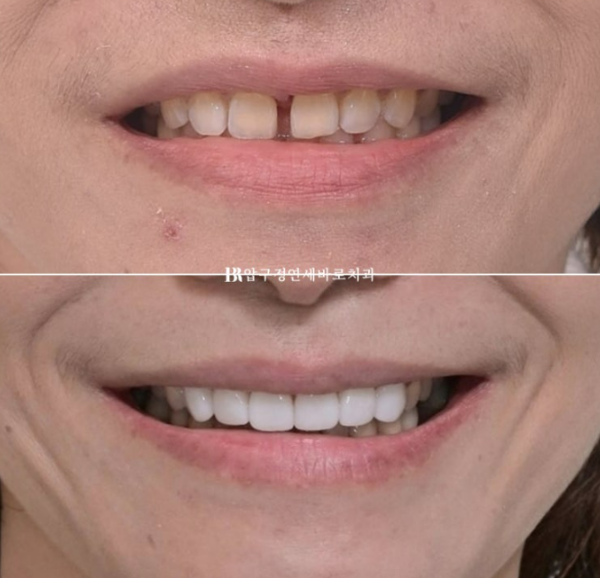
Let’s look at the before-and-after comparison.
From the initial visit in January 2024 to the completion of treatment in January 2025, the total treatment period, including orthodontics and Gelami treatment, was one year.
24.01~25.01
24.01~25.01
24.01~25.01
In order, these photographs show the initial visit (after resin removal), immediately after orthodontic treatment, the Gelami design, and the completed Gelami treatment.
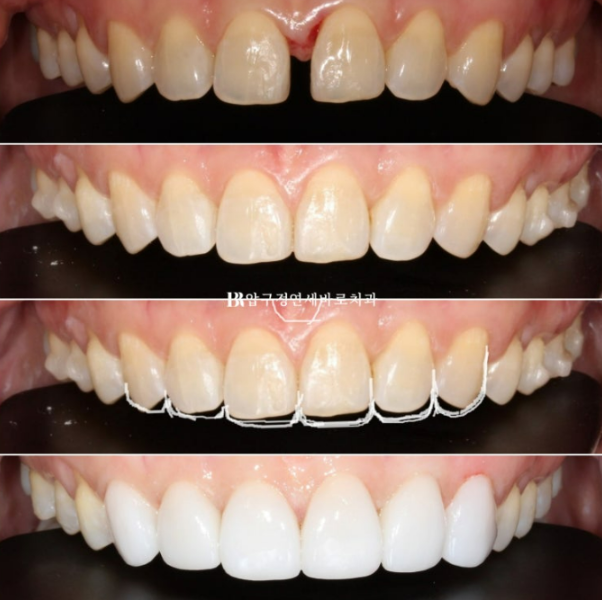
24.01~25.01
Key Summary
Gaps between the front teeth (diastema) are not always best treated with veneers alone.
In this case, the space was first closed with Invisalign Lite, followed by no-prep Gelami veneers.
By performing orthodontic treatment first, we achieved natural tooth proportions without removing tooth structure.
The worn front teeth and canting were also improved, creating a more balanced smile.
The total treatment period was approximately one year.
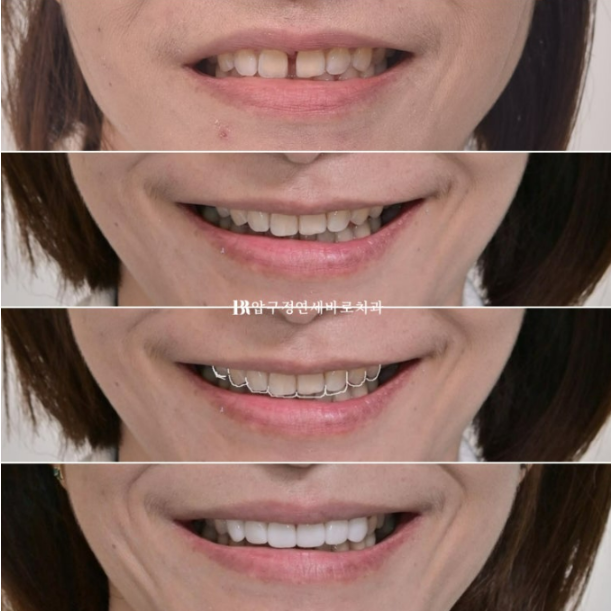
24.01~25.01
Thank you for taking the time to read this long post.
Frequently Asked Questions (FAQ)
Q. I have gaps between my front teeth. Can I receive no-prep veneers alone?
In some cases, this is possible. However, when the space is large, undergoing orthodontic treatment first may provide a more natural result while preserving the teeth.
Q. When is Invisalign Lite used?
It is a clear aligner treatment program suitable for relatively minor tooth movements, such as improving the alignment or spacing of the front teeth.
Q. How thin are no-prep veneers made?
They are made very thin to preserve as much of the natural tooth as possible, with the goal of achieving natural translucency and aesthetic results.
Q. Can people living overseas receive treatment?
Yes. Treatment can be carried out by adjusting the aligner-change schedule and appointment plan to fit the patient’s schedule.