Hello.
We are a Gangnam orthodontic clinic providing Invisalign treatment in Gangnam.
In our previous post, we introduced a case of facial asymmetry treated with surgery-first treatment (double-jaw surgery performed first).
This time, we would like to introduce the actual treatment process of a patient who had both facial asymmetry and a protruding lower jaw (skeletal Class III malocclusion), underwent double-jaw surgery first, and completed orthodontic treatment with Invisalign.
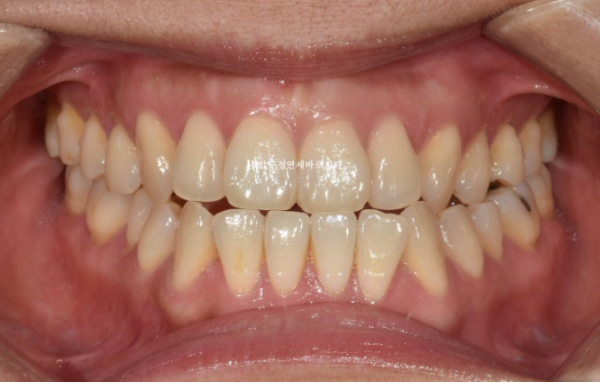
23.01
This patient visited us for surgery-first orthodontic treatment with double-jaw surgery and Invisalign.
There was jaw asymmetry, as shown by the deviation of the dental midline.
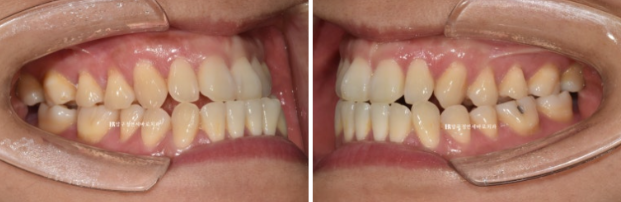
23.01
Because the front teeth as well as the molars were in crossbite, the patient was diagnosed with skeletal Class III malocclusion.
The patient visited us hoping to undergo postoperative orthodontic treatment with Invisalign after proceeding with surgery-first treatment at a hospital specializing in double-jaw surgery.
Determining whether surgery-first treatment is possible requires the judgment of both the surgeon performing the double-jaw surgery and the orthodontist.
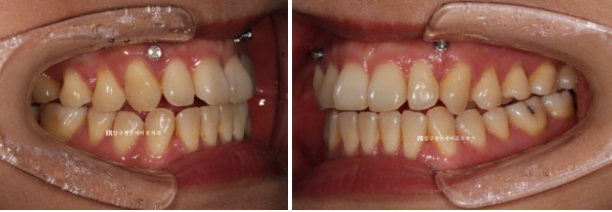
This photograph was taken when the patient visited us one month after undergoing surgery-first double-jaw surgery.
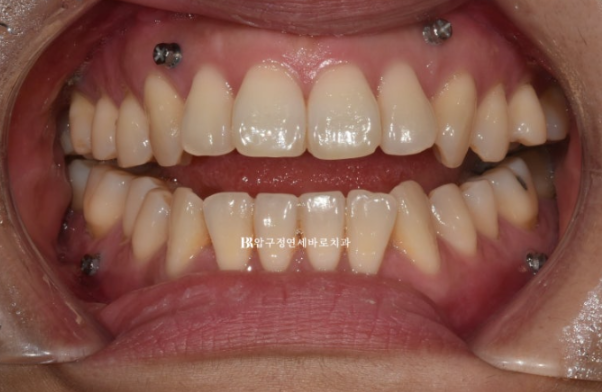
23.02
Severe open bite was observed.
This was not because the surgery had gone wrong; it was because the patient was in the physical therapy period.
It is necessary to place rubber bands on screws inserted into the gums to stabilize the jaw position.
Depending on the surgical method, such as IVRO or SSRO, and on the surgical outcome, this process may take several months.
We decided to begin orthodontic treatment after the jaw position had stabilized and continued physical therapy for several more months.
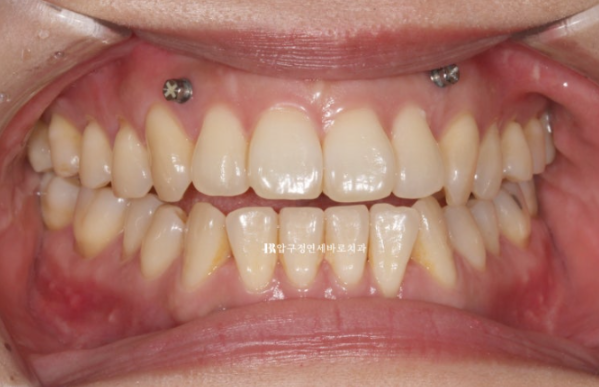
23.05
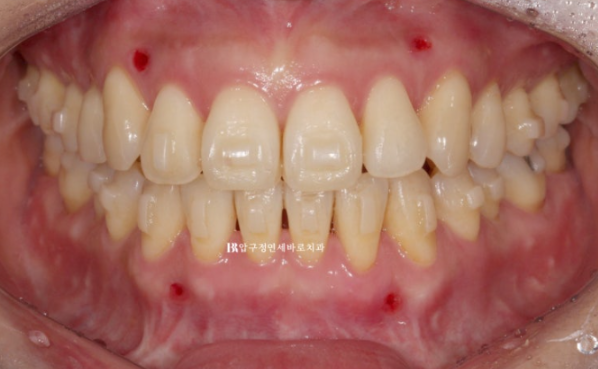
After approximately three months of physical therapy, the open bite had decreased considerably when the patient returned.
The remaining open bite now needed to be corrected with orthodontic treatment.
23.05
At this stage, we took an Invisalign scan and began the appliance-production process.
After waiting one and a half months for production and delivery, the patient began wearing the first aligner in June 2023.
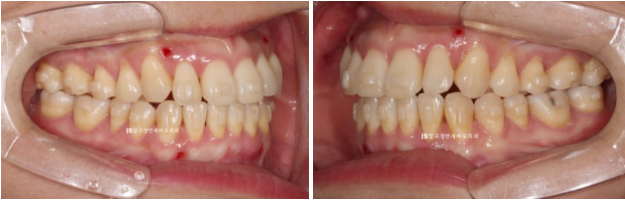
The first set consisted of a total of 23 aligners, and this photograph was taken after all of them had been worn over five months.
23.10
The midline was aligned, and the open bite had been resolved.
23.10
However, there were some aspects of the bite and tooth alignment that could be improved, so a new set was produced.
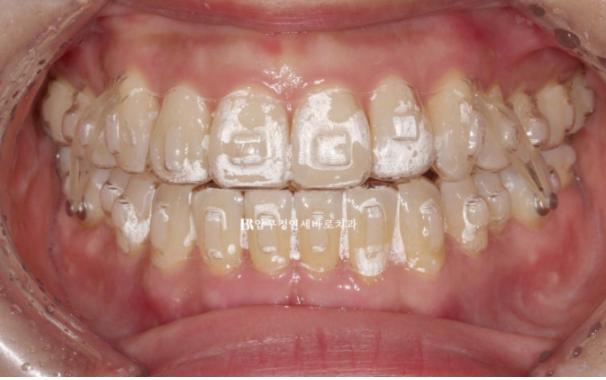
23.11
A month is also required for appliance production when a new set is made.
After waiting for one month, the patient received and began wearing the second set of aligners.
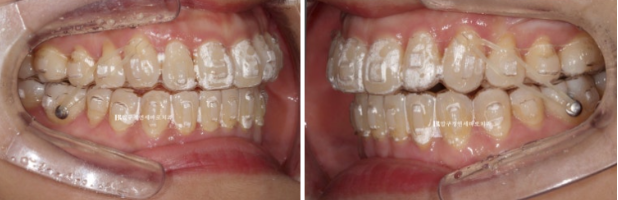
23.11
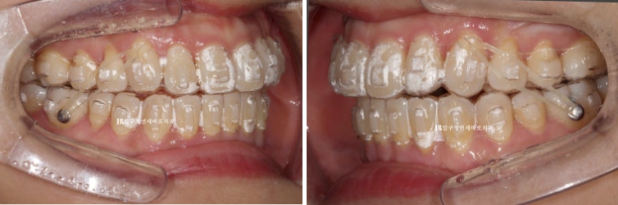
23.11
In the second set, rubber bands were prescribed as well to adjust the molar bite relationship.
Why are rubber bands used together with the aligners?
During the second phase of treatment,
elastics (rubber bands) were used together with Invisalign to adjust the molar bite more precisely.
Using Invisalign together with rubber bands
allows more precise control of
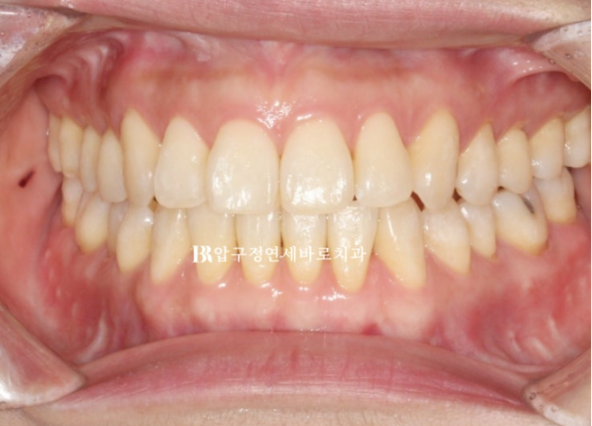
23.07
The treatment was finally completed.
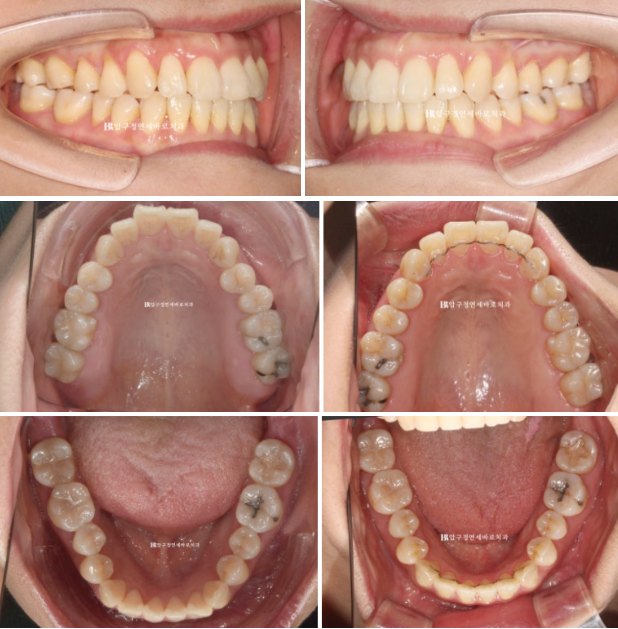
This is how the patient looked with a fixed wire retainer in place as well.
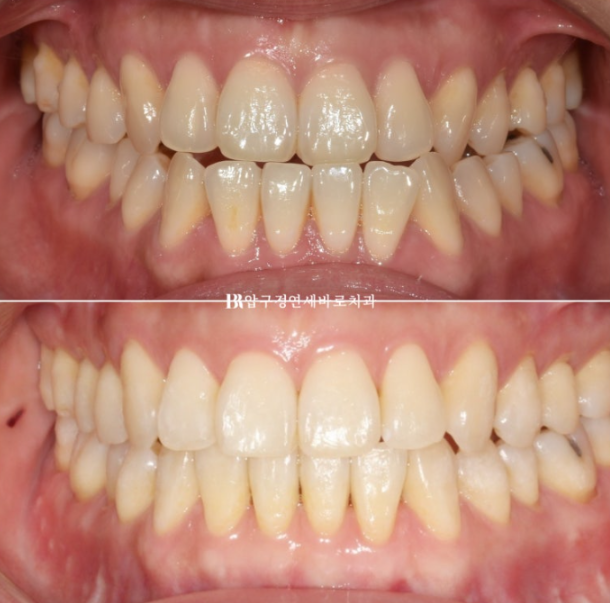
23.01~24.07
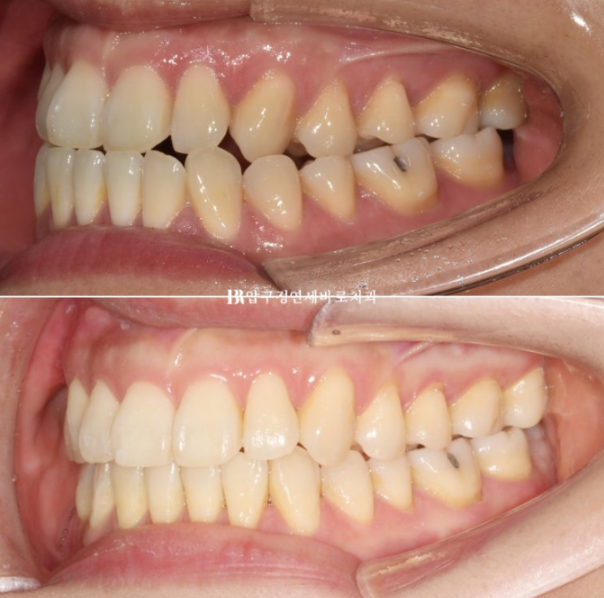
23.01~24.07
The combination of Invisalign clear aligners and double-jaw surgery consistently produces good results.
Orthodontic treatment usually takes around one year. For this patient, treatment took a total of one year and one month, from wearing the first aligner in June 2023 until July 2024. Excluding the one-month wait for new aligners during treatment, the actual treatment period was one year.
We hope this post is helpful to those who need double-jaw surgery but are concerned about conventional metal braces.
Q. Is clear-aligner treatment possible even after double-jaw surgery?
Yes. Depending on the patient’s condition, postoperative orthodontic treatment can be carried out with Invisalign.
Q. Is surgery-first treatment possible for everyone?
No. After analyzing the skeletal and bite conditions, the medical teams performing the double-jaw surgery and orthodontic treatment must make the decision together.
Q. If an open bite develops after double-jaw surgery, does that mean the surgery was unsuccessful?
In most cases, no. It may occur during the recovery process and is often improved through physical therapy followed by orthodontic treatment.
Q. How long does Invisalign treatment take after double-jaw surgery?
It varies from patient to patient, but in this case, the actual aligner-wearing period was approximately one year, and the total duration including aligner production was approximately one year and one month.