Hello.
Today, I would like to introduce a case in which non-prep veneers were used to improve the gap between the front teeth while also naturally changing the smile line visible when smiling.
A Patient Who Visited Us for Non-Prep Veneers
This patient had previously completed orthodontic treatment. Over time, the retainer became detached on several occasions, and the gap between the front teeth gradually increased.
Because the teeth themselves were relatively well aligned, we considered an approach that would improve the aesthetic appearance while preserving the existing teeth as much as possible, rather than removing tooth structure.
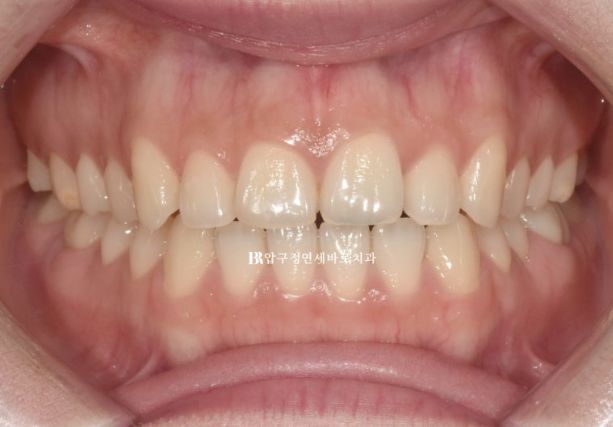
24.01
This patient visited us for non-prep veneer treatment.
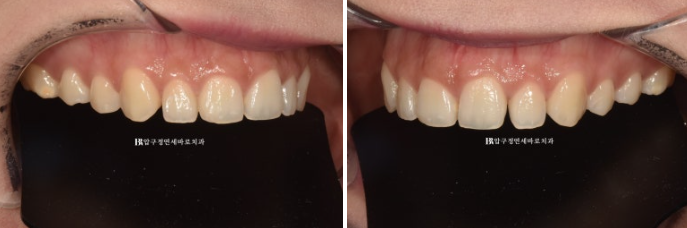
The patient had completed orthodontic treatment a long time ago. Since the retainer had become detached over the years, a gap had developed between the front teeth.
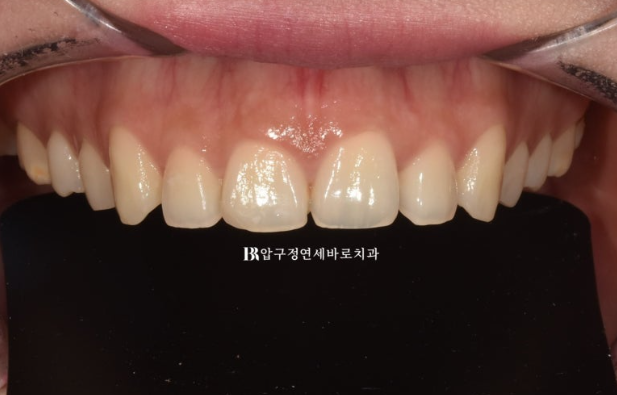
24.01
The key point to note in this patient’s treatment is the smile line.
What Is a Smile Line?
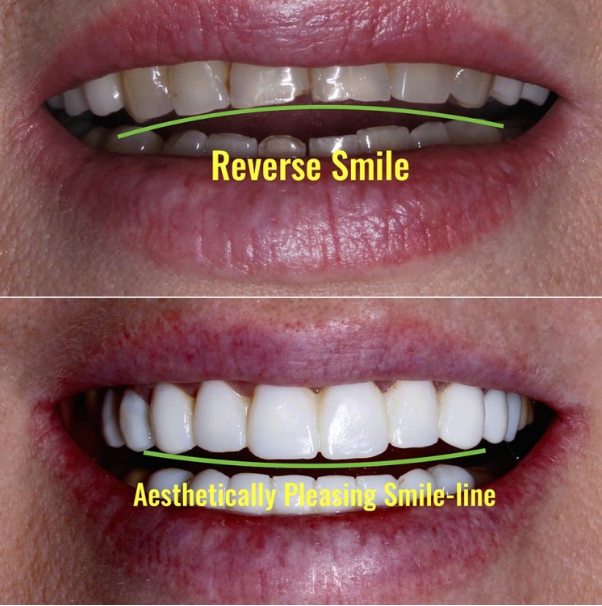
It refers to the line connecting the edges of the upper teeth.
What Was the Patient’s Existing Smile Line Like?
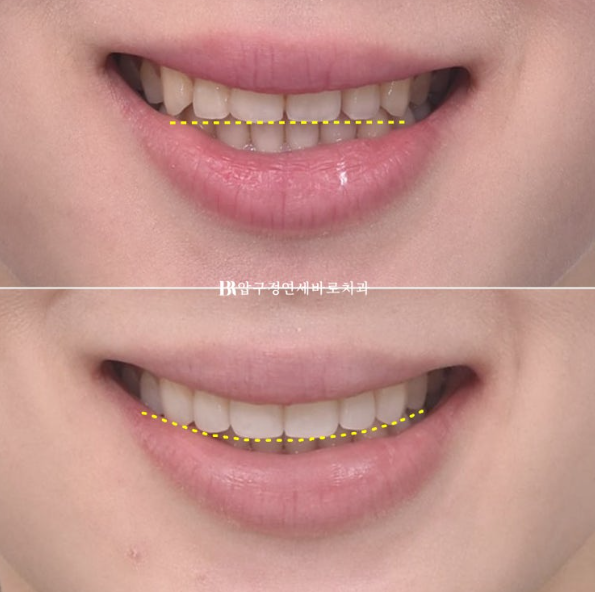
Looking at the patient’s existing teeth, the line connecting the incisal edges of the front teeth was relatively straight.
This shape is commonly referred to as a Reverse Flat Smile Line.
Although the alignment of the teeth itself was not significantly irregular, the line formed by the edges of the teeth did not create a natural curve when the patient smiled. This could make the overall impression of the smile less pleasing.
Therefore, with these non-prep veneers, we focused not only on filling the gap but also on creating a more natural smile line by adjusting the lengths of the teeth from the front teeth to the lateral incisors and then to the canines.
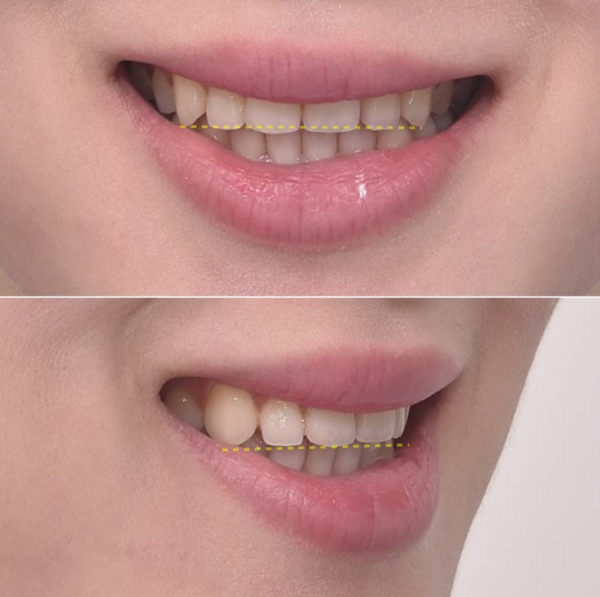
Let’s take a look at the patient’s smile line.
The line connecting the teeth is straight, isn’t it?
This condition is called a Reverse Flat Smile Line.
The smile looks somewhat awkward in this state.
When making non-prep veneers, it is beneficial to adjust the lengths of the front teeth, lateral incisors, and canines to create a pleasing smile line.
24.01
Fortunately, because the patient had undergone orthodontic treatment in the past and had a retainer bonded in place, the teeth were well aligned despite the gap. We were therefore able to proceed directly with preparations for fitting the non-prep veneers.
We decided to place a total of eight non-prep veneers on the upper teeth, extending to the premolars behind the canines.
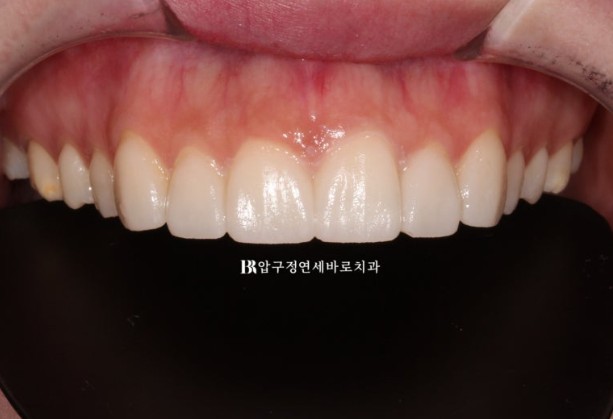
Now, let’s take a look at the fitting.
24.01
It is noticeable that the two central front teeth have been made longer.
24.01
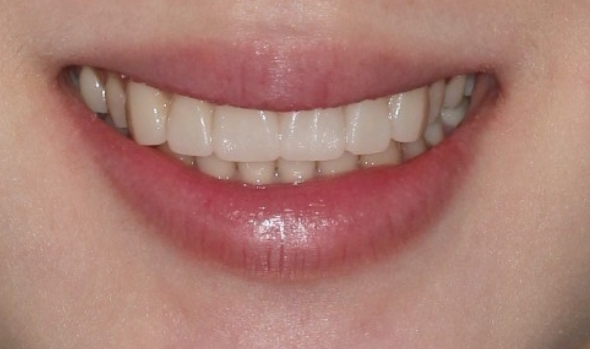
The smile line can be changed by making the two central front teeth longer and keeping the teeth progressively shorter toward the canines.
This creates a beautiful curve parallel to the lower lip instead of the previous flat appearance.
A single smile line can make the smile look more natural and attractive.
On the fitting day, we adjusted not only the details of the smile line but also the patient’s preference for the roundedness of the tooth edges before proceeding with the final veneer fabrication.
The patient wanted a somewhat rounder appearance than the shape of the teeth at the fitting, so the final shape of the actual veneers was as follows.
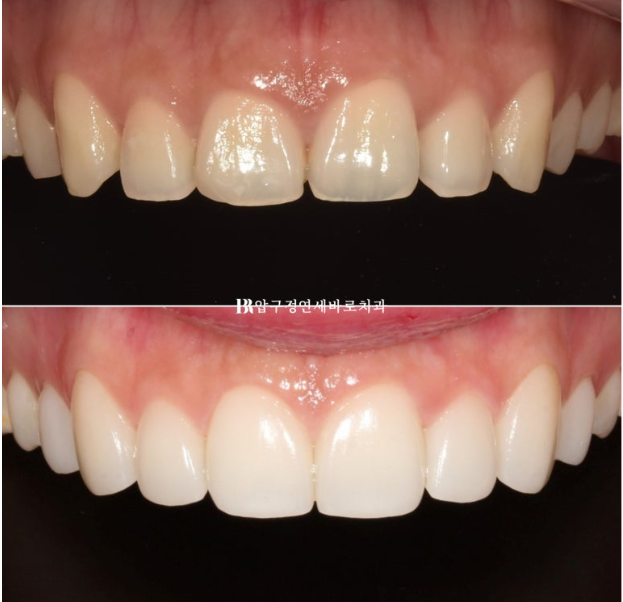
24.01~24.02
Non-prep veneers are performed with 100% of the tooth structure left intact.
The natural shape and tone of the teeth are given top priority.
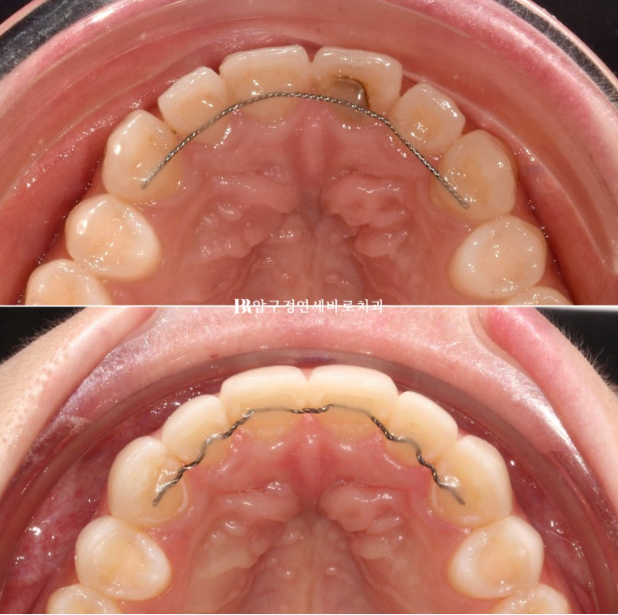
24.01~24.02
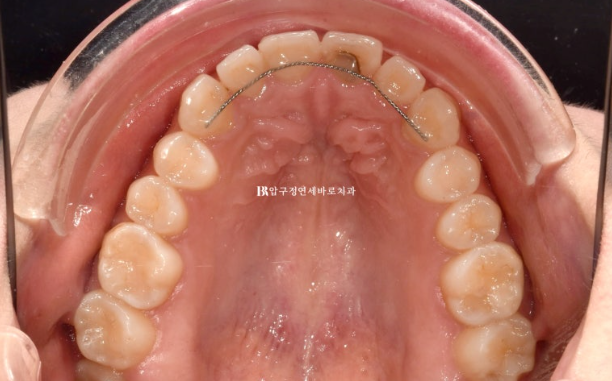
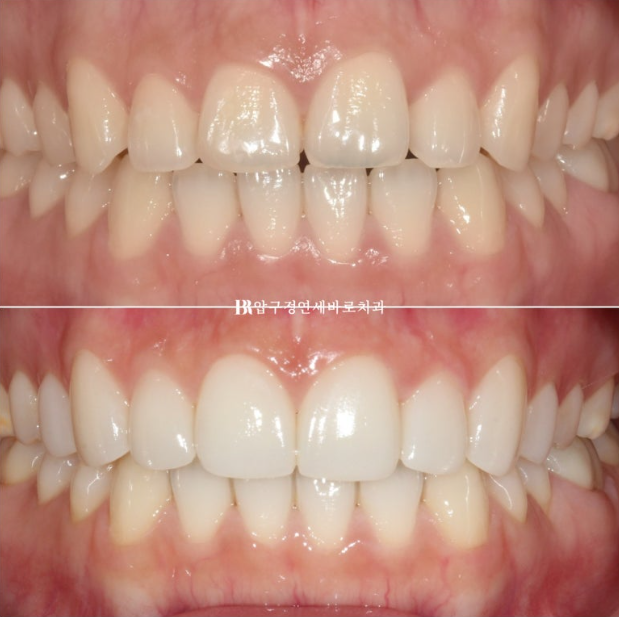
Let’s compare the occlusal photographs to get an idea of the thickness of the non-prep veneer Gelami.
The image above shows the initial examination, while the image below shows all eight teeth with non-prep veneers bonded without removing any tooth structure.
The fact that the difference in thickness is barely visible shows how thin non-prep veneers are.
A thickness of as little as 0.1 mm can be achieved at the thinnest areas.
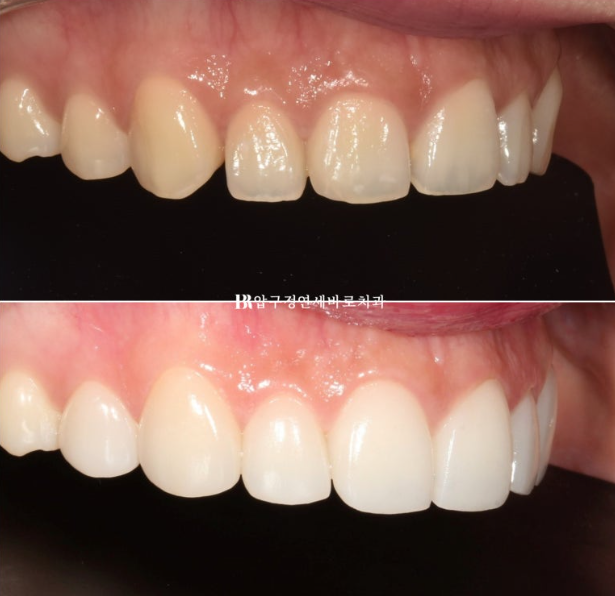
24.01~24.02
The gaps between the teeth were filled with veneers.
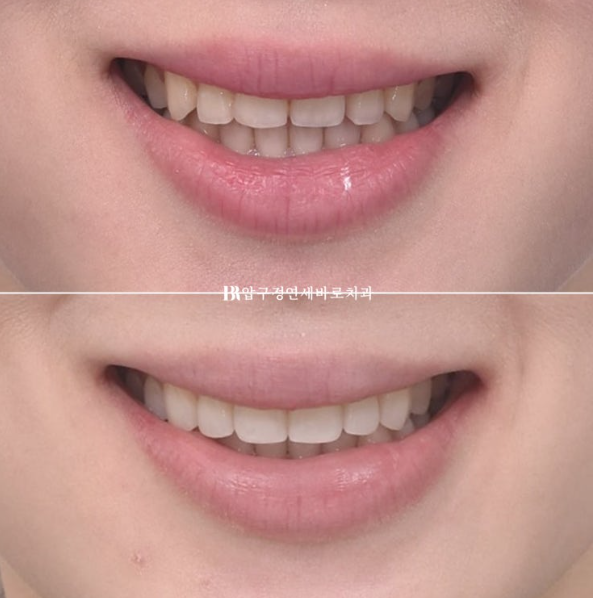
24.01~24.02
The change in the smile line is clearly visible in the frontal before-and-after photographs.
Shall we draw the smile line?
24.01~24.02
A natural smile line can change the overall impression.
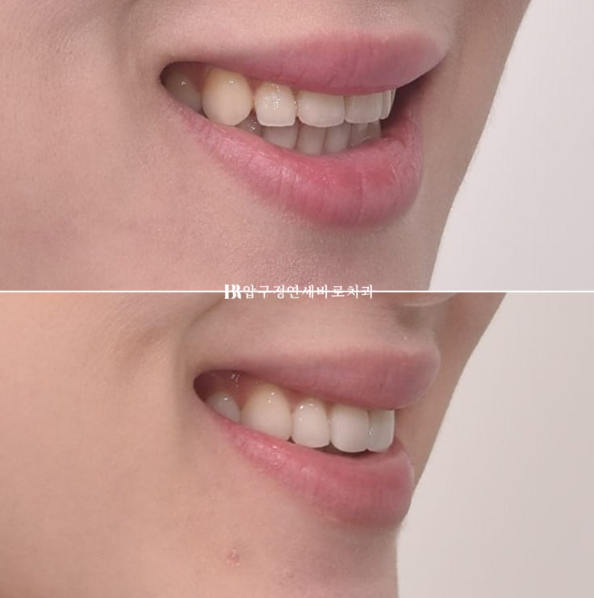
24.01~24.02
A smile line parallel to the lower lip
24.01~24.02
Non-Prep Veneers: It Is Not Only About “Not Removing Tooth Structure”
When people hear “non-prep veneers,” they often focus only on the fact that the teeth are not reshaped.
However, actual aesthetic treatment requires planning beyond that.
The alignment of the teeth, their size and proportions, the smile line, the shape of the tooth edges, color, occlusion, and the aesthetic image desired by the patient all need to be considered comprehensively.
In this case as well, we focused on preserving the well-aligned teeth achieved through previous orthodontic treatment as much as possible, while improving the gap between the front teeth and naturally changing the smile line.
If you are considering non-prep veneers, rather than simply checking whether tooth structure will be removed, it is important to first receive an accurate diagnosis of whether non-prep veneers are suitable for the current condition of your teeth and which design would look most natural for you.
At Apgujeong Yonsei Baro Dental Clinic, we develop individualized aesthetic treatment plans by considering each patient’s dental condition and occlusion, as well as the harmony of the face and lips.