Hello.
This is Apgujeong Yonsei Baro Dental Clinic, a Gangnam orthodontic clinic.

Today, I would like to introduce a case involving the correction of inward-tilted teeth.
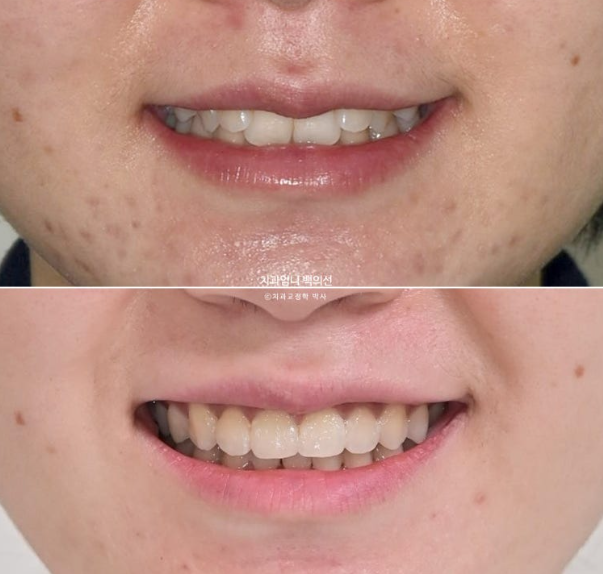
23.02~25.01
The patient had a congenitally missing lower front tooth.
How would the midline be finalized after orthodontic treatment?
Please read to the end.
23.02
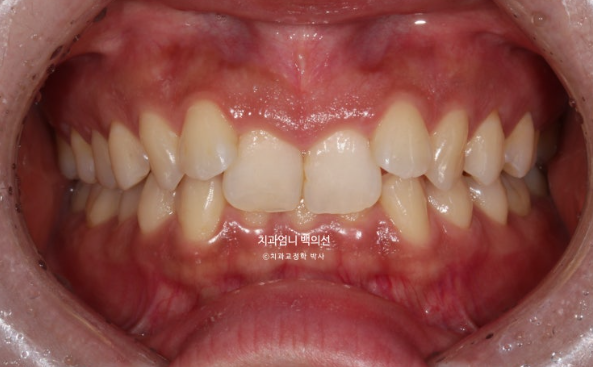
The patient visited us in February 2023 to address inward-tilted and crowded teeth.
This was a case of severe deep bite, to the extent that the lower front teeth were barely visible.
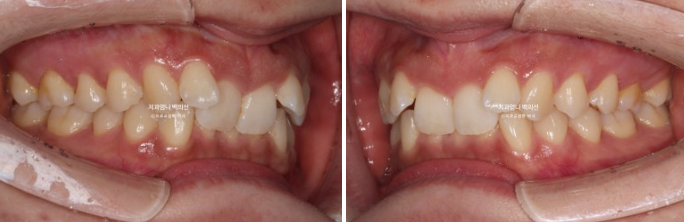
23.02
The two upper central incisors had descended downward and were tilted backward, creating inward-tilted teeth.
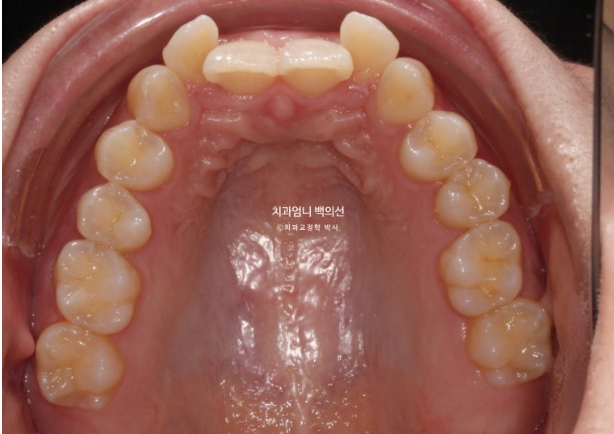
23.02
The lateral incisor, or the tooth next to the central incisor, was a crowded tooth tilted in the opposite direction.
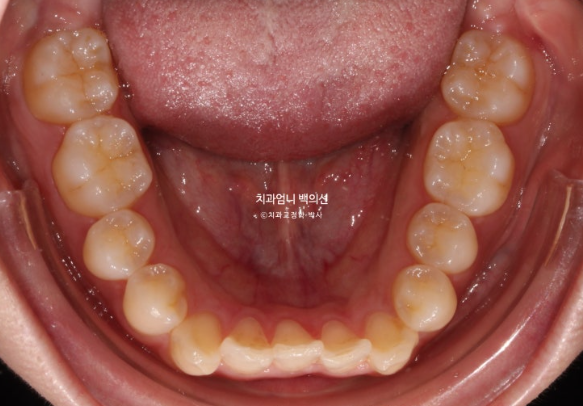
23.02
One lower front tooth was congenitally missing, leaving three lower incisors.
There was no protrusion at all, so we decided on non-extraction orthodontic treatment.
We planned to remove the two impacted upper wisdom teeth and use the resulting space to move the upper teeth backward, creating room to resolve the crowding and inward-tilted teeth. We also planned to establish a Class I occlusion.
The patient wanted Clippy-C orthodontic treatment, so treatment was started.
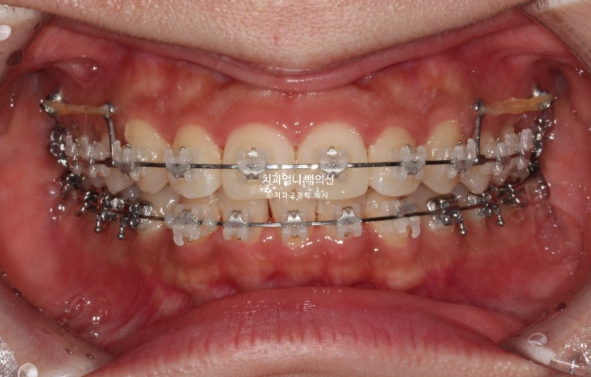
24.06
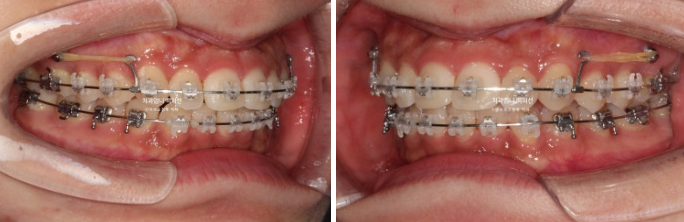
This was the patient’s condition one year and four months after the start of treatment.
The deep bite, inward-tilted teeth, and crowding had been resolved. Mini-screws had been placed, and the entire upper dentition was being moved backward.
24.06
When there are three rather than four lower front teeth, one limitation is that the space between the upper and lower teeth may finish slightly larger than normal.
However, congenital absence is relatively common among lower front teeth, and orthodontic treatment is often completed with three lower incisors rather than placing an implant.
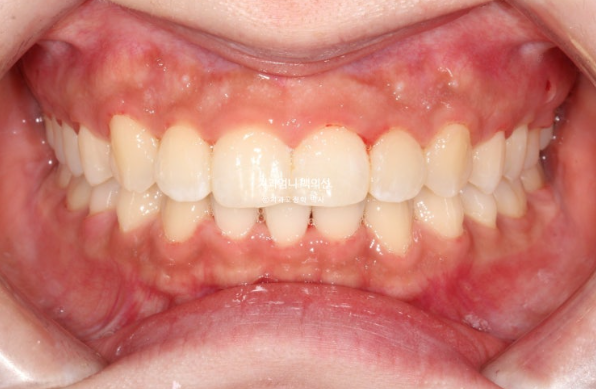
Treatment was finally completed one year and eleven months after it began.
25.01
You can see that the upper dental midline is positioned at the center of the middle tooth among the three lower front teeth.
When one lower front tooth is missing, this is how the midline is finalized.
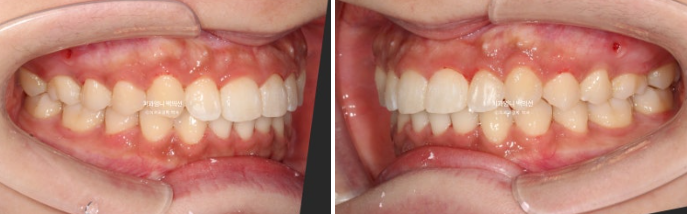
25.01
The occlusion is good.
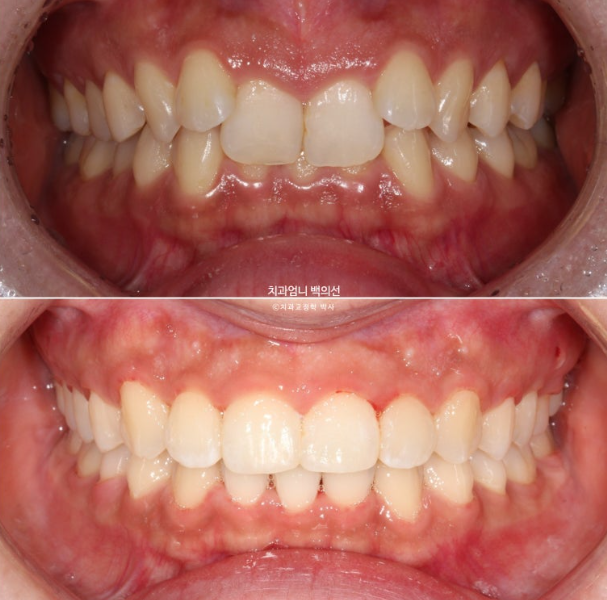
Now, let’s compare the condition before and after treatment.
The treatment period was from February 2023 to January 2025.
23.02~25.01
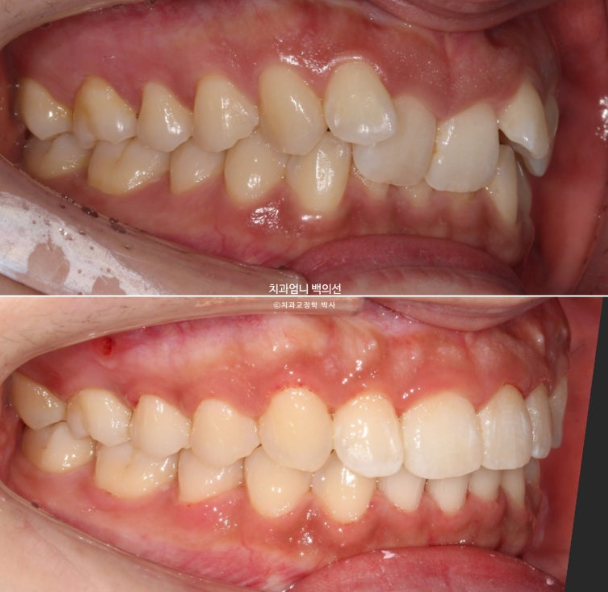
23.02~25.01
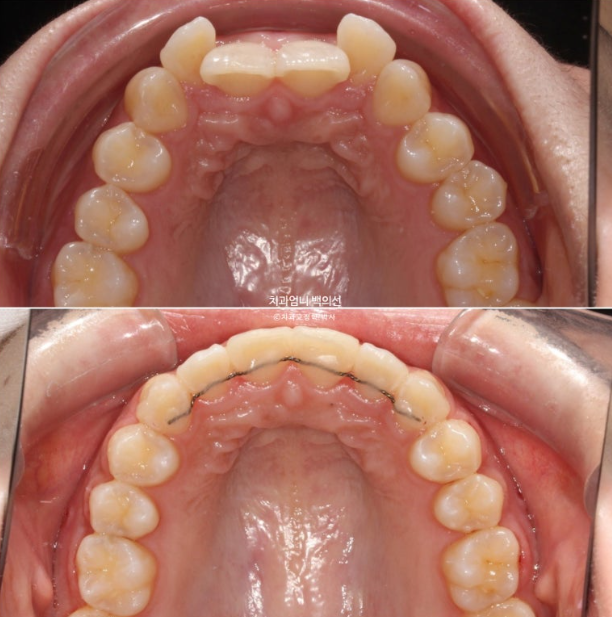
23.02~25.01
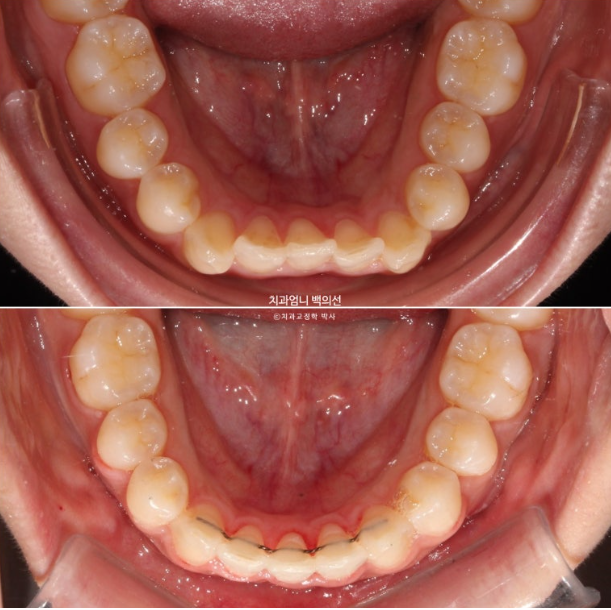
23.02~25.01
Now, let’s compare the facial appearance before and after treatment.
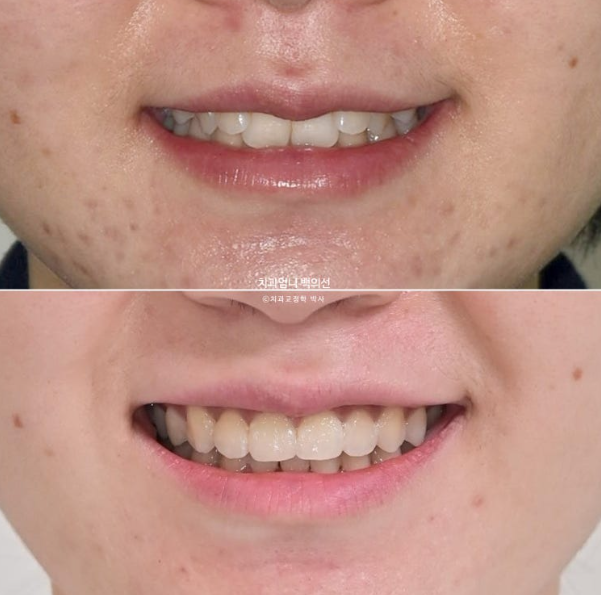
23.02~25.01
A desirable smile line and an appropriate oral corridor
These are very important for smile esthetics.
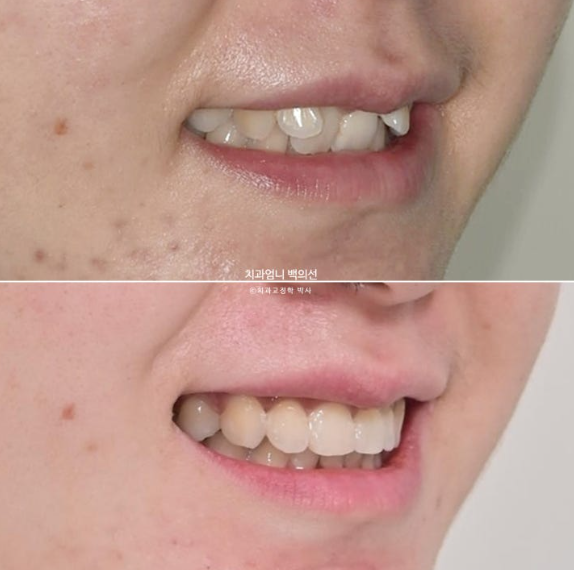
23.02~25.01
The improvement in the inward-tilted teeth that had been leaning backward is clearly visible.
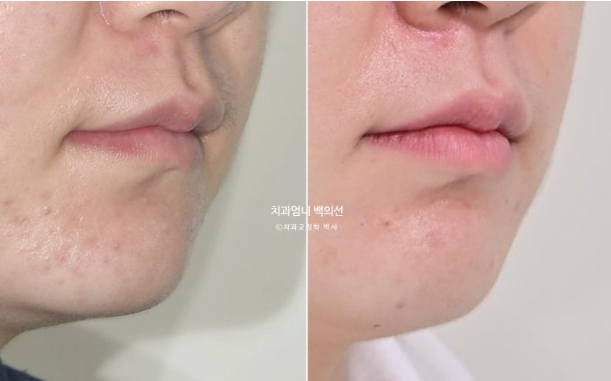
23.02~25.01
The patient’s non-protruding lip profile was also well maintained.
Can inward-tilted teeth be corrected even when one tooth is missing?
The absence of one lower front tooth does not make orthodontic treatment impossible.
However, the treatment plan may vary depending on which tooth is missing, the current positions of the teeth and the occlusion, and whether there is any protrusion.
In particular, when a tooth is congenitally missing, it is important to create a treatment plan that considers not only the alignment of the teeth but also the midline, occlusion, and the size and positions of the teeth.
I hope this case is helpful for those considering orthodontic treatment for inward-tilted or crowded teeth, or for congenitally missing teeth.
Thank you.