Differences Between Rhinoplasty for Women and Men: Cost and Implant Selection Guide
The nose is located at the center of the face, so even subtle changes in its height and angle can significantly alter the overall impression and atmosphere. While rhinoplasty in the past focused simply on raising the bridge of the nose, customized surgery that considers an individual’s anatomical characteristics and gender-specific aesthetic standards has become the norm. Women and men show clear differences not only in the images they prefer, but also in skeletal structure, including the bones and cartilage, as well as skin thickness. Therefore, these differences must be fully understood to achieve satisfactory results. In this post, we will discuss the differences between rhinoplasty for women and men, as well as average costs and implant options.

- The Importance of Customized Design and Anatomical Differences in Rhinoplasty for Women and Men
Rhinoplasty requires comprehensive consideration of the width of the area between the eyebrows, the angle extending from the forehead to the tip of the nose, and the degree of projection of the lips and chin. The process of analyzing the proportions of the entire face and establishing a height and shape that harmonizes with the individual should come first. The main types of nasal lines are classified as follows.
-
Straight line: A shape that extends straight from the bridge to the tip of the nose without curvature. It creates a sophisticated, urban impression and may make the face appear longer or the features more defined. This line is mainly preferred by men, but can also be applied to women who want an androgynous or chic appearance.
-
Semi-upturned line: A curved shape in which the tip of the nose is slightly higher than the bridge. The tip is distinctively raised, like the toe of a traditional Korean sock, creating a three-dimensional appearance that can make the face look smaller and produce a glamorous yet cute and lively image.
-
Straight–semi-upturned line: A combination of the sophistication of a straight line and the raised tip of a semi-upturned line. The bridge is close to straight, while only the tip is raised slightly, making this the most widely preferred style. It gives a natural yet sophisticated impression without looking artificial.
❖ Characteristics and Goals of Rhinoplasty for Women
Rhinoplasty for women generally emphasizes soft curves and refined three-dimensional definition. The line from the forehead to the tip of the nose descends smoothly, and a semi-upturned or straight–semi-upturned line with a slightly raised, defined tip is often preferred. Because women’s skin is often relatively thin and soft, detailed shaping and precise cartilage placement are required so that the transition between the bridge and tip appears natural.
❖ Characteristics and Goals of Rhinoplasty for Men
Compared with women, men generally have thicker skin, greater sebum production, and larger, firmer nasal bones and cartilage. Accordingly, a straight line extending from the bridge to the tip is more commonly used than a dramatic curve. The starting point from between the eyebrows to the bridge should be high, and the masculine straightness of the nose should be emphasized to create a broad and open impression. Raising the tip excessively or applying overly feminine curves may look unnatural, so planning that takes the size and proportions of the skeletal structure into account is essential.

- Characteristics of the Main Materials Used in Rhinoplasty and a Selection Guide
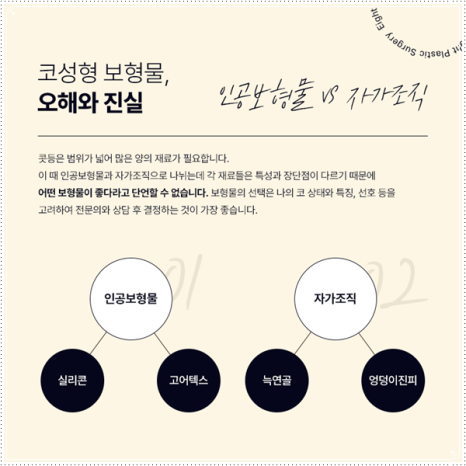
Rhinoplasty uses artificial implants or the patient’s own tissue selectively, depending on the condition of the bridge and tip of the nose. However, the materials that can be used and their suitability may vary according to anatomical conditions such as skin thickness, the size of the septal cartilage, and whether the patient has had previous surgery. Precisely determining the condition of one’s tissues through a detailed examination is therefore key to achieving safe and satisfactory results.
[Materials for Bridge Augmentation]
-
Silicone: A widely used implant with the advantage of being easy for medical professionals to handle. It can be precisely shaped into the form the patient wants, making it suitable for creating a refined design tailored to the individual’s facial features. It maintains its shape well and can be freely adjusted to the desired line.
-
Gore-Tex: This material is soft and naturally integrates with the surrounding tissue after insertion, resulting in less of a foreign-body sensation. As calcification rarely progresses over time, it can maintain a natural shape for a long period. It is also less likely to show through the skin, making it suitable for people with thin skin.
-
Autologous rib cartilage: This is the patient’s own tissue, using cartilage from the chest. It has a low absorption rate and provides very strong support. It firmly supports the bridge and tip so they do not droop over time, making it effective for revision or complex rhinoplasty. In particular, because a sufficient amount can be harvested, structural reconstruction can be performed even when the nose is very low or small.
-
Autologous dermis: This method involves harvesting and grafting dermis, usually from the buttock area. Because it is the patient’s own tissue, it is relatively free from concerns such as drooping, displacement, and deformation that may occur with artificial implants. Since it is similar to actual soft tissue, it responds flexibly to external impact.
[Materials for Tip Augmentation]
-
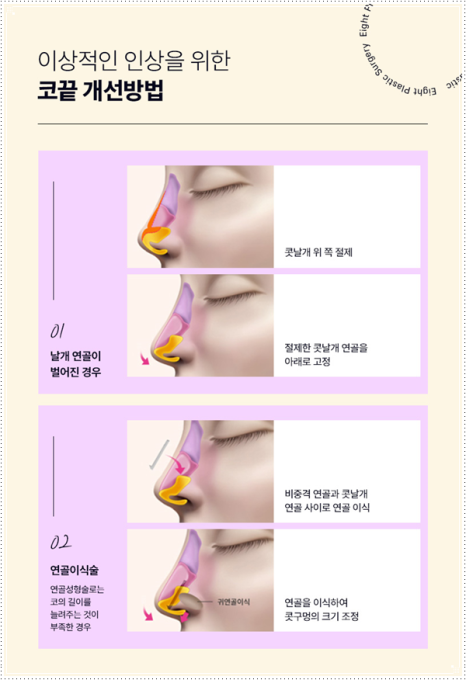
Ear cartilage: A representative autologous material used in rhinoplasty. It is very soft and elastic, making it well suited to creating a natural shape and feel for the nasal tip. It is harvested from behind the ear, so the scar is not noticeable.
-
Septal cartilage: Cartilage located in the center of the inside of the nose. It has an appropriate thickness and strength, making it excellent for building the column, or support, of the nasal tip. Septoplasty can be performed at the same time, offering the advantage of addressing functional problems such as nasal obstruction or rhinitis as well.
-
Rib cartilage: Among autologous tissues, rib cartilage provides the strongest support and is effective in preventing the nasal tip from drooping over time. It can be a safe alternative for people concerned about adverse reactions to artificial implants.

- Rhinoplasty Costs and Practical Considerations
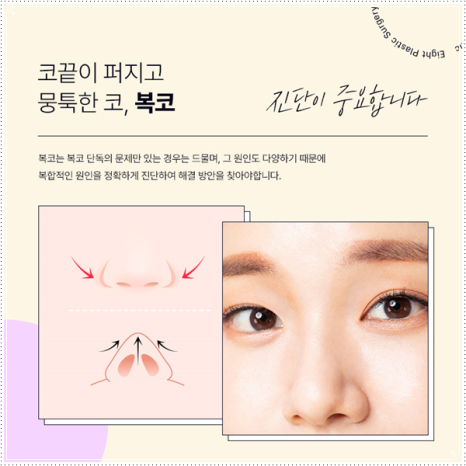
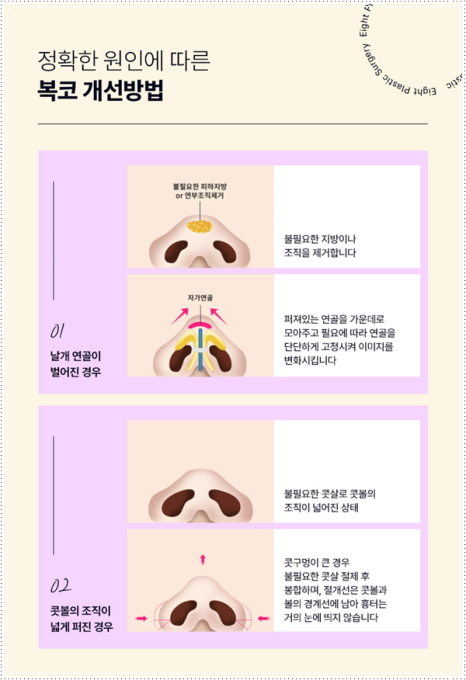
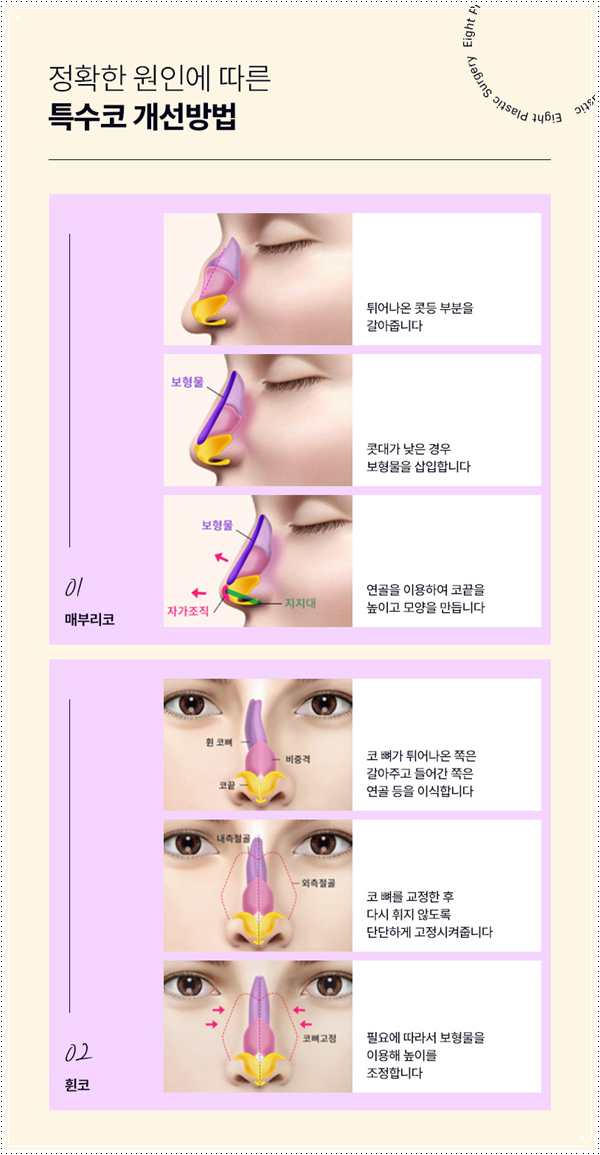
The cost of rhinoplasty varies depending on the difficulty of the surgery, the scope of correction—bridge augmentation alone versus bridge augmentation combined with tip surgery, and whether correction of a dorsal hump or functional nasal surgery for rhinitis is performed at the same time—the type of implant or autologous tissue used, and the surgical method applied.
-
General rhinoplasty cost range: In general, simple bridge and tip augmentation costs an average of 1.5 million to 3 million won. Because costs can vary significantly from person to person, be sure to confirm the exact cost during a consultation.
-
Factors affecting the cost:
-
Revision surgery requiring removal and replacement of an existing implant, or surgery involving structural and anatomical correction, such as correction of a deviated or humped nose
-
Complex surgery requiring additional harvesting of autologous rib cartilage in addition to ear or septal cartilage
-
Functional rhinoplasty performed at the same time to improve symptoms of rhinitis or nasal obstruction
Therefore, rather than choosing a clinic based solely on cost, it is advisable to carefully consider the surgeon’s clinical experience, whether an emergency safety system is in place, and the organization of the postoperative care program. Make a cautious decision after thoroughly consulting with a board-certified plastic surgeon.

- Conclusion and Precautions for Successful Surgery
Today, we have discussed rhinoplasty. Because rhinoplasty is a meticulous procedure that must take into account both the proportions of the entire face and functional factors, we recommend thoroughly consulting with a board-certified plastic surgeon about differences between women and men, as well as skeletal structure, skin thickness, and preferred aesthetic standards.
After surgery, avoiding alcohol and smoking for a certain period and refraining from wearing glasses or engaging in activities that place excessive force on the nose can help prevent complications and support faster recovery. We recommend developing a safe and precise surgical plan through an in-depth one-on-one consultation with a board-certified plastic surgeon with extensive clinical experience.
※ This post was prepared in compliance with Article 56, Paragraph 1 of the Medical Service Act. All surgeries and procedures may involve side effects such as bleeding, inflammation, bruising, swelling, asymmetry, and implant displacement, depending on the individual. Please make a careful decision after thorough consultation with experienced board-certified plastic surgery professionals.