How Much Is a Reasonable Cost for Non-Incisional Ptosis Correction to Escape Sleepy-Looking Eyes? (Including the Differences from Incisional Surgery and Recovery Time)
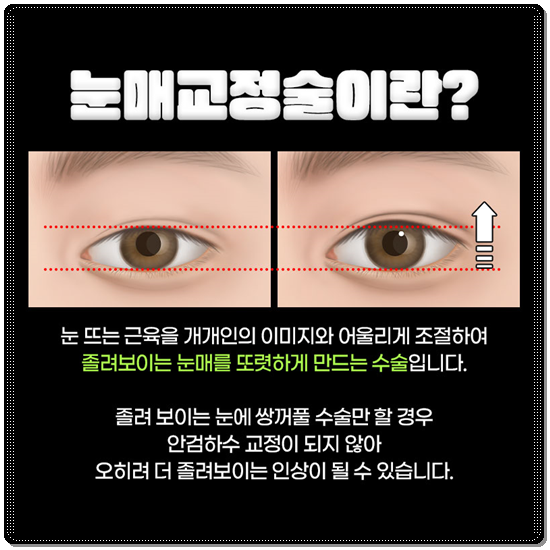
When a person uses excessive forehead or eyebrow strength to open their eyes, or when the black part of the eye is covered by the eyelid, creating a tired and sleepy appearance, one of the plastic surgery procedures that may help is ptosis correction. It is also commonly referred to as eyelid ptosis correction, and it can be an effective method when it is difficult to create a clear, defined eye shape with double-eyelid surgery alone. Of course, the surgical method, cost, recovery period, and characteristics may vary from person to person, so it is important to obtain accurate information suited to your eye condition when making a plan. Today, we will take a detailed look at the costs of non-incisional and incisional ptosis correction, the characteristics of each surgical method, and the differences in recovery periods—topics many people are curious about.

- Make Sleepy-Looking Eyes More Defined! What Are the Characteristics and Cost of Non-Incisional Ptosis Correction?
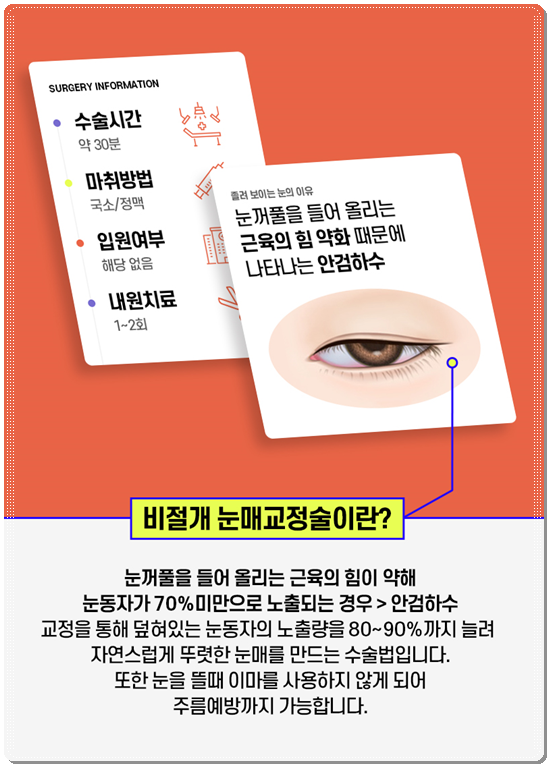
Basically, ptosis correction is an eye plastic surgery procedure performed to correct symptoms of ptosis, in which the muscles that lift the upper eyelids are weak. Non-incisional ptosis correction may be selected when there is no significant skin sagging and the patient wants to improve the strength of the eye-opening muscles while reducing the burden associated with an incision.
- Characteristics of non-incisional ptosis correction:
Non-incisional ptosis correction involves making fine adjustments to the tension of the muscles that open the eyes, such as the levator palpebrae superioris muscle, using sutures inserted through tiny openings. Because the skin is not cut, scarring is barely noticeable. The procedure naturally increases the amount of visible iris, helping create a more defined eye shape.
- Cost of non-incisional ptosis correction:
The surgical price generally ranges from approximately KRW 1.1 million to KRW 1.5 million. However, the cost may vary depending on the individual’s eye condition, the extent of correction required, and the difficulty of the procedure.
- Recovery period for non-incisional ptosis correction:
Because the procedure is performed without an incision, the recovery period for ptosis correction is generally said to be approximately one to three months. Since the tension of the muscles is adjusted with sutures through tiny openings rather than by cutting the skin, there is generally less swelling and bruising and a faster recovery compared with incisional ptosis correction. From immediately after surgery through days one to three, applying cold compresses can help reduce swelling. Around days four to seven, when the stitches are removed, the major swelling subsides and it becomes possible to return to daily activities. After two weeks to one month, residual swelling decreases and the eyes settle into a natural appearance. However, it may take three to six months for the eyelids and surrounding tissues to fully stabilize.

- Firm Fixation and Correction: Characteristics of Incisional Ptosis Correction and Comparison
This surgical method is suitable when the eyelids contain a large amount of fat and appear thick, when the skin is significantly sagging, or when the muscles used to open the eyes are considerably weak.
- Characteristics of incisional ptosis correction:
The necessary amount of eyelid skin is incised, after which excess fat and muscle tissue are directly refined, and the muscles that open the eyes are firmly corrected and fixed.
- Differences from the non-incisional method:
Compared with the non-incisional method, this procedure provides much stronger fixation. It can address sagging skin and thick fat at the same time, so there is less risk of the result loosening over time and the defined crease can be maintained for longer. However, because an incision is involved, it generally requires a somewhat longer recovery period and more time for scar care than the non-incisional method.
- Cost of incisional ptosis correction:
Because the procedure involves directly refining and correcting tissue, the cost of incisional ptosis correction generally ranges from approximately KRW 1.5 million to KRW 2.5 million. This also varies from person to person depending on the scope and extent of surgery and the difficulty of the procedure, so it is important to discuss the details thoroughly with a board-certified plastic surgeon before determining the cost.

- Safety System Checkpoints for Successful Eye Plastic Surgery
Because ptosis correction addresses not only aesthetic improvement but also the functional movement of the eyes, it should be supported by a professional hospital system.
-
1:1 customized, precise diagnosis: Check whether the clinic closely analyzes each individual’s eyelid skin thickness, fat volume, strength of the eye-opening muscles, and eye structure before recommending the appropriate method between non-incisional and incisional surgery.
-
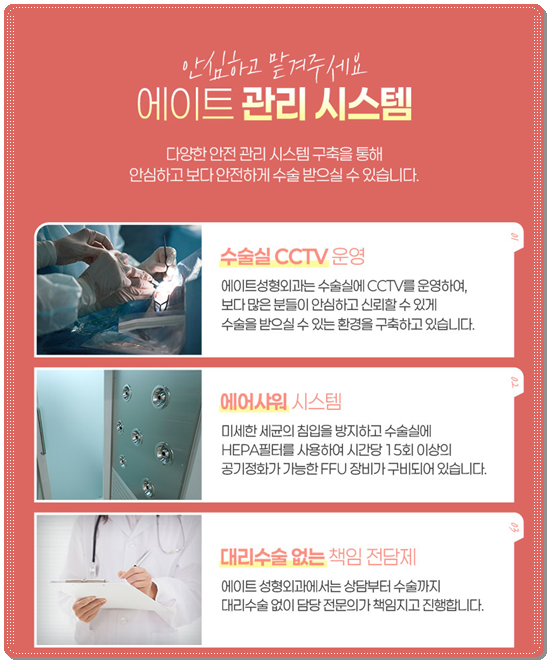
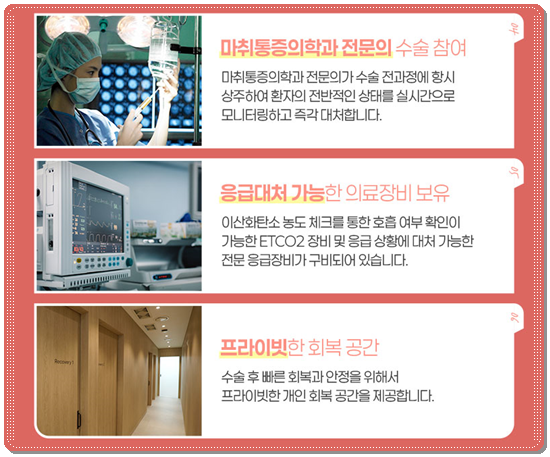
Thorough safety and infection control: Check whether an anesthesiologist is stationed at the clinic and whether it maintains a sterile clean-room environment through an emergency response system that monitors vital signs in real time and an operating-room air-shower system designed to prevent the introduction of microscopic bacteria.
-
Systematic post-operative care: Consider whether the clinic offers personalized recovery programs through its in-house dermatology department, including swelling laser treatments and scar care.

Conclusion
To escape a sleepy-looking appearance and regain a more defined impression, the first priority is to accurately assess the current degree of eyelid sagging and the strength of the eye-opening muscles. By fully understanding the characteristics of non-incisional and incisional ptosis correction and consulting carefully with a board-certified plastic surgeon, you may be better able to achieve satisfactory results that meet your expectations. We hope this explanation has been helpful.
※ This post was written for informational purposes and includes medical advertising for Eight Plastic Surgery. Because side effects or unexpected results may occur depending on an individual’s constitution after surgery or treatment, a thorough consultation with a board-certified plastic surgeon with extensive clinical experience is recommended.

Previous image
Next image