A forehead lift that enhances forehead elasticity,
What to know and check
Hello, this is Ruho Plastic Surgery.
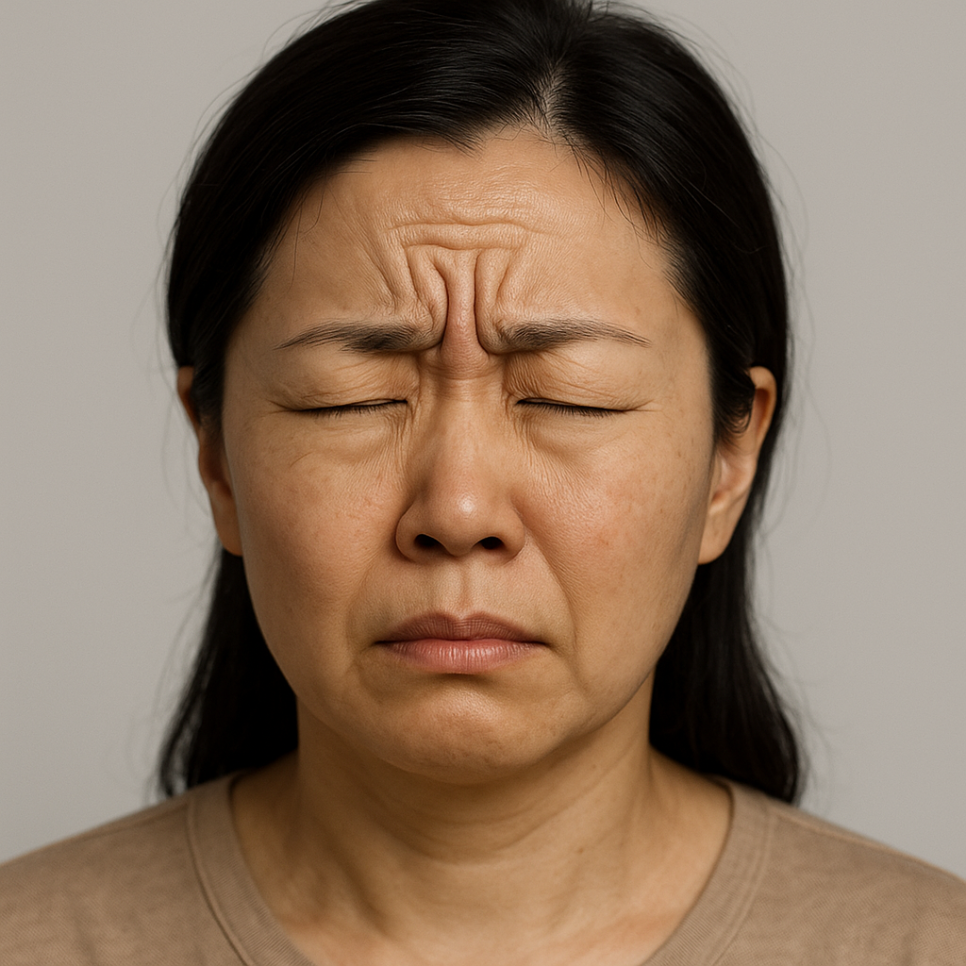
When forehead elasticity declines,
it can cause both an aesthetic issue that makes you look angry
and a functional issue where the eyes feel heavy, leading you to raise your forehead and develop headaches.
Forehead sagging occurs as elasticity decreases
because collagen in the skin is reduced.
Since this is the area located directly above the eyes,
a sagging forehead can also affect the brows and eyelids,
causing them to droop as well.
In severe cases, it becomes difficult to secure a clear field of vision,
and many people choose a forehead lift to relieve this discomfort.
However, some people hesitate to decide because they are worried about swelling and pain after a forehead lift.
Who needs it?
A forehead lift is not just a procedure that smooths forehead wrinkles;
it is a lifting surgery that simultaneously adjusts the position of the brows, forehead, and eyes
and restores facial balance.
It can be effective for people like the following.
First, people whose brows have drooped and whose eyes look tired
✔️ The brows have dropped, covering the eyelids or hiding the double eyelids
✔️ They habitually use their forehead muscles to open their eyes
✔️ The outer corners of the eyes look downturned
Second, people with deep, frequent forehead wrinkles
✔️ When opening the eyes, they use their forehead muscles, causing repeated horizontal wrinkles
✔️ Botox has a short effect or wrinkles form easily even after treatment
✔️ The glabellar muscles are overdeveloped, making wrinkles deep
Third, people with reduced skin elasticity and a sagging forehead
✔️ As they age, the skin feels thicker and more sagging downward
✔️ The brow position has lowered compared with the past, making the expression look tired
✔️ They feel that lifting treatments do not last long
Fourth, people who always seem tired or angry
✔️ A combination of brow drooping and glabellar wrinkles
✔️ They often hear that they look in a bad mood
✔️ The drooped eye corners make the overall expression look sagging
The forehead is a broad area that makes up the upper part of the face,
and because aesthetic and functional changes can be significant depending on facial expression,
if the discomfort above continues,
it may be worth considering a forehead lift.
Defining forehead lift surgery
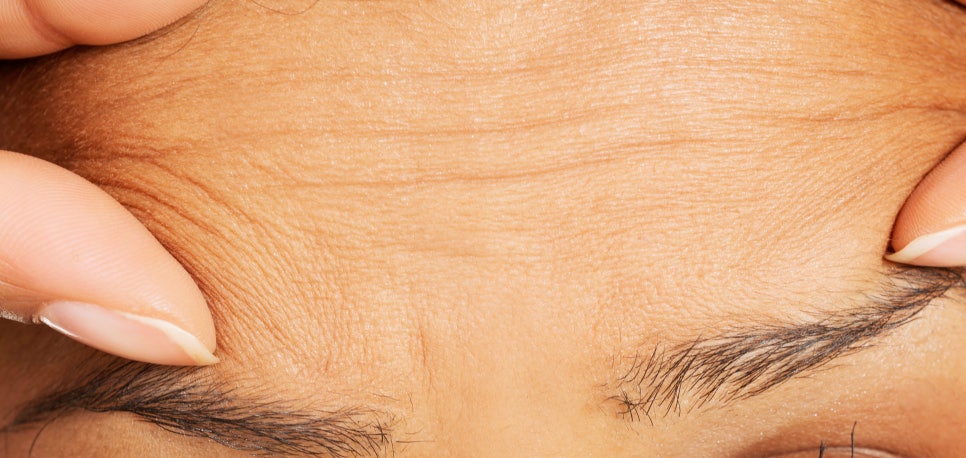
A forehead lift is a lifting procedure that pulls the forehead upward,
and in addition to forehead wrinkles,
wrinkles around the eyes and between the eyebrows can also improve together.
Using an endoscope, the procedure makes a minimal incision
and narrows the distance between the brows and the eyes,
creating a refined and clearer impression.
It is mainly performed for middle-aged and older adults
when aging begins,
but
it is also sometimes performed in younger people
if the distance between the eyes and brows is narrow,
making double-eyelid surgery difficult,
or if they have pseudoptosis.
To see whether the surgery is appropriate,
you first need to look at
'how your facial expressions normally move'
and 'what specifically causes the forehead wrinkles.'
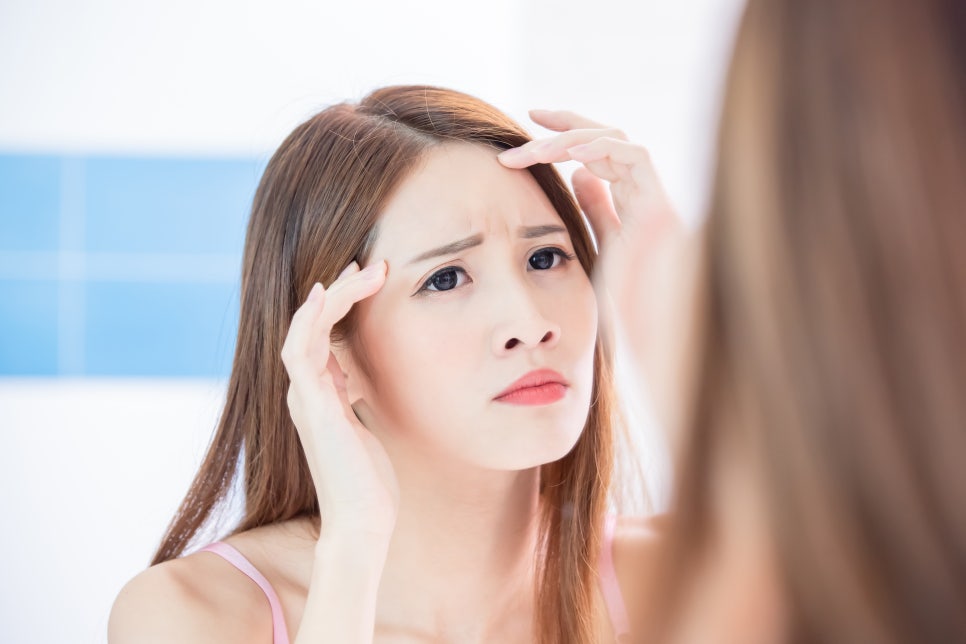
What is the detailed procedure?
Endoscopic forehead lift surgery minimizes scars
and can improve brow drooping, forehead wrinkles, and glabellar wrinkles at the same time.
It is a precise procedure that goes through the following steps.
|
|---|
| 1. Design (preoperative planning): Detailed analysis of facial proportions and muscle movement |
| 2. Anesthesia and preparation |
| 3. Incision and endoscope insertion: After making 3–5 incisions of 1–2 cm inside the scalp behind the hairline, an endoscopic camera and microsurgical instruments are inserted |
| 4. Dissection: Dissection is carried out toward the glabella |
| 5. Lifting and fixation: The separated skin and fascia layers are lifted upward to raise the brows and forehead |
| 6. Suturing and finishing: The incision sites are sutured, and a compression dressing is applied (hidden by the hair, so it is not visible externally) |
An important part of the surgery process is
accurately dissecting the fascia layer (SMAS), which actually supports the tissue,
and even the loosened ligaments,
then placing them in the ideal position and securing them firmly.
Just as a building needs a strong foundation,
the procedure must be performed precisely
in order to maintain a more stable aesthetic result.
At Ruho Plastic Surgery, the forehead lift is performed using 'Endotine,'
which is used in 24 countries and has proven safety after receiving approval from the Korean FDA.
Compared with methods that fix the scalp with screws and threads,
it can reduce the tension that pulls on the scalp,
and after six months it is absorbed by the body,
providing a broader and more balanced fixation effect.

Through thorough care
Step-by-step management for forehead lift surgery
- Immediately after surgery (days 1–3): swelling & compression management
-
Keep the compression bandage on: You should wear the compression bandage for 1–2 days after surgery
to reduce swelling and bleeding
-
Ice packs: Applying cold compresses 3–4 times a day for 10 minutes each
helps reduce swelling
-
Keep the head elevated: Maintain a slightly elevated upper-body position
-
No face washing: Water should not touch the incision area, so
only wipe it with dry gauze for 2–3 days
- Before and after stitch removal (days 5–14): scar & bruise management
-
Stitches are usually removed after 7–10 days
-
Bruises turn yellow over 1–2 weeks and fade naturally
-
After stitches are removed, you can wash your hair lightly with lukewarm water
-
Scar ointment and silicone gel can be used starting 1–2 days after stitch removal
- Recovery period (weeks 2–4)
-
Temporary numbness may occur, but recovery usually happens within 1–3 months
-
Swelling management: Help circulation with warm compresses
-
Light stretching is possible: Move the forehead muscles slightly
and recover naturally
-
No massage: Massage is absolutely prohibited before the incision site has settled
- Result stabilization period (months 1–3)
-
Scar ointment & regenerative cream: Apply consistently to help prevent pigmentation
-
Exercise & sauna: Light activity is possible after at least 1 month
-
No alcohol or smoking: Because they affect blood circulation,
avoid them for at least 3–4 weeks
- Long-term care (after 3 months)
-
Regular follow-up: Return to the surgical clinic for another checkup
3–6 months after surgery
-
Maintenance habits: Reduce the habit of opening the eyes with the forehead,
be thorough with sun protection, and get enough hydration and collagen intake
If you follow a step-by-step approach to manage forehead lift swelling and bruising,
you may expect a longer-lasting result.
An endoscopic forehead lift
is a method that can help improve forehead wrinkles
and support functional recovery.
It is not only a process of smoothing wrinkles,
but also a process of restoring the balance of a face changed by aging
and regaining a natural youthful appearance,
so careful consideration is important.
If you find the right medical team for you
based on detailed information and proceed with the procedure,
you may gain a brighter appearance
and new confidence.