Sinsa Station Revision Rhinoplasty
Hello, this is Luho Plastic Surgery.
After the first nose surgery,
as time passes, changes in the line,
asymmetry, and other issues may lead you to consider revision surgery.
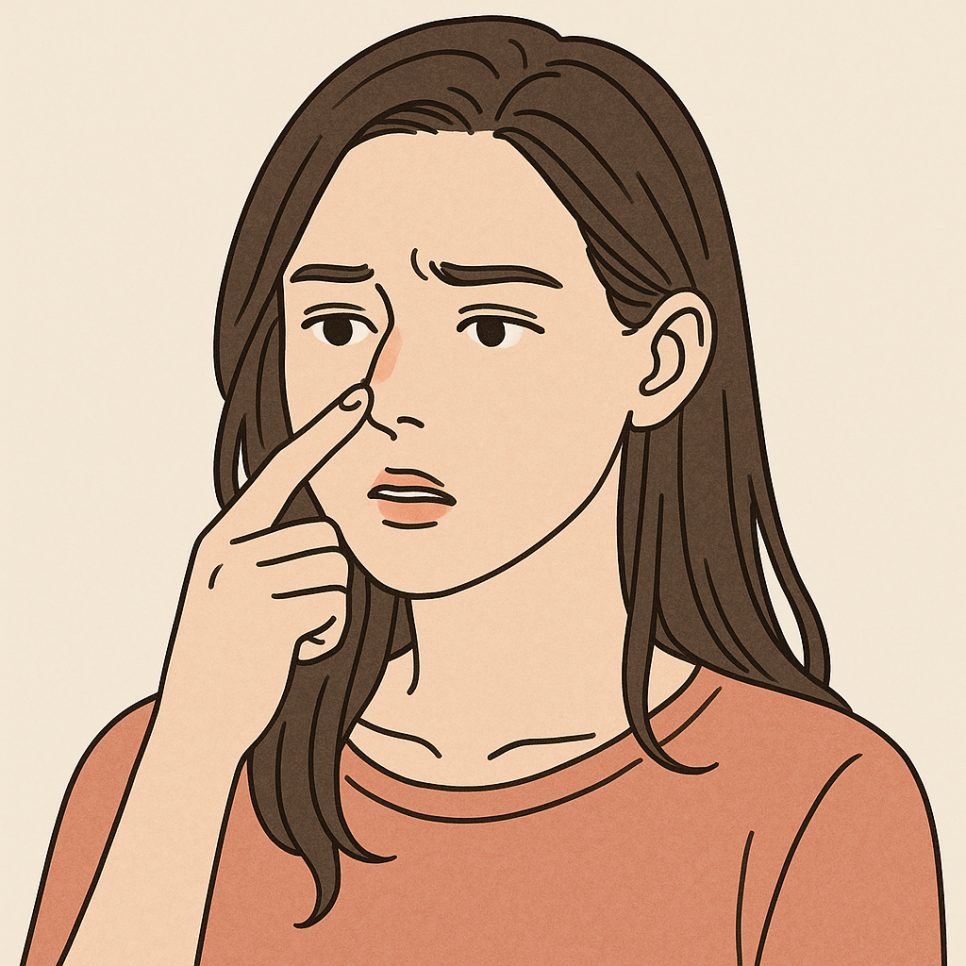
“Should I really have to touch my nose again?
It seems like it takes as much courage as the first surgery.”
Revision rhinoplasty requires even more caution than the first surgery.
Because an incision has been made or an implant has been inserted,
it is necessary to carefully examine the condition of the tissue,
skin thickness, and the degree of internal adhesion.
In addition, patients often worry about things like
whether a scar will remain after another surgery,
or whether the tip of the nose will become stiff.
Today, we have organized the points that need to be checked,
focusing on the key points frequently mentioned in actual revision rhinoplasty reviews.

When is it needed?
There are many reasons revision rhinoplasty may be needed,
but the representative cases include the following:
🤎 Asymmetry in the shape of the nose
One side becomes pressed down or lifted over time
🤎 Implant movement or inflammation
The nose becomes crooked, or swelling lasts for a long time
🤎 Dissatisfaction with the line
A nose tip that is too low, an artificial-looking bridge
🤎 Breathing discomfort
Difficulty breathing due to septal damage or narrowing
These situations go beyond cosmetic concerns
and can lead to functional discomfort,
so we recommend deciding whether revision surgery is needed
after a thorough diagnosis.

The key to revision surgery
It must be approached with much more care than the first surgery.
This is especially because the incised tissue is often adherent
or the cartilage has become weak.
Before surgery, a CT scan must be performed
to check in detail the skin thickness,
remaining cartilage, and implant position.
Also, depending on how much of the septum was removed
and how far the incision extended,
the difficulty level and surgical approach will differ.
If this exploration is not sufficient,
unexpected problems may arise during the surgical planning stage.
Methods by cause
Luho Plastic Surgery's revision rhinoplasty
uses different methods depending on the cause.
- The nose becomes shorter due to capsular contracture
-
Remove the implant and release the adhesions under the skin
-
Use septal cartilage or ear cartilage to
lengthen the nose and insert an implant
- The implant shakes or moves
- A crooked nasal bridge
-
If pressure is being applied by a high nasal bridge,
correct the implant position and reinsert it
-
Lower the nose tip to reduce pressure,
reinforce it with autologous cartilage, and correct it by centering it
- A drooping nose tip, changed shape
-
Use septal cartilage or ear cartilage to create a support structure for the nose tip
-
After additional grafting of autologous cartilage to the nose tip, lift the tip
Rather than choosing a clinic based only on revision rhinoplasty reviews from Sinsa Station,
surgery should be performed with an improvement direction and method
that match the cause in order to be satisfying.
More important than reviews: the materials
'What materials are used' also affects
the overall quality of the result.
| 🌟 Rhinoplasty materials 🌟 |
|---|
| Ear cartilage |
| Septal cartilage |
| Rib cartilage |
| Buttock dermis |
Because the inside of a nose that has already been damaged is sensitive
and has reduced recovery ability,
the goal should be a shape that blends well with the tissue.
At our clinic, to reduce the possibility of side effects,
we use autologous tissue within the available range.

Not a 'restart'
but a 'precise restoration'.
A phrase commonly heard in revision rhinoplasty is:
“I’m too scared to do it again.”
Successful revision surgery is
not simply about adjusting height or changing shape,
but a process of restoring and refining facial balance.
The important points are the medical team's skill,
detailed planning, and the aftercare system.
One failure is not the end.
Revision surgery in the right direction
can be a new beginning for regaining confidence.