Rheumatoid tenosynovitis
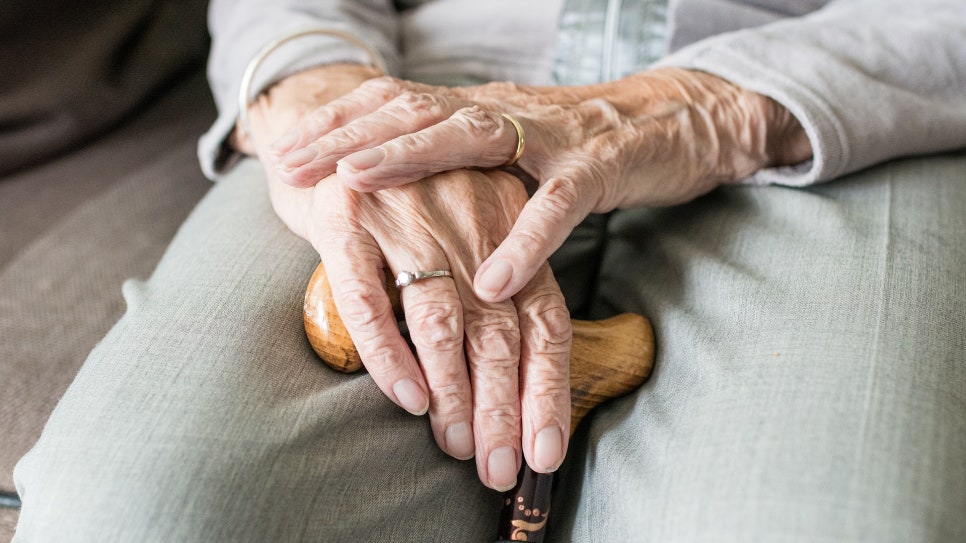
Rheumatoid arthritis is a very common disease in which nonbacterial and non-neoplastic chronic inflammation occurs systemically and symmetrically, and its cause has not yet been clearly identified. It mainly occurs in the synovial membrane of the joint capsule or tendon, causing a characteristic inflammatory proliferation of the synovium, which later becomes fibrotic and forms pannus. However, this is not limited to the synovium; it can also occur in organs, the brain, and blood vessels.
As the lesion progresses, tissues weaken and may be destroyed or ruptured. As a result, joint function changes or is lost, and if the coordination between muscles and tendons is disrupted, severe deformity and significant functional impairment may occur. The severity of the disease varies widely, from mild cases in which acute arthritis occurs in multiple joints for a short period and then resolves without causing major joint damage, to cases that progress helplessly over months or years while destroying multiple joints.
In relatively severe cases, joint pain and swelling repeatedly worsen and improve, and if left untreated, the joints are eventually destroyed or tendons rupture, resulting in deformity and disability. The frequency of involvement of flexor tendons and extensor tendons is nearly similar. When flexor tendons are involved, carpal tunnel syndrome or trigger finger may be the main symptoms, and severe swelling or tendon rupture is often found on the back of the wrist. At sites where tendons pass beneath pulleys, stenosing tenosynovitis or nerve compression syndromes may also occur.
In the most severe cases, muscles or tendons may rupture, completely eliminating the function previously carried out by the ruptured tendon. In the hand, rupture most commonly occurs in the extensor digitorum communis, which extends the 3rd, 4th, and 5th fingers, and in the extensor pollicis longus, which extends the thumb.
The problem with tendon involvement in rheumatoid arthritis is that, as tenosynovitis develops, the synovium can proliferate substantially, and when tenosynovitis becomes severe, the tendon invaded by pannus weakens and can rupture spontaneously.
- Development of tenosynovitis
If the synovial membrane surrounding a tendon proliferates abnormally, the area swells and pain is caused. At this time, tendon gliding may be obstructed, and the tendon may also be weakened, often leading to spontaneous rupture. In the early stage of tenosynovitis, synovial proliferation is not severe, but the amount of fluid around the tendon increases. In such cases, if medical treatment is given to reduce synovial inflammation, the amount of fluid produced can also be reduced. However, when proliferation of the tendon sheath is clearly present and forms a solid mass, it is advisable to perform tenosynovectomy. It has been reported that in 50% to 70% of patients who underwent such prophylactic surgery, the tendons had already been invaded by proliferative tenosynovium.
After tenosynovectomy, active or passive motion should be started as early as possible, ideally within 1 to 2 days after surgery, to prevent the tendon from adhering to surrounding tissues. If tenosynovitis is left untreated for a long period and reaches an advanced stage, synovial proliferation becomes severe, and the tendon is invaded by pannus, weakened, and may rupture. In such cases, tenosynovectomy should be performed, and if the function of the ruptured tendon is essential, tendon transfer should be performed to reconstruct it. Rheumatoid tenosynovitis mainly occurs on the back of the wrist, the front of the wrist, and the front of the fingers.
- Tendon rupture
Tendon rupture is a relatively common complication of rheumatoid tenosynovitis. This rupture occurs because the tendon is weakened by erosion from pannus and can happen at any site. However, it occurs more easily at sites where repeated friction on the tendon is relatively greater as it passes directly over bone.
Common rupture sites include the extensor pollicis longus at the ulnar side of Lister's tubercle, the extensor digiti minimi at the distal ulna, and the flexor pollicis longus at the anterior aspect of the scaphoid. If a tendon ruptures and active movement in a certain area and direction becomes impossible, tendon repair or reconstruction is necessary if the function of that tendon is indispensable for hand function. However, such reconstruction is understood to be very difficult. The reason is that, first, the joint moved by the specific ruptured tendon is often stiff, and the pathway the tendon passes through may no longer be normal. In addition, the transferred tendon itself may be weakened, so functional recovery after transfer may be poor. There may also be cases where other joints along the line of movement of the ruptured tendon are damaged, making the transferred tendon function poorly. Therefore, arthrodesis of the joint moved by the ruptured tendon can also be considered a simpler and more reliable salvage option.
Possible methods of tendon reconstruction include tendon suturing, tendon grafting, and tendon transfer. Tendon suturing may be performed when little time has passed since the tendon ruptured and the muscle has not yet lost much elasticity, or when only part of a muscle with a shared function has ruptured.
In cases where the tendon has been ruptured for a long time, the muscle usually becomes fibrotic and loses most of its elasticity. However, the ruptured tendon may adhere to surrounding tissues and form a new attachment site, preserving the elasticity of the affected muscle. Therefore, the degree of muscle elasticity is more important than the length of time since rupture when deciding on the surgical method. The extent of muscle elasticity can be assessed to some degree during surgery by pulling the proximal end of the ruptured tendon or by looking at the color of the muscle.
If the loss of elasticity is not severe, tendon grafting may be chosen; if the loss is severe, tendon transfer may be considered. However, because the overall conditions for tendon surgery are not favorable in rheumatoid tenosynovitis, tendon transfer tends to be preferred if there are only one or two tendon ruptures.
So far, I have explained rheumatoid tenosynovitis.
In the next part, we will look at stroke.
Source: Korea Disease Control and Prevention Agency, National Health Information Portal