AI-translated archive post

How to Prevent Colorectal Cancer

그레이스성형외과의원 · 아이홀지방이식·가슴성형 읽어주는 최문섭 원장 · May 9, 2019

​ [[ How to Prevent Colorectal Cancer ]] ​ In relation to disease prevention, people often distinguish between 'primary prevention' and 'secondary prevention.' Primary prevention r...

AI translation notice

This page is an English translation of a Korean Naver Blog archive entry. For exact wording and source context, verify against the Korean archive original and the original Naver post.

Clinic: 그레이스성형외과의원

Original post date: May 9, 2019

Translated at: April 24, 2026 at 3:24 AM

Medical note: This translation does not guarantee medical accuracy or suitability for treatment decisions.
How to Prevent Colorectal Cancer image 1

[[ How to Prevent Colorectal Cancer ]]

  • In relation to disease prevention, people often distinguish between 'primary prevention' and 'secondary prevention.' Primary prevention refers to preventive activities aimed at the state before a disease occurs, while secondary prevention means detecting an existing disease early and treating it appropriately to prevent it from worsening. There is also what is called tertiary prevention, which refers to measures for patients with advanced disease to prevent further worsening and the occurrence of complications and sequelae, and to promote the maintenance of physical function and improvement of quality of life through rehabilitation treatment and self-management.

  • At present, primary prevention that completely prevents colorectal cancer from occurring is almost impossible. For any cancer, it is difficult to identify a single cause, and among the various causes of colorectal cancer there are some, such as genetic predisposition and family history, that we cannot choose or avoid.

  • However, secondary prevention, which detects colorectal cancer early through regular screening and treats it, is quite effective. In asymptomatic low-risk individuals, colonoscopy should be performed every 5 to 10 years starting after age 45. High-risk individuals who have ulcerative colitis, Crohn's disease, Peutz-Jeghers syndrome, familial adenomatous polyposis, or who have family members with juvenile polyps, colorectal cancer or colorectal polyps, familial adenomatous polyposis, or hereditary nonpolyposis colorectal cancer, should consult a specialist to determine the screening method and interval and then undergo regular colonoscopy.

[[ Preventing Colorectal Cancer and Food ]]

  1. The greater the total amount of calories consumed, the higher the risk of colorectal cancer.
  • Many studies have shown that the higher the total calorie intake, regardless of food type, the higher the risk of colorectal cancer. In this regard, obesity also increases the risk of colorectal cancer.
  1. Red meat, high-protein diets, and high-fat diets are high in calories and can raise the risk of colorectal cancer by producing carcinogenic substances.
  • Many studies have also examined the relationship between meat consumption and colorectal cancer risk. Among meats, research has shown in prospective cohort studies that consumption of red meat increases the likelihood of developing colorectal cancer. (A cohort refers to a group that shares the same birth period or some characteristic or experience related to the subject of the study. Prospective means that the investigation covers the period after the start of the study.

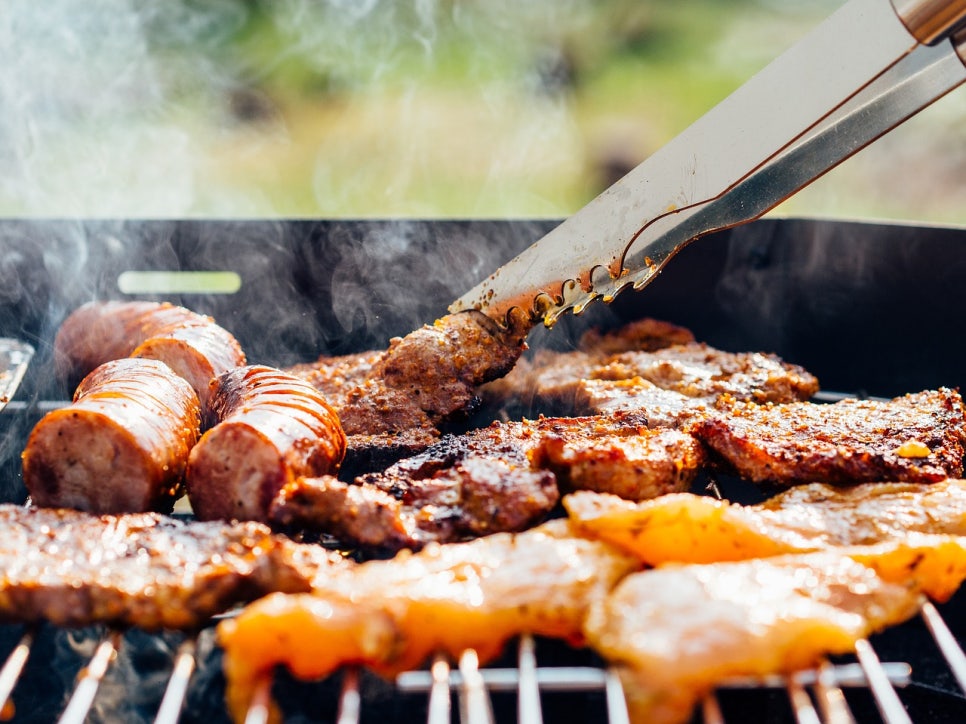
  • Although no definitive evidence has yet been found as to why red meat makes people more likely to develop colorectal cancer, the main factors appear to be that it is usually high in fat and calories, and that cooking methods such as frying, grilling directly over fire, or smoking generate carcinogenic substances.

  • Fat not only increases the secretion of bile acids that irritate the colonic mucosa, but is also converted into carcinogenic substances by intestinal bacteria, causing abnormal growth of the colonic epithelium. Trans fat is produced in the process of adding hydrogen to solidify vegetable oils and prevent rancidity, and it is also formed during cooking with high-temperature oil. Foods high in this type of fatty acid include popcorn, French fries, ramen, frozen pizza, and doughnuts.

  1. Eating plenty of fiber lowers the likelihood of developing colorectal cancer.
  • Many studies have concluded that eating foods rich in fiber lowers the incidence of colorectal cancer. Although the exact mechanism is unknown, fiber dilutes the contents of the colon, reduces the time it takes to pass through the intestines, and increases stool bulk.
  1. Calcium intake also lowers the risk of colorectal cancer.
  • Calcium is known to bind with bile acids and fatty acids, preventing them from acting harmfully on colonic epithelial cells. Some recent clinical trials and prospective cohort studies have found that calcium intake significantly reduces the occurrence of colorectal cancer and its precursor lesion, colorectal adenoma. However, more research is still needed on the effective amount of calcium intake.
  1. Poor lifestyle habits increase the risk of colorectal cancer.
  • People whose jobs involve little physical activity, such as sitting for most of the day, have a higher risk of colorectal cancer, and the association is especially stronger with colon cancer. In other words, the less physical activity a person has, the higher the risk of colon cancer is known to be. Meanwhile, excessive alcohol consumption increases the risk of rectal cancer, especially in men, and smoking increases the risk of both colorectal adenoma and colorectal cancer.

Source: Korea Disease Control and Prevention Agency National Health Information Portal

Continue browsing

Keep exploring this clinic's public source trail

Return to the source archive for more translated posts, or open the Korean clinic profile to compare other public channels.