
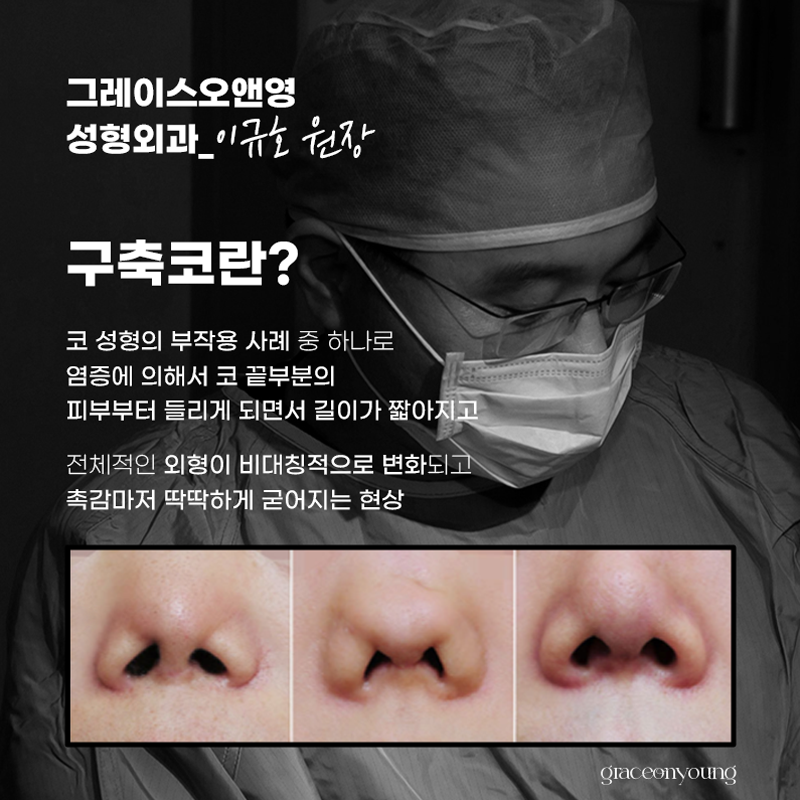
A contracted nose is one of the complications that can occur after rhinoplasty.
Due to inflammation, the skin at the tip of the nose begins to lift,
making the nose shorter, causing the overall appearance to become asymmetrical,
and even making the texture feel hard and stiff.
When the nose becomes shorter or inflamed, contraction can occur in the nasal muscles and skin,
leading to greater aesthetic and functional discomfort.
After nose surgery, repeated foreign body reactions and inflammation can harden the skin and cause the tissue to contract,
which may lift the nose and result in an upturned nose and deformation.
For a nose that has become lifted or upturned due to contraction, precise re-correction and delicate dissection are very important during revision surgery.
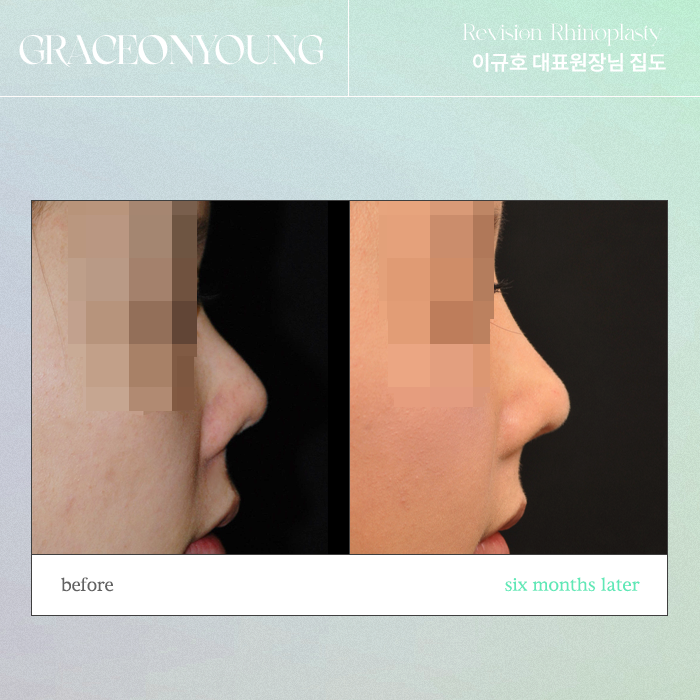 For a short nose, the nasal bridge was raised, nostril lowering was performed,
and the nasal tip was corrected to complete a nose with an ideal angle that suited the lip line.
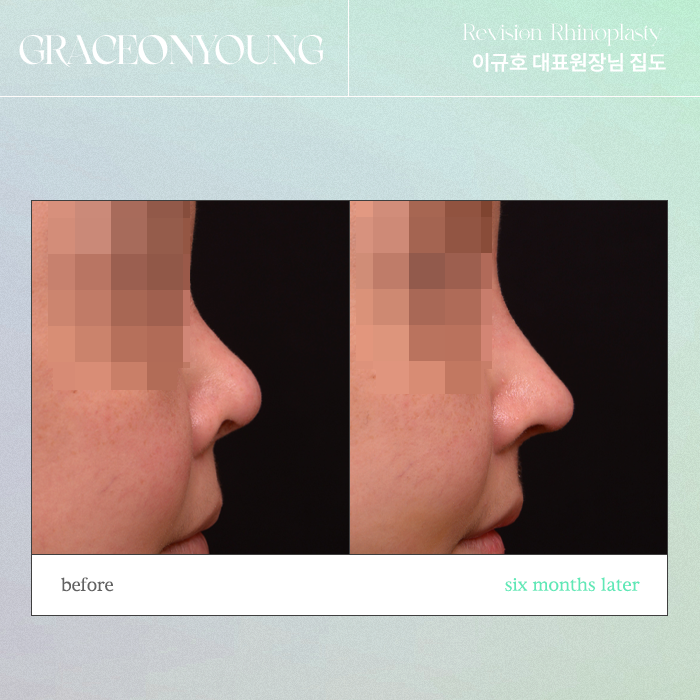
Before nose surgery, the mouth may appear more protruded, but
after revision rhinoplasty, the lip line appears more set back.
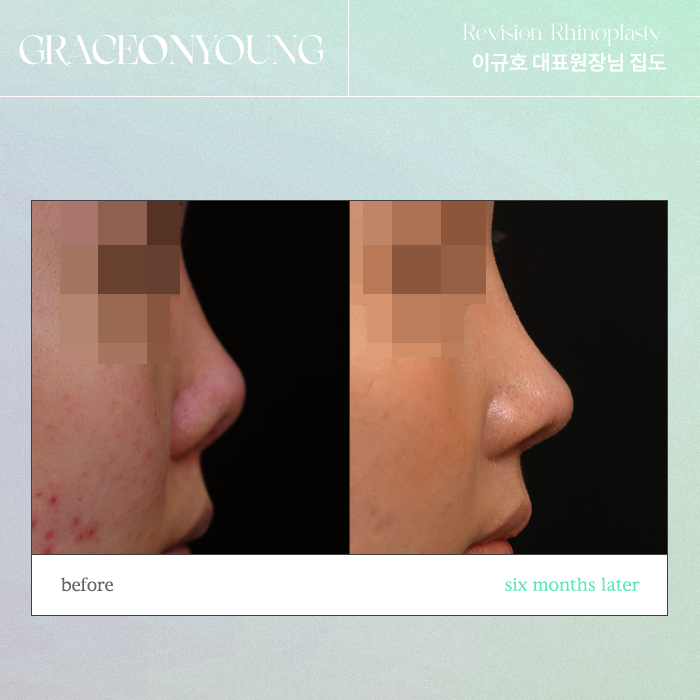 The columella is retracted, and the alar rim has a concavity.
The nostrils are also significantly lifted, making this an upturned nose, or pig nose type,
so it appears problematic from the front or side view,
and the patient was also under a great deal of stress.
The nasolabial angle was adjusted, nostril lowering was performed,
and ear cartilage was also used to further improve the shape of the nasal tip.