The fact that blepharoptosis was not sufficiently improved after the first eye surgery is not simply a matter of the “crease being low.” We first look at the possibility that the tension, fixation point, and layer-by-layer relationship among the levator palpebrae superioris that opens the eyes, its aponeurosis, the skin, orbicularis oculi, and orbital fat were not corrected precisely. If only the appearance is adjusted, the functional issue remains, and over time, forehead compensation, raised brow posture, or a tired-looking impression may recur. The patient visited us because the improvement after eyelid correction at another clinic was insufficient. Grace Plastic Surgery’s philosophy for eye surgery is to restore function first and then create a natural-looking crease on top of that. In revision surgery, we reassess the state of the tissue altered by the previous operation and measure levator function precisely. In this case, the focus was on restoring the ability to open the eyes by appropriately adjusting levator tension through incisional eyelid correction and re-fixing the aponeurosis in its anatomical position. Rather than simply lifting it higher, the key is to secure stable pupil exposure while balancing both sides.
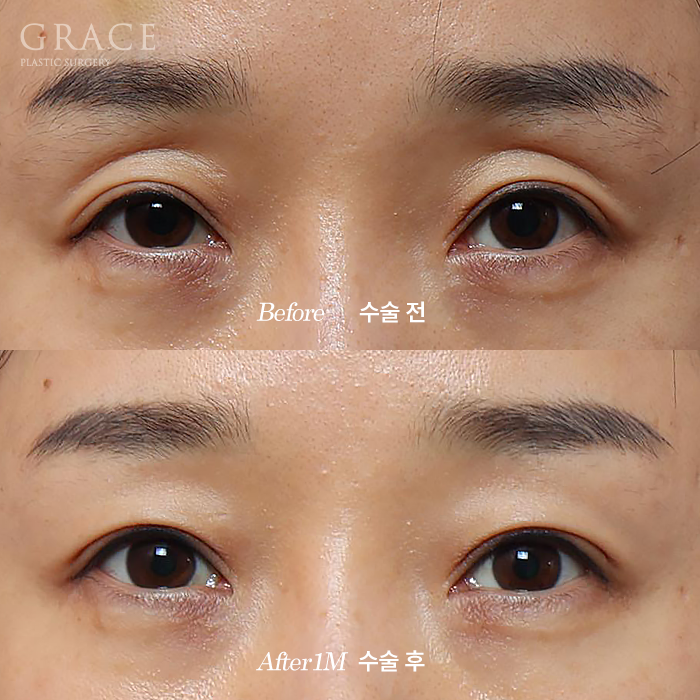
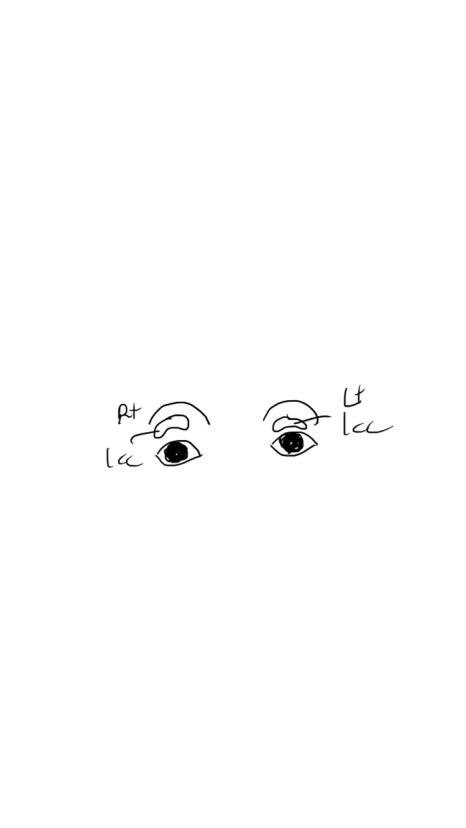
At the same time, upper eyelid fat grafting was performed to address the hollowing of the upper eyelid that became more noticeable after the first surgery. Among the fat harvested from the abdomen, only pure fat with uniform particle size was refined and micro-injected into the necessary layers. By avoiding overfilling and grafting only an appropriate amount while considering the anatomical layers of the orbicularis oculi and orbital fat, the risk of lumpiness and swelling was reduced and natural shading was restored.
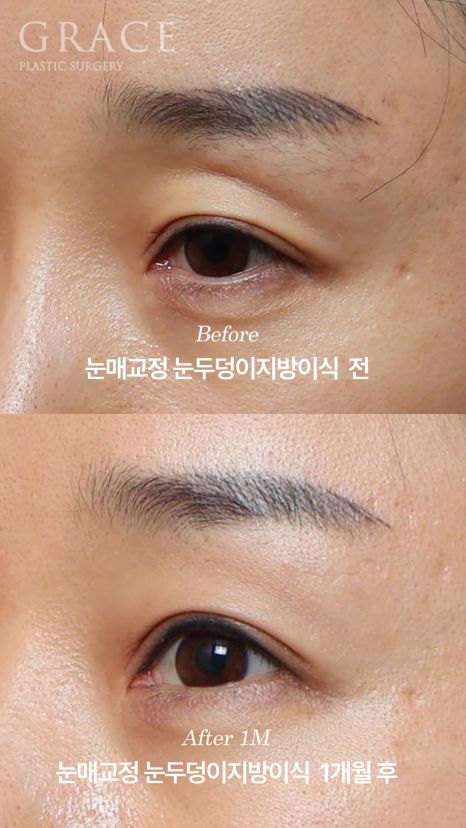
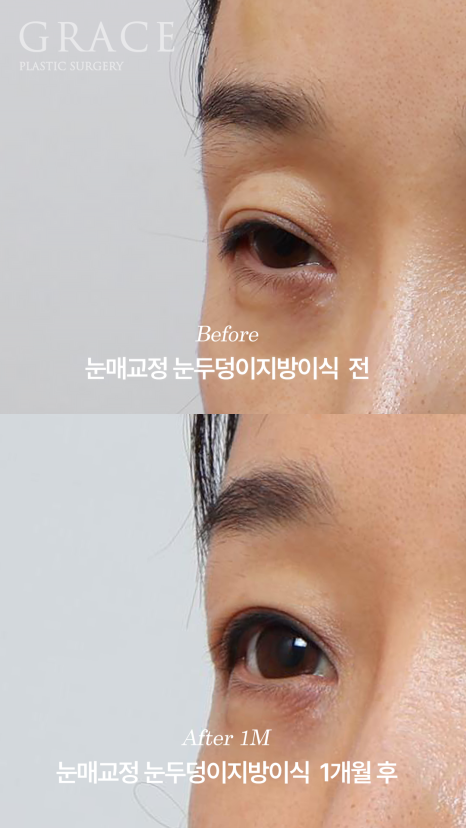
Before the surgery, the patient was observed to use the forehead muscles excessively when opening the eyes, and the impression looked tired because definition was lacking. At 1 month after surgery, there was still mild swelling, but pupil exposure was stably maintained, the upper eyelid shadow was improved, and the overall impression became clearer. The act of opening the eyes became more comfortable, and forehead compensatory movement also decreased, confirming functional improvement. The fat grafted area is still in the process of settling, but with a volume that is not excessive, it is adding soft dimension.
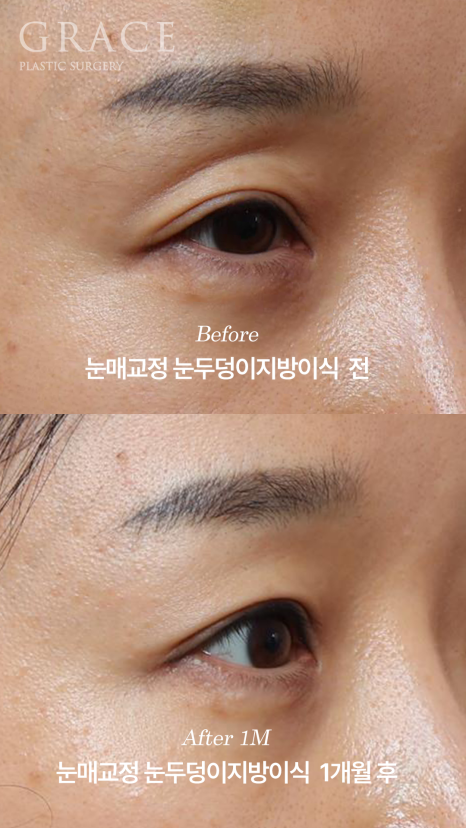
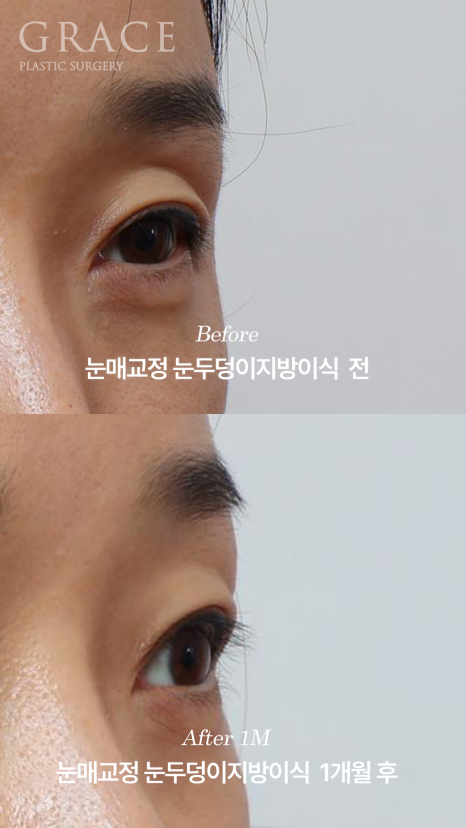
Revision surgery requires even more caution. Tissue irritation must be minimized, and only the necessary structures should be corrected precisely. Diagnosis and planning based on an understanding of eye anatomy make the difference in the outcome. One month is still the beginning, but surgery that corrects the structure becomes more stable and natural over time. An approach that considers both function and aesthetics ultimately leads to satisfaction.
�Phone 02-555-8558
�Web https://graceps.kr/
�Kakao http://pf.kakao.com/_xjAgxoxh/chat
�Address 5F, 623 Gangnam-daero, Seocho-gu, Seoul
Performed by Chief Surgeon Dr. Moonseop Choi of Grace Plastic Surgery Plastic Surgeon Dr. Moonseop Choi #middleagedeyesurgery #uppereyelidfatgrafting #eyeholllamenting #orbitalfatgrafting #eyelidfatgrafting #uppereyelfatgrafting #doublecreaseasymmetry #asymmetriceyesurgery #upperblepharoplasty #lowerblepharoplasty #undereyesurgery #undereyefatreposition #orbitalseptum #eyeholfatgrafting #protrudingeyesurgery #eyelidfiller #eyehollowfiller #eyehollowcelebrity #eyecorrection #blepharoptosis #undereyefatgrafting #eyehollowcorrection #eyehollowsurgery #eyehollowprocedure #eyefatgraftingcomplication #undereyefatrepositionreview #undereyefatrepositioncomplication #undereyefatrepositioncost #undereyefatrepositionrecoveryperiod ※ Surgical results may vary depending on an individual’s eye structure and skin thickness. Because of the nature of the eye area, swelling or bruising may occur, but in most cases they gradually improve during the recovery process, with the goal of achieving a natural-looking improvement in the eyes.