At some point, when you take photos, you start to feel that your eyes are not the same as before. Even though you are not necessarily tired, your eyes may look hollow, and people may even say you look cold. In particular, when the upper eyelids become sunken and the eye hollows start to look deeper, makeup may not cover it and the shadows can become even more pronounced, making you look more tired. At first, you may think it is simply because you have lost weight, but as time goes on, the eyelids become thinner and the sunken hollows become more noticeable, to the point where you may even start thinking, “Is this why I look older...?”
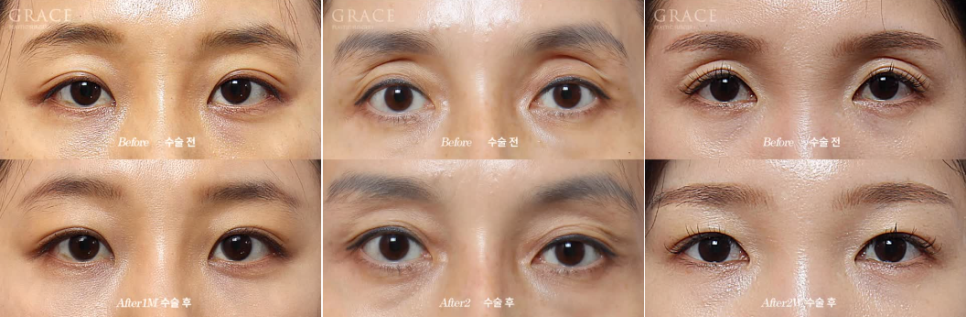
That is why many people first consider fillers or simple procedures, but because the eyelids are an area with thin skin and a lot of movement, concerns about side effects often come along as well. In the end, what matters is not simply filling the area, but understanding exactly why it has sunken and what structural issue is causing the problem. Eyelid fat grafting begins at this point.
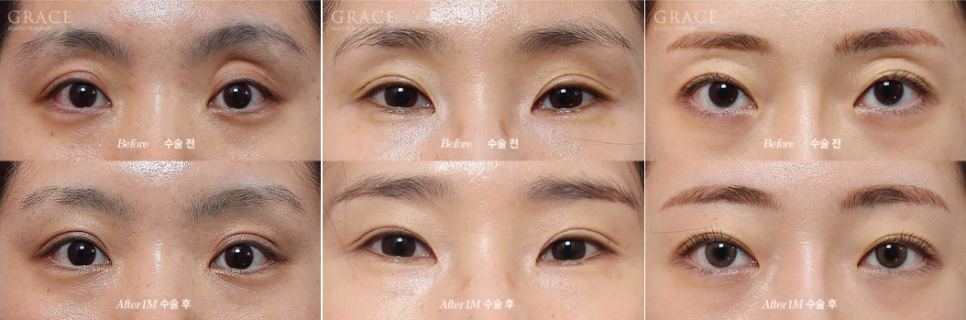
The result of upper eyelid fat grafting is not simply about “filling” the area; it changes completely depending on where, how much, and in what layer the fat is injected. The reason for a sunken upper eyelid or eye hollow is not just a lack of fat, but a combination of factors including the structure of the eyelid tissue, changes in the position of orbital fat, and even the movement of the levator muscle. For this reason, it is difficult to expect a natural result with a superficial filling method, and it is more likely to lead to problems such as show-through or unevenness. At Grace Plastic Surgery, to address these issues, the anatomical structure of the eyelid is analyzed precisely, and fat is dispersed and injected mainly into the deep layer, between the orbital fat layer and the muscle layer.
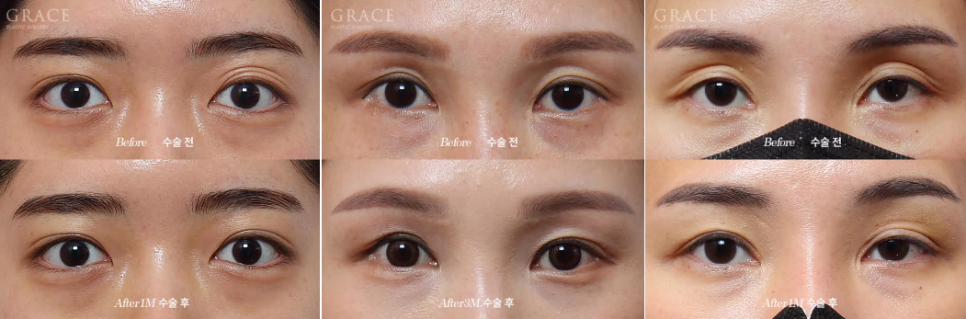
In this process, the focus is not only on adding volume, but also on smoothly connecting the sunken eye hollow and restoring the three-dimensional contour of the entire eyelid. In particular, what matters in eyelid fat grafting is not the amount, but the “layer” and “distribution.” Even if the same amount is injected, the natural look, graft survival rate, and the likelihood of side effects can vary greatly depending on the depth and direction. Side effects are also a major concern. Because the eyelids have thin skin and move frequently, injecting into the wrong layer can cause problems such as show-through (Tyndall effect), nodules, and asymmetry.
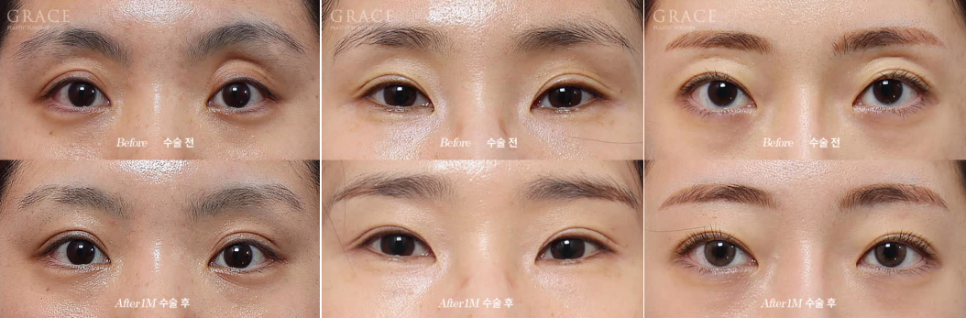
To reduce these risks, Grace Plastic Surgery performs a preoperative three-step diagnostic system to analyze the cause of the sunken upper eyelid in detail and create a customized plan that matches each patient’s eyelid structure. In addition, instead of using frozen fat, only pure fat is carefully selected and injected in micro-parts to increase the graft survival rate and minimize the possibility of unnecessary side effects. In the end, eyelid fat grafting is not a simple volume procedure, but a delicate surgery that requires understanding and designing the entire eyelid structure. If you want to improve a sunken eye hollow naturally, it is important to check not only the method, but also what layer the fat is injected into. This difference creates the result, and that result ultimately leads to trust in the clinic.
�
𝙋𝙝𝙤𝙣𝙚 02-555-8558
𝙒𝙚𝙗 https://www.graceps.kr
𝙆𝙖𝙠𝙖𝙤 http://pf.kakao.com/_xjAgxoxh/chat
𝘼𝙙𝙙𝙧𝙚𝙨𝙨 5F, 623 Gangnam-daero, Seocho-gu, Seoul