Many people are concerned about deeply sunken upper eyelids or multiple eyelid creases, known as multiple-fold double eyelids. Recently, there have also been more consultations about sunken eyelids after dieting, as well as inquiries from people whose eyes look tired and hollow as they age. One option that may be considered in these cases is orbital fat grafting.
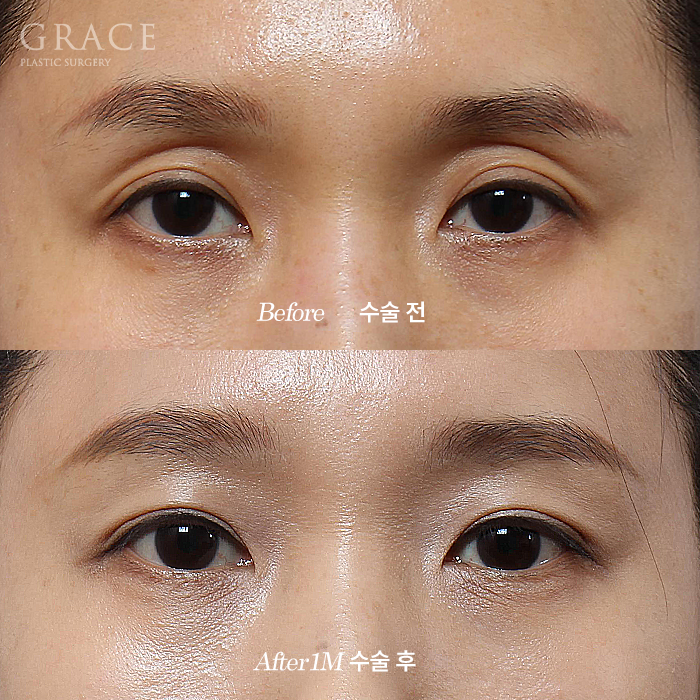
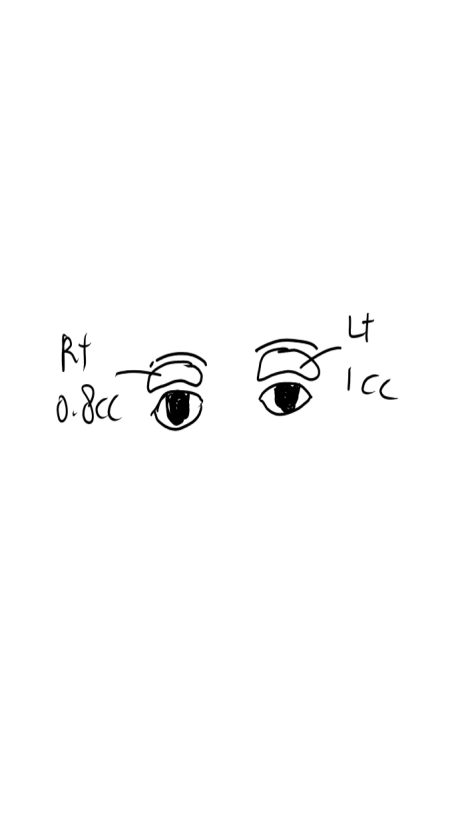
Sunken upper eyelids are not caused simply by a lack of volume. A combination of factors may be involved, including age-related fat loss, a naturally thin eyelid structure, repeated double-eyelid surgery, and changes after eyelid-opening correction. When the eyelids become sunken, the eyes may appear more prominent or give a tired impression. The original double-eyelid crease may also become unstable, causing the eyelid to fold into multiple creases.
Orbital fat grafting is a method of restoring volume to sunken eyelids by grafting the patient’s own fat. However, the eyelids are among the thinnest and most mobile areas of the face, so simply injecting a large amount of fat does not necessarily produce a good result. Excessive injection may instead make the eyelids look thick or heavy and may lead to an unnatural sensation when opening and closing the eyes.
For this reason, the injection site is now considered more important than the amount of fat during orbital fat grafting. Placing the fat mainly in the deeper layer around the orbital septum, rather than in the superficial layer directly beneath the eyelid skin, may help create a more natural result. By considering the anatomical structures containing orbital fat and distributing the injected fat, smooth movement can be expected when opening and closing the eyes, while an excessively bulging appearance may be reduced.
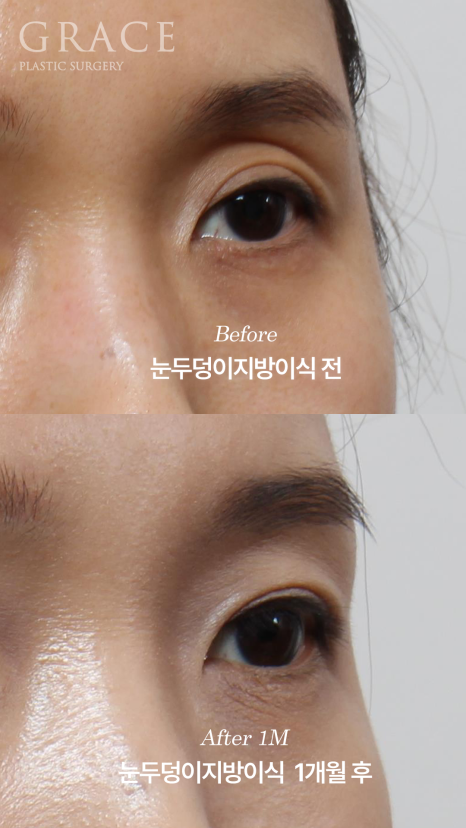
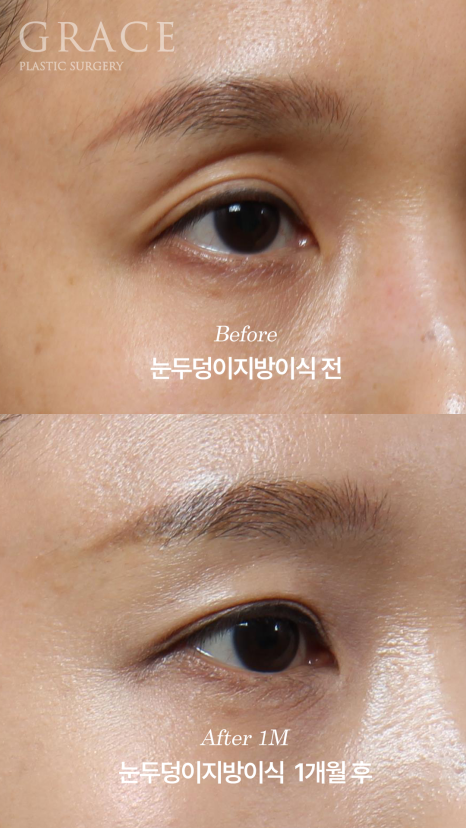
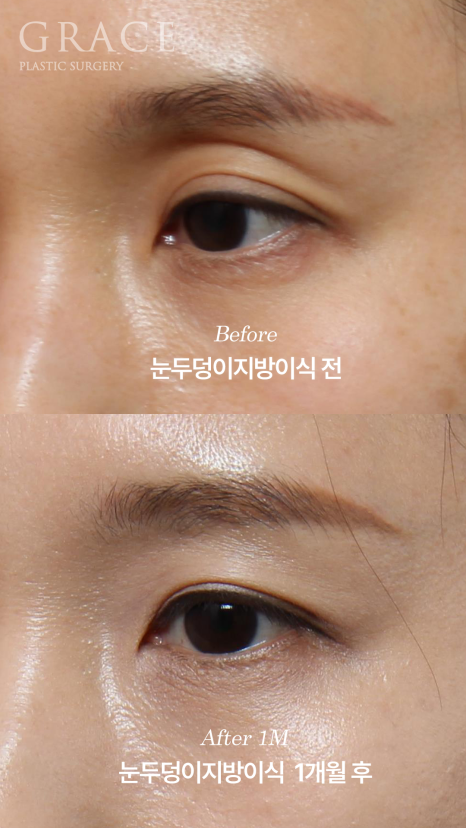
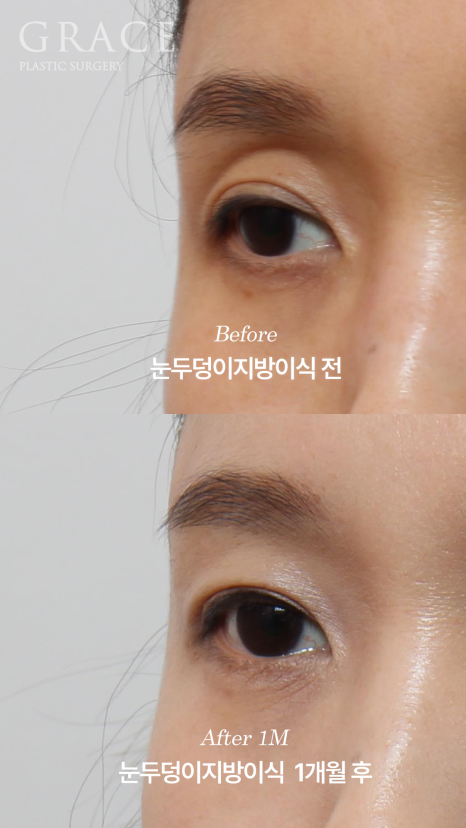
Fat grafting to the upper eyelids is not a procedure in which a large amount is injected, as with fat grafting to the forehead or cheeks. Because the area must be designed with precision within a small space, detailed injection is important. In particular, differences between the left and right sides can easily become noticeable on the eyelids, so it is important to inject only the necessary amount across multiple layers. In practice, precisely correcting deficient areas rather than overfilling them often leads to a more natural result.
Some people also consider fillers to improve sunken upper eyelids. Fillers can be administered relatively simply and have the advantage of a short recovery period. However, because the eyelid skin is very thin, there is a possibility that the filler may show through or that its edges may become visible. In contrast, orbital fat grafting uses the patient’s own fat, so there is less sensation of a foreign body, and after the grafted fat has stabilized, it tends to remain for a relatively long period.
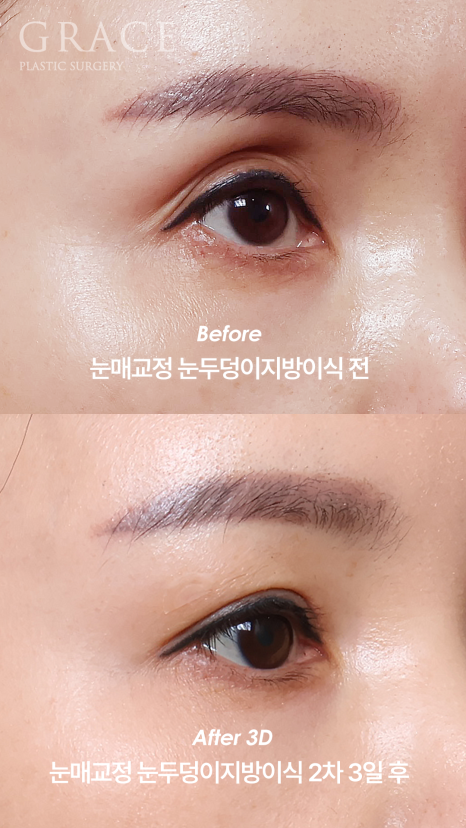
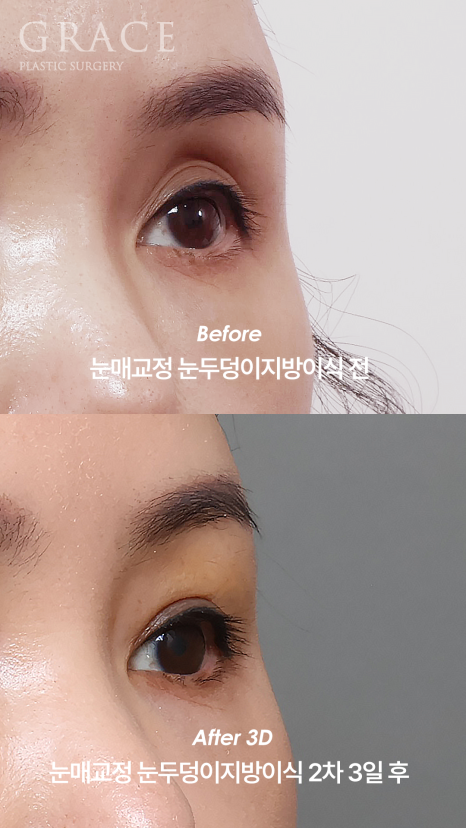
The duration of the results from orbital fat grafting is also a point many people are curious about. After grafting, some of the fat is absorbed while some of it becomes established in the treated area. In general, stabilization of the graft is reached around three months, and the fat that remains in place afterward tends to last for a relatively long time. However, differences may occur depending on an individual’s constitution, lifestyle, and fat survival rate. Recovery varies from person to person, but in most cases swelling and bruising gradually decrease over several days to about one week. Upper-eyelid fat grafting is often performed by injecting fat with a thin cannula rather than through an incision, so the concern about scarring is relatively limited. Immediately after the procedure, the area may look somewhat overfilled, but as the swelling subsides and the fat stabilizes over time, the appearance changes to look more natural.
The important point is that orbital fat grafting is not simply a procedure for filling a sunken space. Understanding the anatomical structures of the eyelid—including the orbicularis oculi muscle, orbital septum, orbital fat, and levator aponeurosis—and accurately determining the layer in which the fat should be placed have a significant impact on the result. Even with the same upper-eyelid fat grafting procedure, the naturalness and level of satisfaction may differ depending on where and how the fat is injected. If you are concerned about sunken eyelids, multiple eyelid creases, or a hollow, tired appearance, it is important to have a thorough consultation to determine whether orbital fat grafting that considers the eyelid structure is appropriate, rather than simply taking an approach that increases the amount of fat. The key to upper-eyelid fat grafting is not injecting a large amount, but accurately placing the necessary amount in the correct location. A natural-looking eye area begins with anatomy, not volume.
Phone 02-555-8558
Web https://graceps.kr/
Kakao http://pf.kakao.com/_xjAgxoxh/chat
Address 5F, 623 Gangnam-daero, Seocho-gu, Seoul