The eyes are the first area of the face to draw attention. However, as the upper eyelids begin to look hollow, they can make you appear more tired or older than your actual age. In particular, as more people have recently come to prefer naturally voluminous-looking eyes over simply having or not having double eyelids, interest in eye socket fat grafting has also increased. People considering eye socket fat grafting are generally most curious about two things: how long the results last and the possible side effects. Because the eyelids are an area with very thin skin and frequent movement, simply adding a large amount of fat does not necessarily produce a good result.
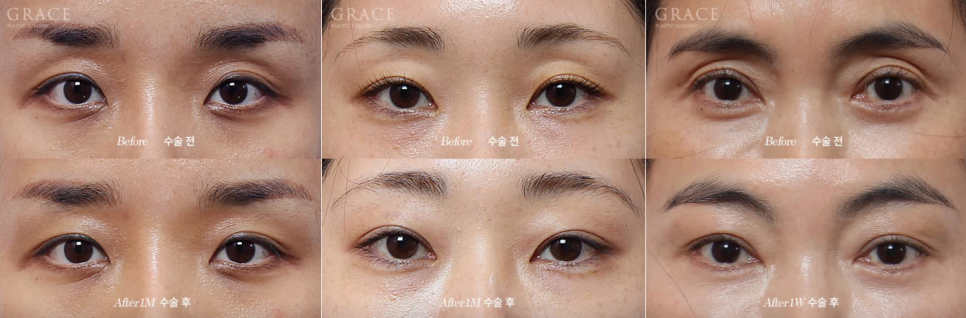
How long do the results of eye socket fat grafting last?
Eye socket fat grafting is a procedure in which your own fat is harvested and transplanted into hollowed upper eyelids. Some of the transplanted fat is absorbed, but the fat that successfully takes can remain for a relatively long time. Generally, fat retention stabilizes around three months after surgery, and the fat that has settled in place tends to remain semi-permanently thereafter. However, the duration can vary depending on factors such as individual constitution, blood circulation, skin thickness, and lifestyle habits. In particular, because the upper eyelids are an area with frequent movement, it is important to inject a carefully determined amount that can settle naturally rather than adding too much from the outset. In some cases, a small amount of secondary touch-up grafting may be performed after three months.
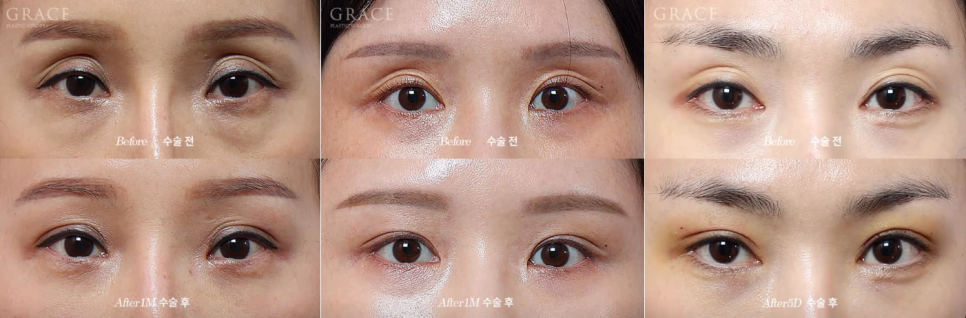
Why do side effects occur after eye socket fat grafting?
When people talk about side effects, they are usually concerned about unevenness, thickened eyelids, asymmetry between the two sides, and excessive volume. In reality, these problems often result more from differences in the injection site and amount than from the fat itself. If a large amount of fat is injected into the shallow layer immediately beneath the eyelid skin, the eyes may look heavy or overly thick, like sausages. Conversely, if too little is injected or a large amount is absorbed, the improvement in volume may be less than expected. Therefore, eye socket fat grafting is not simply a procedure of adding fat; it can be understood as a process that requires an understanding of the eyelid’s anatomical structure and the precise injection of only the amount needed into the correct layer.
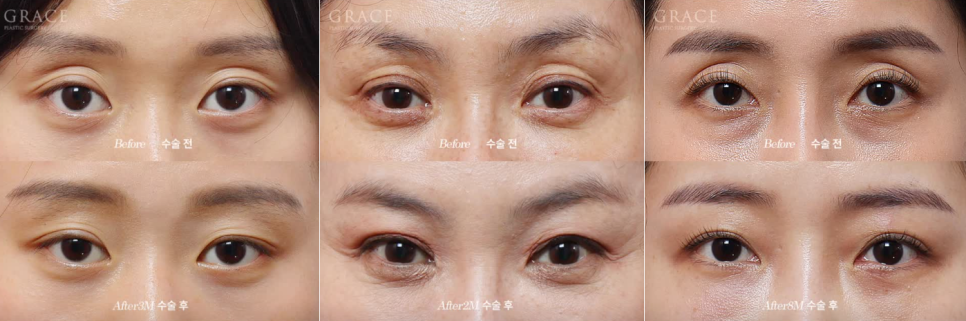
Important factors for a natural result
Ultimately, the key to eye socket fat grafting is restoring natural volume rather than adding a large amount of fat. Since the eyelids move thousands of times every day, what matters is not excessive volume but whether they move naturally when opening and closing the eyes. Using refined fresh fat rather than frozen fat, and injecting it in small amounts divided across multiple layers, may help produce a more natural result.
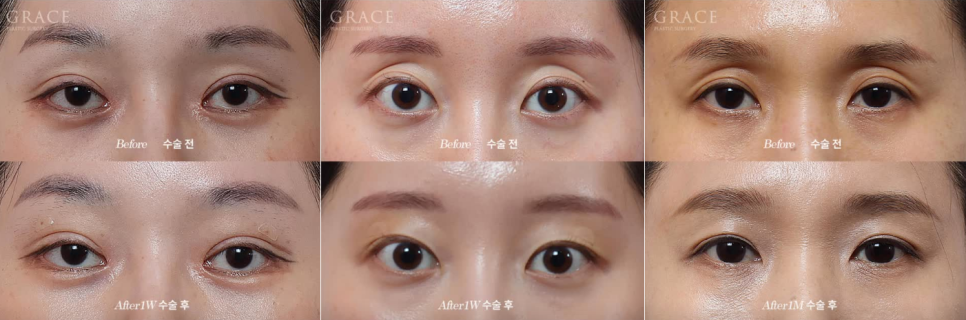
When you may consider eye socket fat grafting
Although the results of eye socket fat grafting may last longer than expected, satisfaction depends less on how long they last than on how naturally the fat settles. Therefore, rather than comparing only costs or fat retention rates, it is important to determine whether the medical professional has sufficient understanding and experience with eyelid anatomy.
𝙋𝙝𝙤𝙣𝙚 02-555-8558
𝙒𝙚𝙗 https://www.graceps.kr
𝙆𝙖𝙠𝙖𝙤 http://pf.kakao.com/_xjAgxoxh/chat
𝘼𝙙𝙙𝙧𝙚𝙨𝙨 5F, 623 Gangnam-daero, Seocho-gu, Seoul
Performed by Plastic Surgeon Dr. Moonseop Choi, Chief Director of 그레이스성형외과 #UpperEyelidFatGrafting #LowerEyelidFatRepositioning #EyelidCorrection #RevisionDoubleEyelidSurgery #LowerEyelidNanoFatGrafting #RejuvenatingEyeSurgery #RevisionEyeSurgery #Ptosis #OrbicularisOculi #OrbitalSeptum #OrbitalFat #LevatorAponeurosis #OrbicularisOculi #OrbitalSeptum #OrbitalFat #EyelidAnatomy ※ Surgical results may vary depending on the individual’s condition, and some side effects, including bleeding, inflammation, and scarring, may occur.