The Before-and-After Results of Revision Surgery and Upper Eyelid Fat Grafting After Failed Initial Ptosis Correction
"I had ptosis correction surgery, but the asymmetry became even more severe.
"Instead of one double-eyelid crease, I developed three overlapping creases, and my upper eyelids also look deeply hollow."
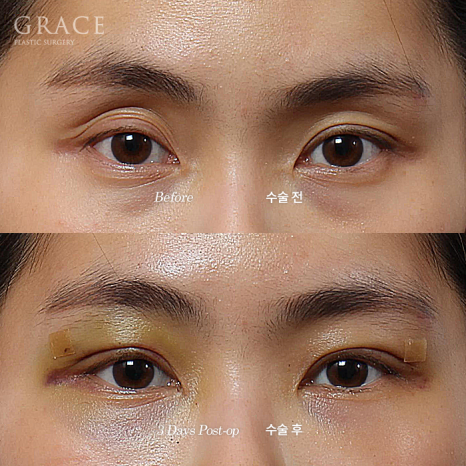
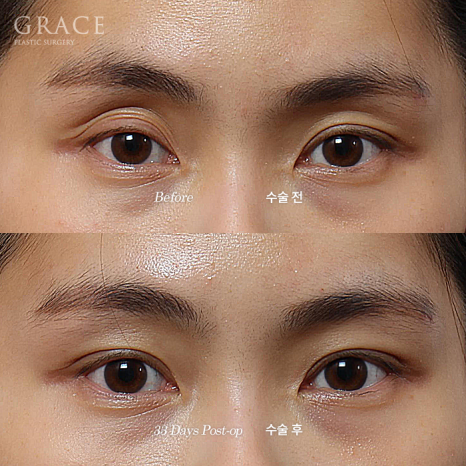
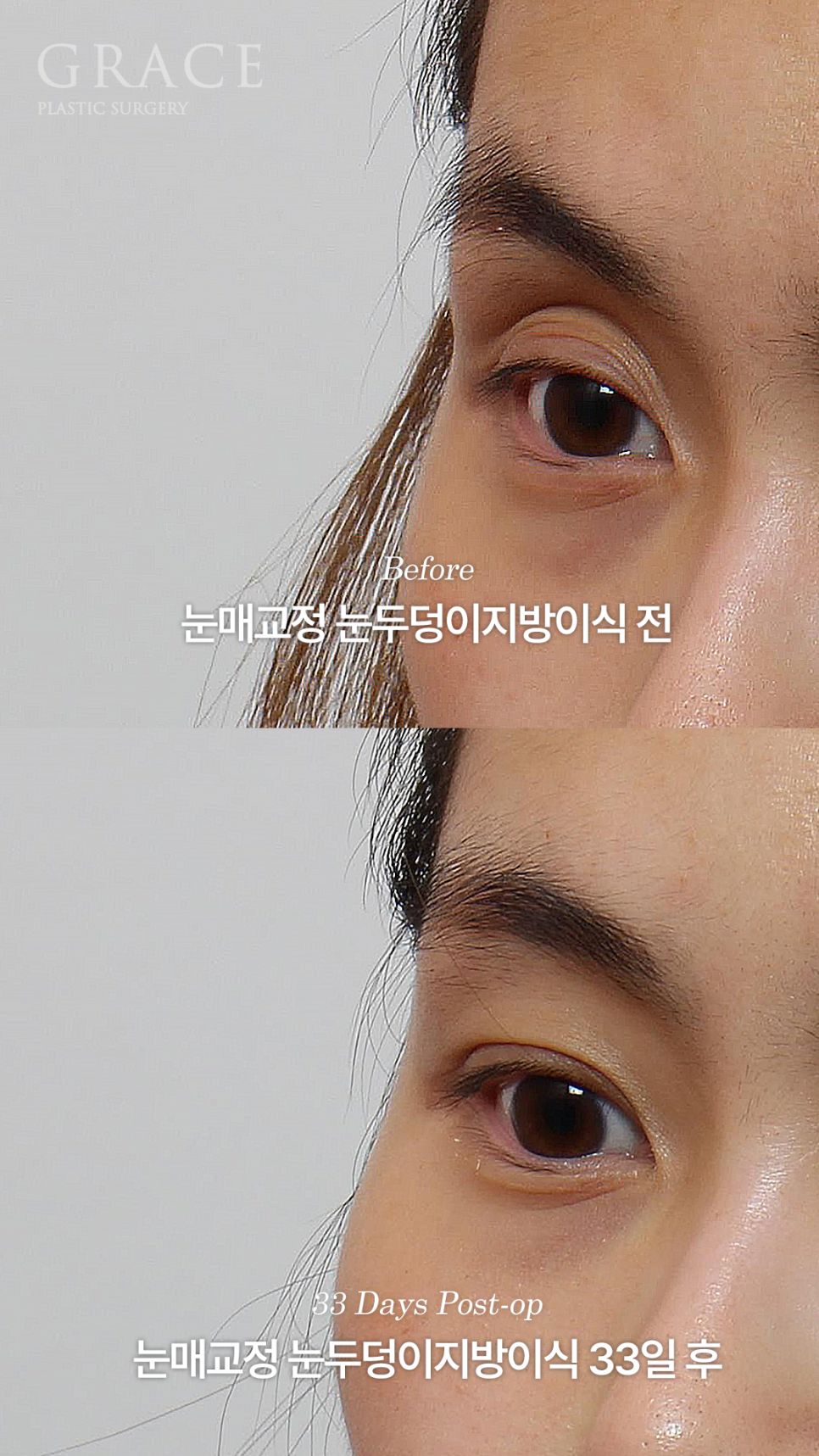
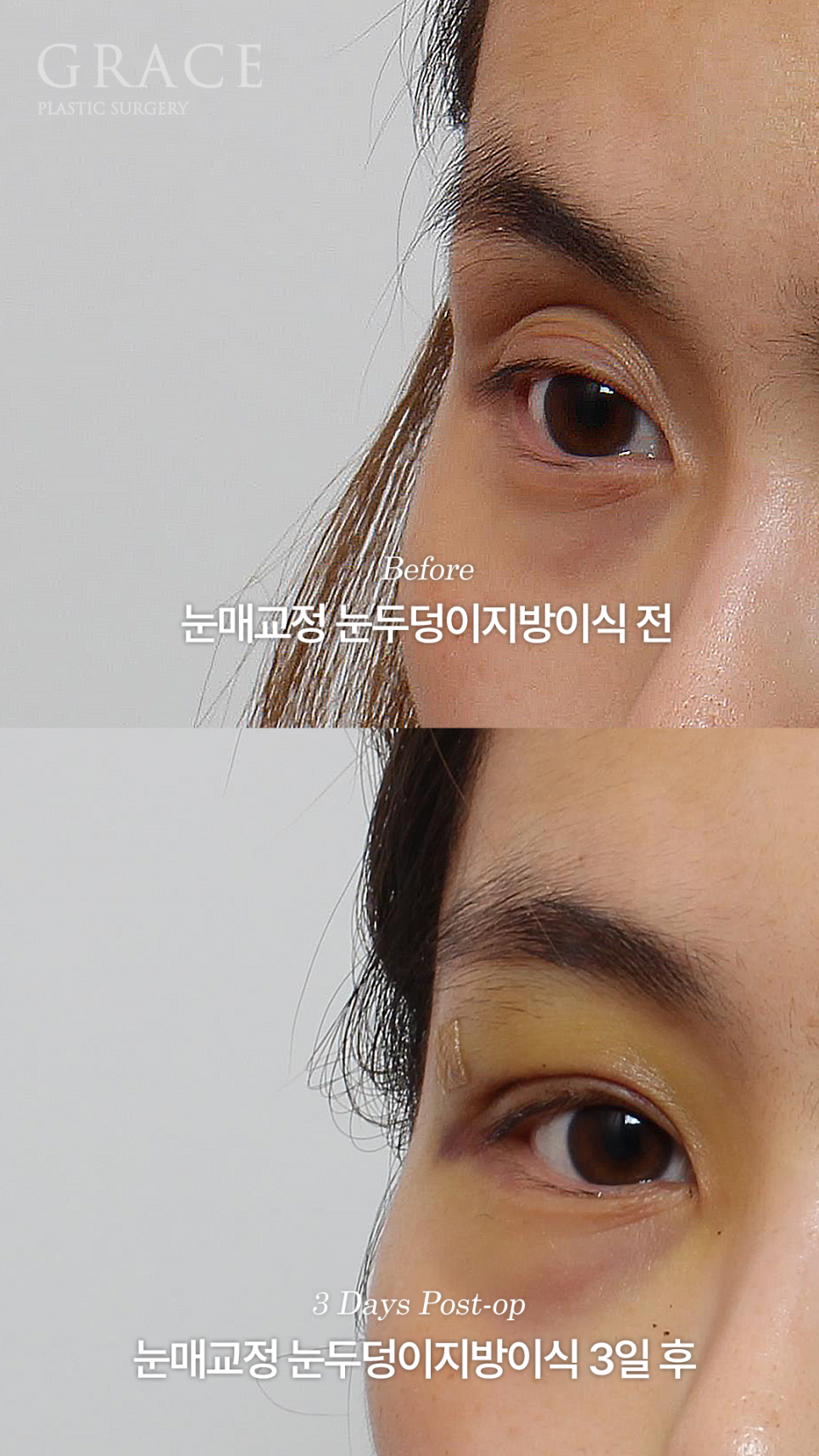
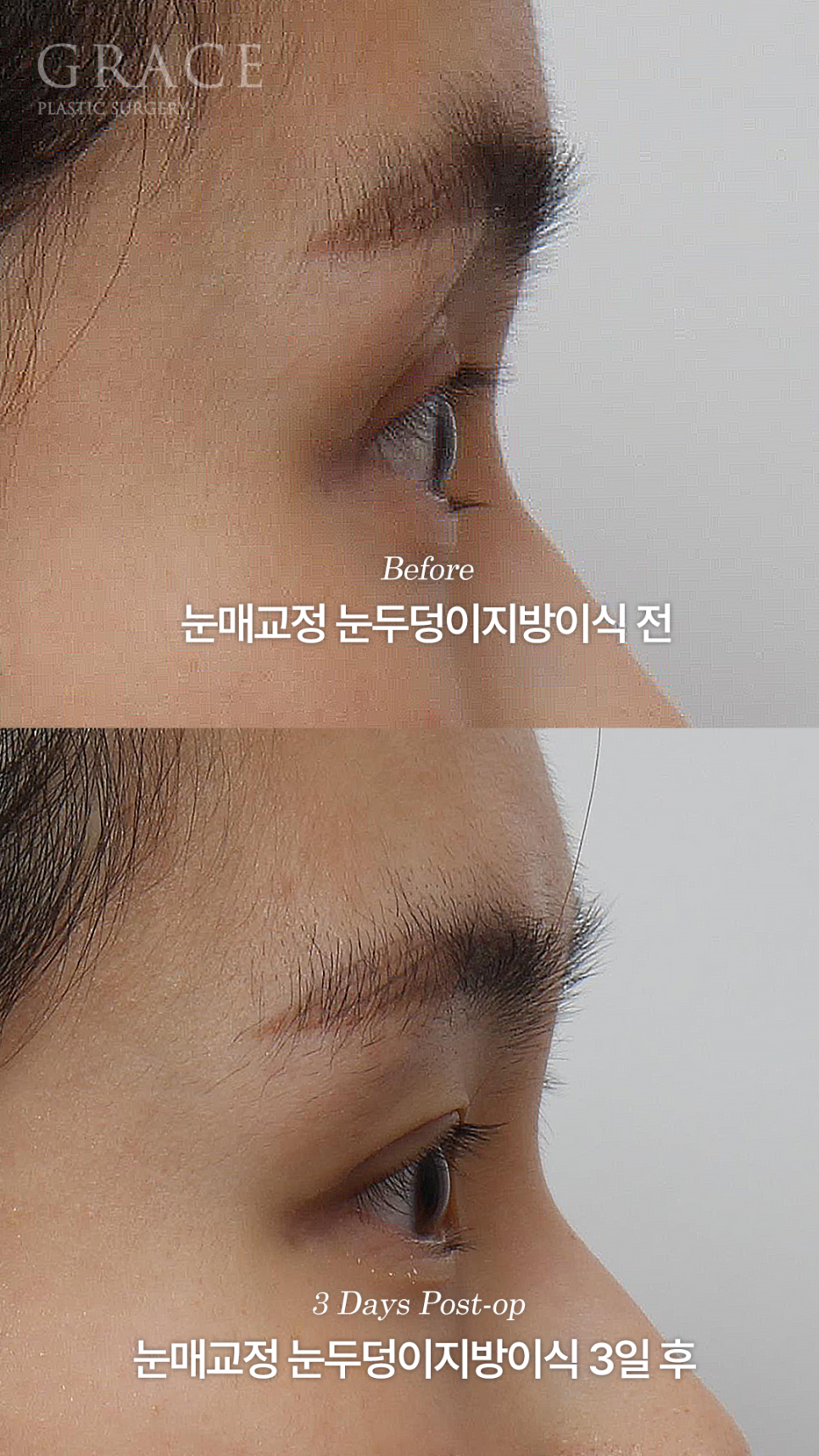
These are concerns we often hear during consultations with people considering revision ptosis correction. In some cases, when the eyelid tissue has become excessively thin or the orbital fat appears insufficient, simply recreating the crease may not produce a satisfactory result. In such cases, accurately analyzing the eye structure and considering upper eyelid fat grafting—or, when necessary, orbital fat grafting—together with revision ptosis correction may help create a more natural appearance. Many people think that hollow eyelids can be corrected by adding a large amount of fat, but in practice, where and how delicately the fat is injected is much more important than simply how much is added. Excessive volume can instead make the eyes look heavy or create an unnatural appearance. In particular, orbital fat grafting requires a thorough understanding of the anatomical structure of the eyelids and the injection of small amounts into the appropriate layers. The movement of the eyes and the crease must both be considered to restore volume naturally. In this case as well, the eyelids appeared hollow after the initial surgery, leaving a tired-looking impression.
Previous image
Next image
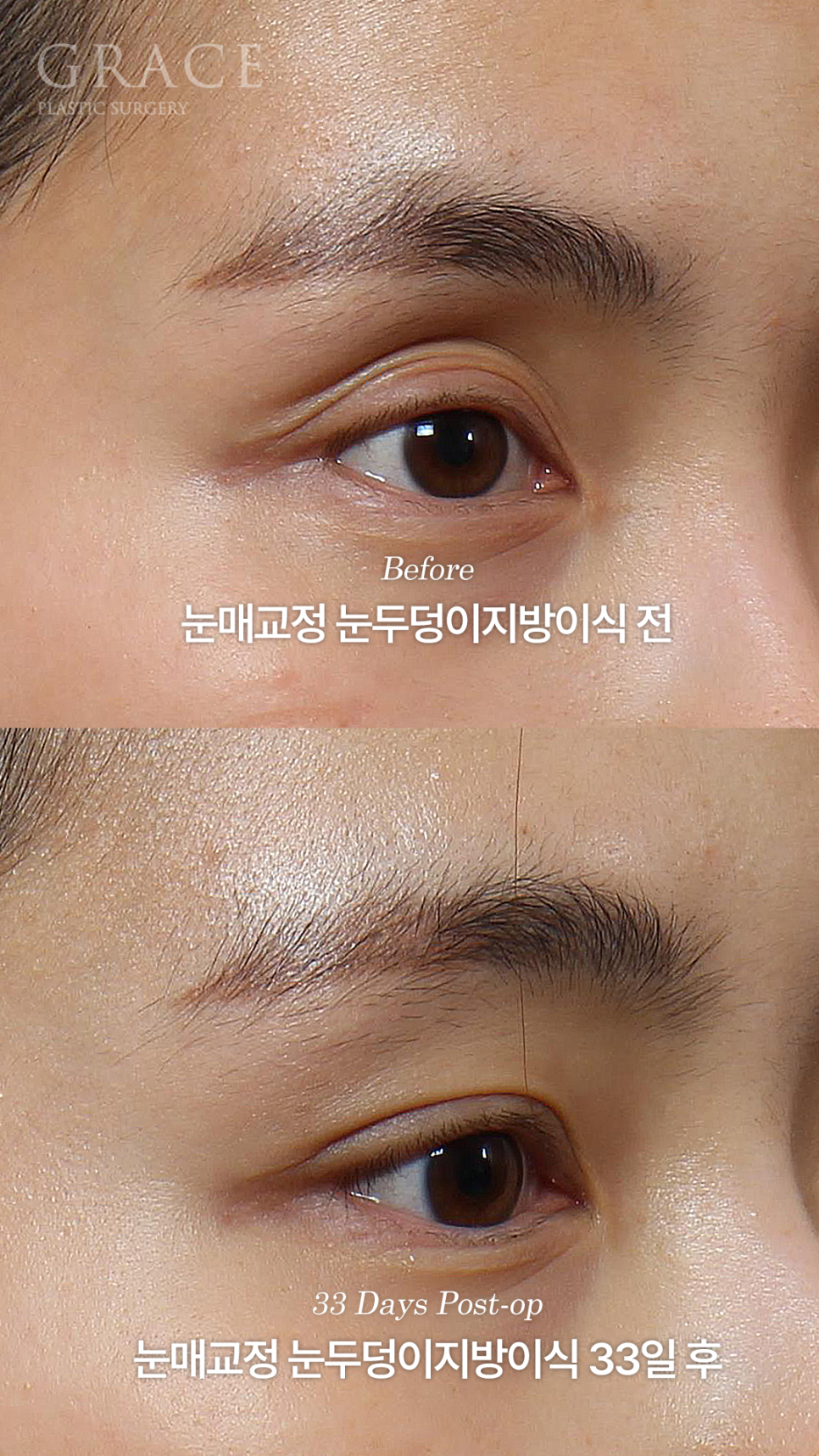
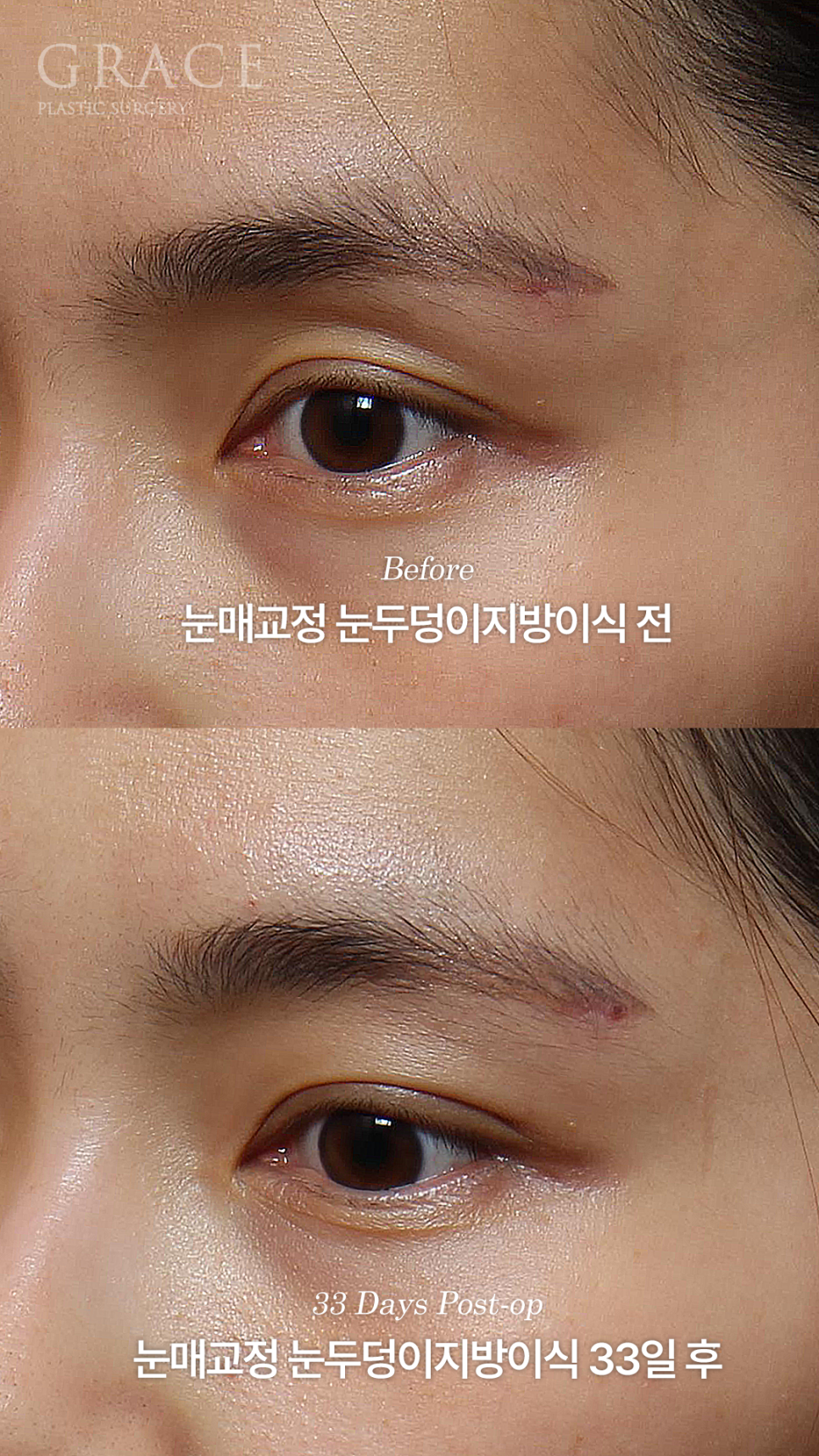
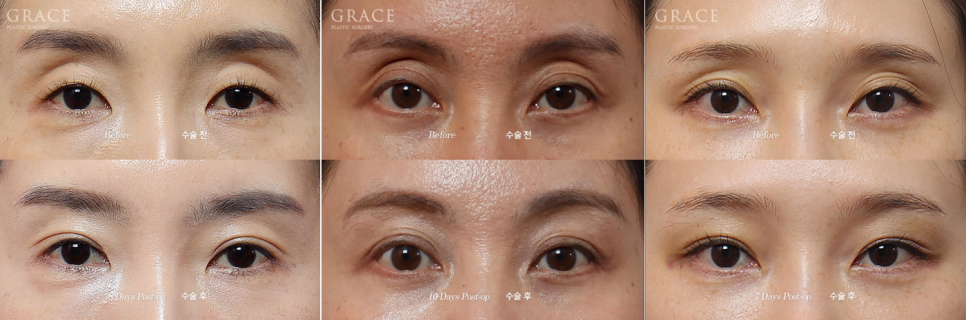
Rather than simply modifying the double-eyelid crease, revision ptosis correction was performed to redesign the eye-opening force and crease, while the insufficient volume was supplemented with upper eyelid fat grafting. After surgery, the previously hollow eyelids became softly filled, making the eyes look more relaxed and the overall impression more natural. Above all, the result was designed to achieve natural-looking volume resembling the patient’s original eyes, rather than excessively full eyelids. Because the eyelids are extremely thin and delicate tissues, their condition can change even after just one surgical procedure.
| Factors Checked During Revision Surgery | Why They Matter |
|---|
| Existing scars (Scar) | We check the location and extent of scars resulting from the initial surgery. |
| Adhesions (Adhesion) | We assess the degree to which the tissues are attached to one another and plan the revision method accordingly. |
| Skin thickness (Skin Thickness) | The surgical method and results may vary depending on whether the skin is thin or thick. |
| Eyelid-opening force (Ptosis Function) | We determine whether ptosis correction is necessary and the degree of correction required. |
| Upper eyelid volume (Fat Volume) | We assess the hollowing to determine whether upper eyelid fat grafting (orbital fat grafting) is needed and how much should be injected. |
| Left-right symmetry (Symmetry) | We analyze the cause of the asymmetry and develop a plan to balance both eyes. |
In some cases, upper eyelid fat grafting alone may be sufficient, while in others, revision ptosis correction may take priority over fat grafting. The safest approach is to determine the exact method after directly evaluating the current condition of the eyes. An unsatisfactory result from the initial surgery does not necessarily mean the same result will be repeated. By accurately analyzing the cause and correcting only the areas that require attention, a more natural and comfortable-looking eye shape may be achieved.
𝑾𝒆𝒃 https://www.graceps.kr
𝑲𝒂𝒌𝒂𝒐 http://pf.kakao.com/_xjAgxoxh/chat
Restoring hollow eye sockets with the proper amount using a custom-made cannula #UpperEyelidFatGrafting #LowerEyelidFatRepositioning #PtosisCorrection #DoubleEyelidRevision #LowerEyelidNanofatGrafting #EyelidSurgery #HollowEyeSockets #UpperEyelidComplications #UpperEyelidFatGrafting #EyeSocketFillers #EyeHollowFillers #CelebrityEyeHollows #Men’sEyeHollows #Middle-AgedAestheticSurgery #GracePlasticSurgery