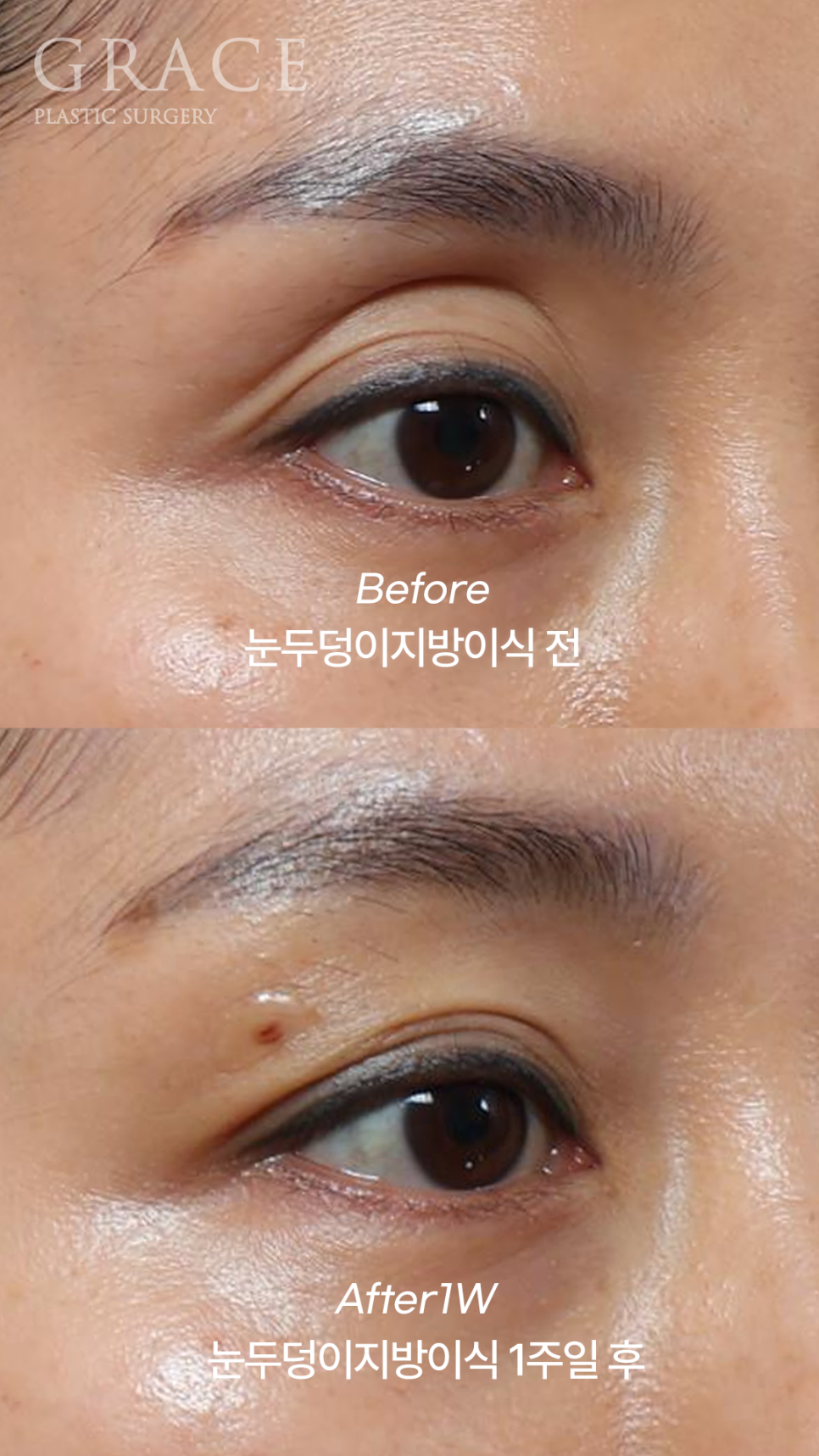
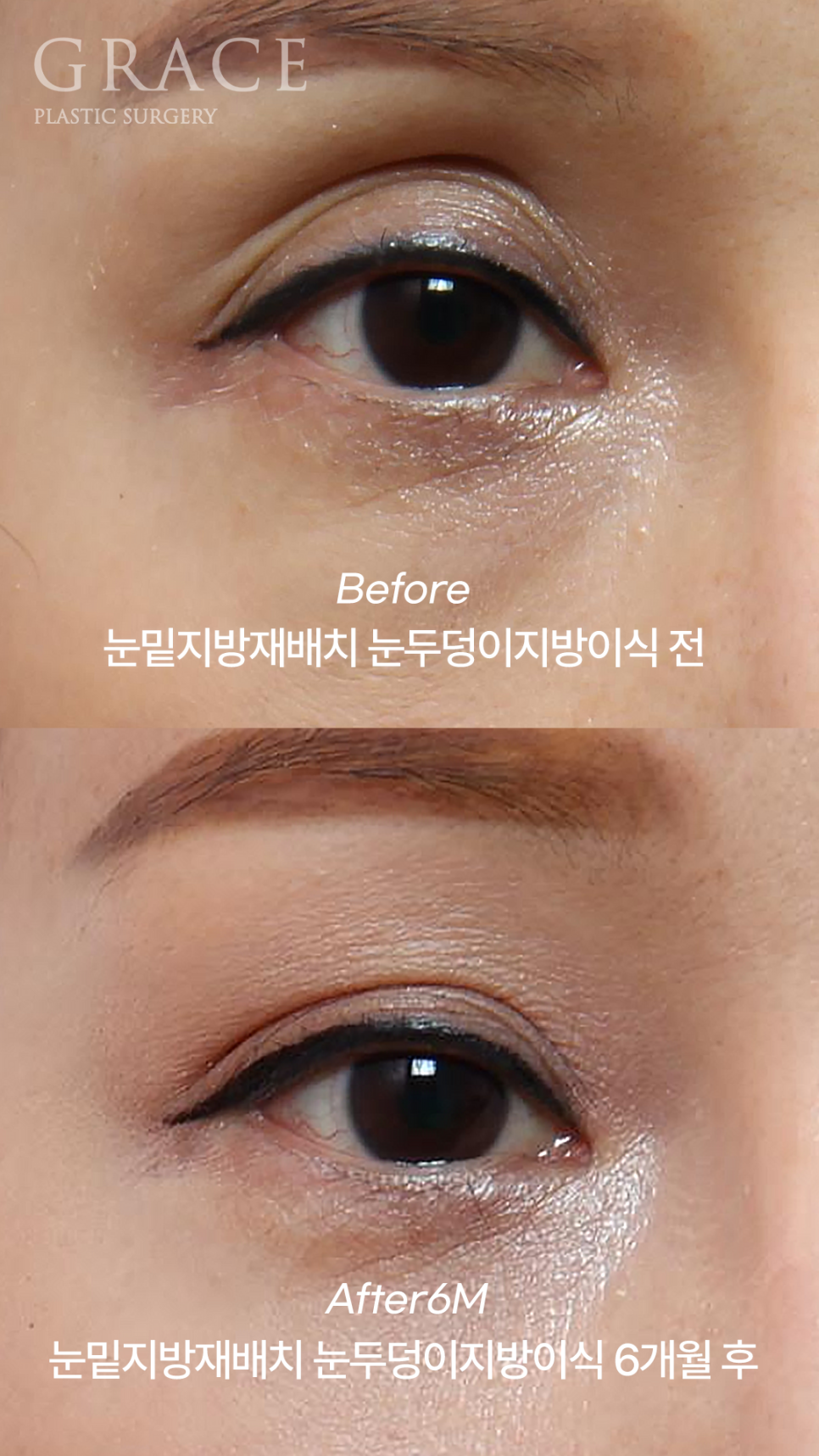
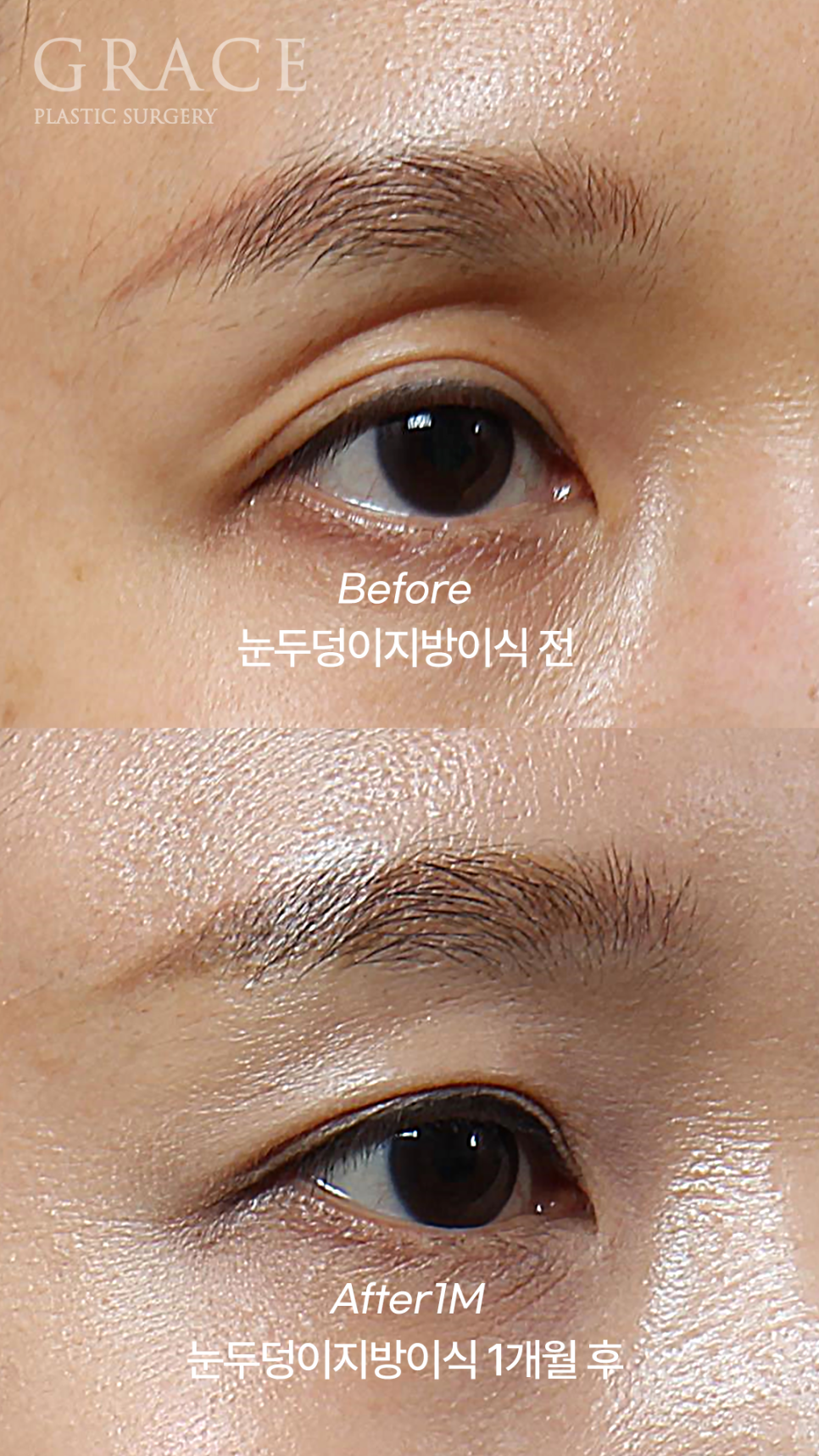
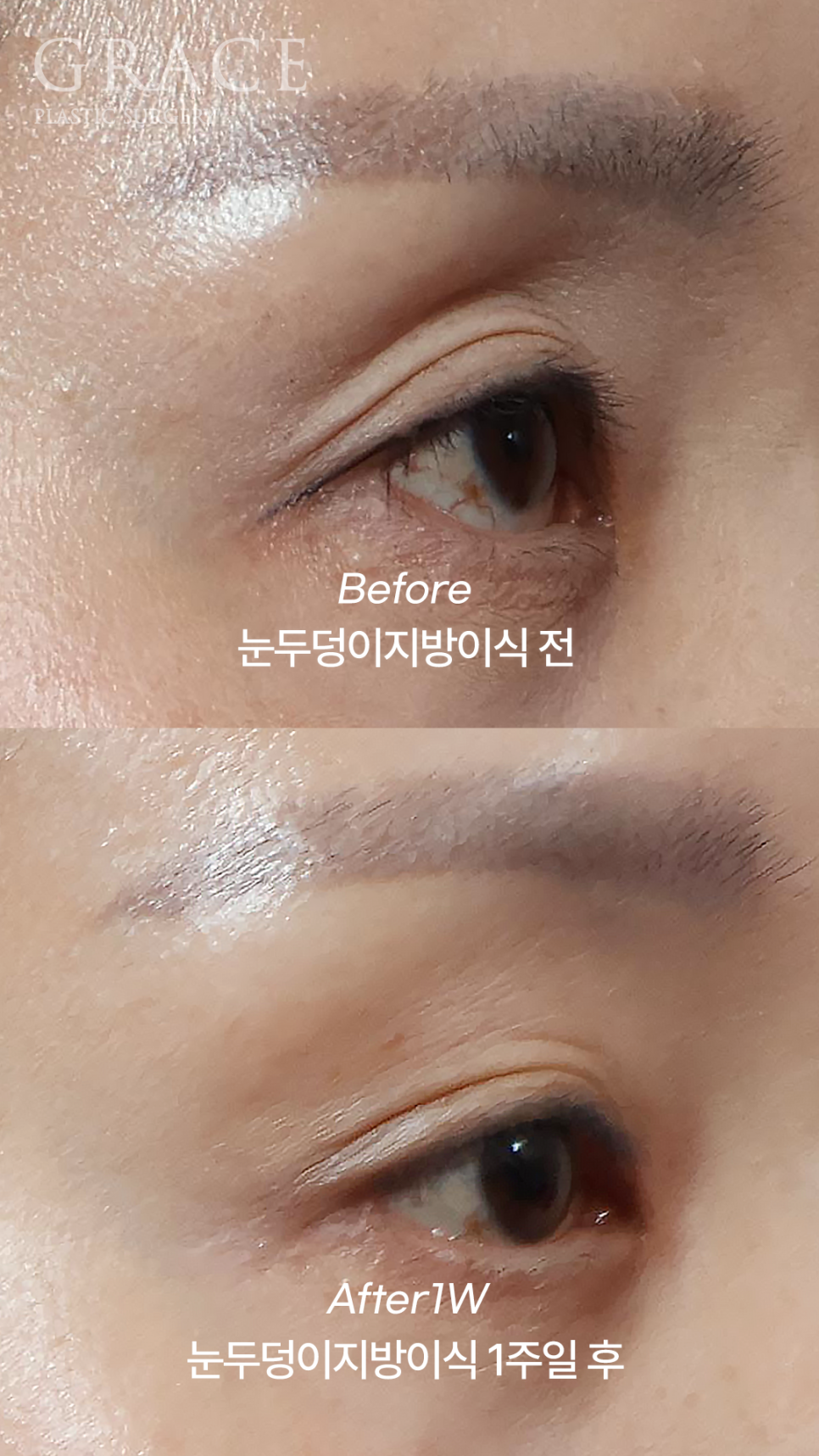
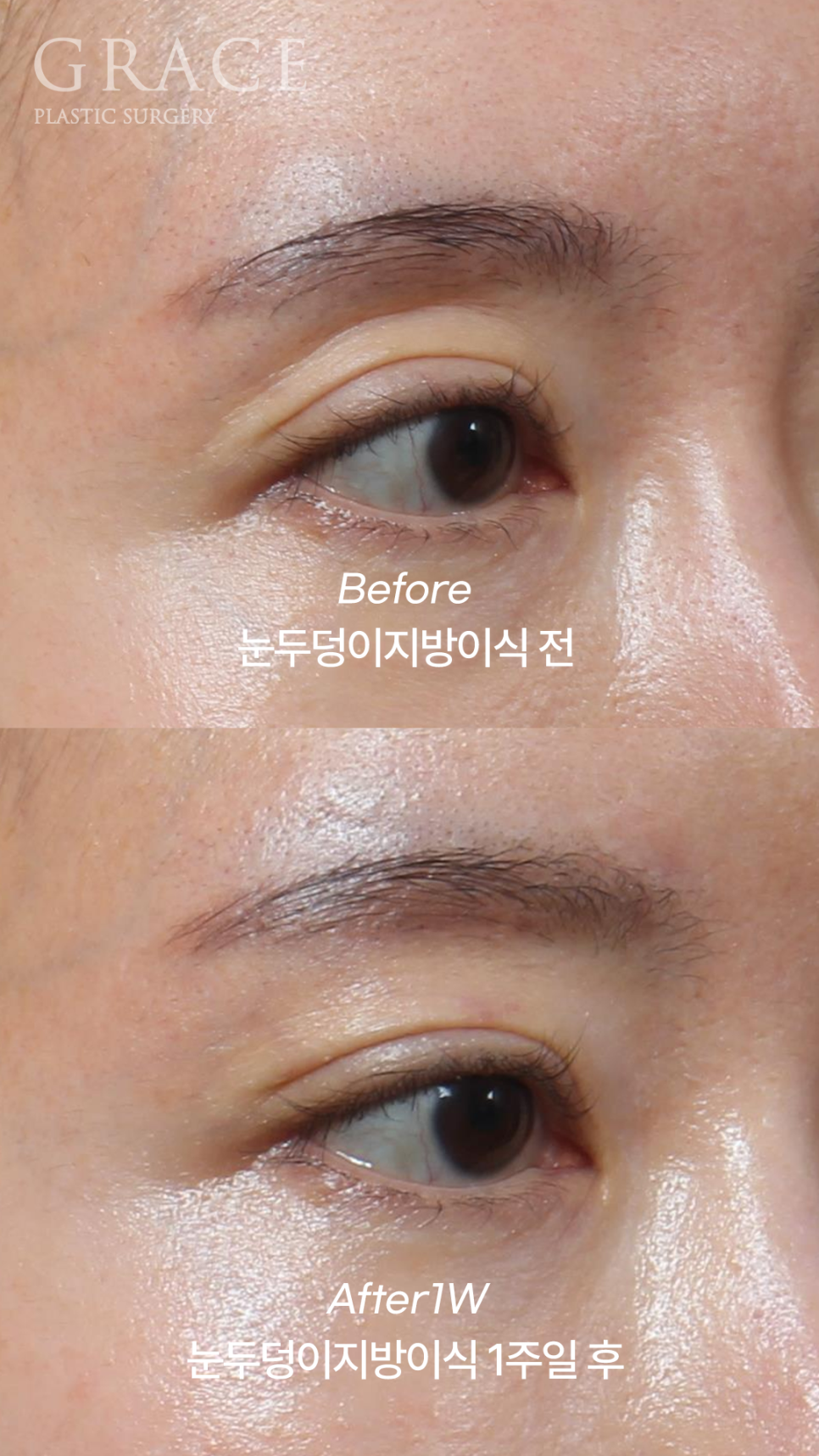
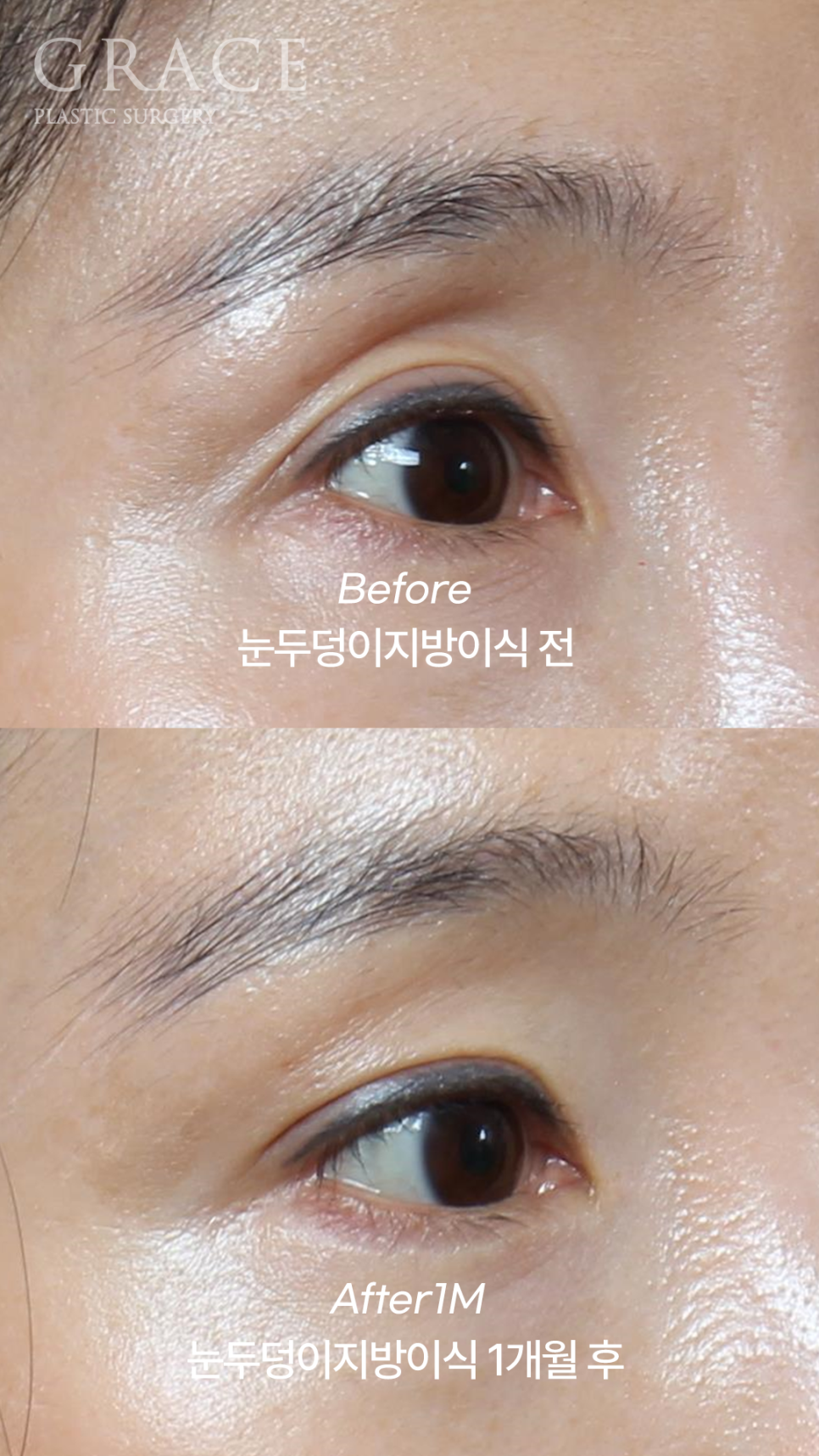
Many people consider upper-eyelid fat grafting because of upper-eyelid hollowing, sunken eyelids, or deep eye hollows. However, even with the same upper-eyelid fat grafting procedure, the results can vary greatly. The reason is that the outcome depends not simply on adding fat, but on how well the anatomical structure of the eyelid is understood and taken into account. The eyelids have the thinnest skin on the face, and beneath it are the orbital septum, orbital fat, blood vessels, nerves, and the muscles that open the eyes, all positioned in a highly complex arrangement. Because this is such a delicate area that even a few millimeters can change the result, fat grafting to improve upper-eyelid hollowing and eye hollows is unlikely to produce satisfactory results if approached in the same way as other areas of the face.
Previous image
Next image
The most widely known side effects of upper-eyelid fat grafting include an uneven appearance, fat clumping, asymmetry, a tight-looking appearance caused by overcorrection, and changes in the crease of the eyelid. Many people think these problems occur because too much fat was injected, but in practice, the layer into which the fat was injected, how it was placed, and which cannula was used often have a greater influence on the result than the amount of fat itself. Because the eyelid skin is very thin, even a small amount of fat concentrated in one area can easily make the surface look uneven. If it is injected into a layer that is too superficial, it may not settle naturally and could create an unnatural appearance of volume.
In this sense, upper-eyelid fat grafting is not simply a procedure to fill in volume. It can be viewed as a process of accurately analyzing the eye structure and positioning fat according to each person’s anatomy. Therefore, the approach should differ for people with severe upper-eyelid hollowing, deep eye hollows, naturally sunken upper eyelids, or fat loss caused by aging. This is not a procedure in which injecting the same amount of fat in the same way produces the same result for everyone.
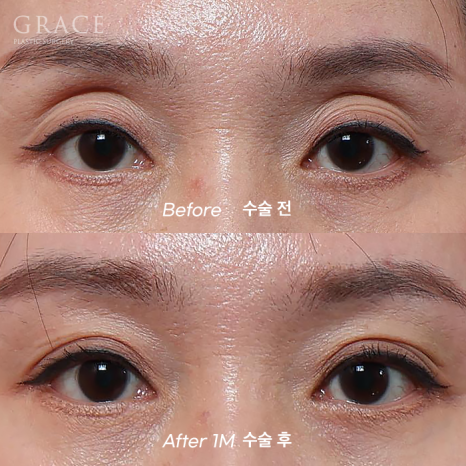
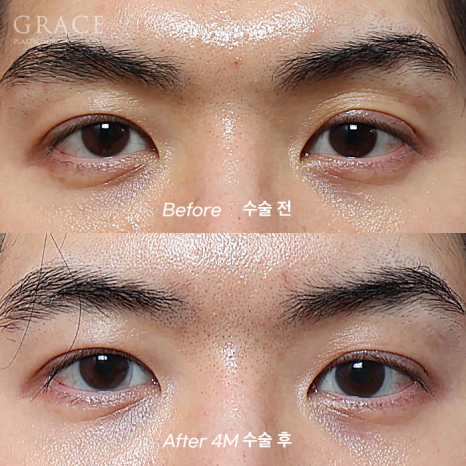
At Grace Plastic Surgery, we began by reconsidering the cannula itself in order to reduce these differences. Rather than using a standard fat-grafting cannula as-is, we have continuously improved and customized it based on actual surgical experience for the narrow and delicate space of the eyelid. The diameter, length, and tip shape of the cannula were all considered in relation to the eyelid structure so that the fat could be finely distributed through the necessary layers instead of being pushed into one area. These may seem like small differences, but such details can help create a natural result and are also important factors in reducing the possibility of side effects.
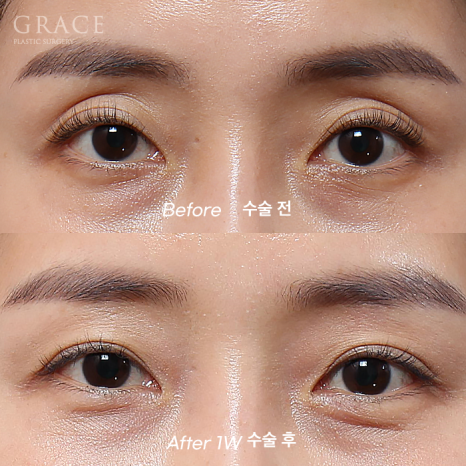
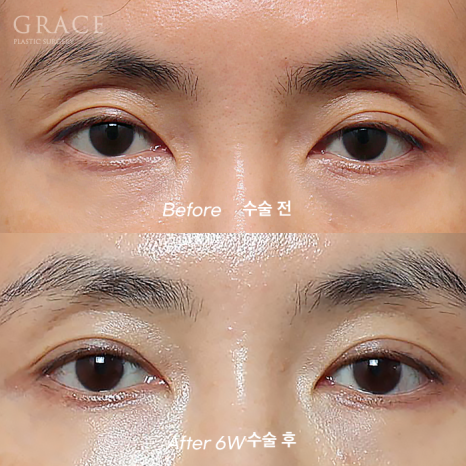
Grace Plastic Surgery also uses purified fresh fat rather than frozen fat, and performs the procedure by dividing the fat into very small amounts and injecting it over multiple passes while taking the eyelid structure into consideration. This is because distributing small amounts across the areas that need them, rather than injecting a large amount at once, may reduce the likelihood of the fat clumping in one place and may help create more natural volume. Each person’s skin thickness, amount of orbital fat, location of hollowing, and degree of asymmetry are different. Therefore, it is important to analyze each individual’s eye structure and create a customized plan rather than performing the procedure according to a single formula. Not everyone with upper-eyelid hollowing needs only fat grafting. In some cases, the force used to open the eyes may be weak, making eyelid-opening correction necessary as well, while in other cases, fat grafting alone may provide sufficient improvement. Because failing to accurately distinguish between these differences can lead to an appearance that differs from the expected result, an anatomical diagnostic process before surgery is very important.
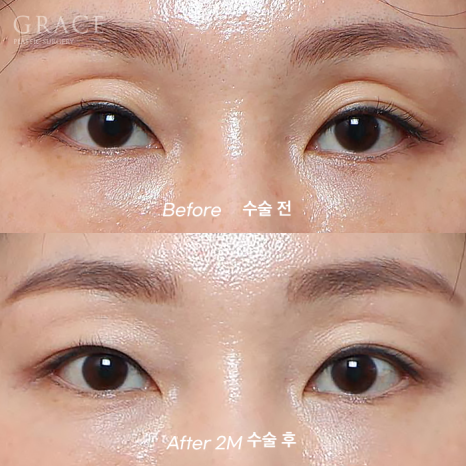
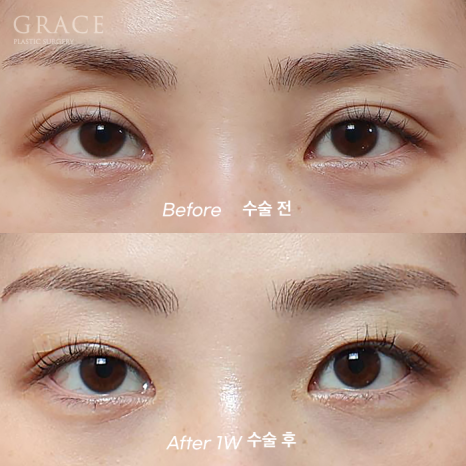
The goal of upper-eyelid fat grafting is not simply to create volume, but to restore a natural appearance that looks like your original eyes. For this reason, Grace Plastic Surgery places greater importance on the injection layer selected through an understanding of the anatomical structure, customized cannulas, micro-distributed injections, and individualized design than on the amount of fat itself. Upper-eyelid hollowing, sunken eyelids, and deep eye hollows are areas where even small changes can significantly alter one’s impression. Therefore, more than simply the technique of adding fat, an understanding of eye anatomy and delicate surgical skills can be important factors that determine the result.
Medical Advertising Information
※ This post was written for the purpose of providing medical information.
※ Surgical results may vary depending on an individual’s eye structure, tissue condition, and recovery process.
※ All surgeries and procedures may involve side effects such as bleeding, infection, swelling, bruising, asymmetry, differences in the rate of fat absorption, and the need for revision surgery. Please make a decision only after having a thorough consultation with a medical professional.