If you are considering upper eyelid fat grafting, make sure you know this first.
The concerns of people preparing for upper eyelid fat grafting are usually similar.
Is it okay to put fat around the eyes?
Will it become uneven?
What if the fat does not take and is all absorbed?
Could my eyes end up looking more closed-in?
The upper eyelid is a particularly delicate area that requires a very careful approach, even among facial fat grafting procedures.
That is why Grace Plastic Surgery does not view this as simply a procedure to fill hollow areas with fat.
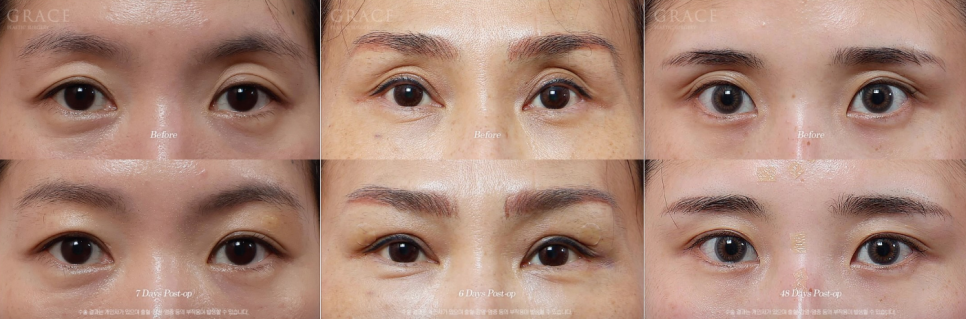
- We do not use frozen fat for the upper eyelids
This is one of the important principles of upper eyelid fat grafting at Grace Plastic Surgery. Because the skin around the eyes is thin and even very small differences in volume can change the appearance, we collect fresh fat each time upper eyelid fat grafting is performed. In other words, we do not freeze and store fat remaining after the first procedure and then reinject it into the upper eyelids. This may feel somewhat inconvenient, since fat must be collected again even when a second fat grafting procedure is needed. Nevertheless, we maintain this principle for fat used around the eyes.
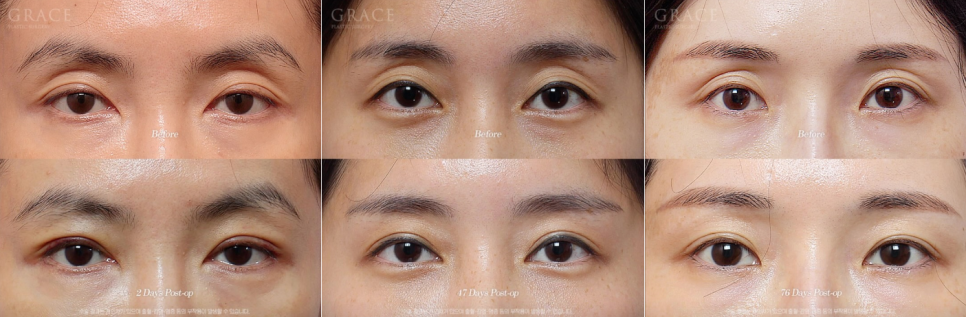
- We look not only at the upper eyelids but also at the overall appearance of the eyes
Some people are surprised when the doctor suddenly brings up eyelid correction during a consultation. However, eyelid correction is not recommended for everyone. We check whether the hollow appearance of the upper eyelids is caused simply by a lack of fat, or whether the force used to open the eyes and the existing double-eyelid crease are also contributing factors. Inside the eyelids, the orbicularis oculi muscle, orbital septum, orbital fat, and structures involved in opening the eyes are closely positioned. Therefore, rather than looking only at the hollowing of the eye socket and adding fat, it is important to assess the appearance when the eyes are open, differences between the two sides, the double-eyelid crease, and the strength used to open the eyes. If it is not necessary, fat grafting alone can be performed. If we determine that eyelid correction may be helpful depending on the individual condition of the eyes, we will also explain this during the consultation.
This is because we believe that performing upper eyelid fat grafting well requires looking beyond the fat and understanding the eyes as a whole.
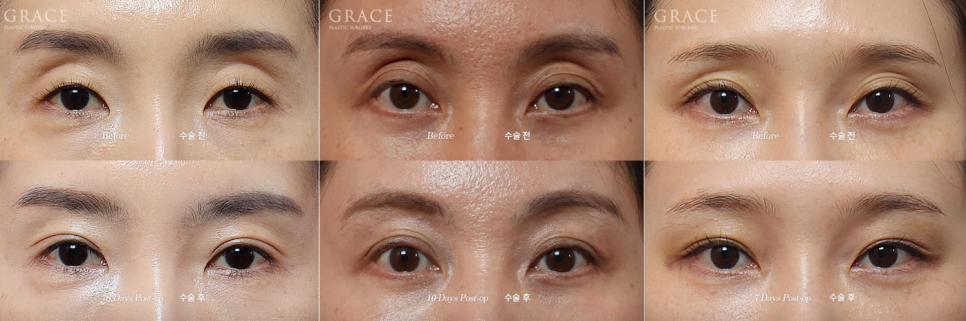
- The procedure itself is not as long as you might expect
Upper eyelid fat grafting is performed under sedation anesthesia, and the procedure takes approximately 30 minutes. However, the actual surgical plan may vary depending on the degree of hollowing in the upper eyelids, asymmetry between the two sides, whether you have previously had double-eyelid surgery, and the strength used to open the eyes. In particular, if you have previously undergone double-eyelid surgery or eyelid correction, it is important to first assess the current condition of the eyelids.
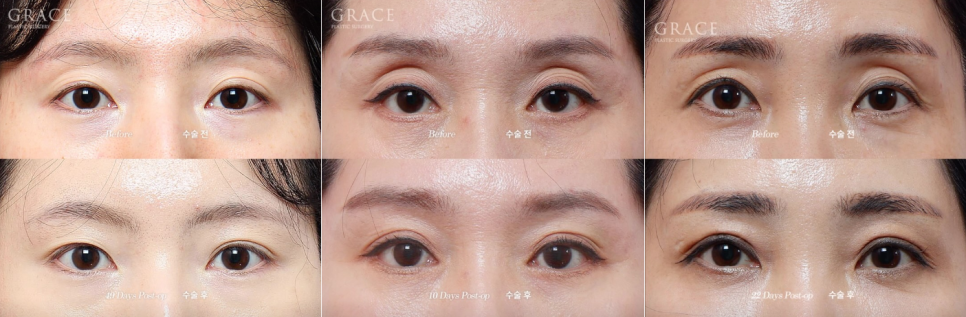
- Is this a procedure that is definitely finished after just one session?
It is also good to know this in advance. Fat grafting is not a procedure in which all of the grafted fat remains exactly as it was, and there are individual differences in how much fat takes and how much is absorbed. Therefore, if a little more volume is considered necessary after checking the progress following the first fat grafting procedure, a second fat grafting procedure may be considered. Since Grace Plastic Surgery does not use frozen fat for the upper eyelids, a second fat grafting procedure also involves collecting fresh fat. The costs for the first upper eyelid fat grafting procedure and a second procedure performed within three months are currently different, so we recommend receiving accurate pricing information through the consultation channel.
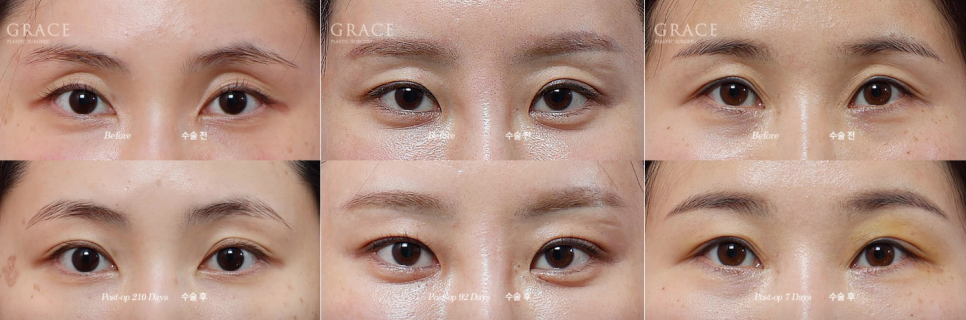
- Supplements before surgery are more important than you might think
If your surgery date has been scheduled, please also check the health supplements you are currently taking in advance. You must inform the medical staff before surgery if you are taking supplements such as vitamins, omega-3, red ginseng, lutein, Ginkgo biloba products, milk thistle, magnesium, or olive oil. To help ensure a safe procedure, Grace Plastic Surgery advises patients to stop taking these supplements beginning two weeks before surgery. If you are taking prescription medication, do not stop taking it on your own; be sure to consult your medical team first.
Upper eyelid fat grafting may appear to be a simple procedure involving the addition of fat to a small area. In reality, it is a surgery in which it is important to determine where, how much, and by what method to create volume within the thin tissues of the eyelids. That is why Grace Plastic Surgery assesses not only the hollow areas but also the current structure and overall appearance of the eyes. If you are wondering about the cost of upper eyelid fat grafting or
whether fat grafting alone is sufficient for your eyes or eyelid correction is also needed, please receive a consultation based on your current eye condition.
For detailed information about the first and second upper eyelid fat grafting costs, available surgery dates, and more, please contact Grace Plastic Surgery through KakaoTalk consultation.
𝙬𝙚𝙗 https://graceps.kr/
𝙆𝙖𝙠𝙖𝙤 http://pf.kakao.com/_xjAgxoxh/chat
#UpperEyelidFatGrafting #UpperEyelidFatGraftingCost #UpperEyelidFatGraftingPrice #UpperEyelidFatGraftingSpecialist #EyeSocketHollowing #HollowEyelids #EyelidFatGrafting #EyelidCorrection #Ptosis #DoubleEyelidRevision #EyeRevisionSurgery #OrbitalFat #OrbitalSeptum #그레이스성형외과