30s and 40s facelift, even if you're not middle-aged

Interest in lifting procedures has always remained steadily popular, both in the past and today.
As a result, as various lifting procedures have been introduced, clinics also perform different types of lifting while giving them different names depending on the method and effects.
Typical lifting options include simple thread lifting, mini lifting, and facelifting.
Each lifting procedure can vary depending on the patient's age, the degree of skin sagging or thickness, and the amount of fat.
In the past, thread lifting was often performed for people in their 20s with little sagging, thread lifting and mini lifting for people in their 30s when signs of skin aging began, and facelifting for older patients with more severe sagging.
However, recently, regardless of age, there is a growing trend of interest in facelifting among people in their 30s and early 40s who want to prevent skin aging or who are concerned about sagging after previous contouring surgery.
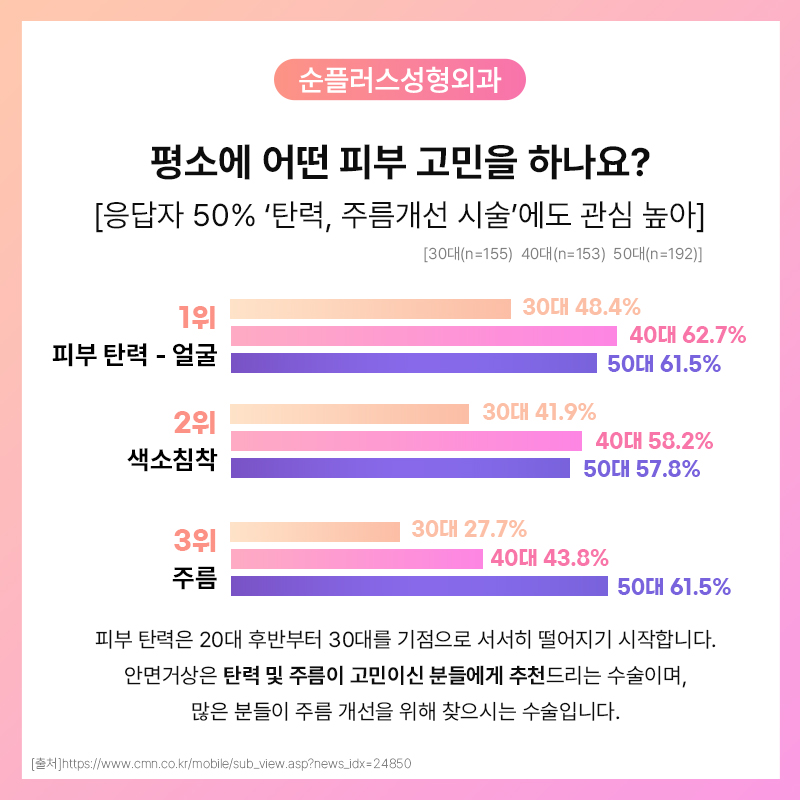
There are quite a few people who underwent contouring surgery at a young age to improve their facial contours of concern.
As time gradually passes, the muscles and SMAS layer sag into the empty space created by shaving the jawbone, and many people in their 30s worry about sagging cheeks and sagging along the jawline.
In such cases, a facelifting procedure that fully identifies the cause of the sagging cheeks and jawline and secures them back to the position they were in before contouring surgery can be a helpful option for improvement.

What is the SMAS layer?
It is a fascial layer that exists between the subcutaneous fat layer and the muscle layer under the facial skin. It is vulnerable to gravity and is one of the main causes of sagging due to aging and other external factors.
A facelift after contouring surgery sufficiently improves the SMAS layer and, unlike previous contouring surgery, can also be expected to produce a facial reduction effect through adequate lifting.
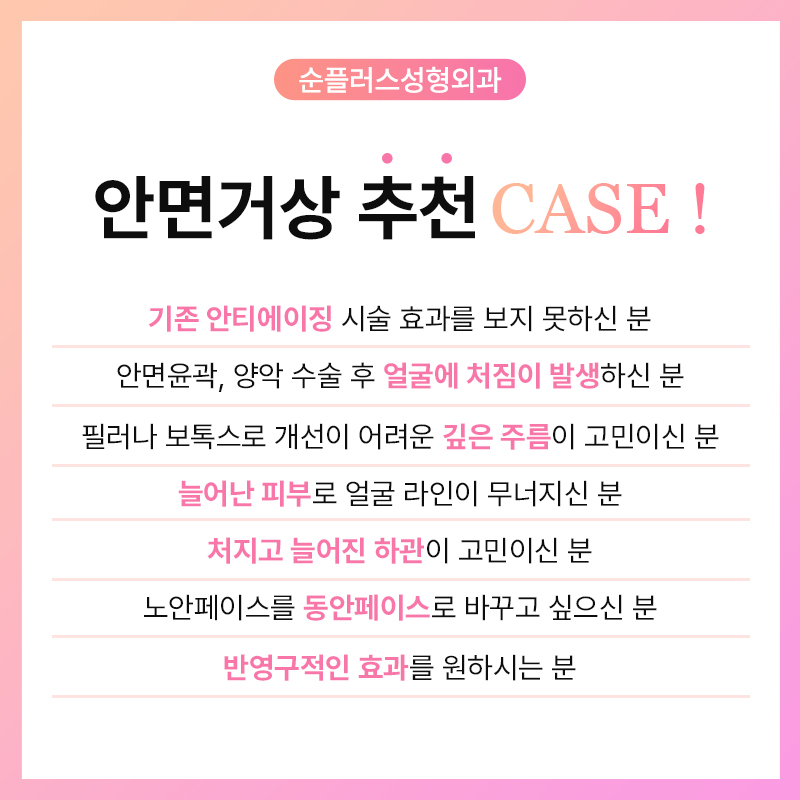
A facelift in your 30s and 40s is recommended for the following people.
People in their 30s and 40s who developed sagging cheeks after cheekbone reduction surgery
People in their 30s and 40s who developed a double chin after double jaw surgery
People concerned about deep wrinkles that are difficult to improve with fillers or Botox
People in their 30s who are concerned about having a tired-looking face
People in their 30s and 40s who are concerned about drooping corners of the mouth after chin surgery
If any of the above applies to you, we recommend receiving a detailed consultation about a facelift in your 30s.
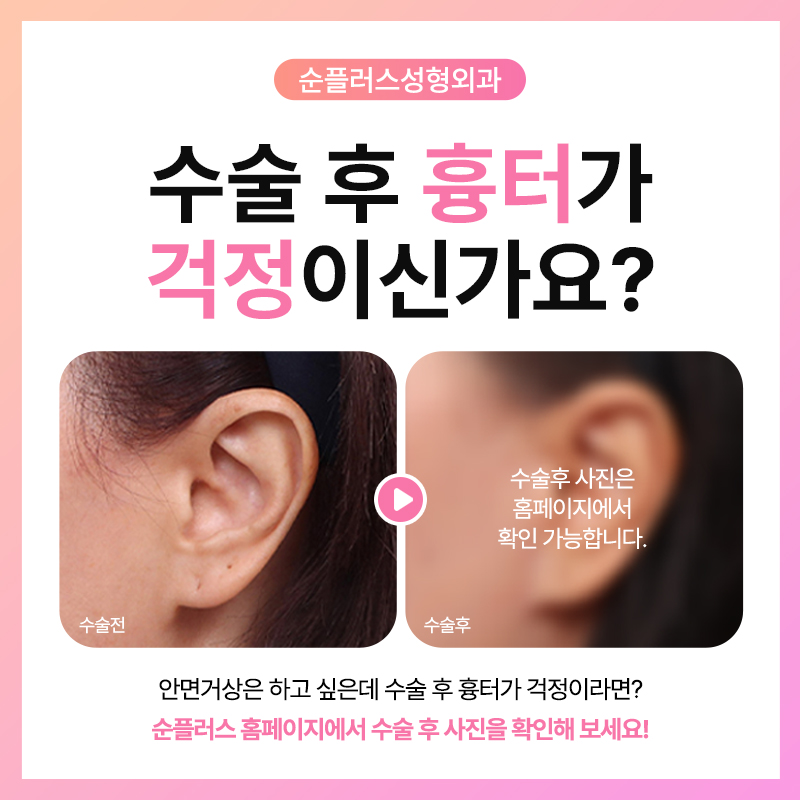
Since people in their 30s and 40s are in the midst of active social and professional lives, they may worry about scars that can occur after a facelift.
The incision is minimized along the crease next to the ear and to the front of the auricle, and the procedure is carried out delicately with the precise suturing skills of medical staff dedicated to facelifts so that scarring and ear shape deformities do not occur.
Depending on each patient's skin condition, degree of sagging, and the extent of muscle formation, everything from the dissection area to the amount of pulling and the suturing method is considered.

Even if you are relatively young, if you are worried because skin sagging and looseness have started rapidly, or if your skin has become loose after previous bone surgery, we encourage you to receive a more detailed consultation about a facelift.
A careful and thorough diagnosis and consultation are conducted by a plastic surgeon specializing in lifting procedures.
Sunplus Plastic Surgery, specializing in lifting and anti-aging, is located near Exit 4 of Sinsa Station.