Of course, the saying that skin is something you are born with is true, but the signs of skin aging that appear as we get older are something anyone will experience. That is why, as people get older, especially those in their 50s and 60s, they begin to consider and look into various lifting procedures.
If you look at skin condition by age group,
most people in their 20s generally maintain firmness, but partial loss of elasticity and wrinkles begin to appear little by little, and as facial fat descends, a simple lifting procedure may be needed.
In their 30s, skin elasticity around the jawline decreases, the jowls sag, and overall skin elasticity also declines, leading to partial wrinkles and sagging skin.
From the 40s onward, when aging becomes more visible, and especially in the 50s and 60s, overall facial skin elasticity declines, sagging increases, and the face from the forehead to the jawline collapses, making this a time when broad, overall lifting is needed.

Because people of various age groups may prefer lifting procedures, a wide range of lifting products has also been released. Among the many lifting options, in order to carry out the procedure with the lifting method that is appropriate for the individual, it is important to visit a specialized hospital and have a thorough consultation with a plastic surgery specialist.
For people in their 50s and 60s whose skin aging has progressed considerably, a facelift can often be recommended.
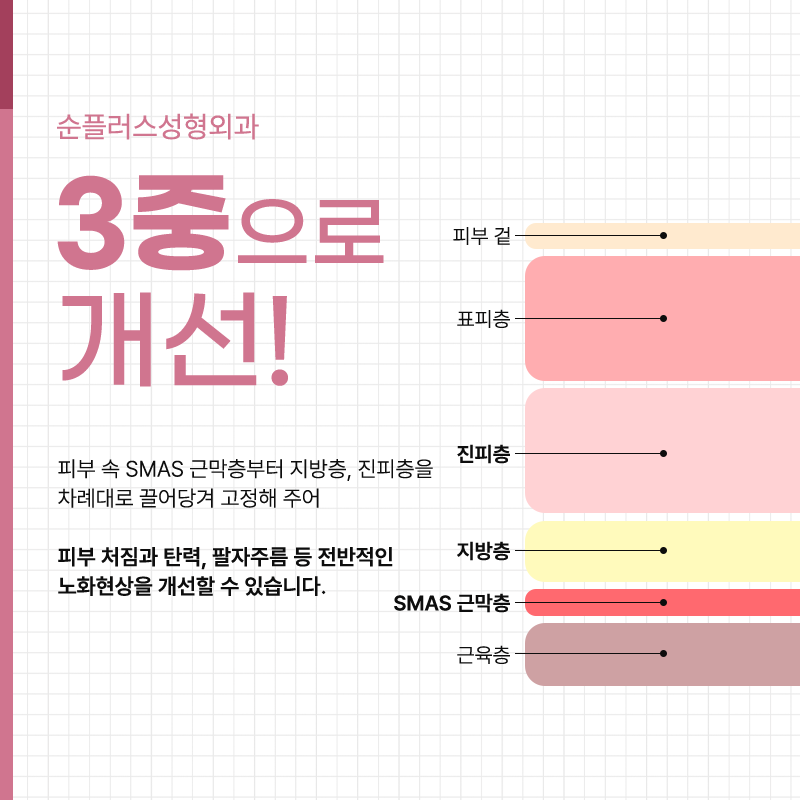
The reason facelift surgery is recommended as a lifting procedure for people in their 50s and 60s is that when the fascial layer (the SMAS layer), which supports the skin fat and dermis above the muscles, collapses, the entire face also collapses. As people get older, if the SMAS layer is not tightened, it can be difficult to restore elasticity.
Therefore, through a facelift that tightens even the deeper SMAS layer,
the fascial layer, fat layer, and dermal layer must be pulled and fixed one by one to improve signs of skin aging such as sagging, loss of elasticity, and wrinkles.
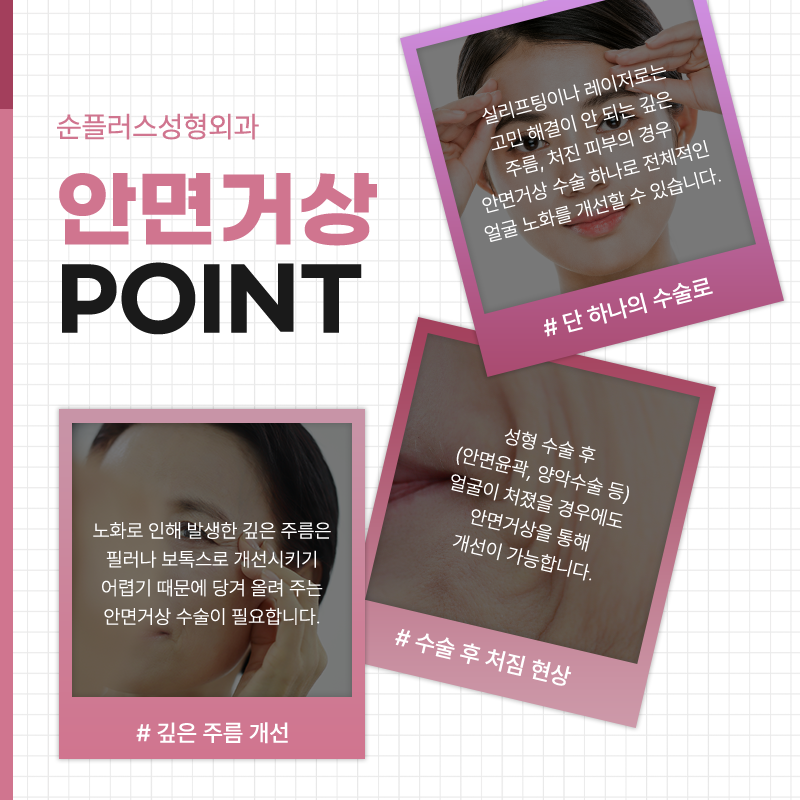
An important point in facelift surgery may be dissection and fixation.
At a lifting-specialized clinic near Sinsa Station, precise and extensive dissection of the SMAS layer, fat layer, and muscle layer allows the loosened skin structure to be lifted and fixed all at once in three layers, making it possible to expect a highly polished skin improvement that does not become distorted.
With a more precise and delicate plan, the lifting procedure is performed while carefully checking the patient’s nerves, muscles, and blood vessels, and a systematic and safe facelift is carried out with the patient’s safety as the top priority.
Depending on the patient’s age, skin condition, muscle volume, and more, a one-on-one customized design and plan are applied. By protecting the patient’s nerves and blood vessels, the likelihood of side effects is lowered, and the masseter retaining ligament is tightened to increase satisfaction with the lifting effect.
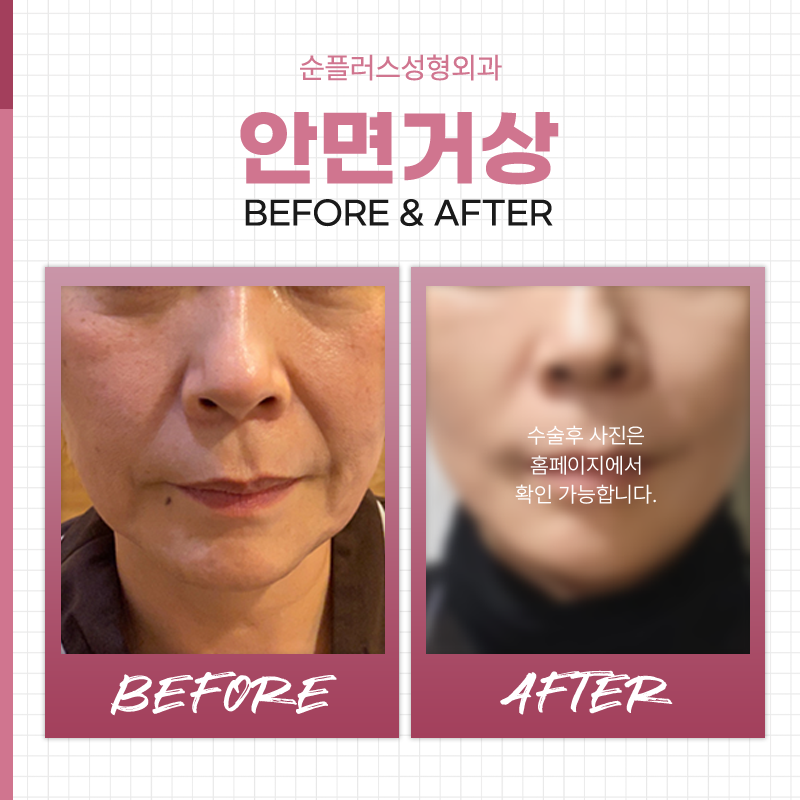
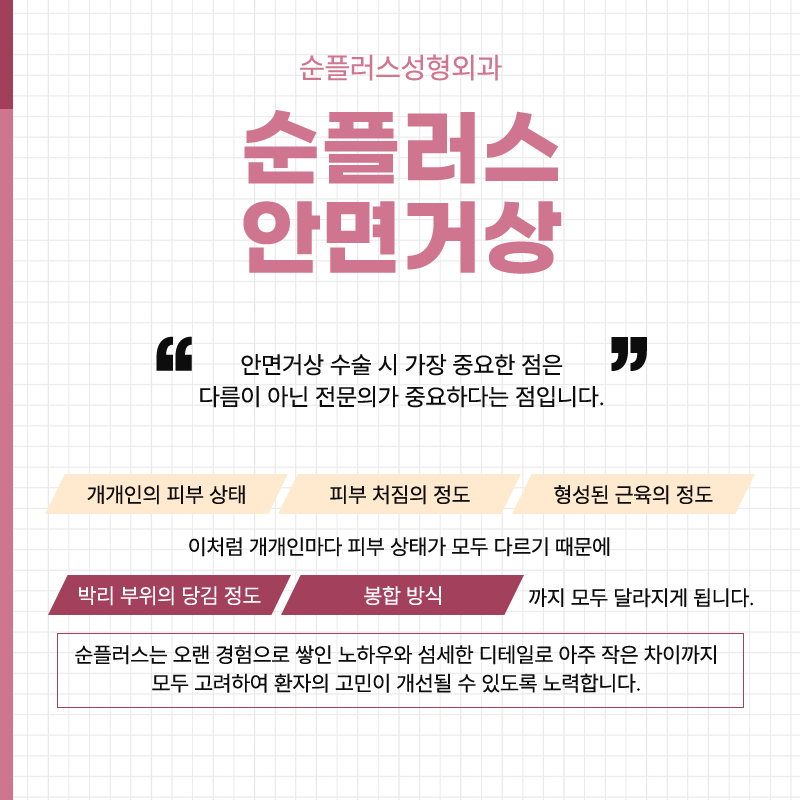
Because skin condition varies greatly from person to person, each detail, such as the dissection area, the degree of pulling, and the suturing method, must be carefully considered in order to expect satisfying results.
At the lifting-specialized clinic near Sinsa Station, one-on-one customized procedures are performed with the know-how accumulated through years of experience and with delicate, precise detail that considers even small differences.
If you would like a more detailed consultation about a facelift, please use the KakaoTalk quick reservation to receive visit guidance.