This is Sunplus Plastic Surgery.
Among the representative mid-face lifting procedures, including facelifts, many people are curious about
the facelift recovery process and when scars heal, so let’s talk about that.
When consulting about facelifts, many people are very afraid of facelift scars
and often ask about swelling and the recovery period.
First of all, in all surgeries, recovery can vary greatly depending on each person’s condition, constitution, and skin condition.
This is because there can be significant differences in recovery depending on skin thickness, skin tone, and swelling.
On average, swelling is at its worst the day after surgery rather than on the day of surgery, and usually peaks around 2 to 3 days after surgery.
In general, major swelling gradually subsides starting about one week later, and it can be said that major swelling disappears within two weeks.
Around one month later is when minor swelling also subsides significantly, and a more natural appearance can be seen.
However, it is not the case that all swelling disappears at one month; it can take about 3 months to become reasonably natural.
Of course, this also varies by individual, and in some cases swelling may not go down even after 3 months.
Some people recover quickly and even minor swelling subsides to some degree within just a month.
But if we speak of the average recovery period, it can be said that the recovery period for major and minor swelling ranges from as short as one to two weeks to as long as one to three months!
Still, it can be said that the recovery period varies from person to person.
The same applies to facelift scars.
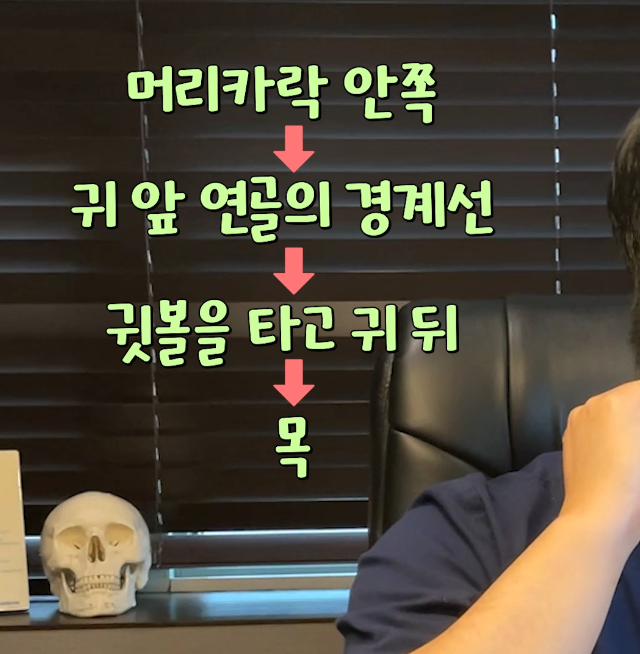
The incision range for a facelift is long: inside the hairline -> along the boundary of the cartilage in front of the ear -> behind the earlobe -> neck.
That is why many people worry about facelift scars.
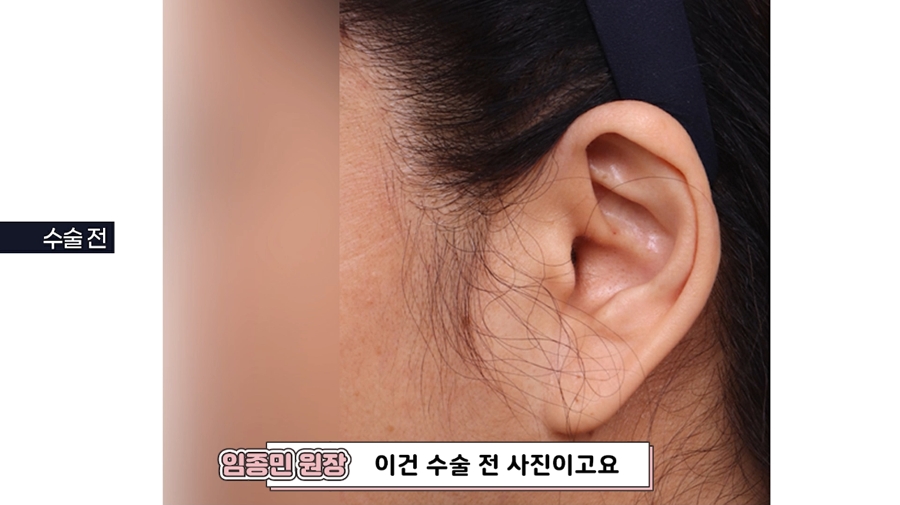
For facelift scars:
At one week after surgery, the incision area and the surrounding skin may be very red and the scar may be clearly visible.
Yellow bruising may appear on the face, and bruising along the jawline and neck may also be visible, making the scar look more severe.
At two months after surgery, the redness has largely faded, and unless viewed up close,
the scar does not stand out much.
You can also see the stitched feeling of the scar gradually fading.
At six months after surgery, you can see that the outline of the scar has become much less distinct.
Compared with before surgery, there may still be some difference, but this is the time when the appearance of the facelift scar has mostly faded.
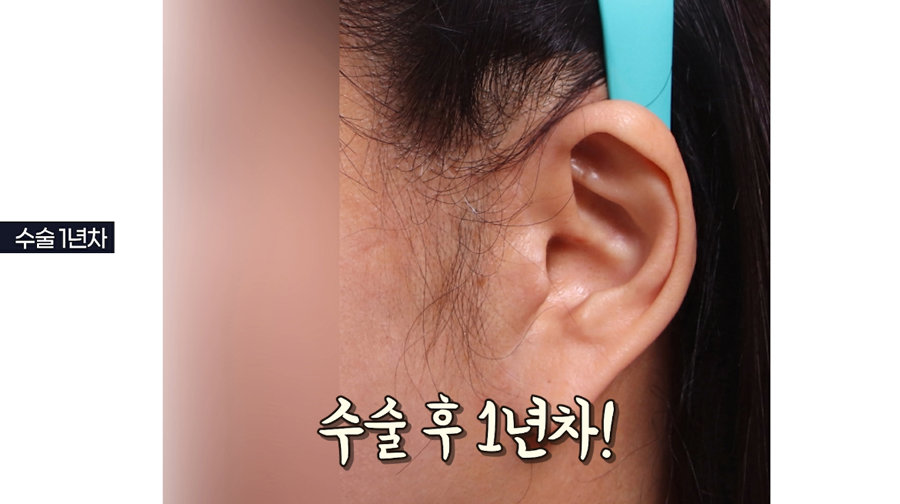
About one year after surgery, the scar has healed significantly, and even when seen up close,
the facelift scar is at a stage where it is not easily noticeable. The color also changes to become almost similar to the surrounding skin.
Facelift scars also vary from person to person, but you can see that facelifts leave much less scarring than many people think.
Compared with before surgery, it may take some time to reach a natural state,
but from about two months onward, the scar is not prominent unless looked at closely.
As much time passes, the appearance and color of the scar become much more similar to the surrounding area, making it less noticeable.
If you want to undergo a facelift but are afraid of scars and have been hesitant to approach it easily,
we recommend visiting a plastic surgery specialist and receiving a detailed consultation.
If you follow the precautions provided by the clinic well,
you can recover properly without the wound worsening or leaving many scars, so please be sure to follow them.