
As we age, many people may feel self-conscious or dissatisfied with their appearance as aging progresses both inside and out.
As life expectancy approaches 100 years and the age at which people remain socially active rises, many middle-aged people seek to improve signs of aging through various forms of care and procedures in order to create a neater, more youthful impression.
As time passes, aging appears throughout the body. In particular, visible signs of aging begin with changes in the skin.
In youth, the face has a suitable amount of volume and looks three-dimensional, but as that volume decreases, skin elasticity declines, and as a result,
wrinkles and sagging become visible throughout the face.
If skin sagging, drooping, and wrinkles are not managed, they can worsen over time and create an older-looking image, so improvement through the effects of a facelift is needed to create a firmer, smoother facial line.
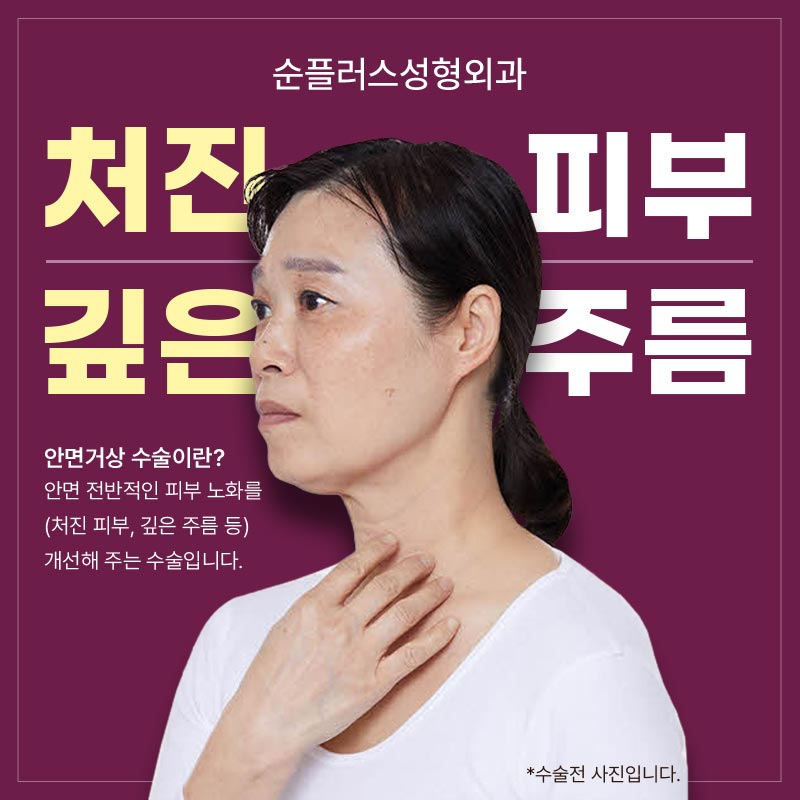

Our skin is easily damaged and ages easily, but returning it to how it was before is not simple. That is why, even if you diligently do at-home care, you may not easily see results. This is because sagging and drooping skin aging requires improvement of the underlying cause within the skin, not just the surface.
Among the procedures preferred by middle-aged people to improve skin aging, a facelift is representative.
A facelift increases lifting results by making an incision and then performing sufficient dissection for lifting. Since the effects of a facelift, facelift scarring, and recovery time can vary depending on the extent of the incision, the degree of dissection,
and the amount of pulling, it is important to choose a hospital specializing in facelifts.
At a facelift-specialized clinic near Sinsa Station, to address the underlying causes within the skin, a minimal incision is made even into the deep SMAS layer, which can be a cause of skin aging, lifting the skin, fat, and muscle in three layers to help improve overall skin aging, including sagging facial lines,
skin elasticity, and facial wrinkles.
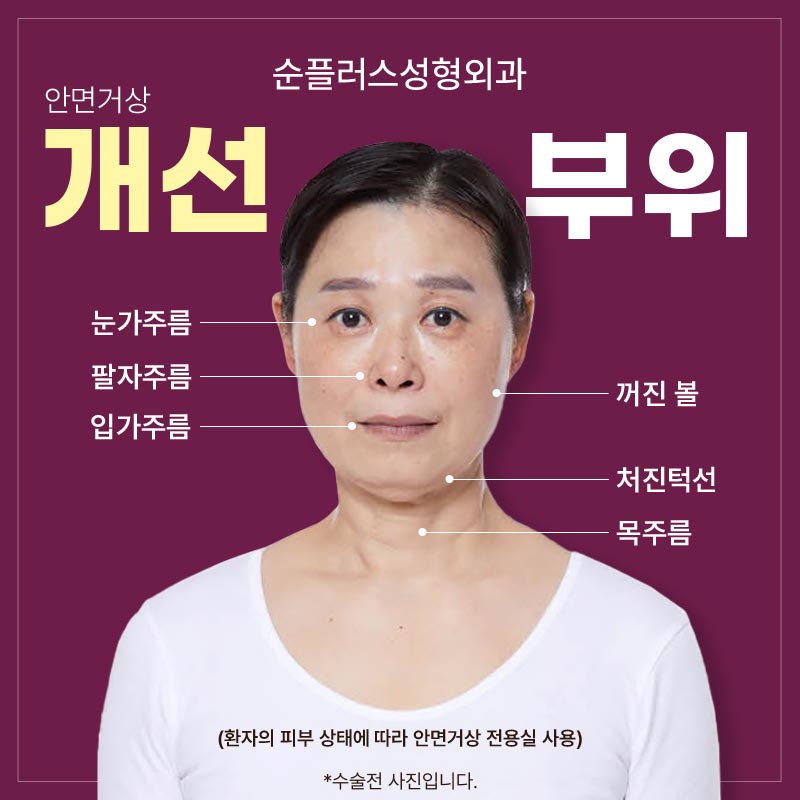
Skin aging begins in the 20s, but visible effects can be experienced from the late 30s to the early 40s.
In such cases, because skin elasticity declines across the entire face and the skin collapses from the forehead to the tip of the chin, broad and overall lifting is needed. Therefore, it should be performed through a delicate and systematic plan by a plastic surgeon specializing in lifting procedures who can provide various lifting treatments by concern and by area.
Depending on the patient’s age, degree of wrinkles, muscle mass, and skin condition, a facelift can be performed carefully and precisely,
while tightening the masseter retaining ligament to enhance the facelift effect.
It also helps lower the risk of side effects by protecting the patient’s nerves and blood vessels.
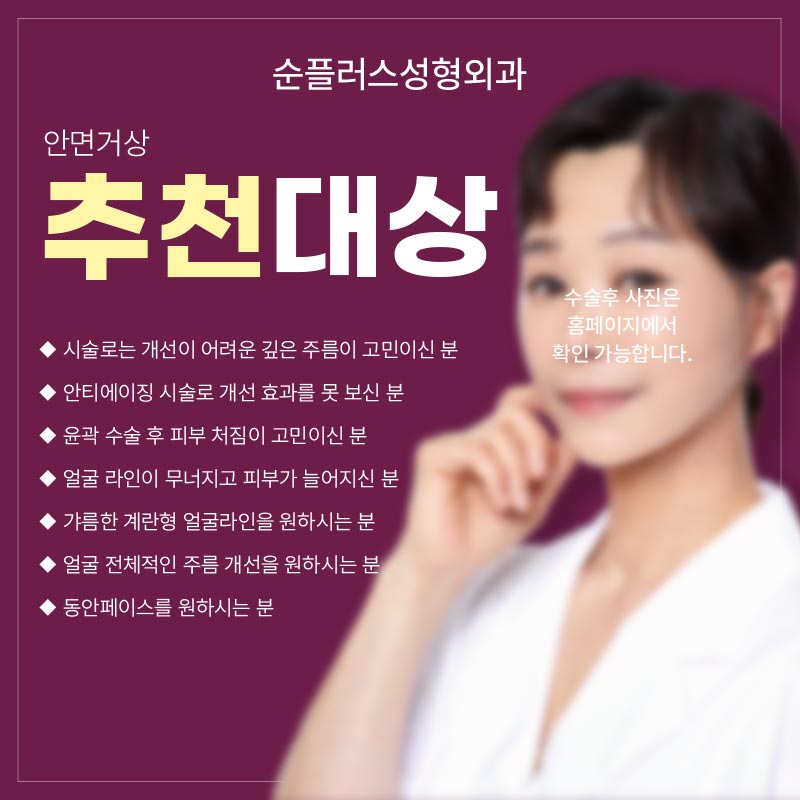
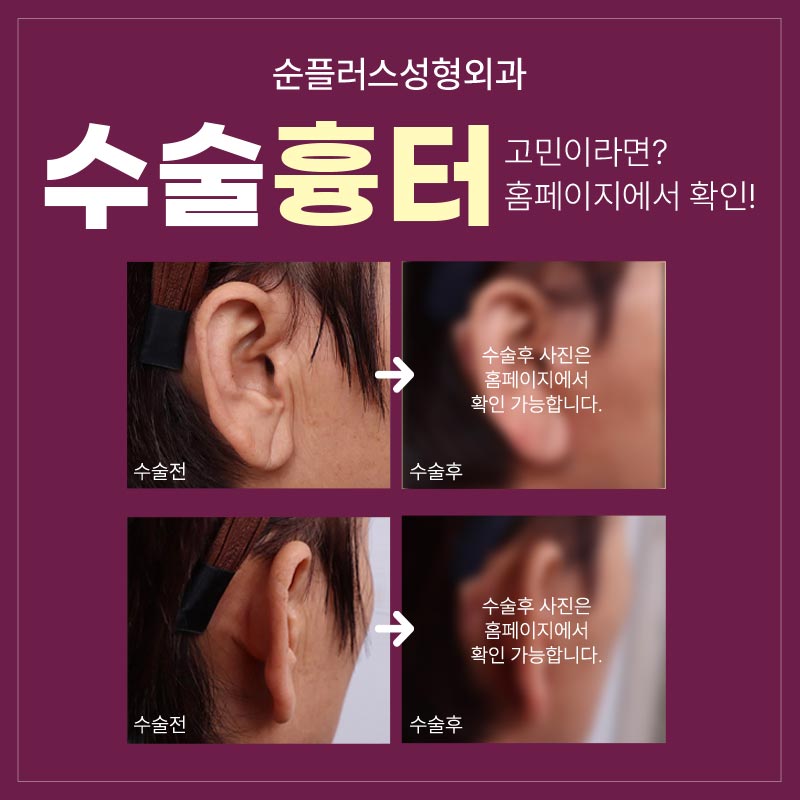
For those considering a facelift, one of the most common concerns is facelift scarring.
At a facelift-specialized clinic near Sinsa Station, incisions are minimized along the wrinkles beside the ear and in front of the auricle.
In addition, through the precise suturing skills of medical staff specializing in facelifts, ear shape is less likely to be altered,
and facelift scarring is kept to a minimum as much as possible.
Facelift scar recovery process
Because a facelift involves extensive dissection and skin incisions, patient safety must be the top priority above all else.
Also, since each patient’s skin condition is different, the procedure should be carried out with a 1:1 customized plan that takes into account the dissection area, the degree of pulling, and the suturing method.
If you are worried about looking older due to sagging skin, I hope you will visit a facelift-specialized clinic and receive a careful and thorough consultation.