Hello. We are a lifting-specialized clinic near Sinsa Station.
With the recent release of various lifting threads, many people are wondering:
What kind of lifting is right for me?
And for each type of lifting, what are the maintenance period, pain, side effects, removal method, and precautions?
Today, we’ll talk about Elastigum, which is known for its strong elasticity.
First, what is Elastigum?
Elastigum is one of the materials used in lifting procedures, and as an authentic Italian product, it is a lifting product whose safety has been verified by the European medical authority.
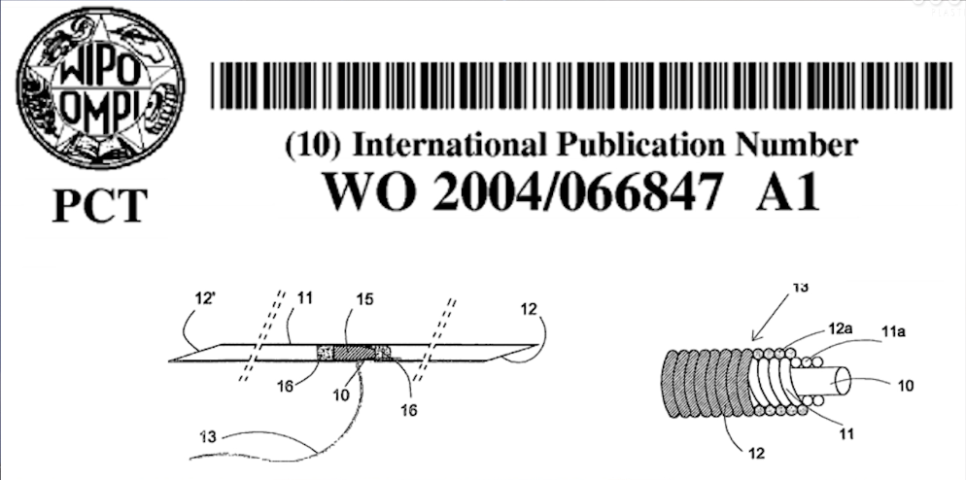
Elastigum was also developed by Dr. Capurro from Italy, a specialist in reconstructive plastic surgery.
It was developed for purposes such as lifting the cheekbones or other tissues when they collapse or sag downward, and because it is made of a non-dissolving material, it remains permanently in the body unless you choose to remove it, much like a breast implant.
So, since it remains in the body for life, it should be comfortable and safe.
Elastigum has rubber band-like elasticity, allowing natural movement even when inserted into any part of the body, and the thread contains silicone, which is widely used as a medical material and functions to create elasticity.
Its outer layer is made of polyester, which is considered safe enough to be used in surgery for stitching cardiac blood vessels.
How long does Elastigum last?
Elastigum has strong elasticity, enough to correct stretched ligaments, meaning it can serve the role of a retaining ligament.
For that reason, it is generally said to last about 3 to 5 years.
The reason is that Elastigum itself has high elasticity and does not dissolve, so it can maintain that state for a long time.
If a patient’s skin condition and overall condition are good, it may be expected to maintain elasticity for more than 5 years.
Recovery period and pain with Elastigum?
The recovery period and pain with Elastigum are among the questions many patients ask.
Because Elastigum itself has very strong tension and pulls firmly,
slight pain may occur.
On average, the pain is said to last about 2 weeks.
Depending on the patient’s skin condition and overall condition, pain may be experienced for 2 to 4 weeks.
Pain usually decreases as the tissues adhere and healing progresses, so there is no need to worry too much about pain.
Are there any side effects with non-dissolving thread Elastigum?
As mentioned earlier, Elastigum uses silicone and polyester, which are medical materials that have long been used in the human body without major problems, so its safety can be said to have been verified.
Even if the elasticity decreases and the effect weakens after the procedure, unless there is a special issue, it is generally not a major problem even if Elastigum is not removed.
Can Elastigum be removed as well?
Elastigum can be considered one of the lifting threads that is easy to remove.
Because the thread does not cause severe internal adhesion and still retains some elasticity when removed,
it comes out easily once it is cut.
There may be slight differences depending on the surgeon performing the procedure,
but since the knot locations are somewhat predetermined when the surgery is performed, it is easier to remove the existing thread during revision surgery.
And if you simply want the thread removed, it is relatively easy to do so.
However, because surgical methods may differ among medical professionals, if you want removal, it is more appropriate to have it done at the hospital where your medical records are kept.
Who is Elastigum recommended for?
Elastigum tends to provide a greater lifting effect for people whose skin is relatively thin and light,
and for those whose face lifts up easily when pulled lightly.
This is not a procedure that removes internal tissue called SMSA (the fascial layer).
Because the pulled side of the skin becomes compressed, the cheekbone area and similar areas may temporarily look more prominent.
Therefore, people with less developed cheekbones may find the Elastigum procedure more advantageous.
If you have prominent cheekbones or dislike the cheekbone area becoming more pronounced,
you can think of this procedure as being somewhat less favorable for you.
Precautions for Elastigum
As with all surgeries and procedures, it is important to avoid drinking alcohol and smoking after the procedure.
It is also good to be careful when washing your face so as not to irritate the surgical area.
Three days after the Elastigum procedure, washing your face and shampooing your hair should not cause any major problems,
so there is no need to worry too much.
In addition, if you follow the precautions provided by the clinic after the procedure,
you can expect a satisfying Elastigum result.
Because lifting methods can vary depending on the patient’s skin thickness, degree of wrinkles, and degree of sagging,
it is important to receive a detailed consultation in person for an accurate diagnosis.