This is from a specialized facelift clinic.
Hello.
We are a clinic specialized in facelifts.
Today, we’ll take time to answer some of the questions patients ask most often.
A. Many people also visit our clinic for consultation about revision facelift surgery.
After a facelift, a lot of time may pass and aging may progress further,
or some people feel dissatisfied because it seems like the effect is not significant after only 1 to 2 years, and so they consider revision surgery.
Aging is an inevitable part of being human.
Even after lifting surgery, aging cannot be avoided.
Because facelift surgery does not replace all the internal facial tissues with new ones,
of course it slows the progression of aging compared with not having a facelift,
and the face may look a little firmer, but aging still progresses.
For example, if a facelift is performed in one’s 60s and the outward appearance becomes more than 10 years younger, it is still not the case that, without a facelift, one would have looked younger at that age in the 60s and then aged more slowly from there. Compared with continuing to age from the current outward appearance and aging speed, that would be a better result.
It is not possible to keep looking more than 10 years younger forever.
In general, the appropriate timing is considered to be about 10 years after a facelift, once aging has progressed enough again, and then performing a revision facelift.
If you feel the facelift effect itself is insufficient, it may be because the lift was not strong enough. For the lifting to be greater, more skin and the SMAS layer should be removed, but if the dissection was insufficient or the excision was insufficient, the lifting force may be weak and the result may feel lacking.
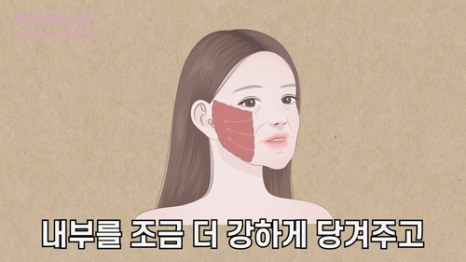
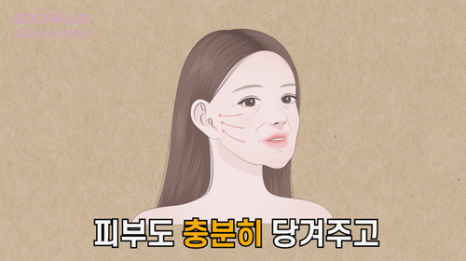
At our clinic, to prevent insufficient results depending on the case, we use a dedicated facelift operating room to pull the inside more firmly, sufficiently tighten the skin, and allow the dissection to extend farther.
A. In general, when judging whether revision facelift surgery is needed, it is more accurate to decide after at least 1 year has passed and recovery has been completed.
Even if the patient feels the effect seems small through self-assessment,
it is most accurate for a plastic surgery specialist with extensive experience in facelifts to make the diagnosis,
so we recommend consulting a clinic specialized in facelifts.
A. Rather than there being a fixed number of times revision facelift surgery can be performed,
facelift surgery works by lifting sagging skin, dissecting it, and removing the excess skin and SMAS tissue left behind,
so sufficiently thorough dissection can lead to better results.
However, if surgery is performed too frequently, the SMAS layer or fat layer can be damaged and become hard and stiff.
In that case, the surgical effect may not be good.
We believe revision facelift surgery should be spaced by at least 1 year.
A. Inside the face, below the skin layer and subcutaneous fat layer, there is the SMAS layer.
The SMAS layer is a very thin and tough membrane. If the SMAS layer was significantly damaged during the previous facelift surgery,
or if adhesions are severe and it has hardened, dissection becomes difficult and it does not move well.
If it is damaged significantly, the fat that was inside may protrude, and even pulling the SMAS layer may be ineffective, so preserving and protecting the SMAS layer well is important.
A. Ultherapy is a procedure that delivers radiofrequency to target the SMAS layer beneath the fat layer.
Radiofrequency procedures stimulate the SMAS layer with thermal energy to induce collagen resynthesis.
Some people think that having Ultherapy too many times means facelift surgery cannot be performed, but if facelift surgery is done delicately and carefully, it is fully possible.
If the goal is not to remove a large amount of skin through facelift surgery, but rather to make the current condition look beautiful, then regular Ultherapy and radiofrequency procedures in between may be necessary for good results.
A. There are no separate special care instructions after revision facelift surgery.
In the case of revision surgery, compared with the first surgery, the skin is more likely to have some damage and blood circulation may be poorer,
so it is definitely important to be careful.
After revision surgery, alcohol, excessive exercise, and places with very low temperatures
should be avoided because they may interfere with blood circulation.